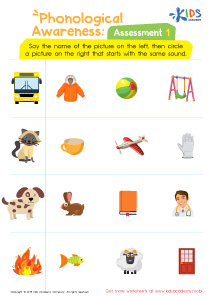
Normal Consonants Worksheets for Ages 4-8 - Page 2
26 filtered results
-
From - To
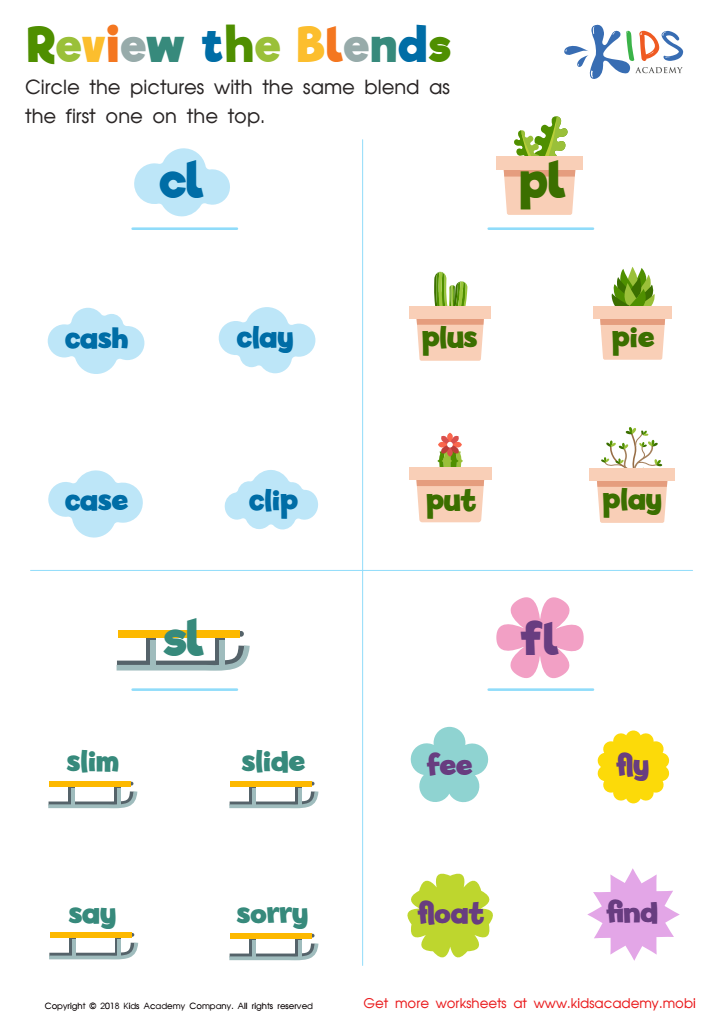
Review the Blends Worksheet
 Assign to My Students
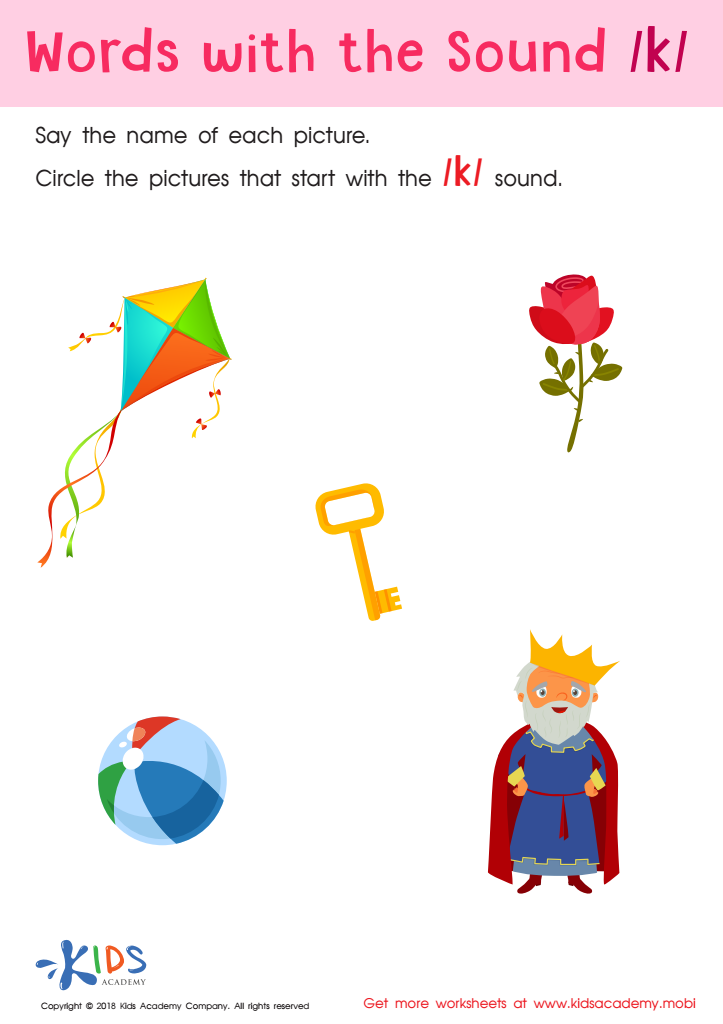
Words with sound k Reading Worksheet



Understanding normal consonants is crucial for children aged 4-8 because it lays the foundation for effective communication and literacy skills. Consonants make up a significant portion of spoken and written language; their mastery enhances both spelling and reading proficiency. When children learn to recognize and articulate consonant sounds, they become more confident in their abilities to decode words, a vital skill in early education.
Moreover, consistent exposure to normal consonants helps in developing phonemic awareness, a key component in reading readiness. This awareness enables young learners to manipulate sounds, which is essential for phonics instruction. Teachers and parents should recognize that mastering these sounds can have a positive impact on a child’s overall academic performance, as well as their self-esteem.
Additionally, understanding consonants also aids in effective communication and social interaction. When children articulate words correctly, they feel empowered to express themselves clearly, leading to better peer relationships and collaborative learning experiences. Overall, adults in a child’s life should prioritize consonant education, as it crucially supports literacy development, social skills, and sets the groundwork for future academic success.