Normal Ending Sounds Worksheets for Ages 4-8
5 filtered results
-
From - To
Discover our engaging Normal Ending Sounds Worksheets, specially designed for children ages 4-8! These printable resources focus on building essential phonetic skills by helping young learners identify and practice ending sounds in words. Each worksheet is thoughtfully crafted to enhance auditory discrimination and boost reading readiness. With colorful illustrations and fun activities, children will enjoy learning while developing their language abilities. Perfect for classroom or home use, these worksheets provide a solid foundation for early literacy. Explore our collection today and watch your little ones gain confidence in their reading skills as they master ending sounds effortlessly!
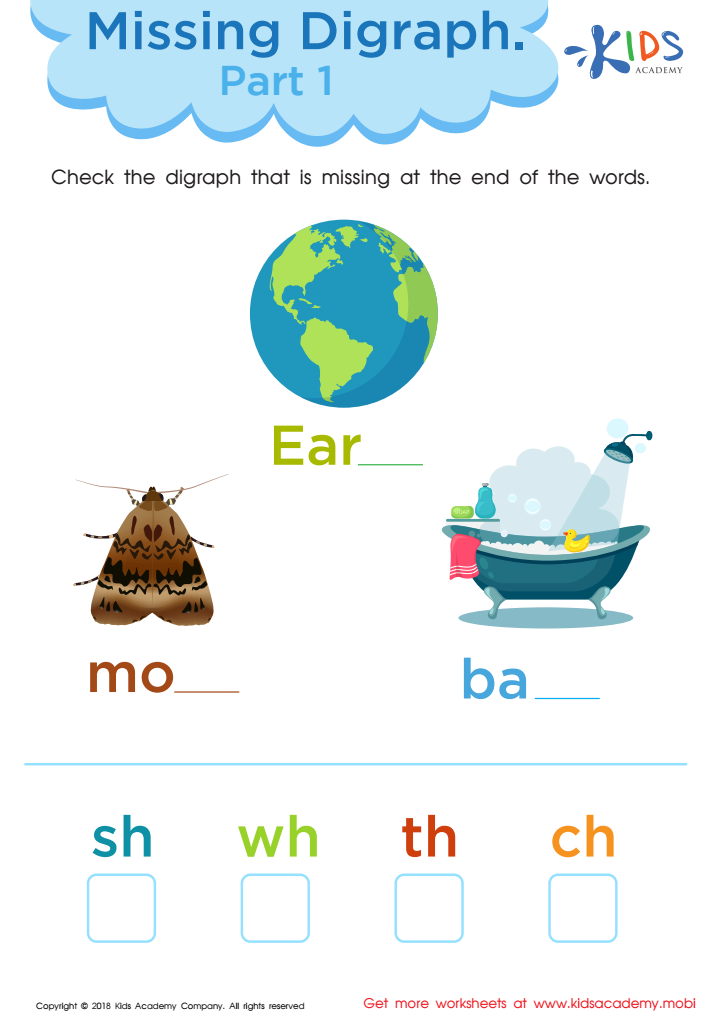
Missing Digraph: Part 1 Worksheet
 Assign to My Students
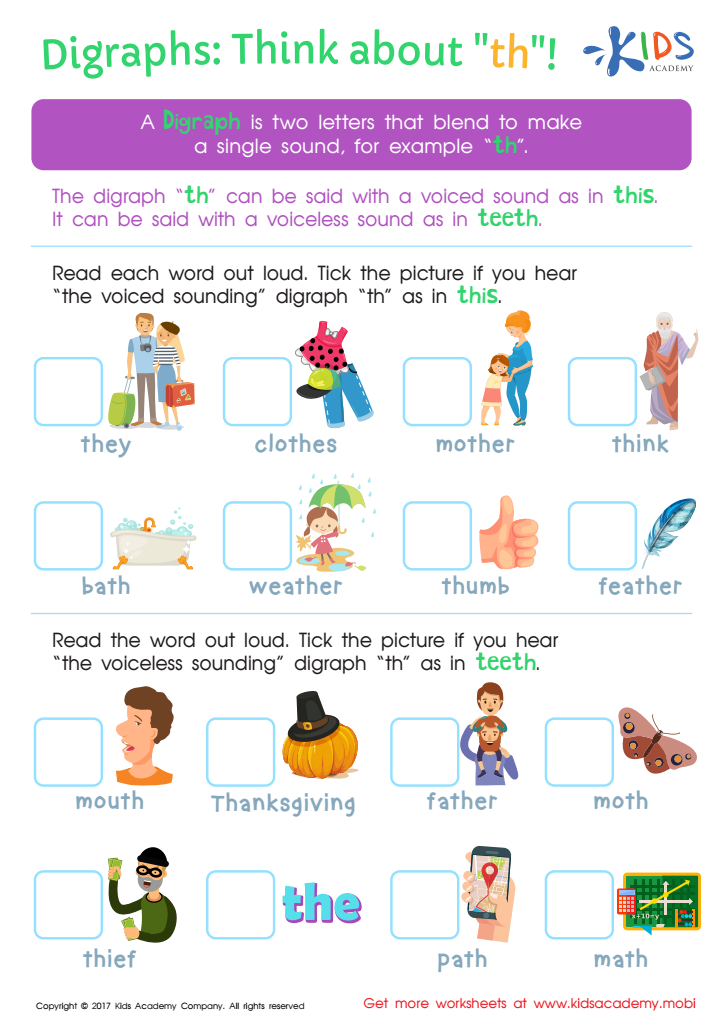
Digraphs: Think About "th" Worksheet
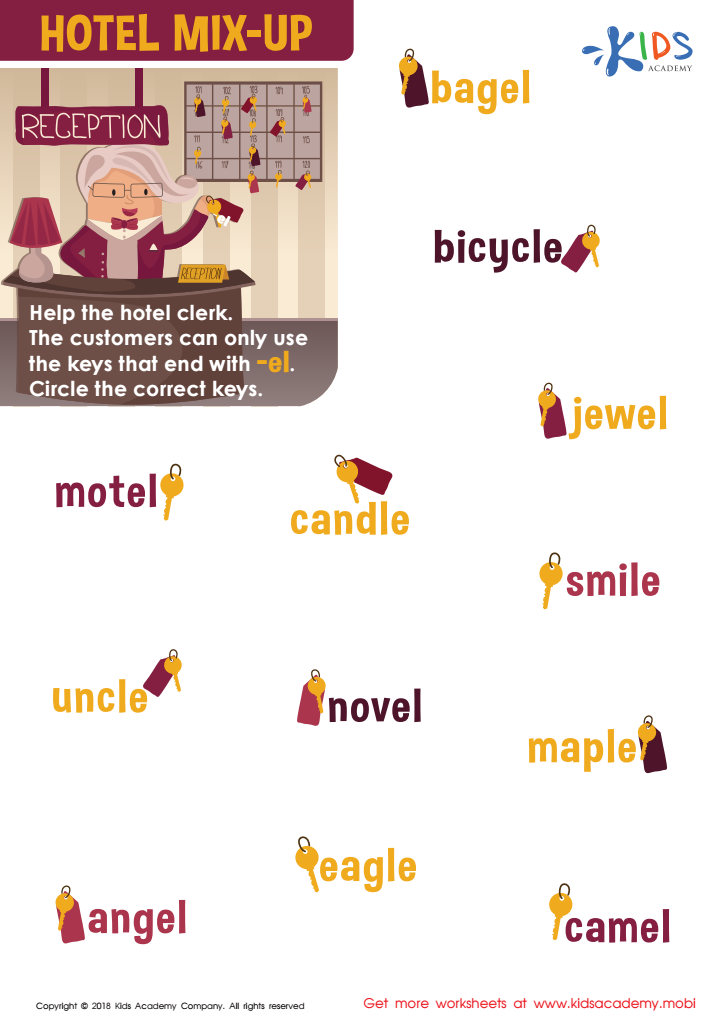
Hotel Mix-up Worksheet
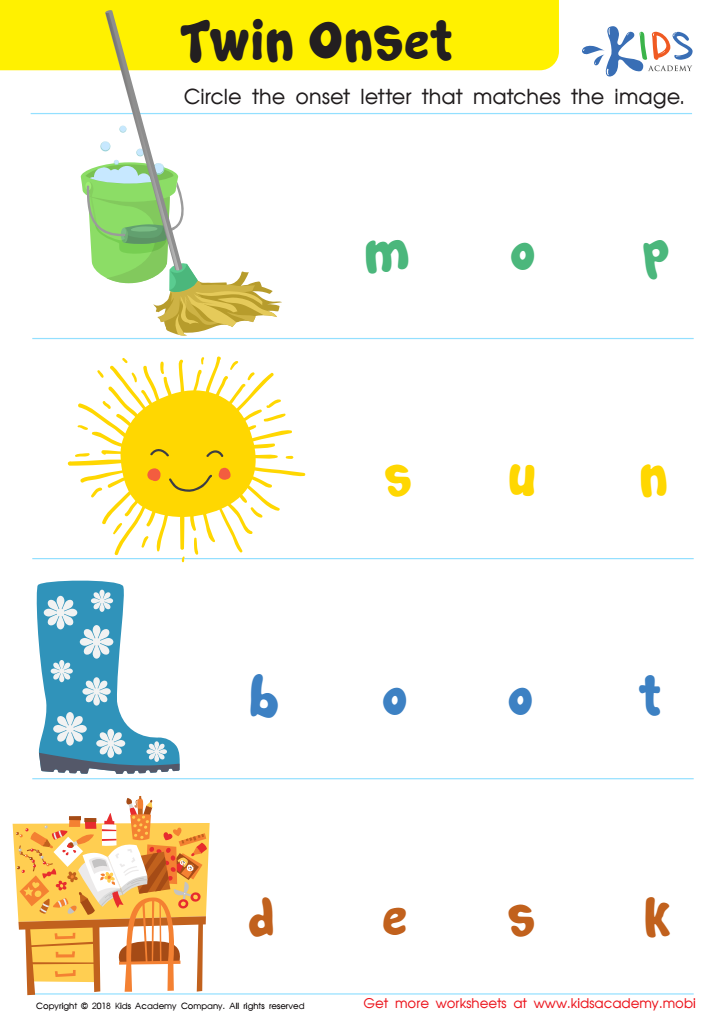
Twin Onset Worksheet
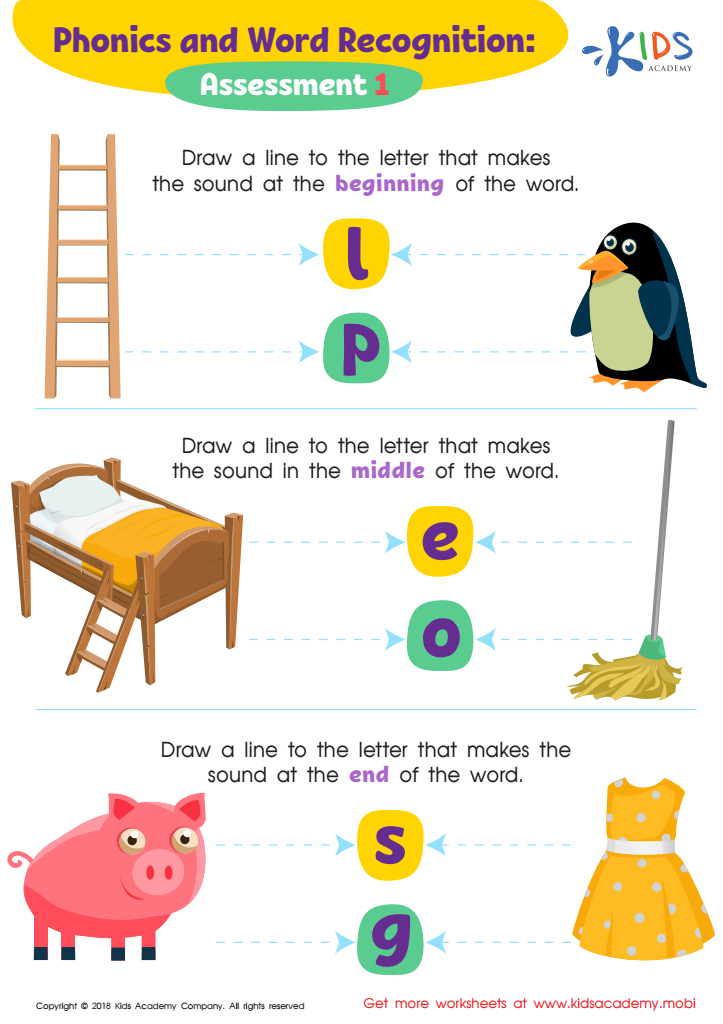
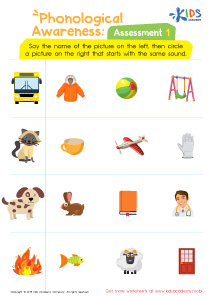
Phonics and Word Recognition: Assessment 1 ELA Worksheet






Normal ending sounds, or phonemes, are critical components of language development for children ages 4-8. Parents and teachers should care about these sounds because they play a significant role in early literacy skills, which lay the foundation for future reading and writing success. Mastering normal ending sounds helps children decode unfamiliar words and improves their overall phonemic awareness—essential for understanding the structure of language.
By focusing on these sounds, educators can help children differentiate between words with similar beginning sounds but different endings, enhancing their vocabulary and pronunciation. This understanding directly supports their ability to engage with texts, comprehend stories, and express themselves clearly.
Additionally, when children master normal ending sounds, they become more confident in their reading abilities. This self-assurance can motivate them to explore literature independently and engage more in classroom activities. By emphasizing the importance of normal ending sounds, parents and teachers together can foster a love for language and learning from an early age, cultivating lifelong learners who appreciate reading and discover the joy of storytelling. Investing attention in these sounds can yield tremendous benefits in literacy and academic achievement.