Normal Long Vowels Worksheets for Ages 4-8 - Page 2
30 filtered results
-
From - To
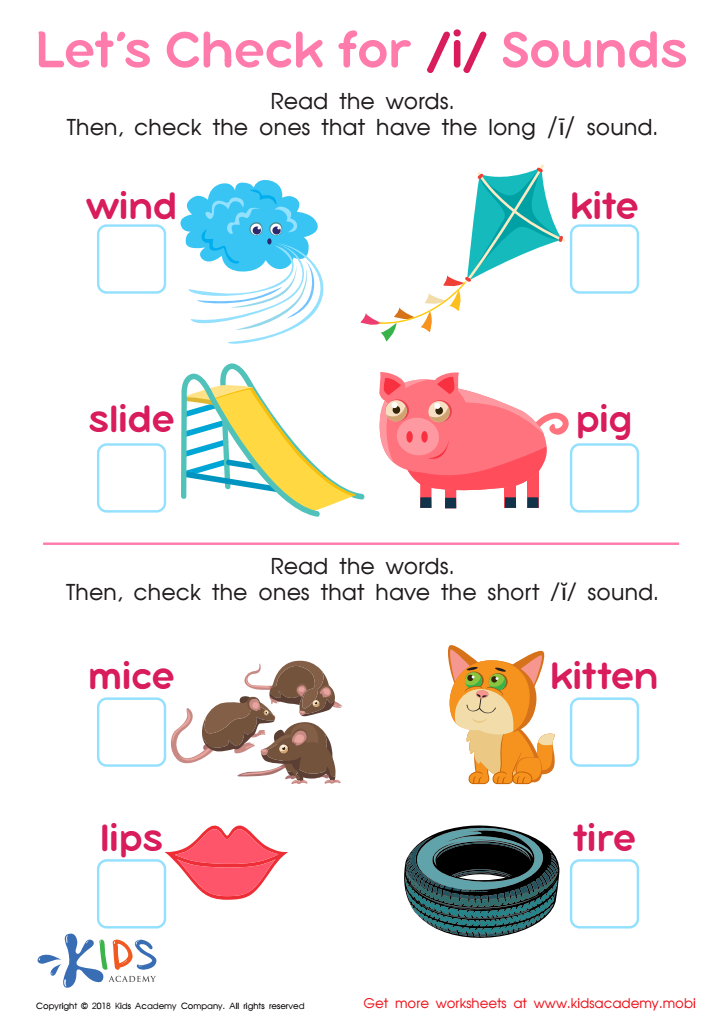
Let's Check for «i» Sounds Worksheet

Long and Short E Worksheet
 Assign to My Students
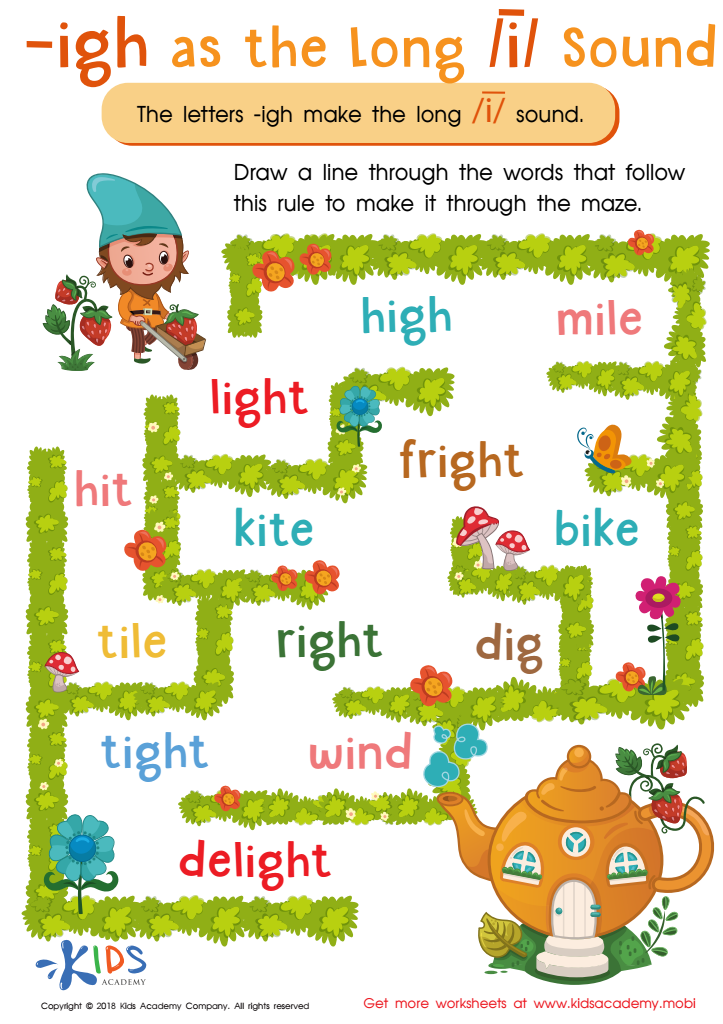
Reading: IGH as Long I Worksheet
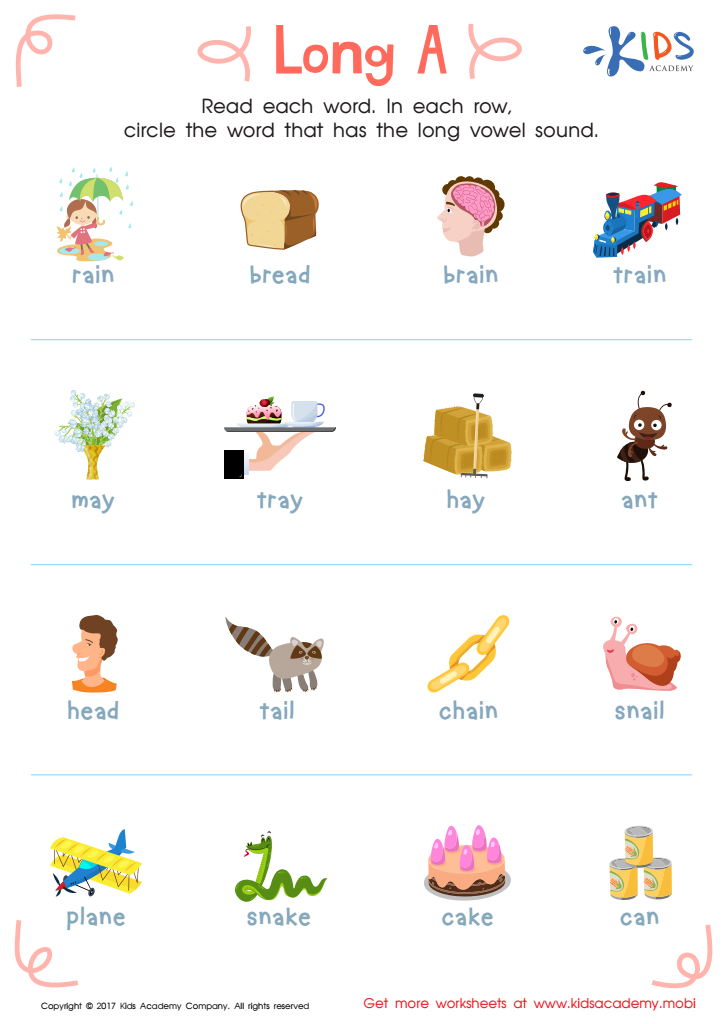
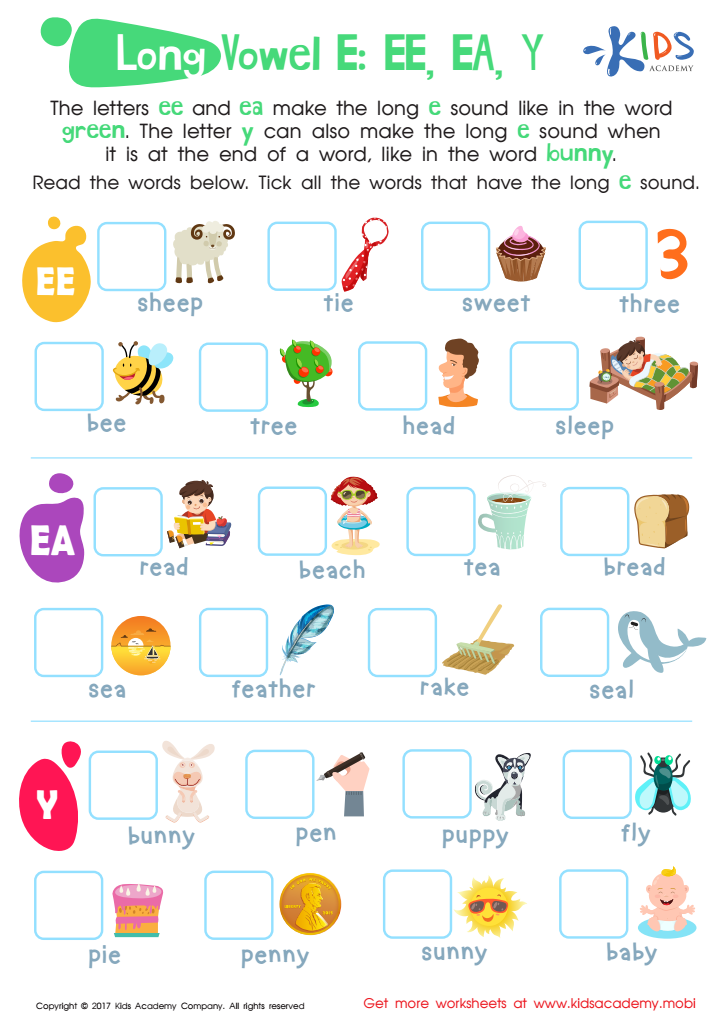
Long Vowel E Printable
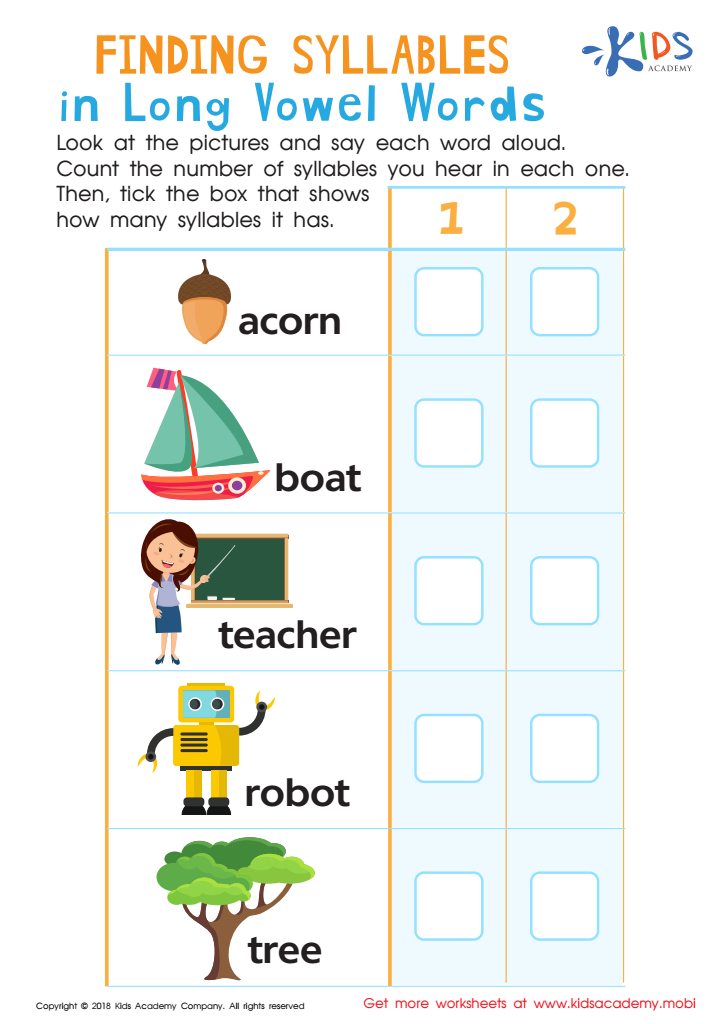
Finding Syllables in Long Vowel Words Worksheet



Parents and teachers should care about normal long vowels for children aged 4-8 because these foundation skills are crucial for early literacy development. Long vowels, which typically represent the letter names in their sounds (e.g., 'a' in "cake" or 'e' in "bee"), are essential as children progress in their reading and writing abilities. Understanding long vowels helps young learners decode new words, facilitating their transition from oral language to written language.
Recognizing long vowel sounds also aids in phonetic awareness, enhancing children's ability to break down words into their constituent sounds. This awareness is crucial when learning spelling rules and patterns, allowing children to become proficient readers and writers. Furthermore, a strong grasp of long vowels contributes to improved reading fluency, as children can read aloud with better accuracy and expression.
Moreover, early mastery of long vowel sounds fosters confidence in children as they progress in their literacy journey. By focusing on these skills, parents and teachers can create a supportive learning environment that promotes effective communication and a love of reading. Overall, investing in understanding long vowels sets a solid foundation for a child’s future academic success.