Discover our "Enhancing Critical Thinking Normal Worksheets" designed for children ages 4-8! These engaging worksheets foster essential critical thinking skills through fun, age-appropriate activities. Ideal for early learners, our resources encourage problem-solving, logical reasoning, and imaginative thinking in a playful way. Each worksheet is crafted to suit varying skill levels, ensuring every child can thrive. Parents and educators can help youngsters develop a strong foundation in critical thinking, preparing them for future academic success. Explore our varied selection and support your child's journey with worksheets that inspire curiosity, creativity, and a love for learning. Start your adventure in critical thinking today!

Check out this FREE "Enhancing critical thinking" Trial Lesson for age 4-8!

Rounding to the Nearest 10 - Up

Favorites
With answer key
Interactive
  • 4-8
  • Enhancing critical thinking
  • Normal
Cause And Effect Worksheet

Cause And Effect Worksheet

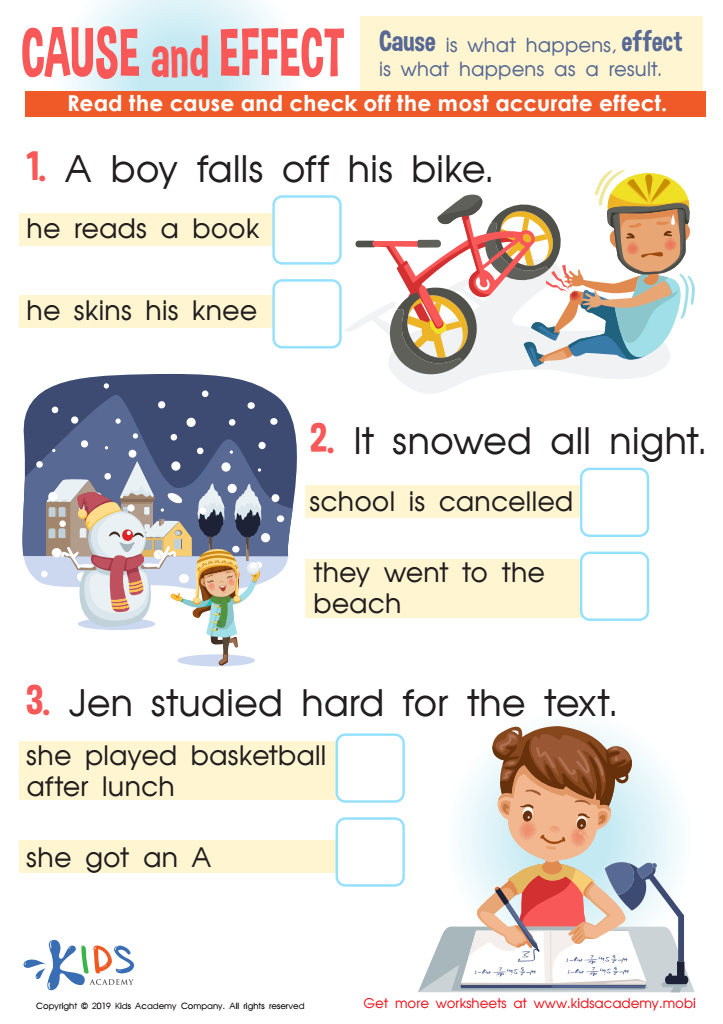
Help your kids understand cause and effect with this worksheet. Explain that cause is what happens, and effect is the result of an action or event. Ask if they understand, then direct them to read the cause in the pictures and choose the most accurate effect from the options.
Cause And Effect Worksheet
Worksheet
Sorting Worksheets for Kids

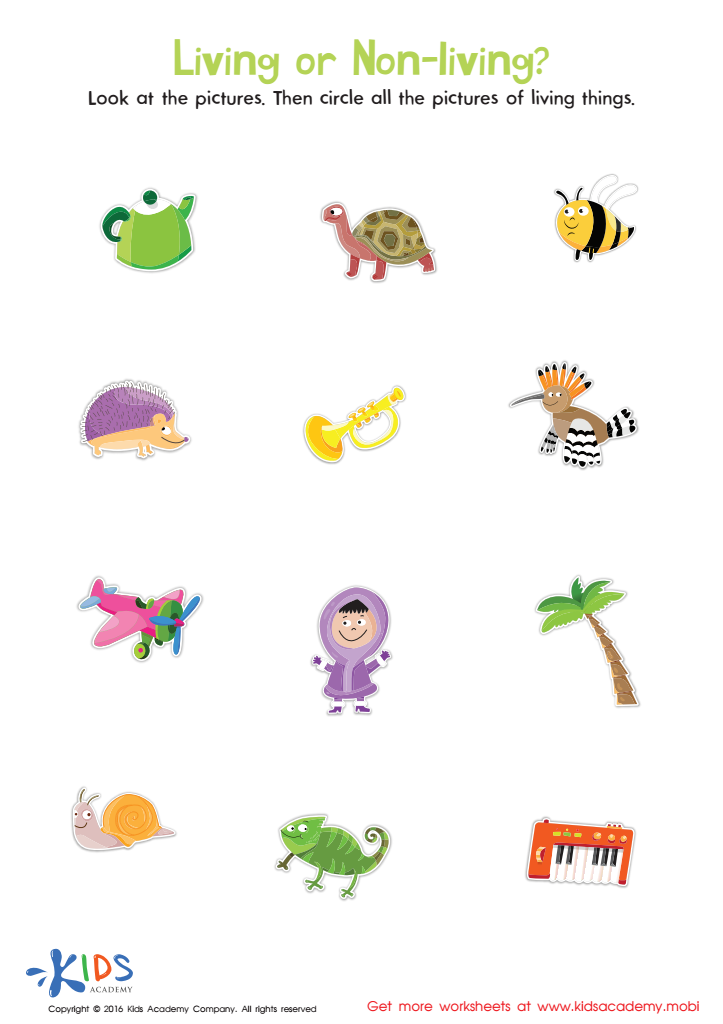
Identifying Living and Non–living Things Sorting Worksheet
Help your child sort living and non-living objects with this cute worksheet. Kids will use problem-solving skills to recognize and categorize the images they see. Matching worksheets available to help their skills soar.
Identifying Living and Non–living Things Sorting Worksheet
Worksheet
Safety Sounds Worksheet

Safety Sounds Worksheet

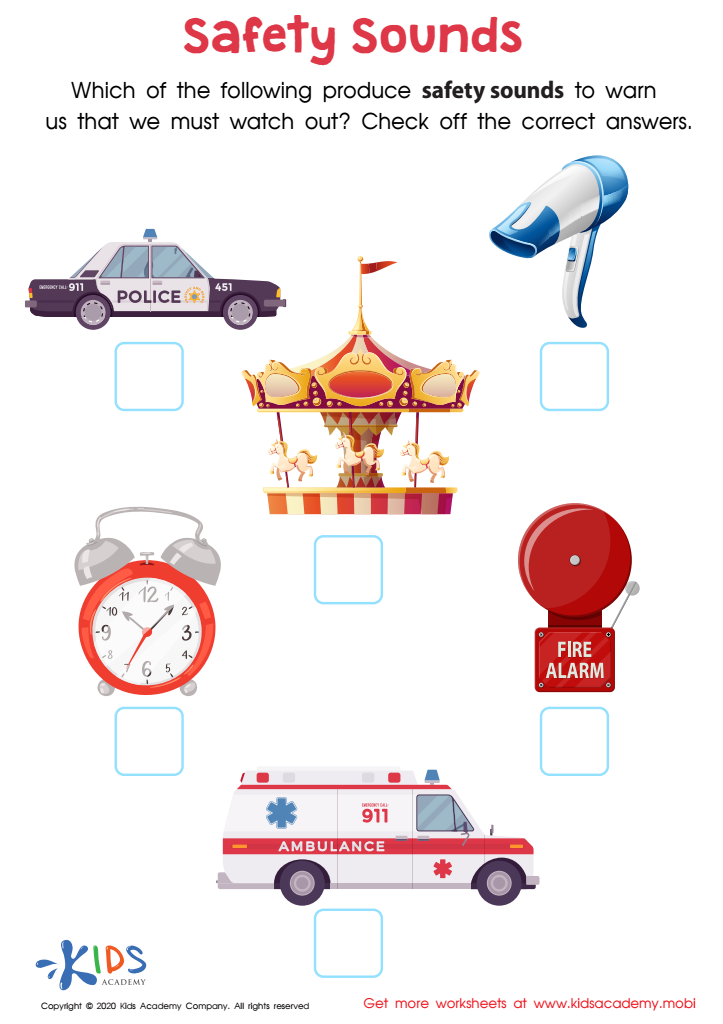
Teach your kids about safety. Explain the rules and let them know what sounds to be aware of. Review the worksheet with pictures of objects and ask them to recognize which ones produce safety sounds. Have them check their answers. Doing this will help ensure their safety and that of others.
Safety Sounds Worksheet
Worksheet
Rounding Numbers Up Worksheet

Rounding Numbers Up Worksheet

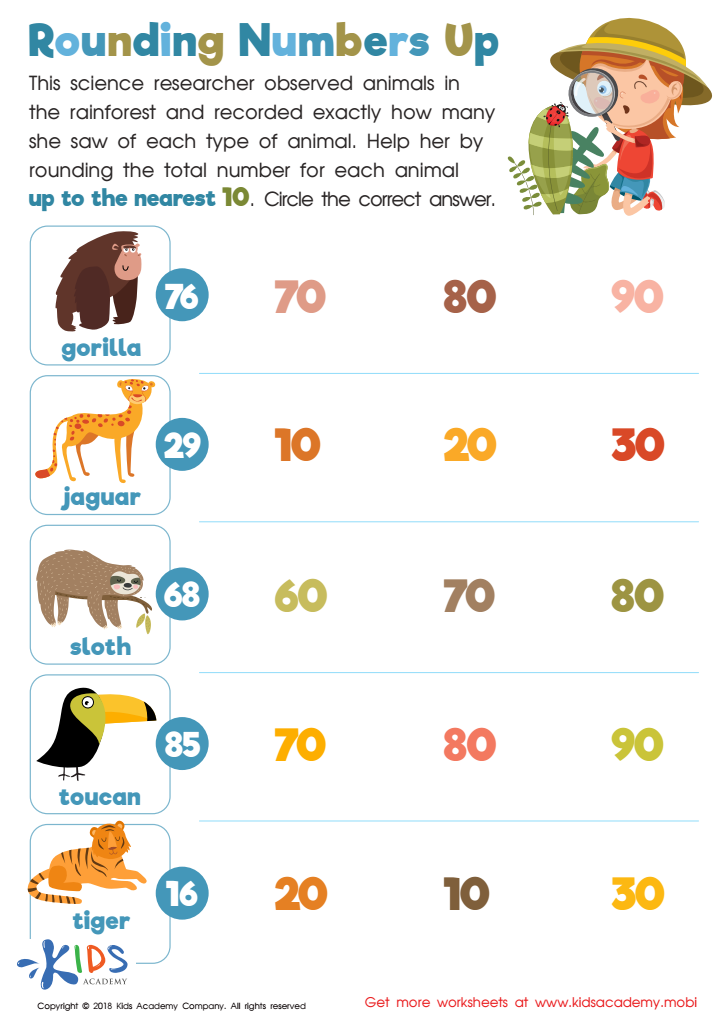
Does your child want to be a science researcher? If so, they share something in common with the person in this worksheet. She observed rainforest animals and counted them. Your child can help by rounding the totals to the nearest 10 and circling the correct answer for each type.
Rounding Numbers Up Worksheet
Worksheet
Producer or Consumer? Worksheet

Producer or Consumer? Worksheet

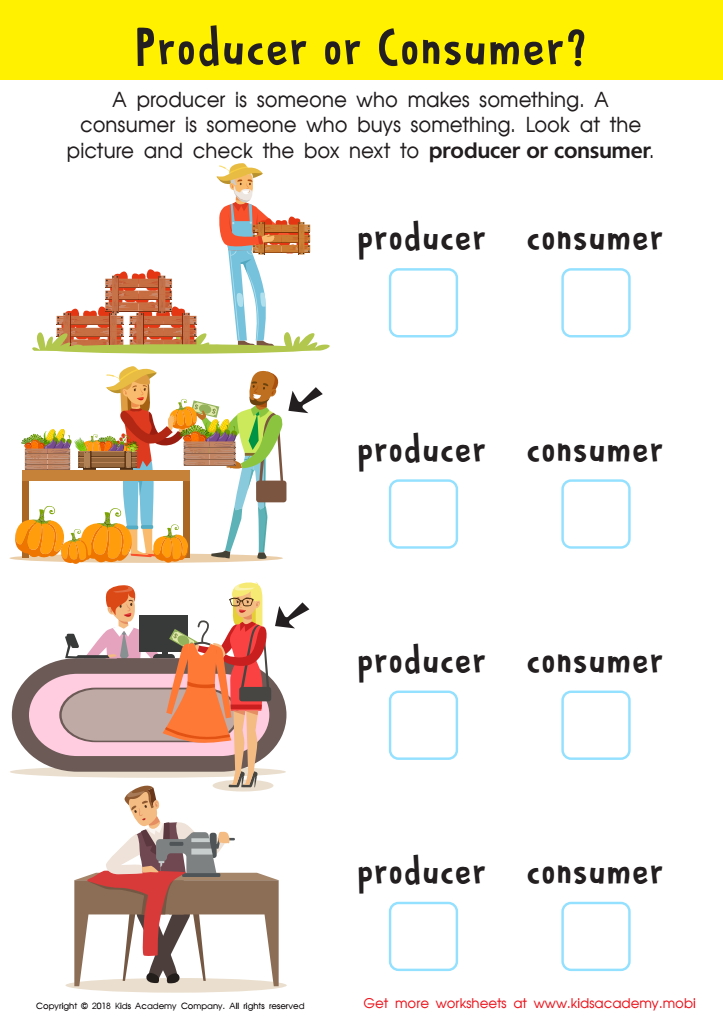
Test your child's knowledge by asking who's a producer and consumer. Explain producer makes things and consumer buys them. Use a snack example. Look at the picture with your kids and help them check the box next to producer or consumer.
Producer or Consumer? Worksheet
Worksheet
Comparing Causes of Erosion Worksheet

Comparing Causes of Erosion Worksheet

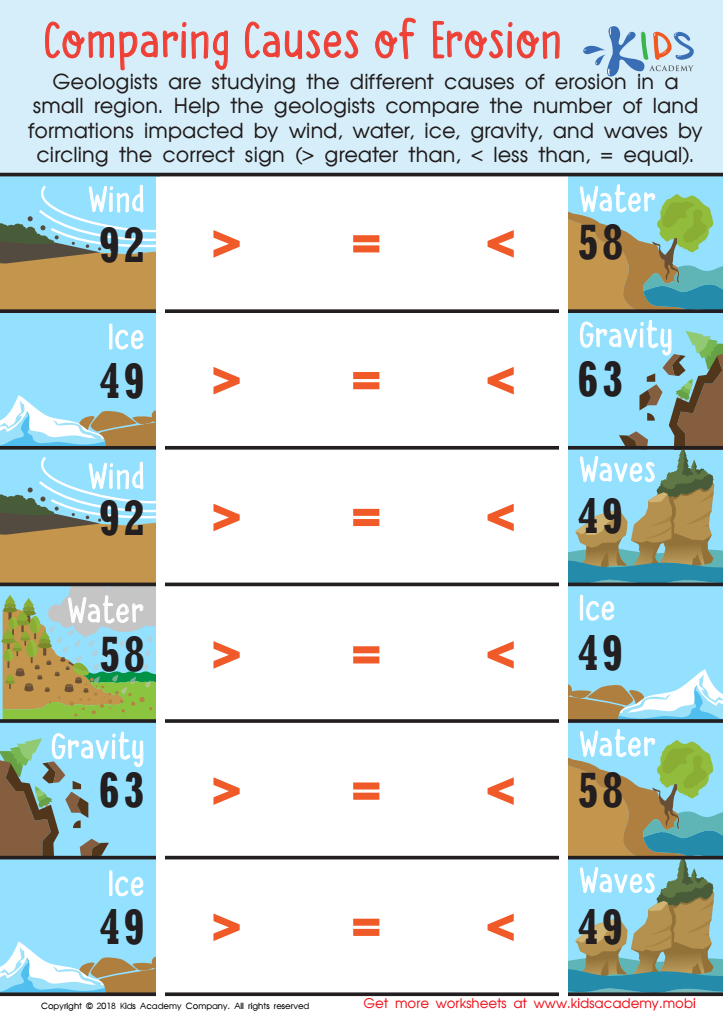
This free PDF worksheet combines science, number sense and comparing numbers to teach kids about the causes of erosion. They'll compare numbers related to ice, wind, water, gravity and waves and decide if each cause is greater, less than or equal to another. It's an interdisciplinary and meaningful way to learn that kids will enjoy.
Comparing Causes of Erosion Worksheet
Worksheet
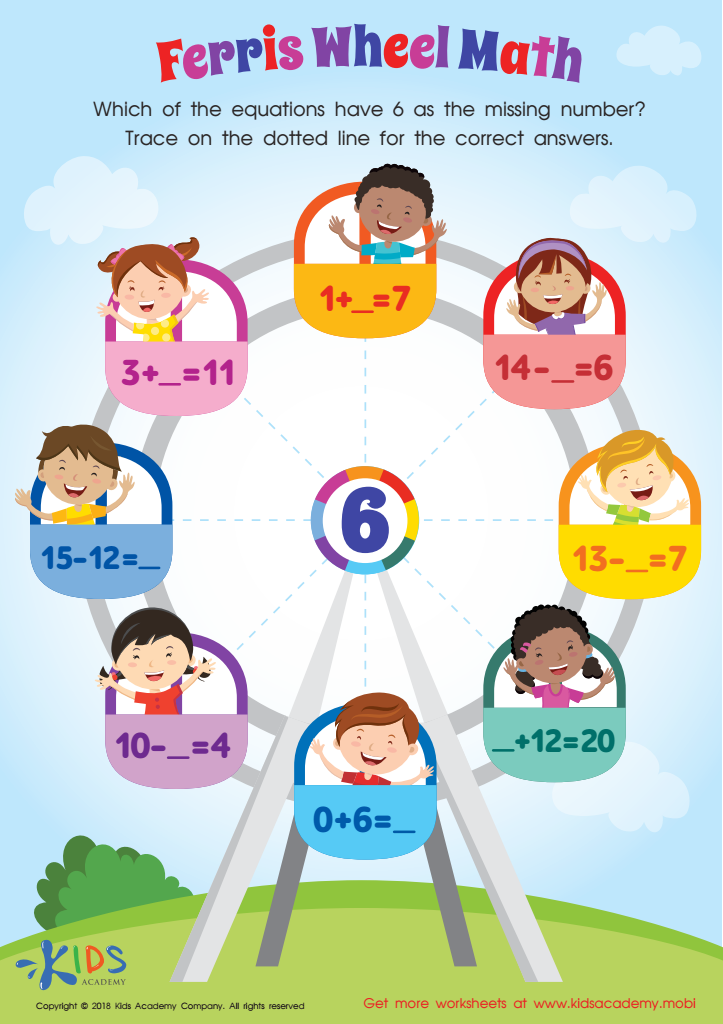
Missing Number: Ferris Wheel Math Worksheet

Missing Number: Ferris Wheel Math Worksheet

Hop on the Ferris wheel and solve the equations in the baskets! If the missing number is 6, draw a line from the basket to the middle of the wheel. Kids Academy's addition worksheet will not only help practice pre-algebra but also keep kids entertained with its vibrant illustrations. So, go round and round and have fun with math!
Missing Number: Ferris Wheel Math Worksheet
Worksheet
Colonial Times Worksheet

Colonial Times Worksheet

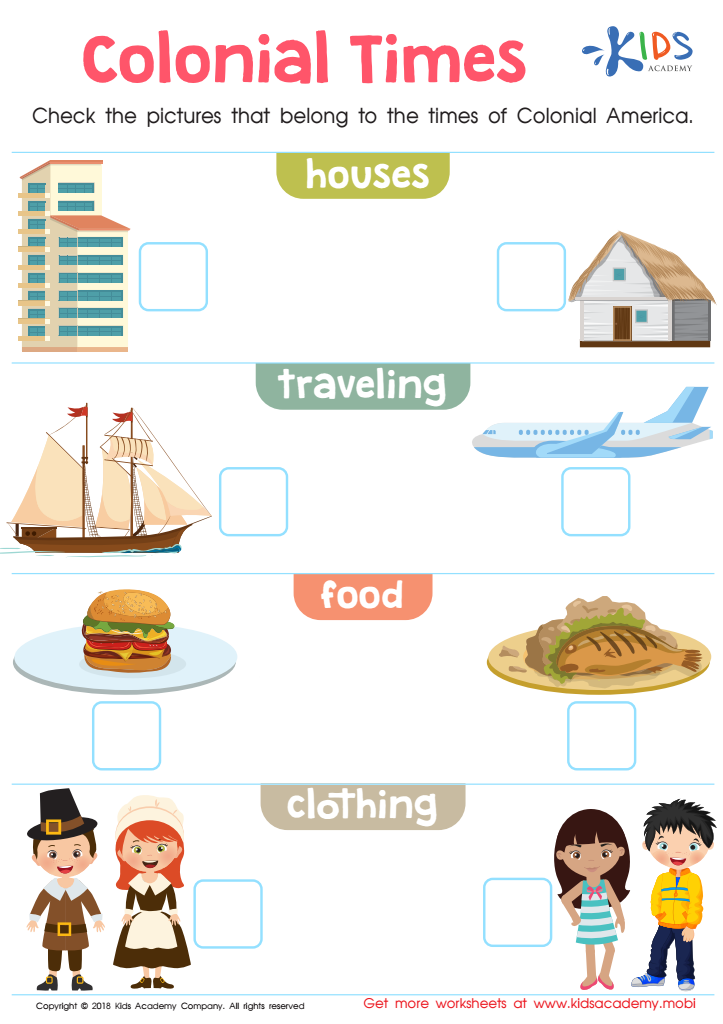
Test your students' knowledge of colonial times with this easy social studies worksheet. Look at the pictures to see how people lived back then. See if your little ones understand what structures they had, what food they ate, and what type of clothing they wore. You might be surprised by how much or how little they know!
Colonial Times Worksheet
Worksheet
What Equation Is That? Worksheet

What Equation Is That? Worksheet

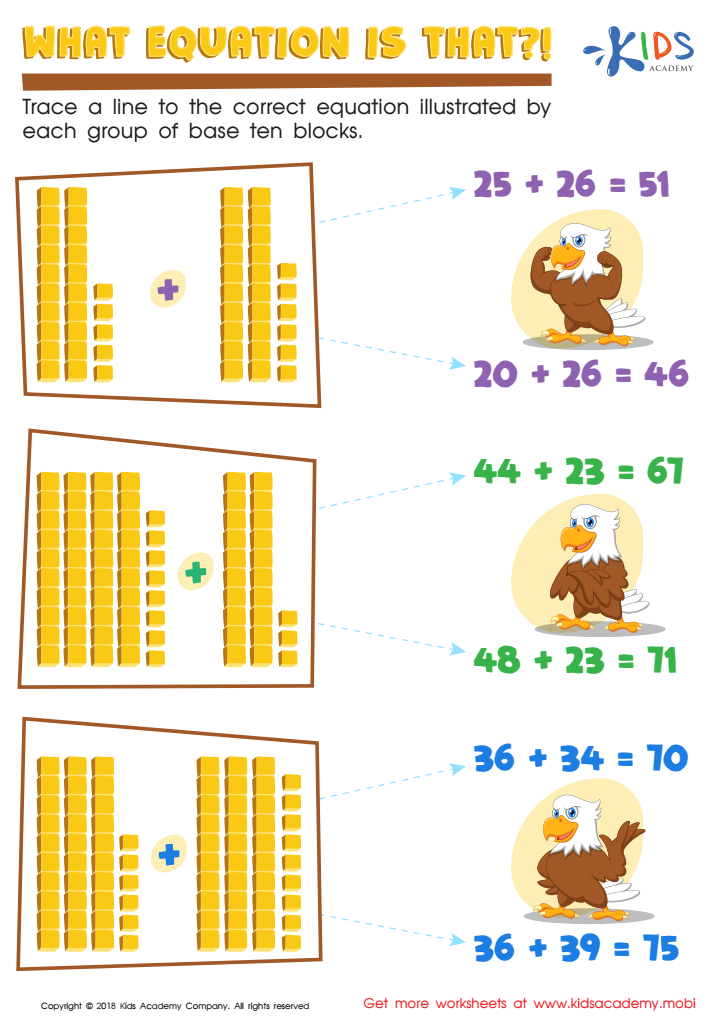
Have your students practice counting with base ten blocks. This will help them with math struggles. Homework and worksheets will help them improve; ask them to trace lines to the correct equation on a tracing sheet. Guide them as they count the blocks and trace the lines.
What Equation Is That? Worksheet
Worksheet
Food Chain Cause Worksheet

Food Chain Cause Worksheet

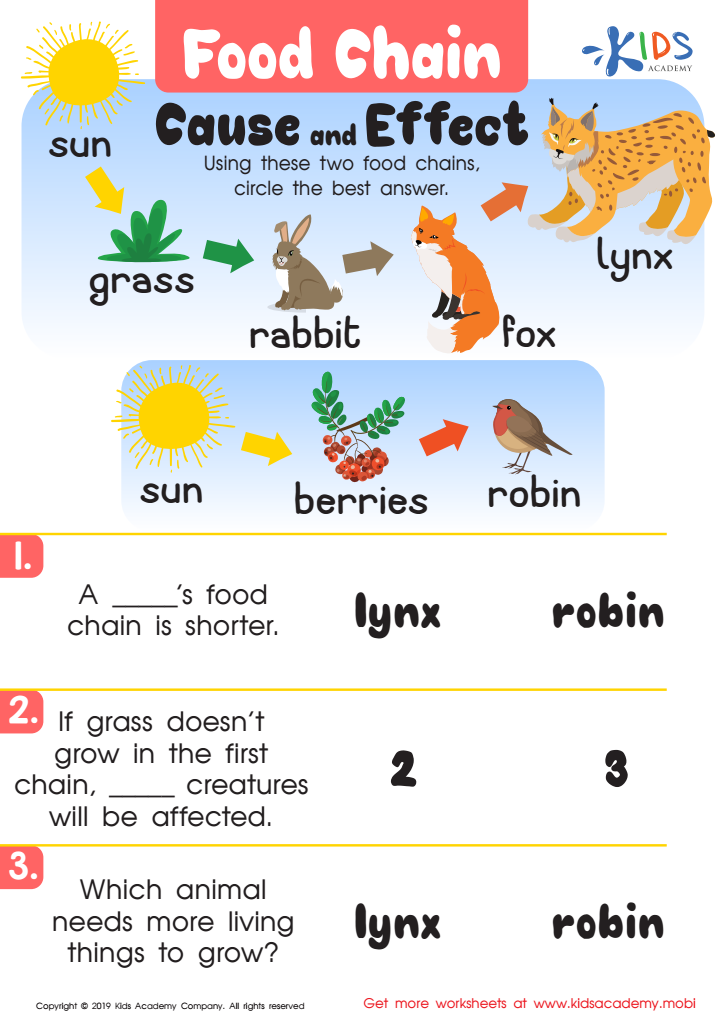
Help your little learner analyze ecosystems and compare food chains with this Kids Academy worksheet! Kids will compare a carnivore's and herbivore's food chain; which is longer and why? Questions at the bottom of the page will help them compare and circle the best answers. A great way to understand animal food chains!
Food Chain Cause Worksheet
Worksheet
Counting on Pollination: Butterflies, Moths, Beetles Worksheet


Counting on Pollination: Butterflies, Moths, Beetles Worksheet
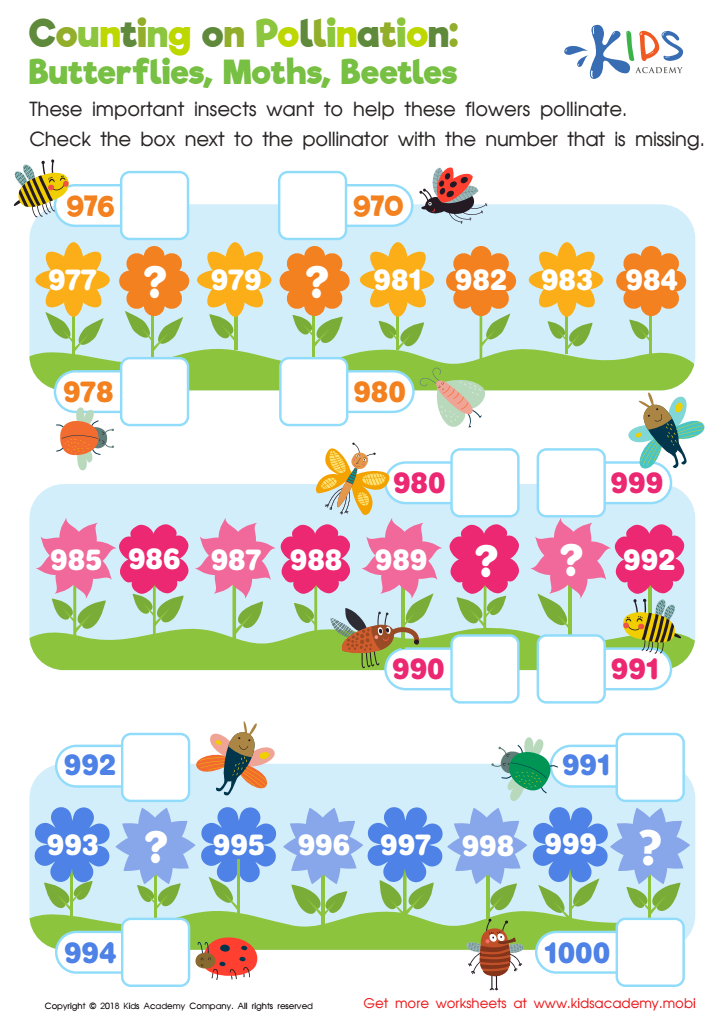
A number line can help boost computation accuracy and efficiency. It can also be used with more advanced numbers. Help your child practice by having them identify missing numbers in sequences. This fun worksheet lets them help the pollinators in the process, as they strengthen their number sense.
Counting on Pollination: Butterflies, Moths, Beetles Worksheet

Worksheet


Enhancing critical thinking skills in children aged 4-8 is crucial for their cognitive development and overall success. At this formative stage, children are naturally curious, and fostering critical thinking allows them to explore their interests, ask questions, and seek solutions. Parents and teachers should prioritize these skills to help children develop the ability to analyze, evaluate, and synthesize information, skills fundamental not only in academics but also in everyday decision-making.

Critical thinking nurtures creativity, as children learn to approach problems from multiple angles, think outside the box, and develop innovative solutions. It also builds confidence; when children learn to trust their judgments and reasoning, they are more likely to actively participate in discussions and share their ideas.

Furthermore, strengthening critical thinking prepares children for future challenges in an increasingly complex world. They are more equipped to navigate social interactions, understand diverse perspectives, and become active, informed citizens. Engaging children in activities like puzzles, open-ended questions, and collaborative problem-solving in classrooms or at home creates an environment where critical thinking flourishes. By caring about enhancing these skills, parents and teachers lay a strong foundation for lifelong learning and resilience.