Phonics comprehension Normal Worksheets for Ages 4-8
3 filtered results
-
From - To
Unlock your child's potential with our Phonics Comprehension Normal Worksheets, designed specifically for ages 4 to 8. These engaging and age-appropriate worksheets help young learners build essential reading skills through fun activities and exercises. Children will practice letter sounds, phonemic awareness, and decoding skills, fostering confidence in their reading abilities. Each worksheet features vibrant illustrations to keep kids motivated while they explore phonics in an interactive way. Perfect for use in the classroom or at home, these resources aim to make learning enjoyable and effective. Foster a love for reading in your child today with our comprehensive phonics worksheets!
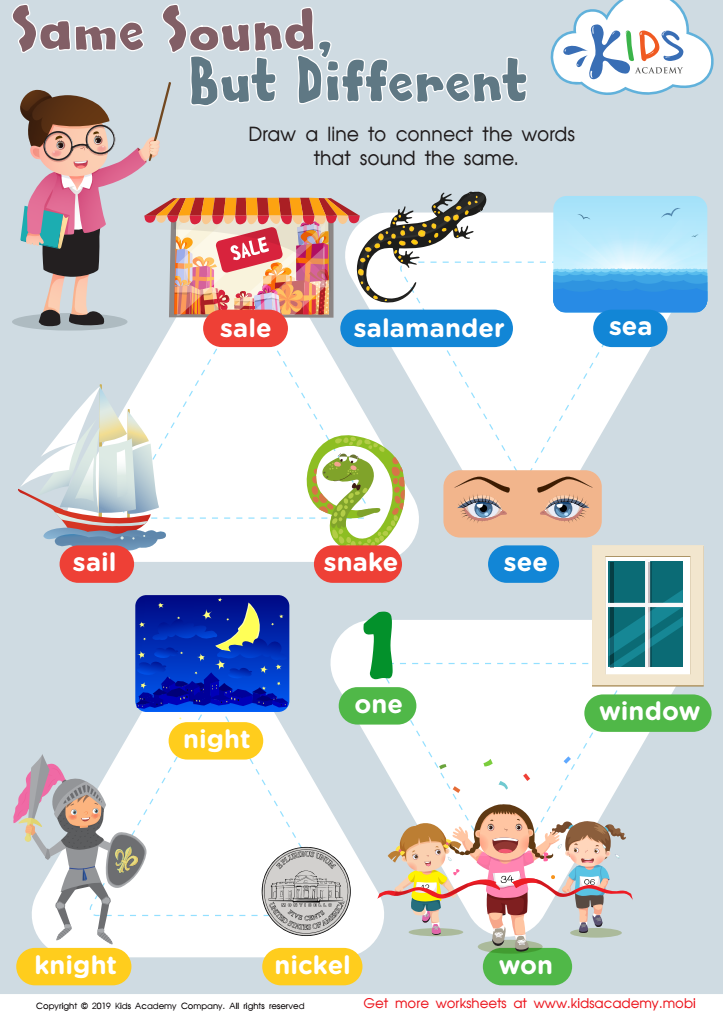
Sound Different Worksheet
 Assign to My Students
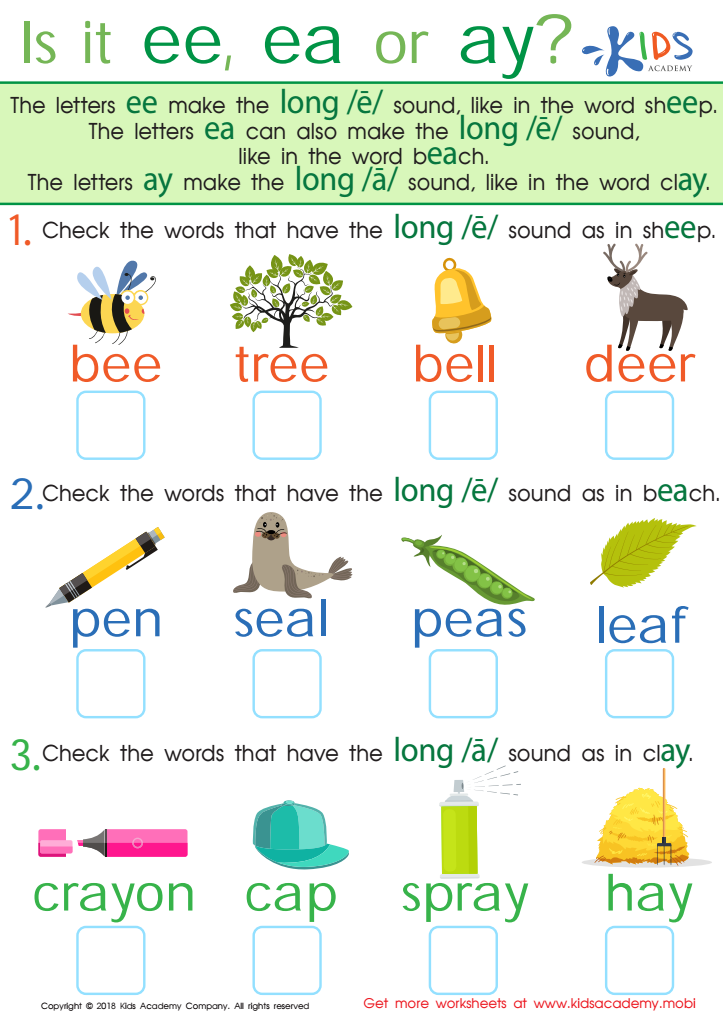
Is It EE, EA, or AY? Worksheet
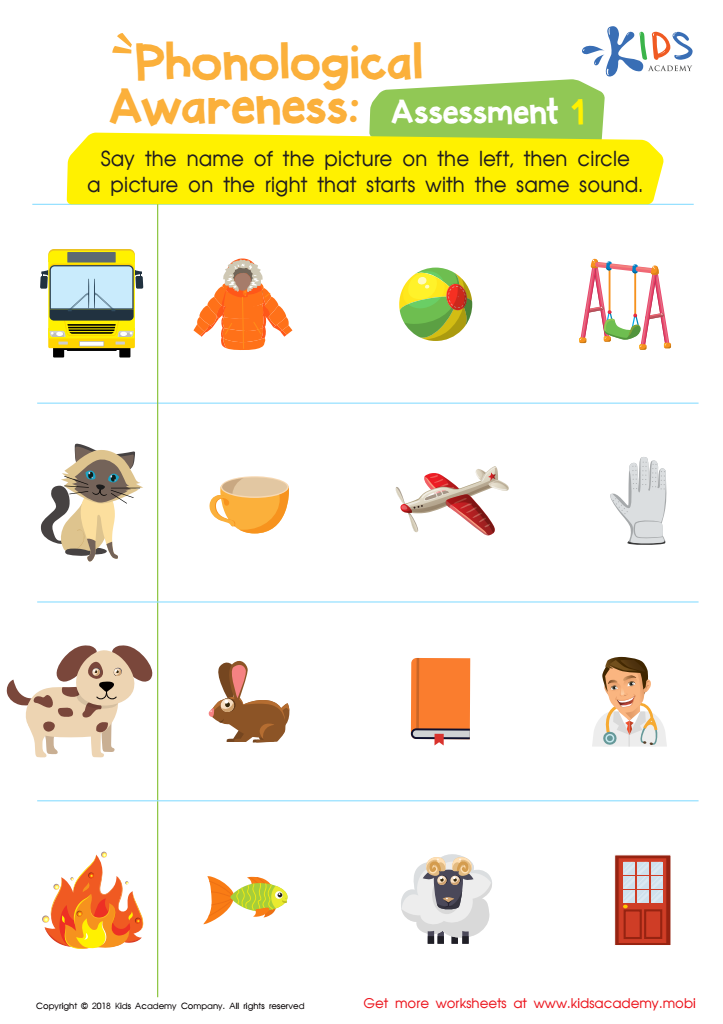
Phonological Awareness: Assessment 1 Worksheet








Phonics comprehension is crucial for children aged 4 to 8 as it forms the foundation for reading and literacy skills. This period is marked by rapid brain development and increased language acquisition, making it an ideal time for teaching phonics. Parents and teachers should care about phonics because it helps children understand the relationship between letters and sounds, enabling them to decode words independently. When children master phonics, they gain the confidence to read fluently, which enhances comprehension and overall academic success.
Additionally, early phonics instruction can decrease the likelihood of reading difficulties later on. Research shows that children who struggle with decoding may face long-term challenges in their education. Early interventions grounded in phonics equip children with essential skills to navigate text and engage with more complex reading materials as they progress.
Furthermore, phonics impacts a child’s ability to express themselves through writing. A strong foundation in phonetics aids in spelling accuracy and fosters a love for reading and writing. Ultimately, prioritizing phonics comprehension is not just about literacy; it’s about empowering children to explore their world, communicate effectively, and embrace lifelong learning. Therefore, parents and teachers play a vital role in nurturing these skills during these formative years.








