Phonics practice Normal Worksheets for Ages 4-8
20 filtered results
-
From - To
Enhance your child's reading skills with our Phonics Practice Normal Worksheets, perfect for ages 4-8. These engaging, educational worksheets are designed to build a strong phonics foundation through interactive activities that make learning fun. Your child will learn letter sounds, blending, segmentation, and word formation, fostering confidence and proficiency in reading. Ideal for both classroom and home use, our worksheets cater to young learners at different stages, helping them advance at their own pace. With a blend of colorful visuals and practical exercises, these phonics worksheets ensure effective learning while keeping your child motivated and excited about reading!
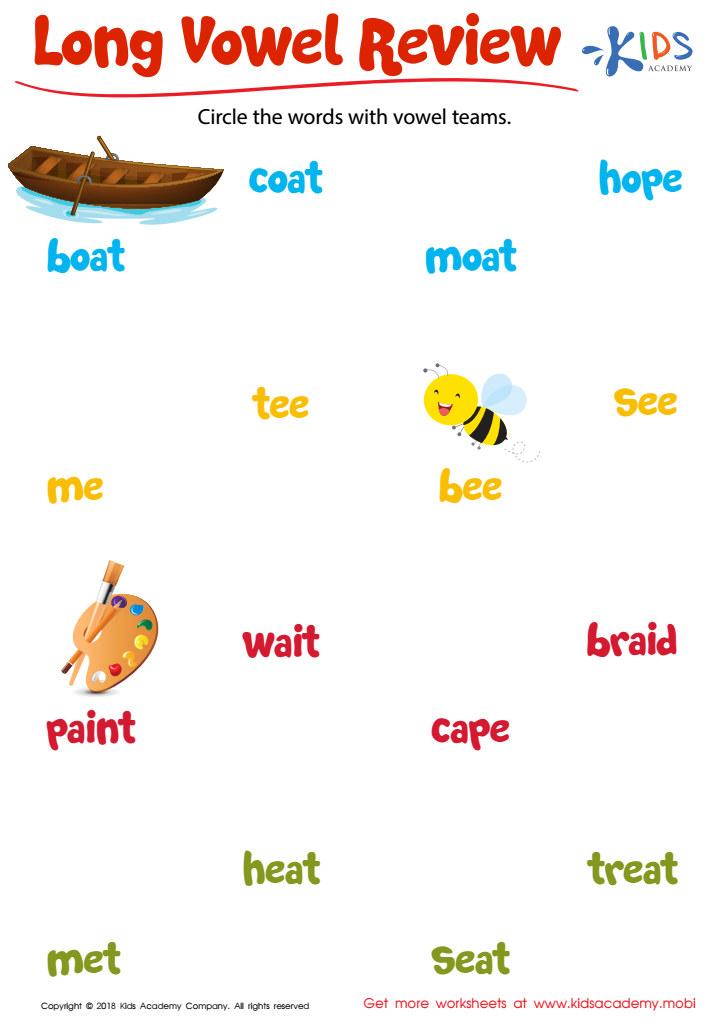
Long Vowel Review Worksheet
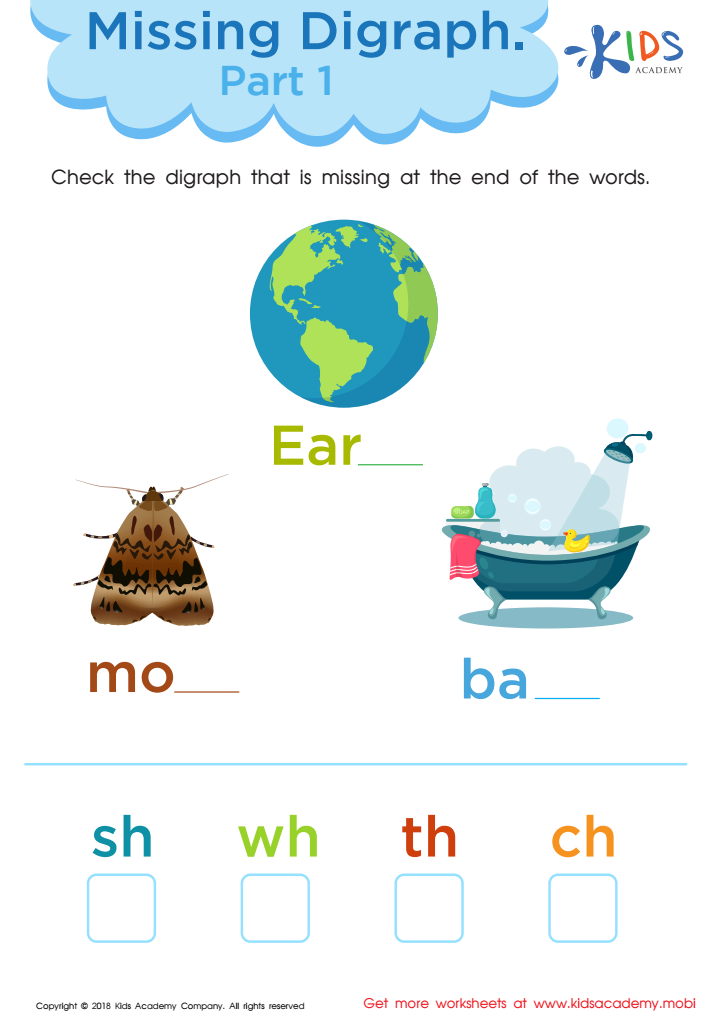
Missing Digraph: Part 1 Worksheet
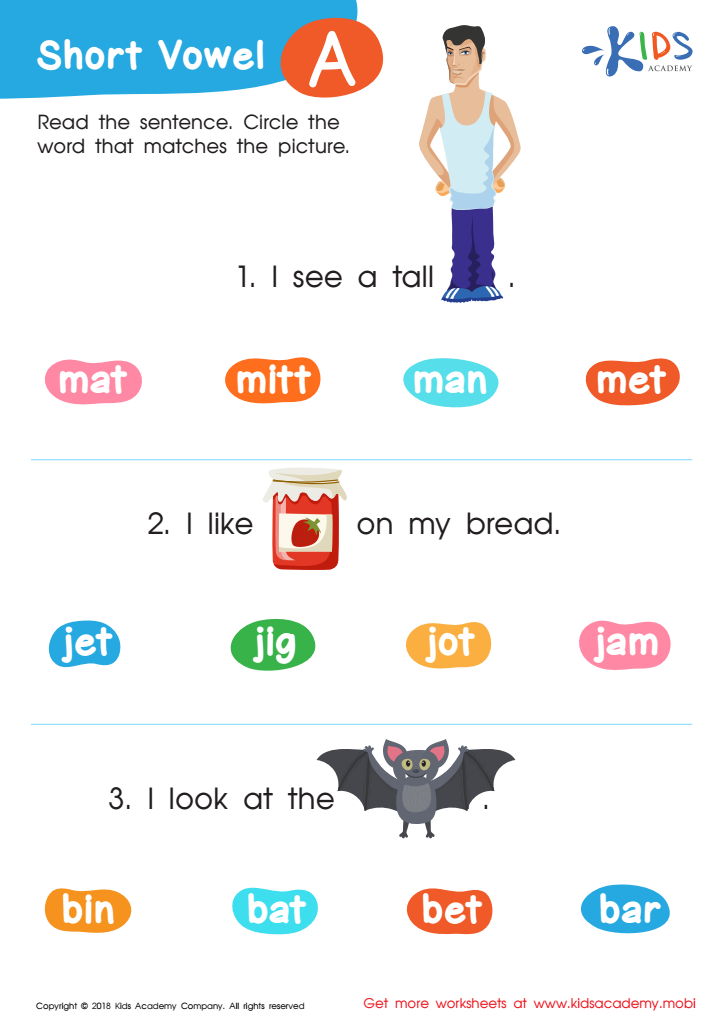
Short Vowel /a/ Worksheet
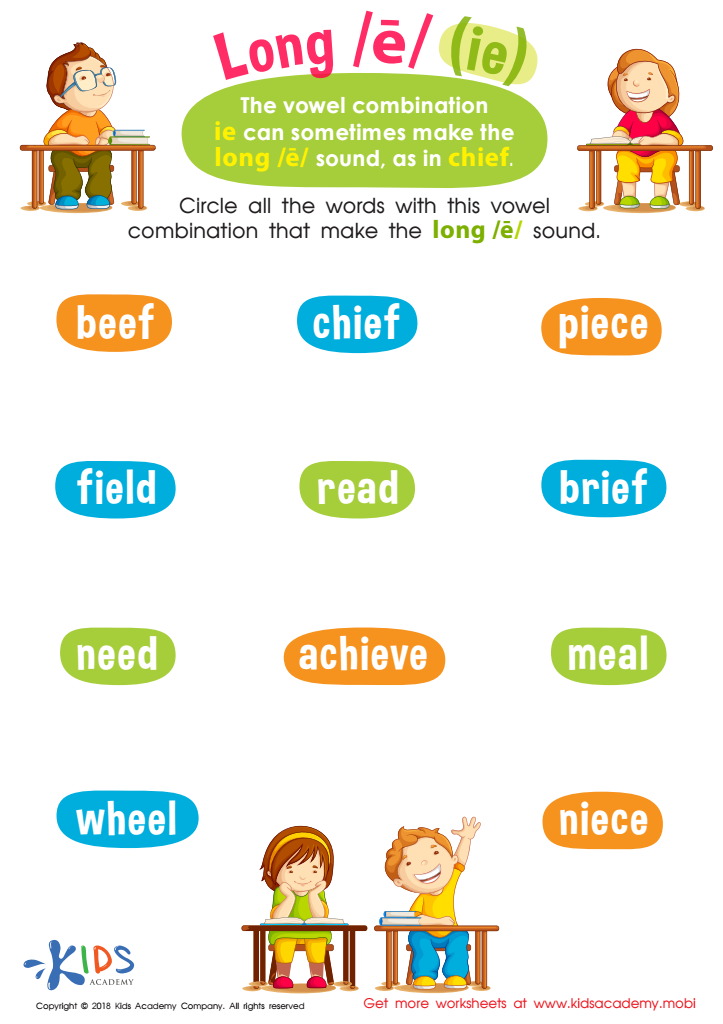
Reading: Long E and IE Worksheet
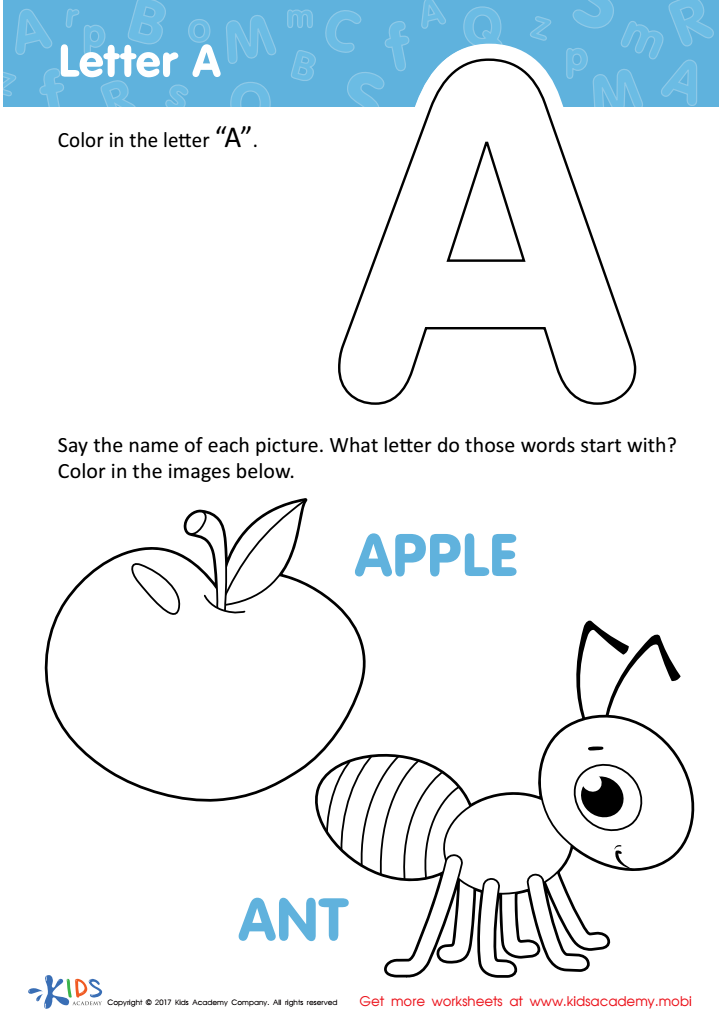
Letter A Coloring Sheet
 Assign to My Students
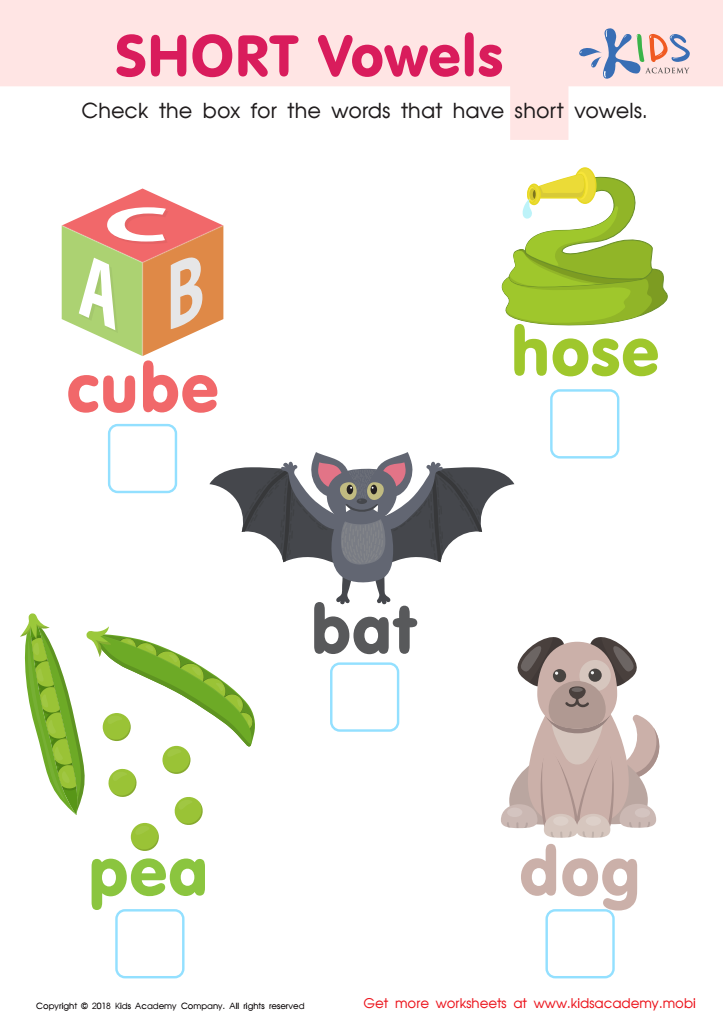
short vowels Worksheet
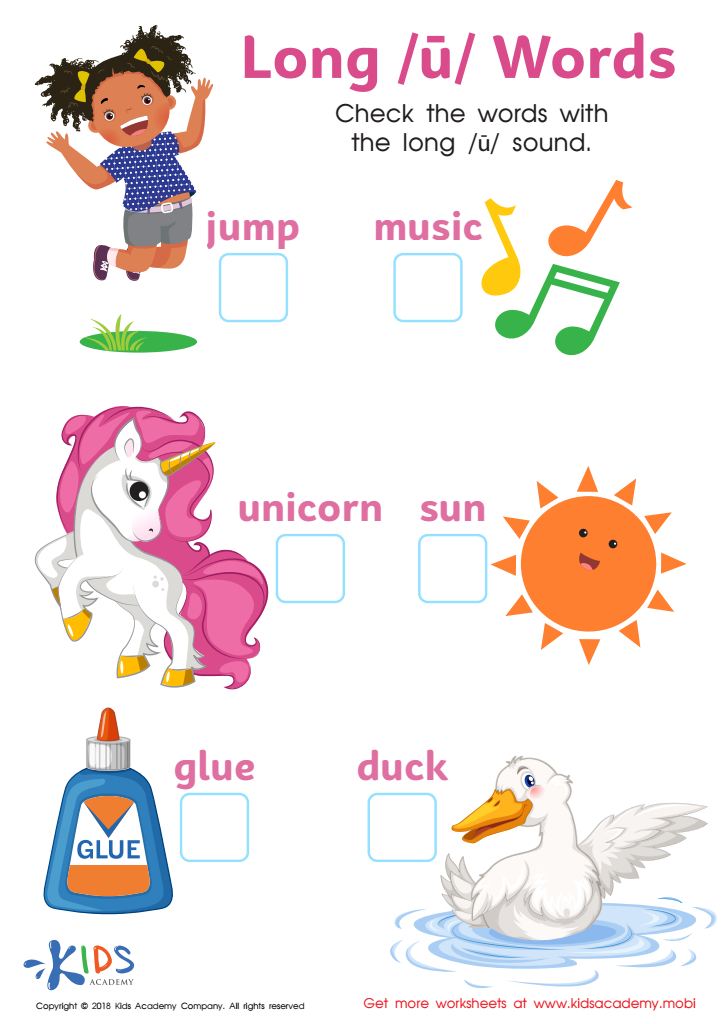
Long U Words Reading Worksheet
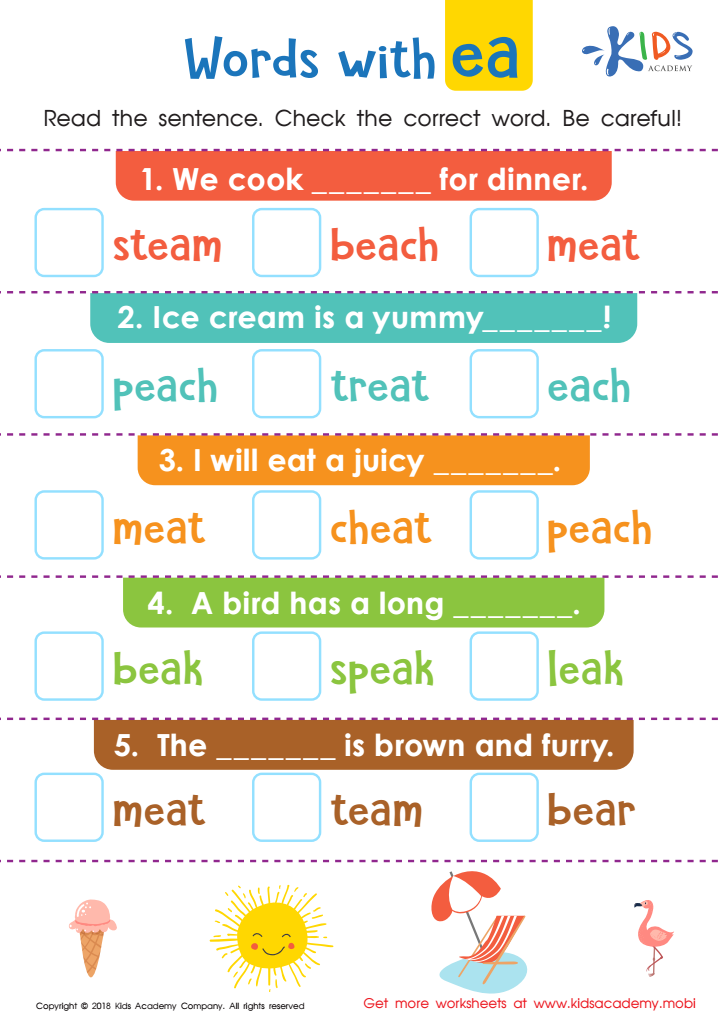
Words with ea Worksheet
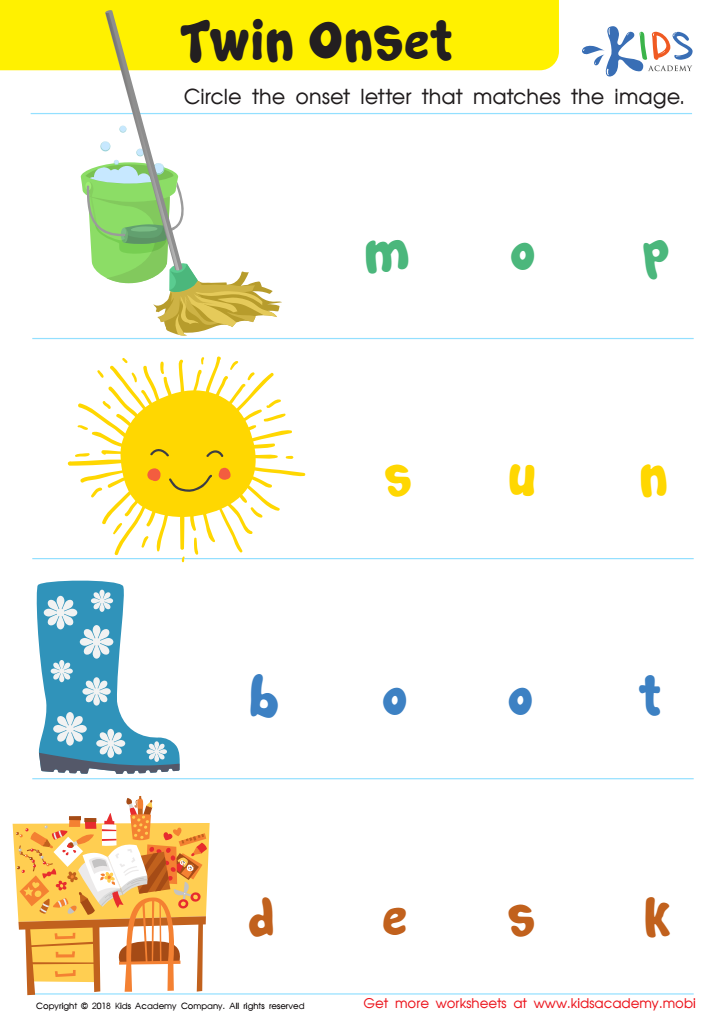
Twin Onset Worksheet
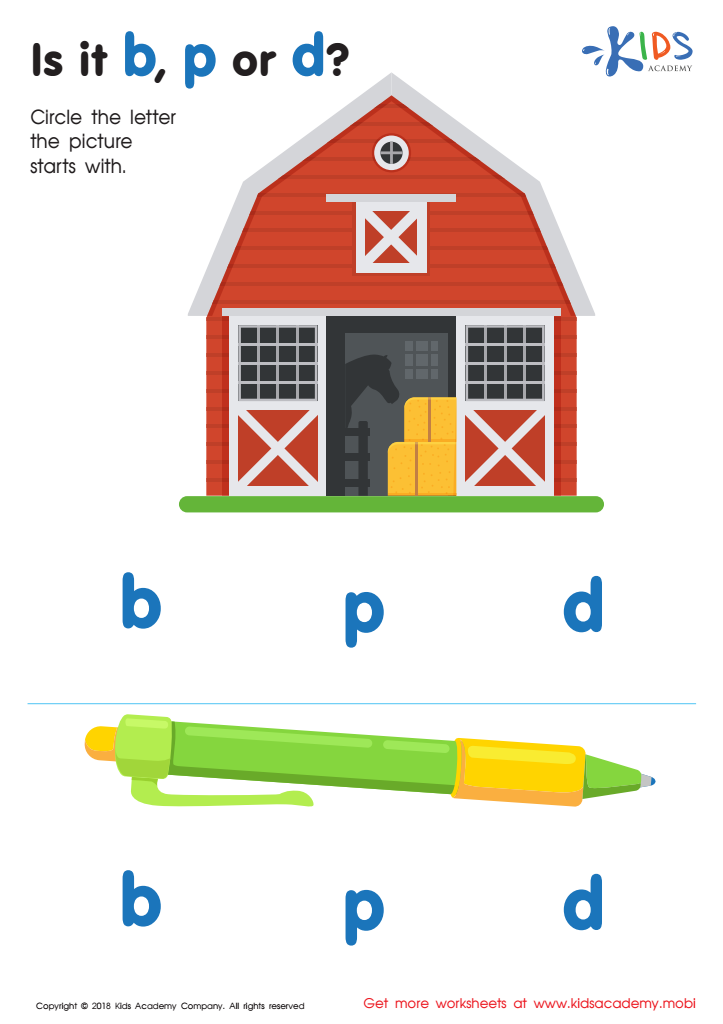
Is it b, p or d? Worksheet
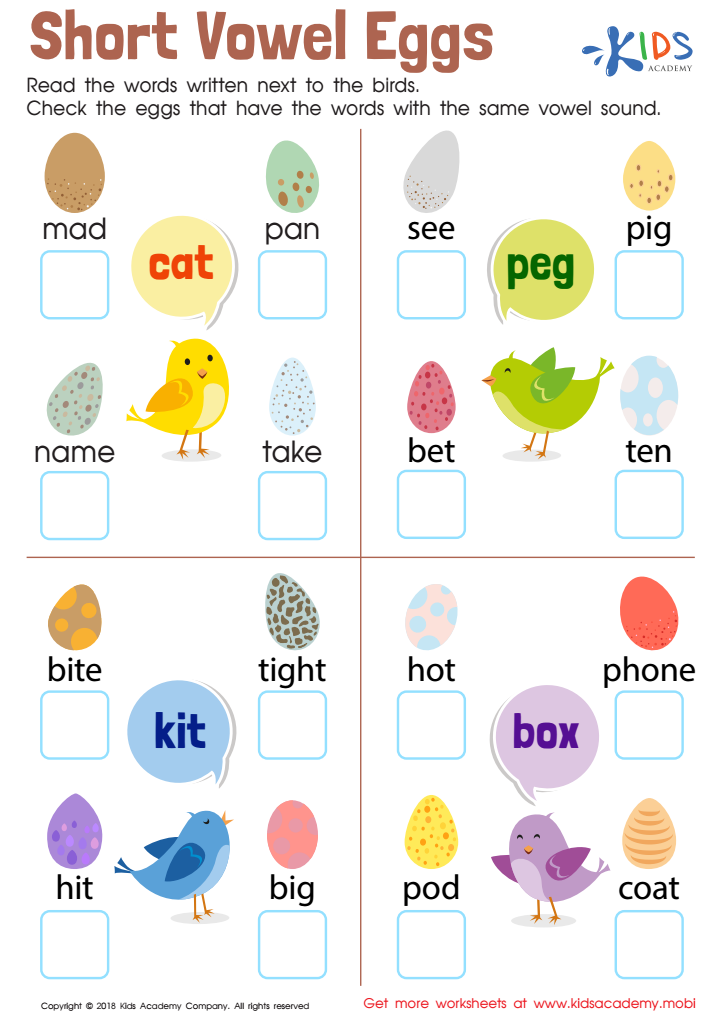
Short Vowel Eggs Worksheet
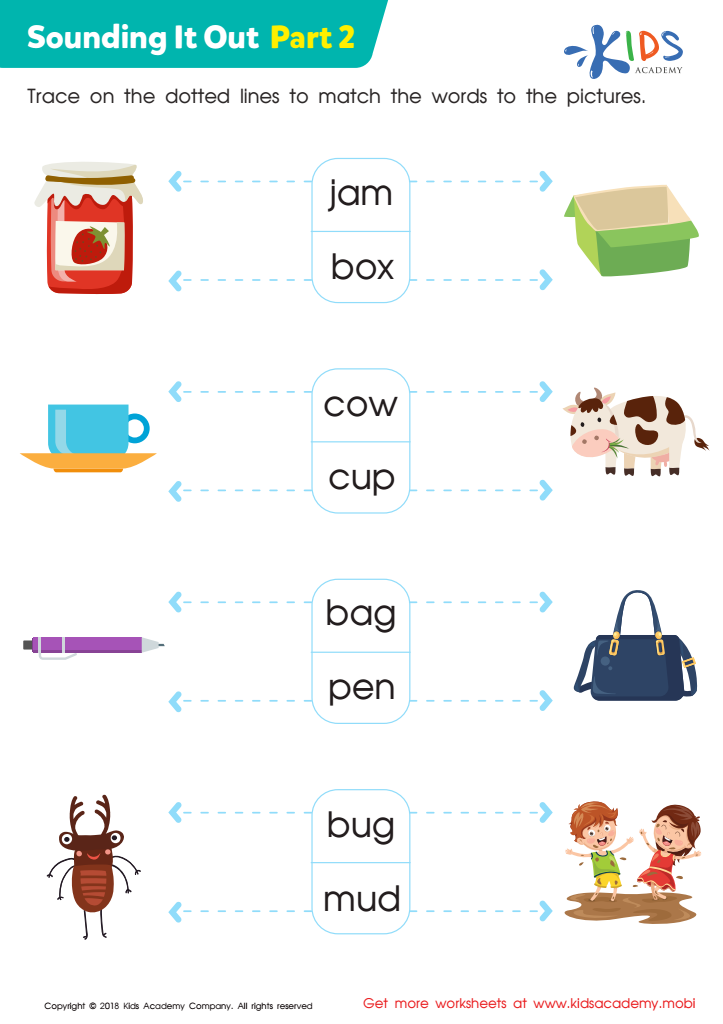
Sounding it Out: Part 2 Worksheet
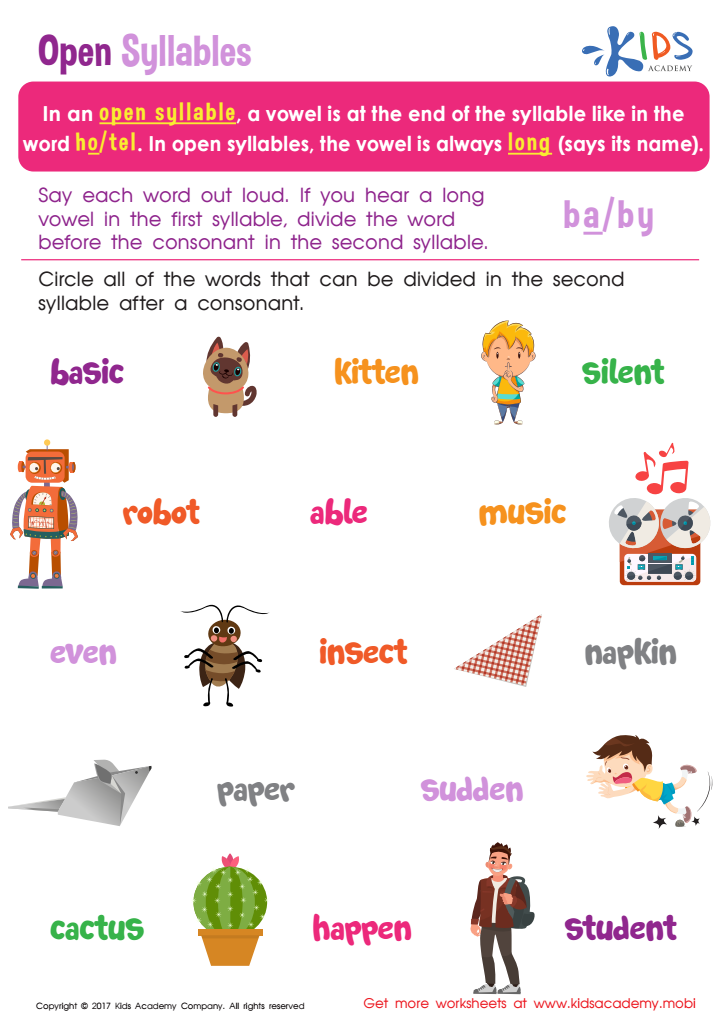
Open Syllable Printable Worksheet
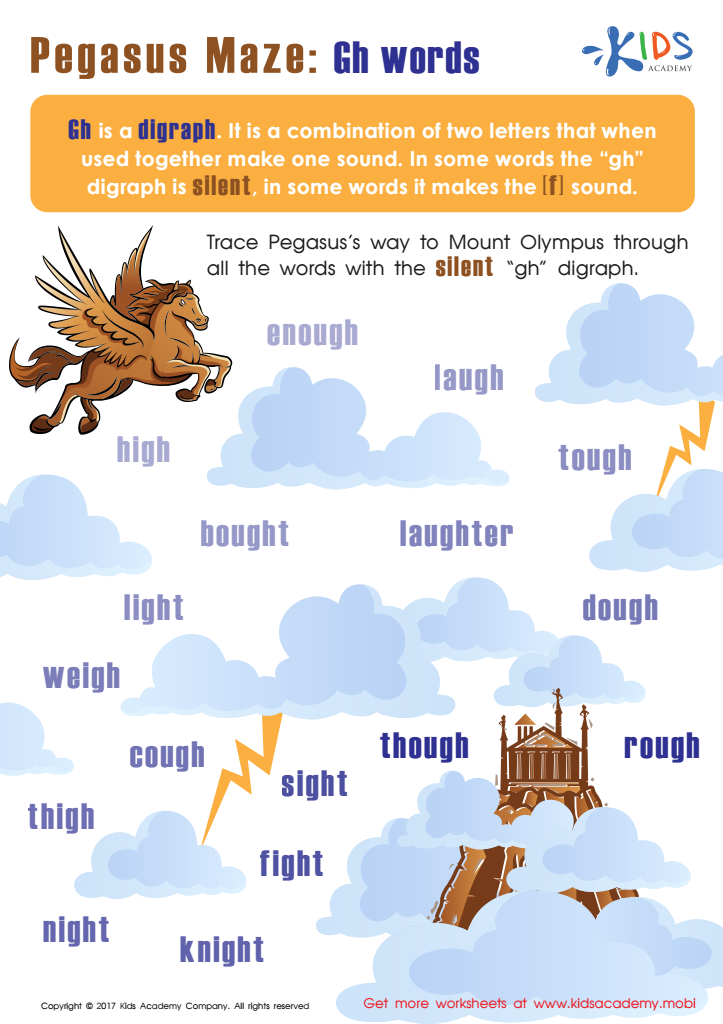
Pegasus Maze: GH Words Worksheet
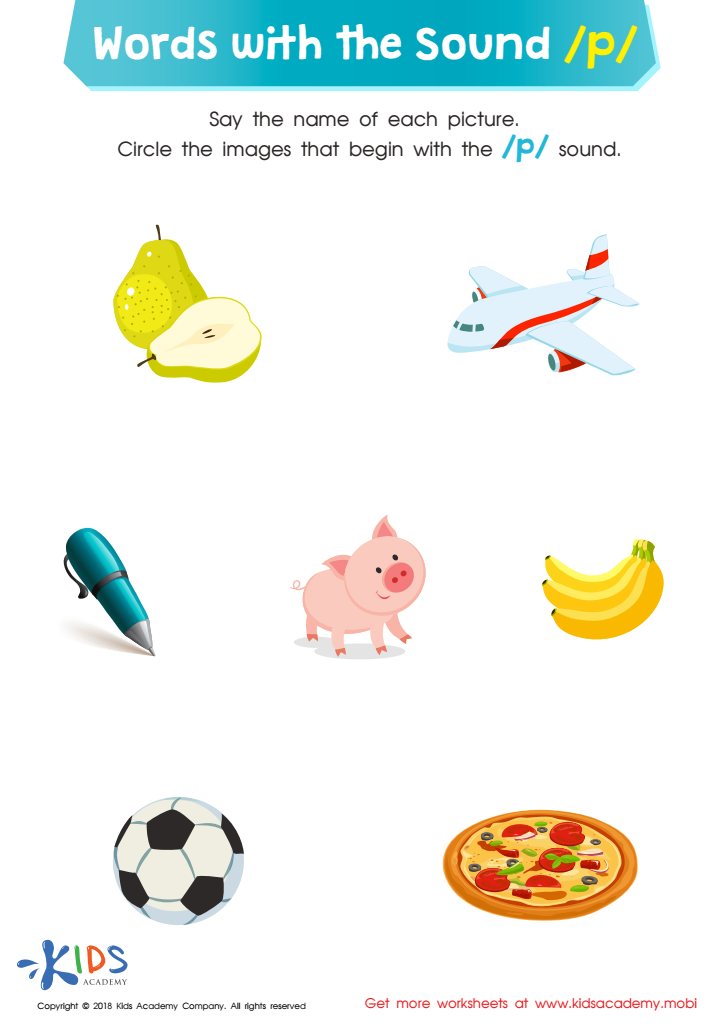
Words with sound p Reading Worksheet
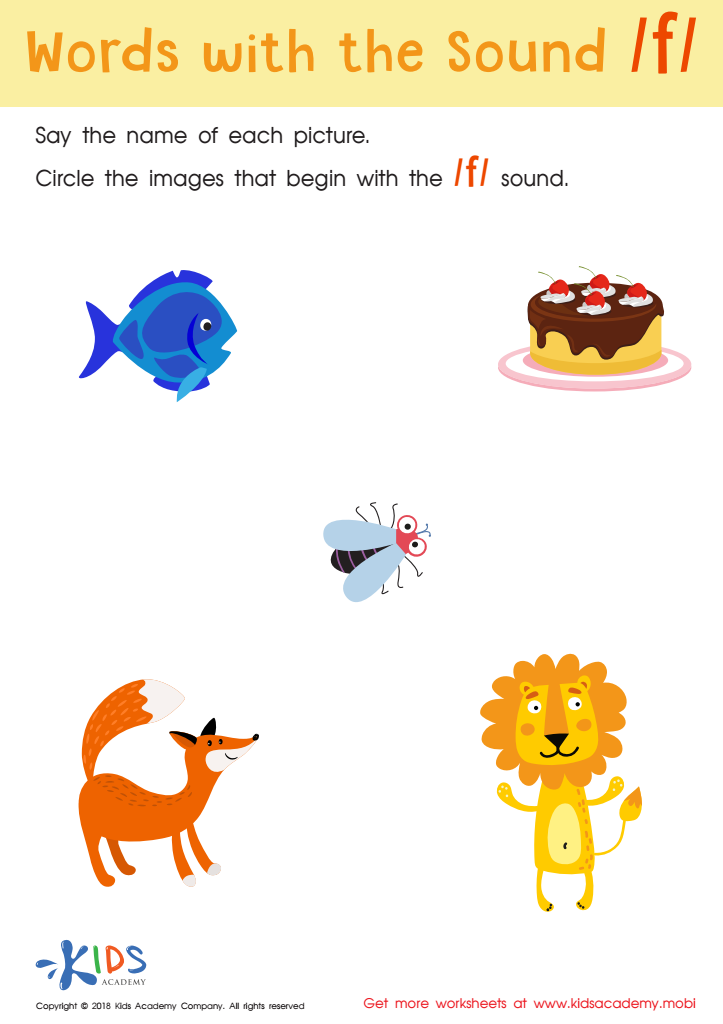
Words with sound f Reading Worksheet
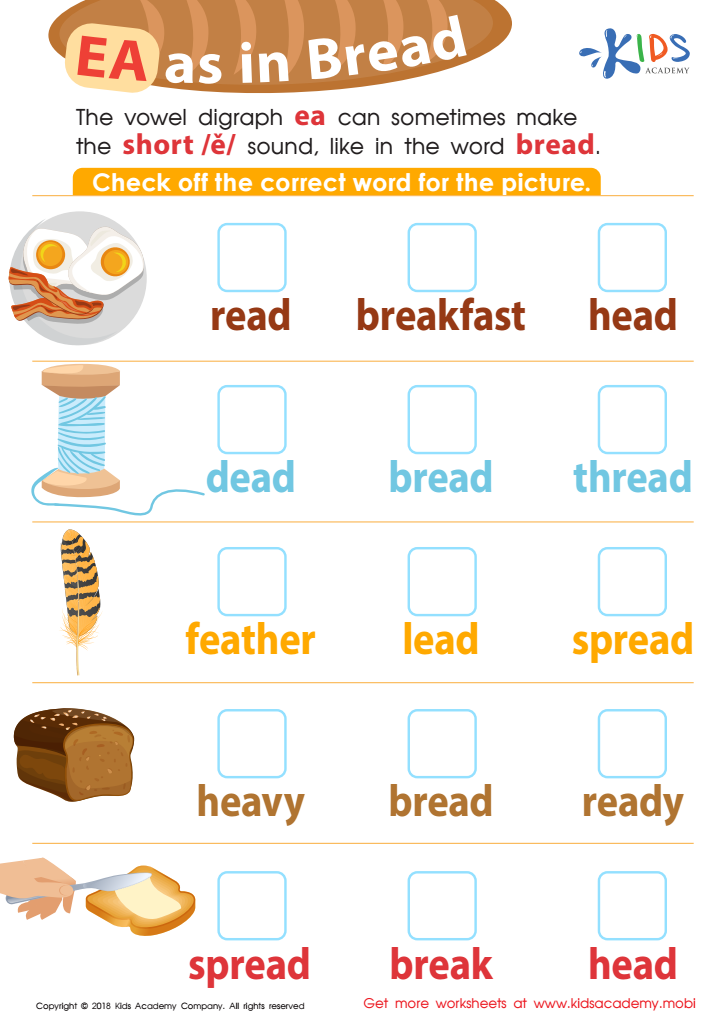
Reading: EA as in Bread Worksheet
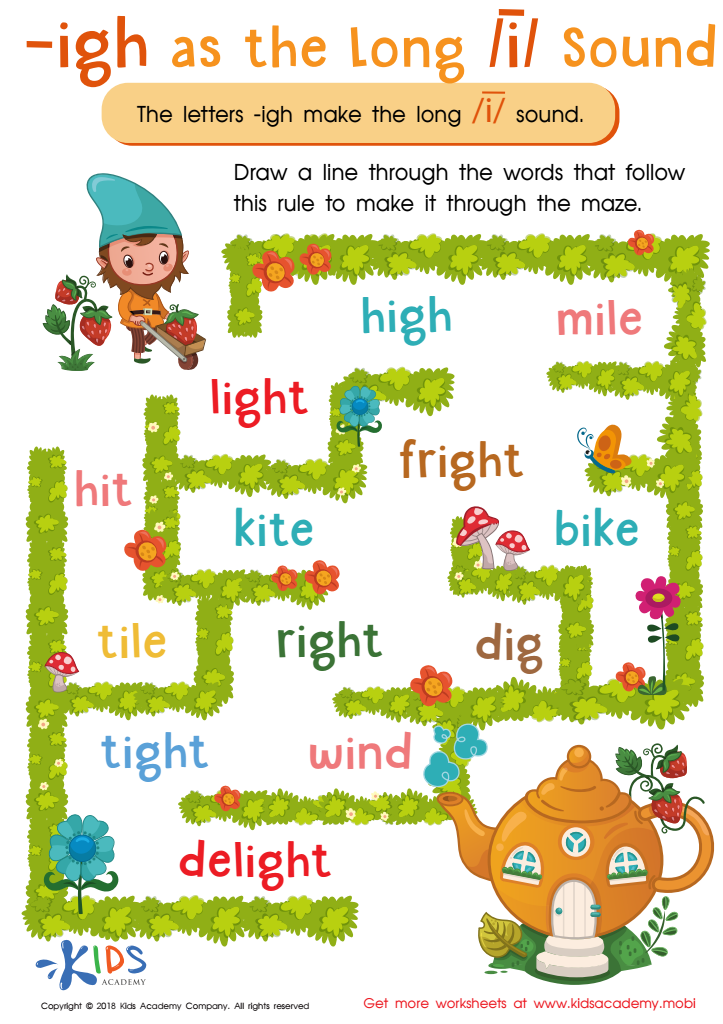
Reading: IGH as Long I Worksheet
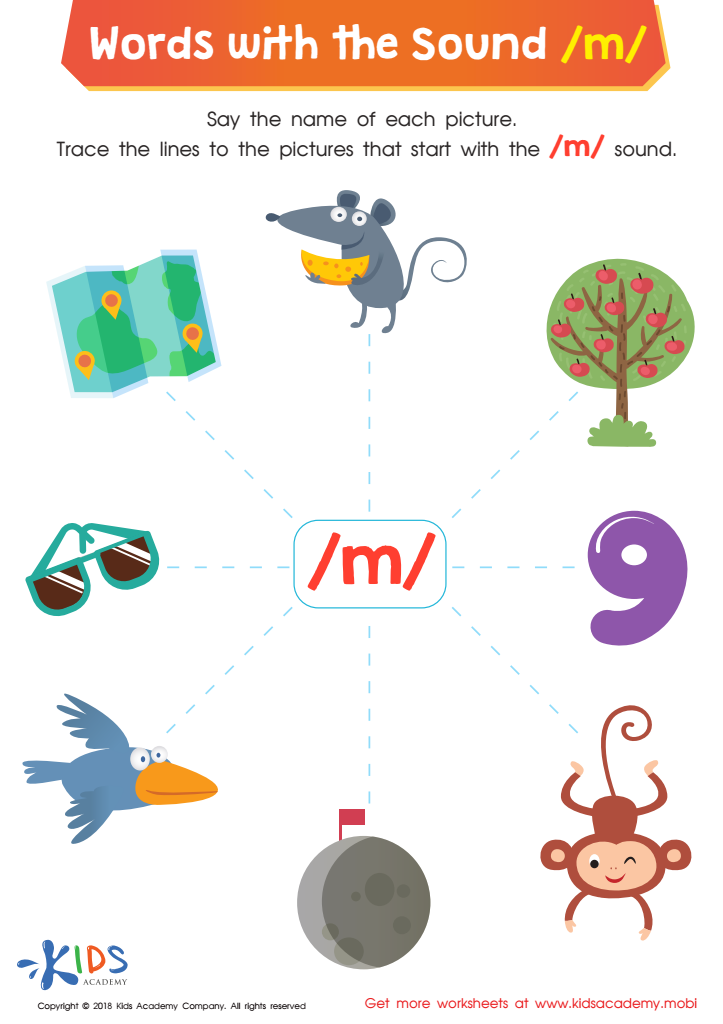
Words with Sound M Reading Worksheet
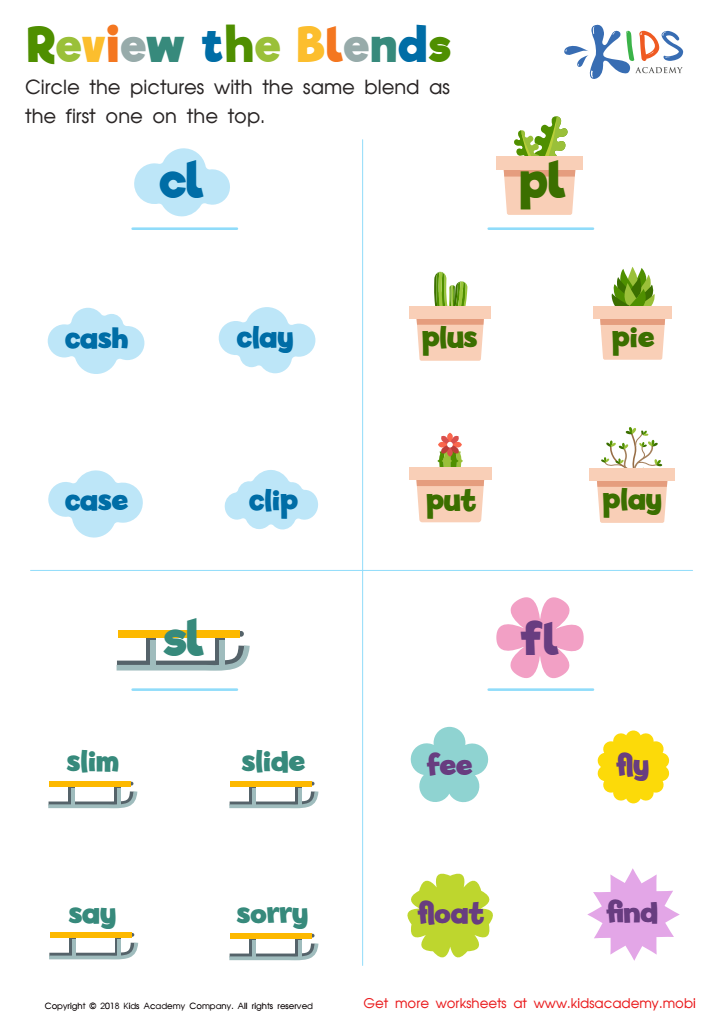
Review the Blends Worksheet








Parents and teachers should prioritize phonics practice for children aged 4-8 because it forms the crucial foundation of reading skills. Phonics instruction involves teaching the relationships between letters and sounds, enabling children to decode words by sounding them out. Children who receive systematic and structured phonics education are better able to recognize familiar words quickly and decipher new ones, which broadens their vocabulary and comprehension levels.
At ages 4 to 8, children are in a critical developmental window where their brains are particularly receptive to language learning. Phonics practice not only aids in developing reading fluency but also boosts spelling and written expression skills, forming a comprehensive literacy framework to support future academic success. Early proficiency in reading is linked to enhanced confidence and engagement in all subjects, as it reduces frustration and opens up a world of information and imagination.
Furthermore, phonics practice can individualize learning, allowing educators and parents to tailor instruction according to a child’s specific needs. Early phonics competency contributes significantly to preventing reading difficulties and ensuring that children are equipped with the skills they need to navigate more complex texts in later years. Overall, investing time in phonics practice from a young age fosters a lifelong love of reading and learning.








