Critical Thinking Normal 2D Shapes Worksheets for Ages 4-8
5 filtered results
-
From - To
Discover our engaging "Critical Thinking Normal 2D Shapes Worksheets," tailored for children ages 4-8! These interactive worksheets are designed to foster critical thinking and shape recognition through a variety of fun activities. Young learners will enhance their problem-solving skills while exploring common 2D shapes like circles, squares, and triangles. Each worksheet promotes creativity and logical reasoning, ensuring children develop a strong foundational understanding of geometry. Ideal for home or classroom use, our resources encourage independent learning and can be easily printed for convenient access. Help your child unleash their inner thinker while building essential math skills today!
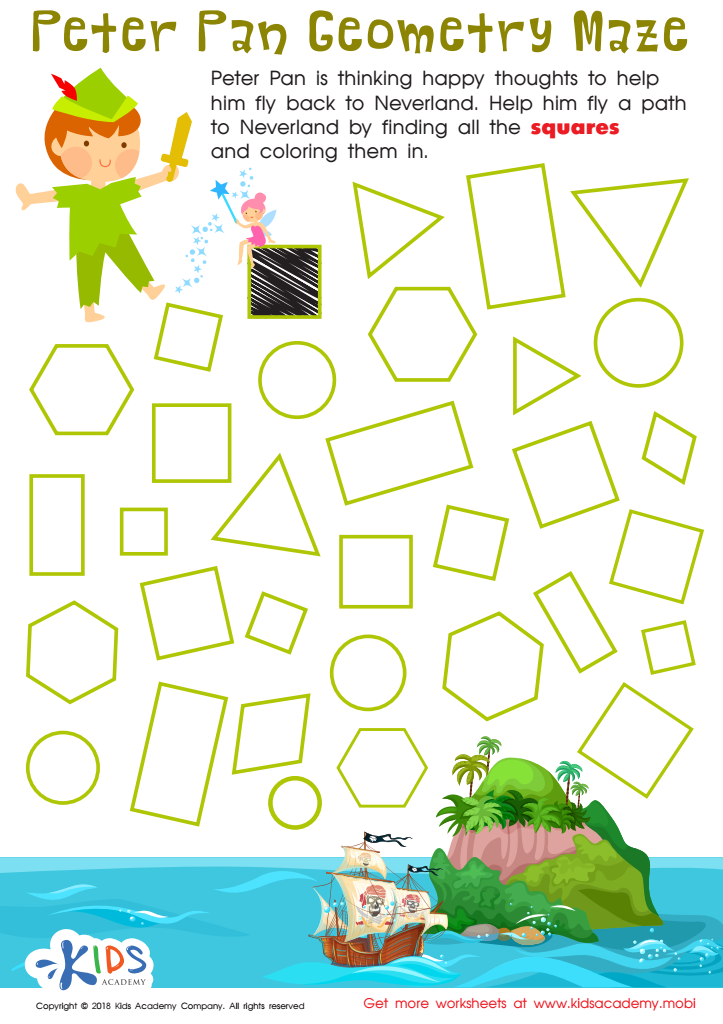
Peter Pan Worksheet
 Assign to My Students











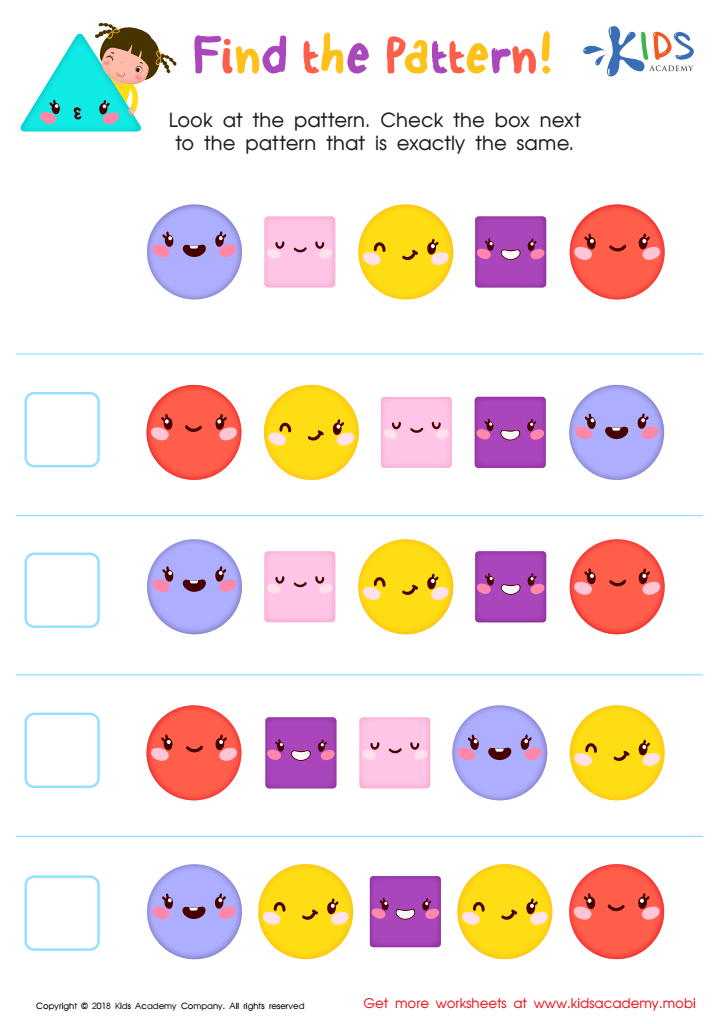
Find the Pattern Worksheet
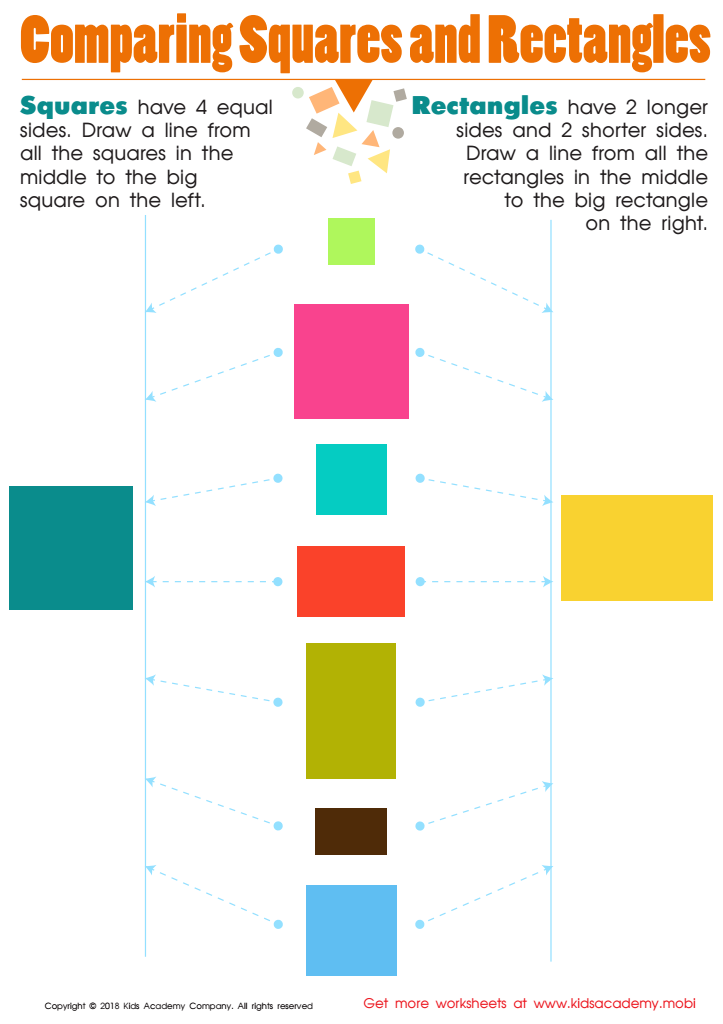
Comparing Squares Rectangles Worksheet
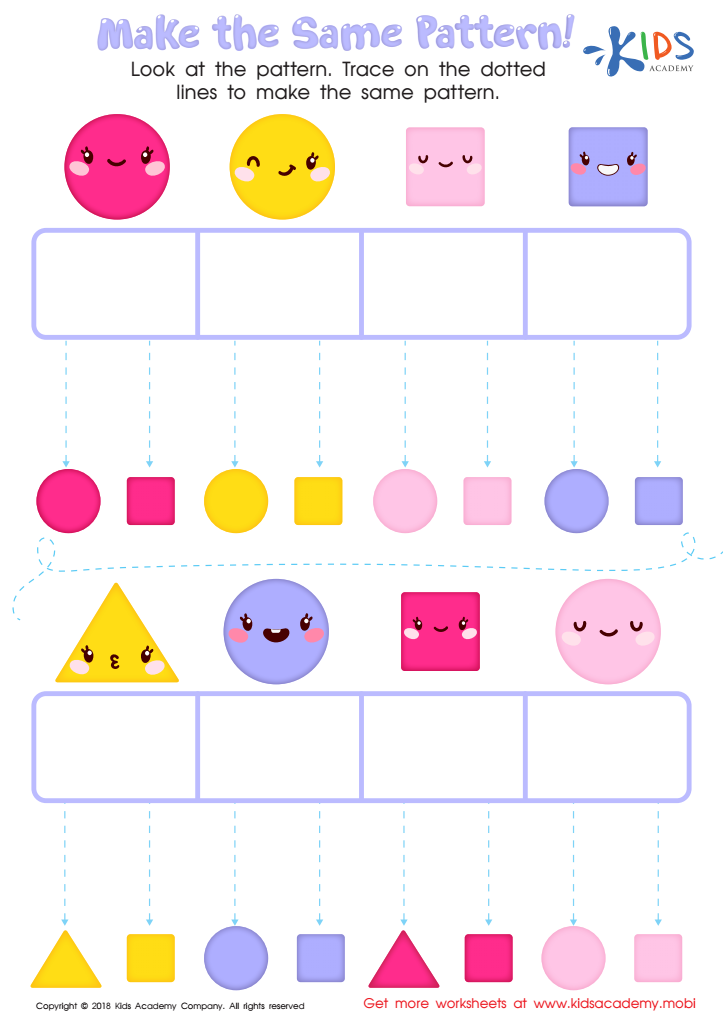
Make the Same Pattern Worksheet
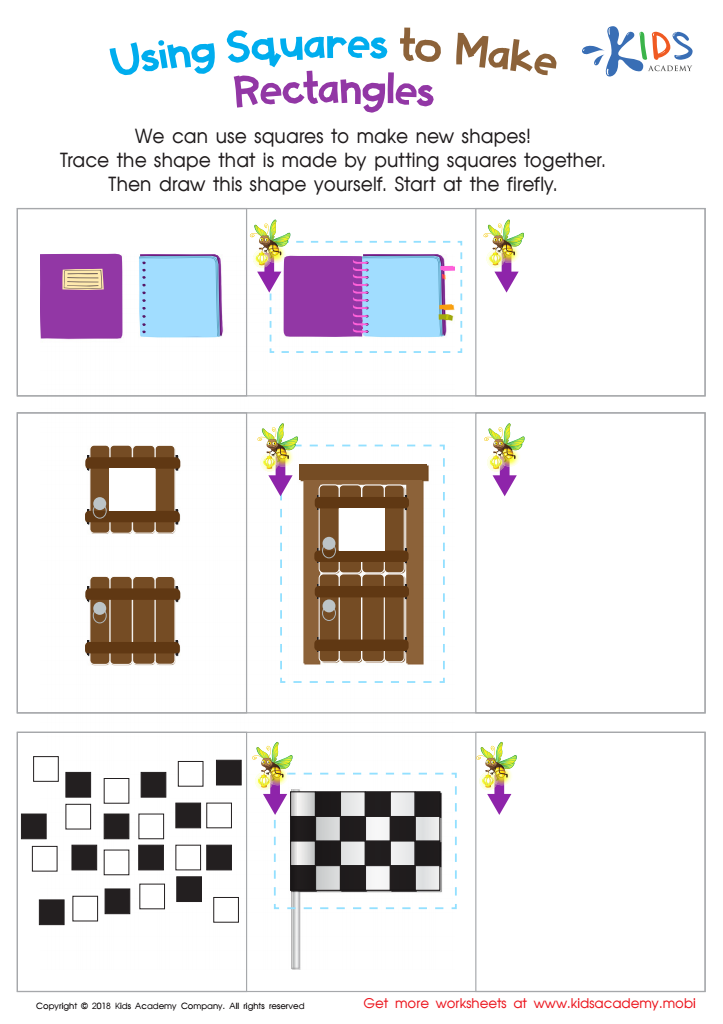
Using Squares to Make Rectangles Worksheet








Critical thinking about normal 2D shapes is essential for children aged 4-8 as it lays the foundation for broader cognitive skills and problem-solving abilities. At this developmental stage, children are naturally curious and eager to explore the world around them. By engaging them in activities that focus on shapes—such as identifying, categorizing, and manipulating 2D shapes—educators and parents can nurture this curiosity while promoting critical thinking skills.
Understanding shapes goes beyond memorization; it invites children to analyze, compare, and draw connections. For instance, when a child compares a square to a rectangle, they learn to identify similarities and differences, fostering logical reasoning. These skills are not only crucial in mathematics but also enhance spatial awareness and creativity, which are important in art and design.
Moreover, this exploration facilitates language development as children learn to articulate their thoughts, ask questions, and engage in discussions about shapes. Parents and teachers can create engaging and imaginative ways to incorporate shape activities into everyday learning, making it enjoyable and relevant. Ultimately, fostering critical thinking about 2D shapes enriches a child’s cognitive growth, setting the stage for more advanced learning and problem-solving skills in the future.