Fine Motor Skills Normal 2D Shapes Worksheets for Ages 4-8
5 filtered results
-
From - To
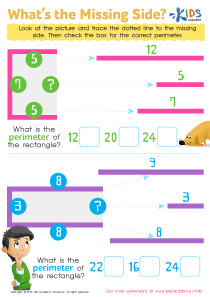
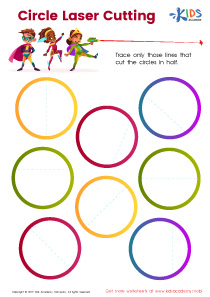
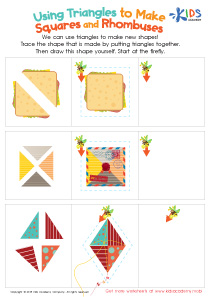
Enhance your child’s fine motor skills with our engaging Normal 2D Shapes Worksheets, specially designed for ages 4-8. These fun and educational printable worksheets provide an interactive way for children to explore basic geometric shapes while developing essential motor skills. Activities like tracing, coloring, and shape recognition not only foster creativity but also improve hand-eye coordination and dexterity. Perfect for home or school use, these worksheets make learning enjoyable and effortless. Help your child build a strong foundation in mathematics and shape awareness while fine-tuning their artistic abilities with our adorable and age-appropriate resources. Download now and watch them flourish!
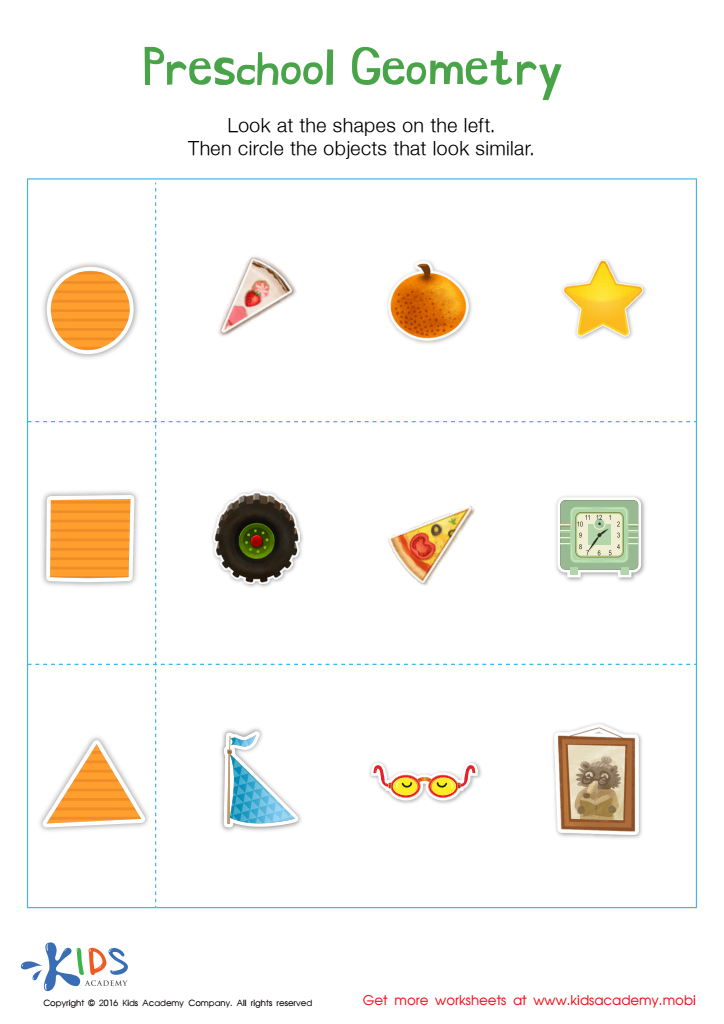
Preschool Geometry Match Up Worksheet
 Assign to My Students









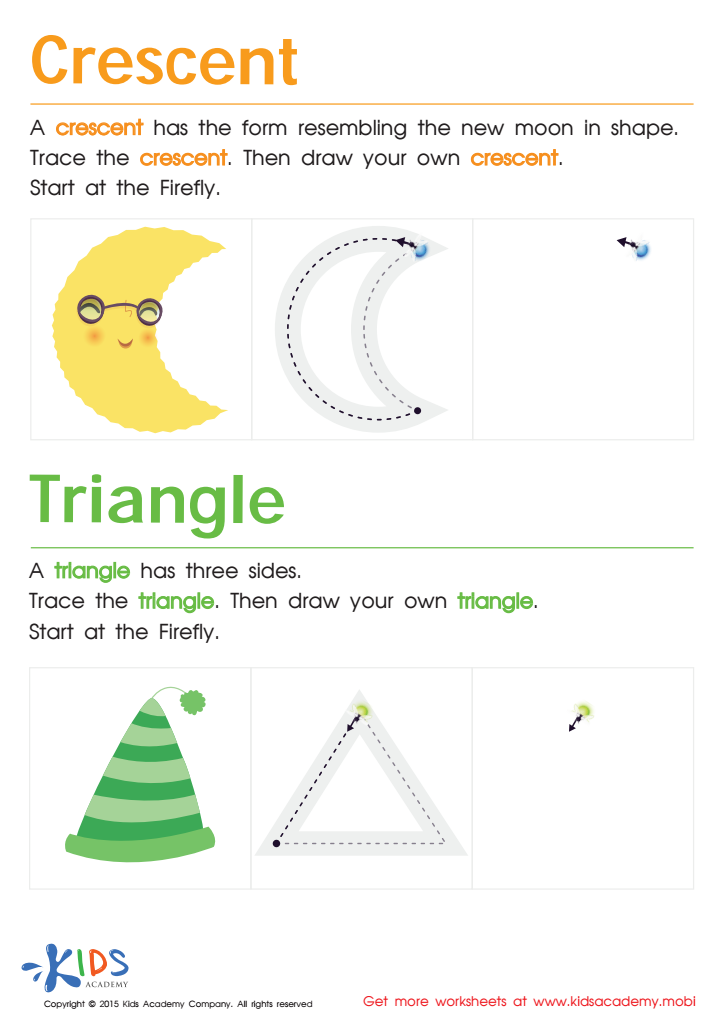
Learning to Draw Crescents And Triangles Worksheet
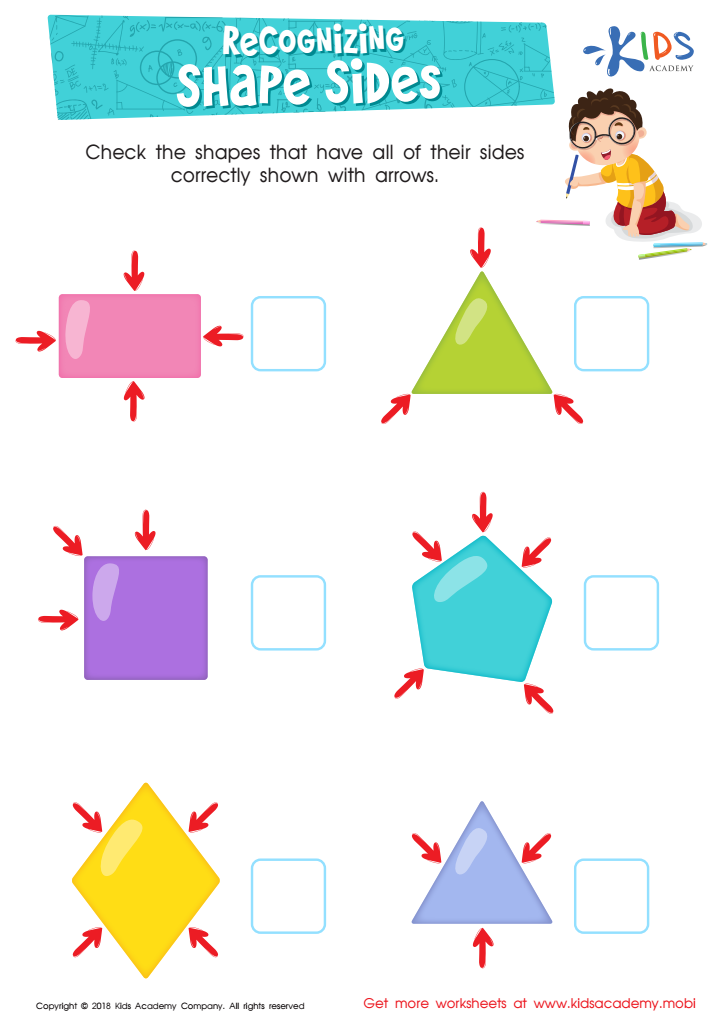
Recognizing Shape Sides Worksheet
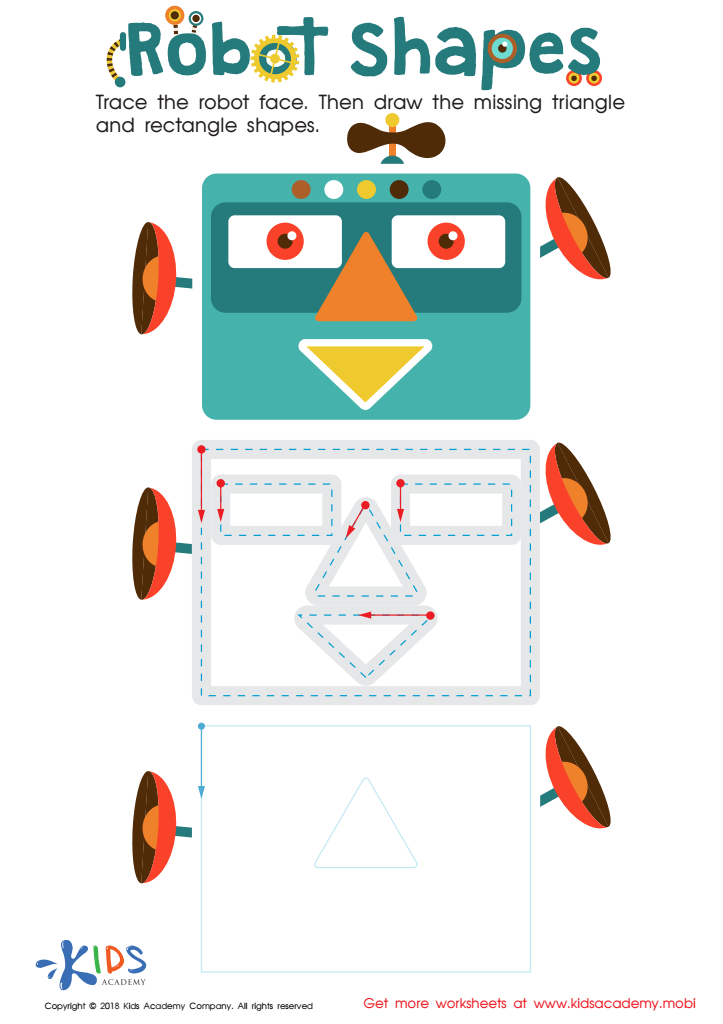
Robot Shapes Worksheet
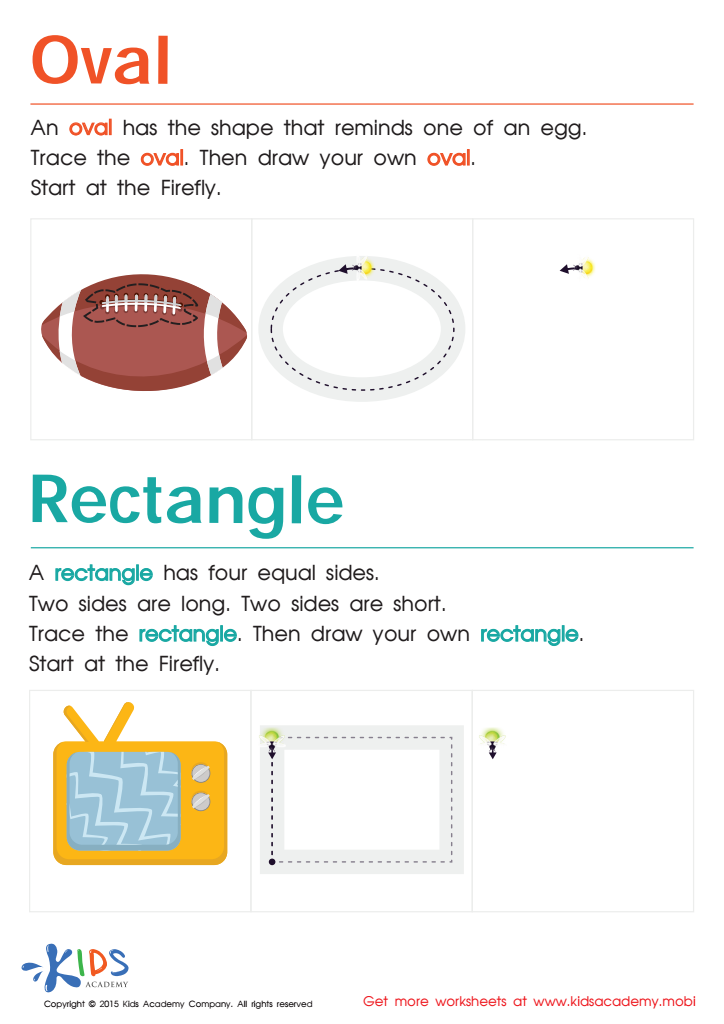
Easy Drawing of Ovals And Rectangles Worksheet








Parents and teachers should prioritize fine motor skills development and the understanding of normal 2D shapes for children ages 4 to 8 because these foundational abilities are crucial for academic success and daily life. Fine motor skills involve the coordination of small muscle movements in hands and fingers, enabling children to perform tasks such as writing, cutting, and assembling. Mastery of these skills enhances children's ability to complete classroom activities and becomes essential as they progress in their education.
Understanding normal 2D shapes—like squares, circles, triangles, and rectangles—fosters spatial awareness, critical thinking, and problem-solving abilities. As children engage with shapes, they begin to identify patterns, understand symmetry, and develop an appreciation for geometry in their environment. This comprehension helps introduce more complex mathematical concepts later on.
Furthermore, engaging in activities that promote fine motor skills and shape recognition can significantly enhance children's confidence and independence. Whether through arts and crafts, puzzles, or educational games, these practices facilitate growth in a fun and engaging manner. Thus, supporting fine motor skills and shape recognition is vital for holistic child development, preparing them for future academic challenges while nurturing their creativity and self-esteem.