Recognizing number patterns Normal Numbers Worksheets for Ages 4-8
4 filtered results
-
From - To
Unlock the magic of numbers with our "Recognizing Number Patterns" worksheets for ages 4-8. Designed by educational experts, these engaging activities help young learners identify and predict sequences, enhance their analytical thinking, and build strong mathematical foundations. Perfect for preschoolers and early elementary students, our worksheets offer a fun and interactive approach to mastering number patterns. Each worksheet features vivid illustrations and simple instructions to keep children motivated and excited about learning. Ideal for classroom use or extra practice at home, our resources support every child's journey to mathematical excellence!
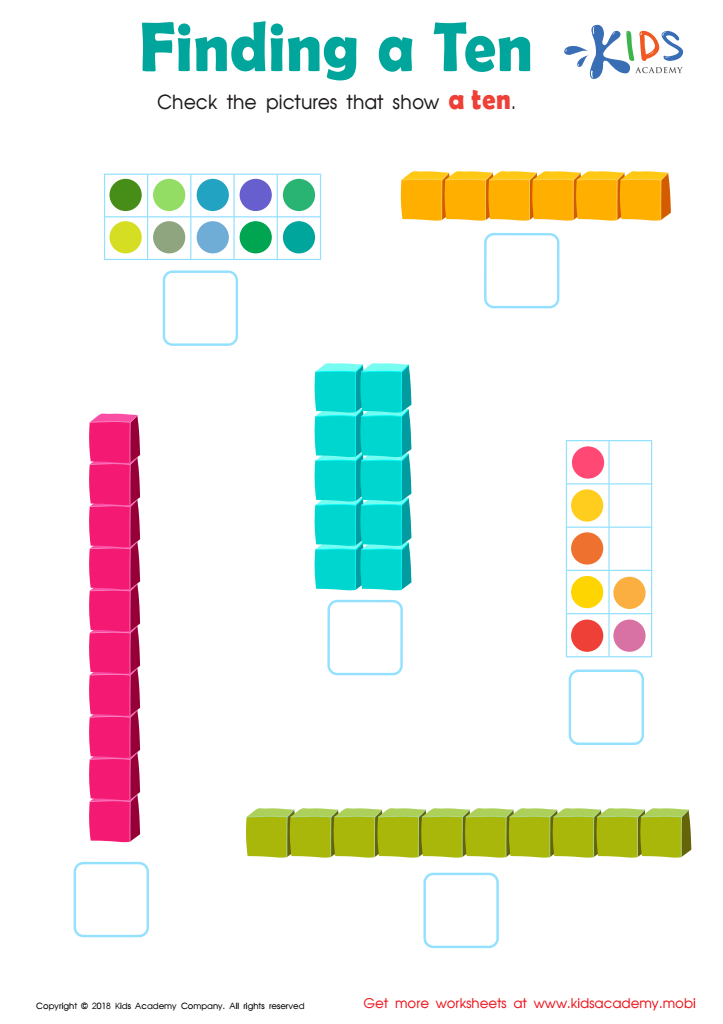
Finding a Ten Worksheet
 Assign to My Students
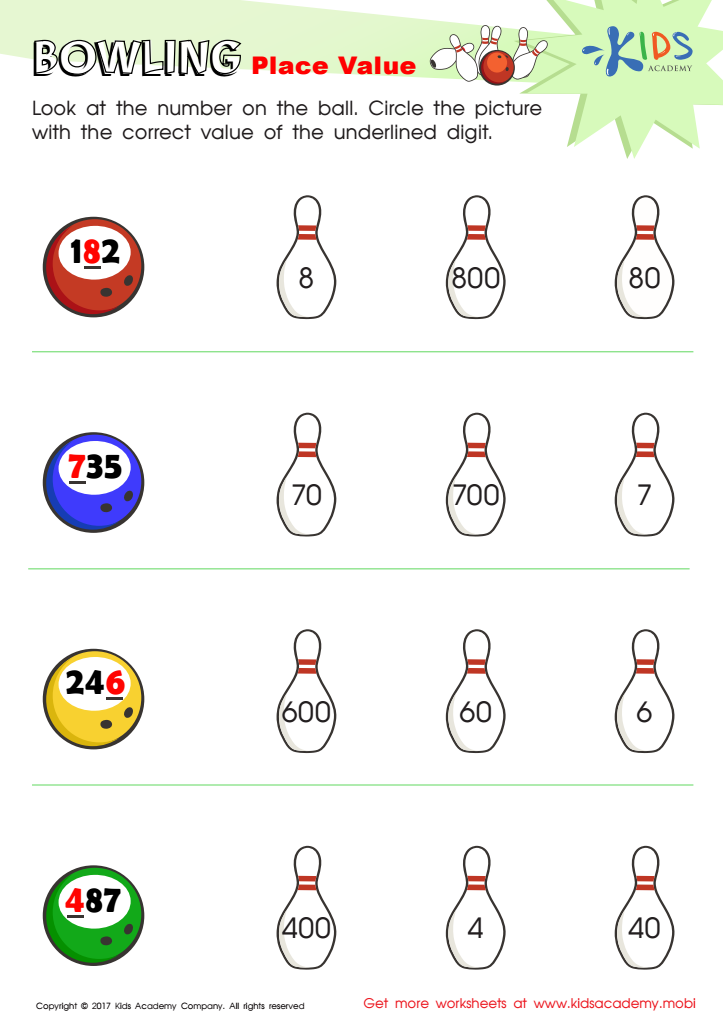
Place Value Worksheet
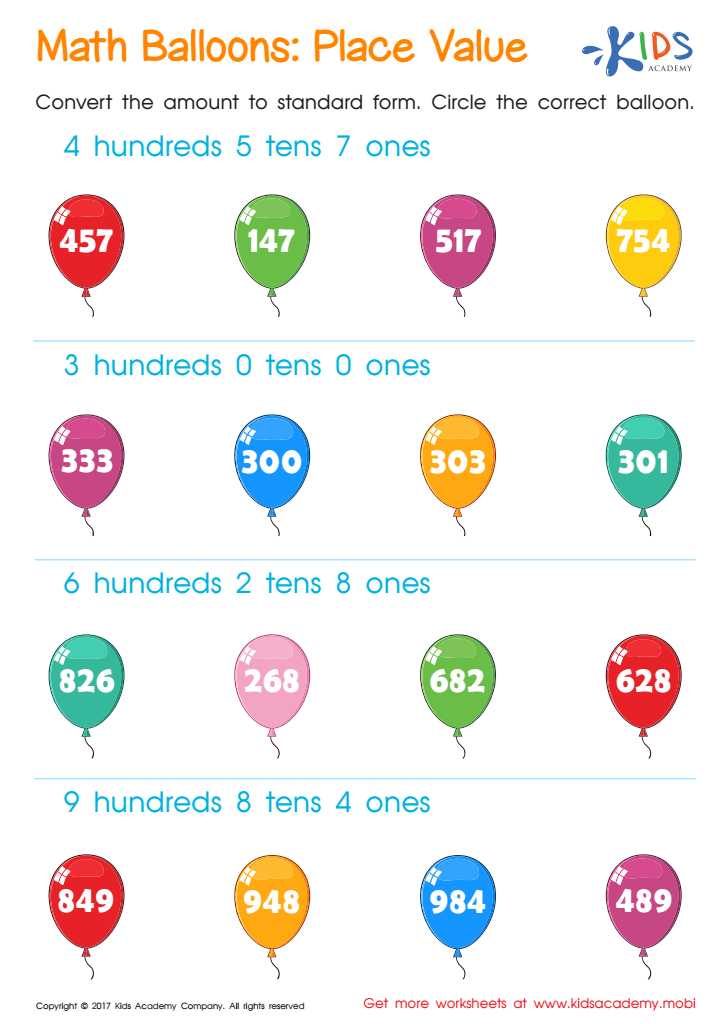
Place Value Printable Worksheet
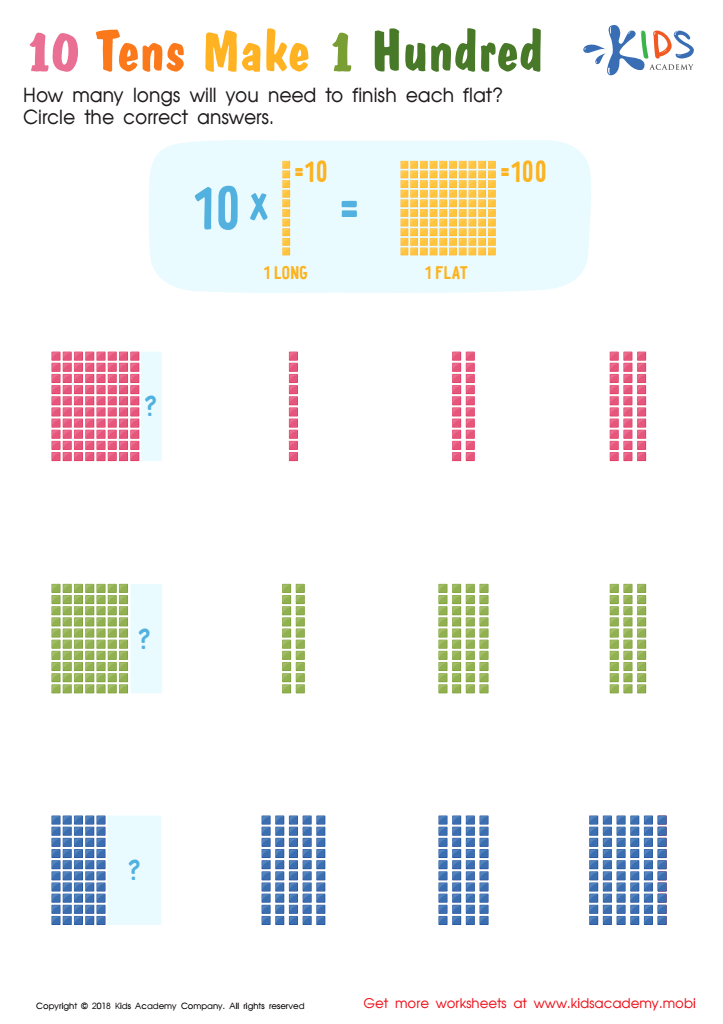
10 Tens Make 1 Hundred Worksheet








Recognizing number patterns is crucial for children aged 4-8 as it lays the foundation for essential mathematical skills and cognitive development. Number patterns help young learners understand the concept of sequence, order, and prediction, which are fundamental components of math. When children recognize patterns, they learn to anticipate what comes next, fostering logical thinking and problem-solving abilities.
Patterns also enhance memory and attention to detail. As children engage with repetitive sequences, they improve their ability to recall and internalize information, which is vital for more complex mathematical operations later on. These skills translate beyond math, aiding in reading and comprehension through the recognition of sentence structures and word patterns.
Furthermore, recognizing patterns can make learning math more engaging and enjoyable. It transforms abstract math concepts into fun and relatable activities, boosting a child’s confidence and interest in the subject. Encouraging pattern recognition in early years provides a strong academic foundation, promoting a positive attitude towards learning.
Teachers and parents play a pivotal role in incorporating pattern recognition activities, such as clapping sequences, colored block arrangements, or counting exercises, into daily routines. Their active participation supports children’s intellectual growth and prepares them for future academic success.








