
Comparing sizes Normal Math Worksheets for Ages 4-8
3 filtered results
Difficulty Level
Grade
Age
-
From - To
Subject
Activity
Standards
Welcome to our Comparing Sizes Normal Math Worksheets for Ages 4-8! Designed with young learners in mind, these engaging worksheets help children develop essential comparative skills by exploring concepts such as "bigger," "smaller," "taller," and "shorter." Each worksheet features fun illustrations and activities that captivate kids' attention while promoting their understanding of size differences. Perfect for classroom use or home practice, these resources encourage hands-on learning and foster critical thinking. Parents and educators can easily find suitable materials to enhance their child's math journey. Start exploring our collection today and watch your little ones confidently master size comparisons!
Favorites
With answer key
Interactive
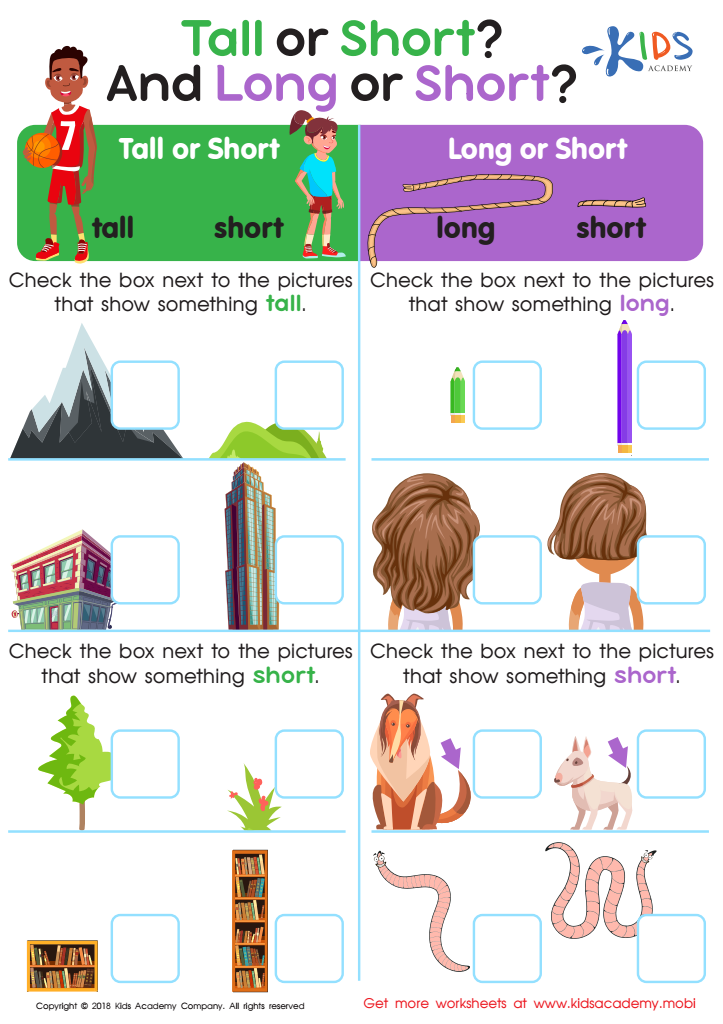
Tall or Short and Long or Short? Worksheet
This worksheet is fun and helpful for kids to understand the difference between height and length. With pictures of familiar objects, they can compare and choose the box with the right answer. This helps them gain skills and a better foundation for future measuring.
 Assign to My Students
Tall or Short and Long or Short? Worksheet
Worksheet
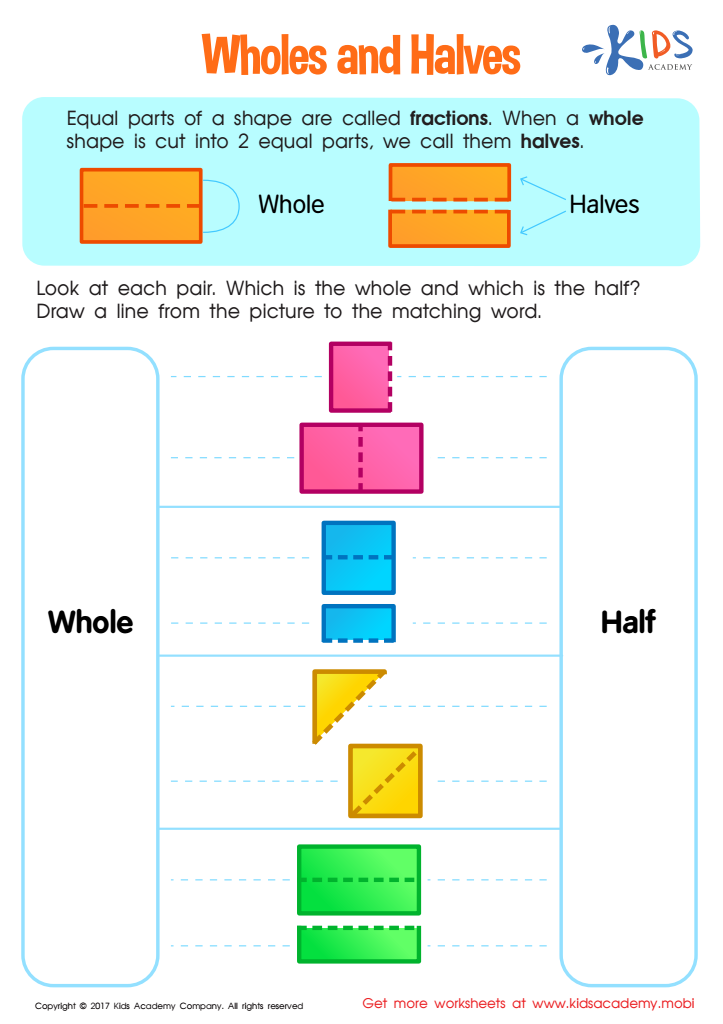
Wholes and Halves Worksheet
Students can feel overwhelmed with fractions. Help take the stress off by using a colorful worksheet to explain whole shapes and how to find halves. Ask them to identify the whole and point to the matching word for the half. A free printout can help guide them.
Wholes and Halves Worksheet
Worksheet
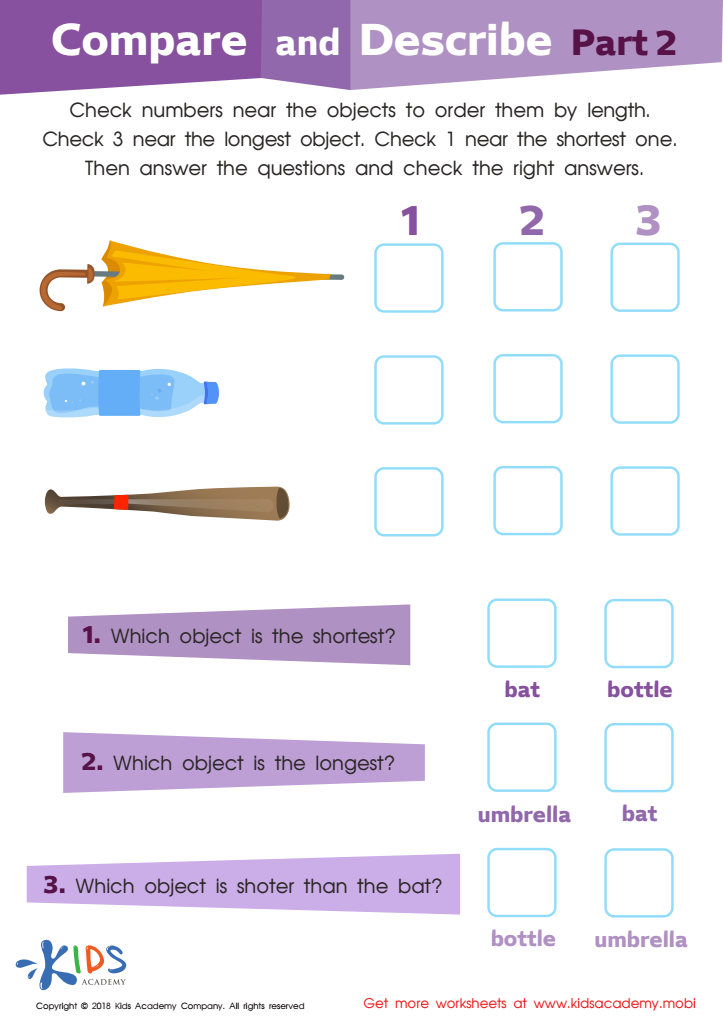
Compare and Describe: Part 2 Worksheet
Help kids hone their comparison skills with this fun measurement worksheet! Kids will sort objects by length and check off the boxes as they go. At the bottom, they'll read the questions and take a final look at the images to complete the exercise. An exciting way to learn measurement!
Compare and Describe: Part 2 Worksheet
Worksheet
Join Kids Academy for Free
Who is primarily going to use this learning content?






%20(1).jpg)
Comparing sizes is a fundamental math concept that plays a crucial role in the cognitive development of children aged 4-8. Understanding size relationships enhances their critical thinking and problem-solving skills. Firstly, it helps children make sense of the world around them; from distinguishing large and small objects to understanding big and little quantities, this foundational skill translates into real-life applications. For instance, when sorting toys or organizing items, children instinctively use comparative sizes, reinforcing their cognitive abilities.
Moreover, mastering comparing sizes fosters early mathematical skills. It introduces children to basic principles of measurement and lays the groundwork for more complex concepts like addition, subtraction, and eventually, geometric shapes. Engaging in size comparison activities also supports language development through vocabulary expansion, as children learn terms such as "bigger," "smaller," "taller," and "shorter."
Finally, incorporating size comparison in fun and interactive ways encourages a love for learning. When parents or teachers participate in these activities—whether through games, lessons, or everyday conversations—they actively nurture curiosity and significant mathematical understanding. By prioritizing this concept, adults can positively influence children's academic trajectories and instill essential skills they will carry throughout their education and everyday lives.








