Mental math practice Normal Math Worksheets for Ages 4-8
5 filtered results
-
From - To
Boost your child's math skills with our engaging Mental Math Practice worksheets designed specifically for ages 4 to 8. These printable worksheets feature a variety of fun and interactive activities that make learning math enjoyable. Children will develop essential mental calculation abilities, enhance their problem-solving skills, and gain confidence in handling numbers. Tailored to accommodate different learning levels, our worksheets make it easier for kids to practice addition, subtraction, and simple equations. Ideal for both classroom and home use, our resources encourage independent learning and critical thinking. Download and explore our collection today to support your child's early mathematics journey!
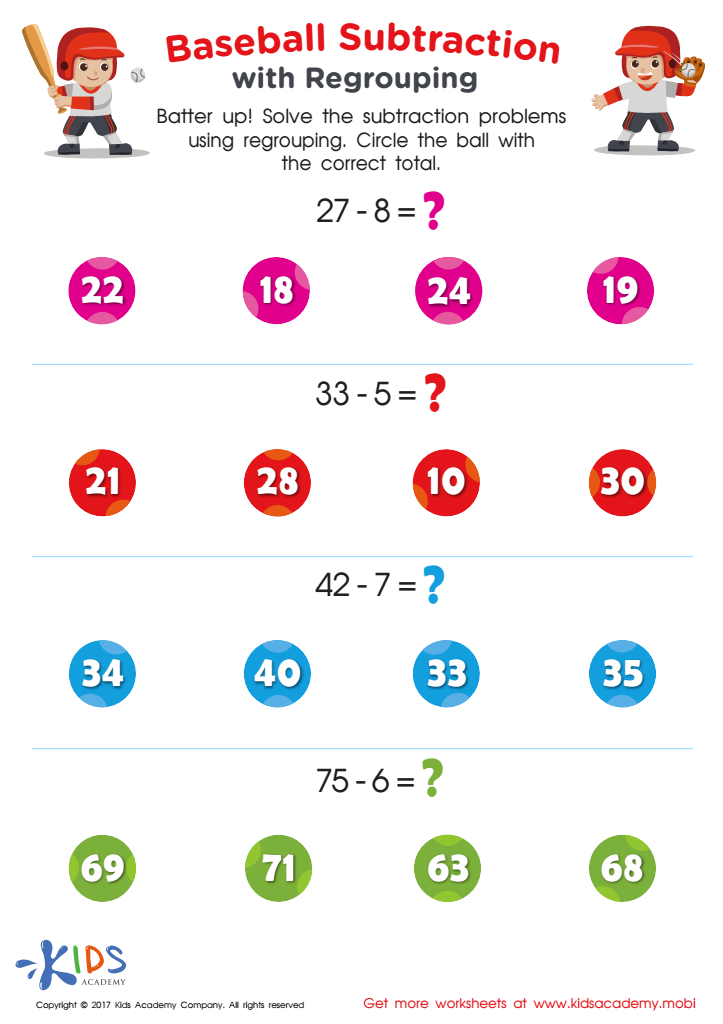
Subtraction With Regrouping for 2nd Grade Worksheet
 Assign to My Students
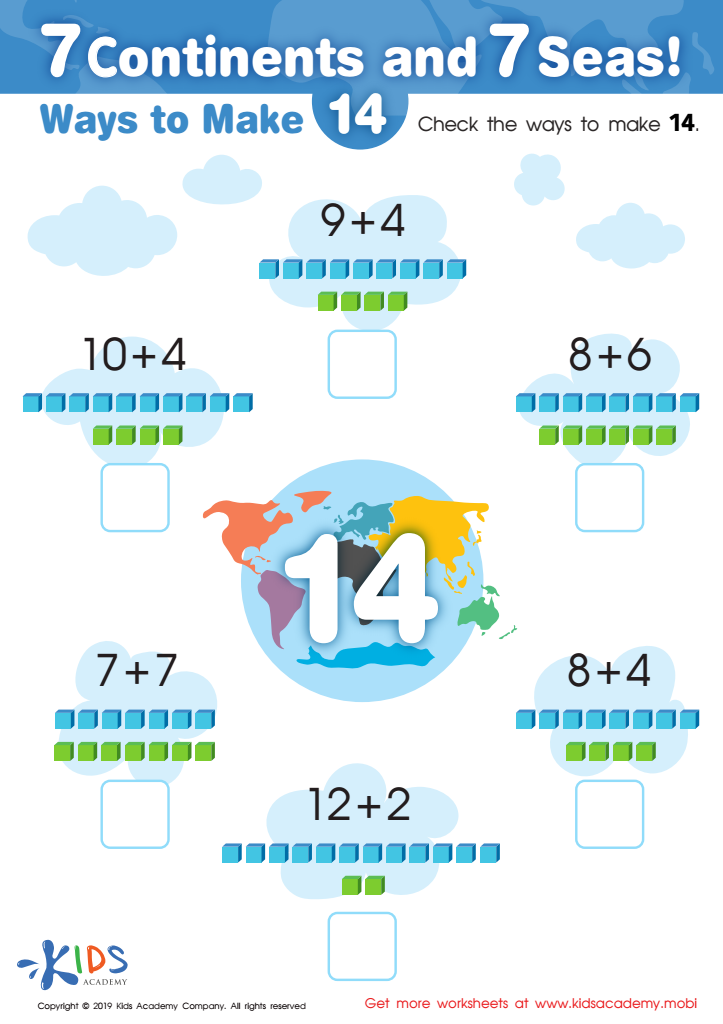
7 Continents and 7 Seas Worksheet

Adding at the Hospital Worksheet
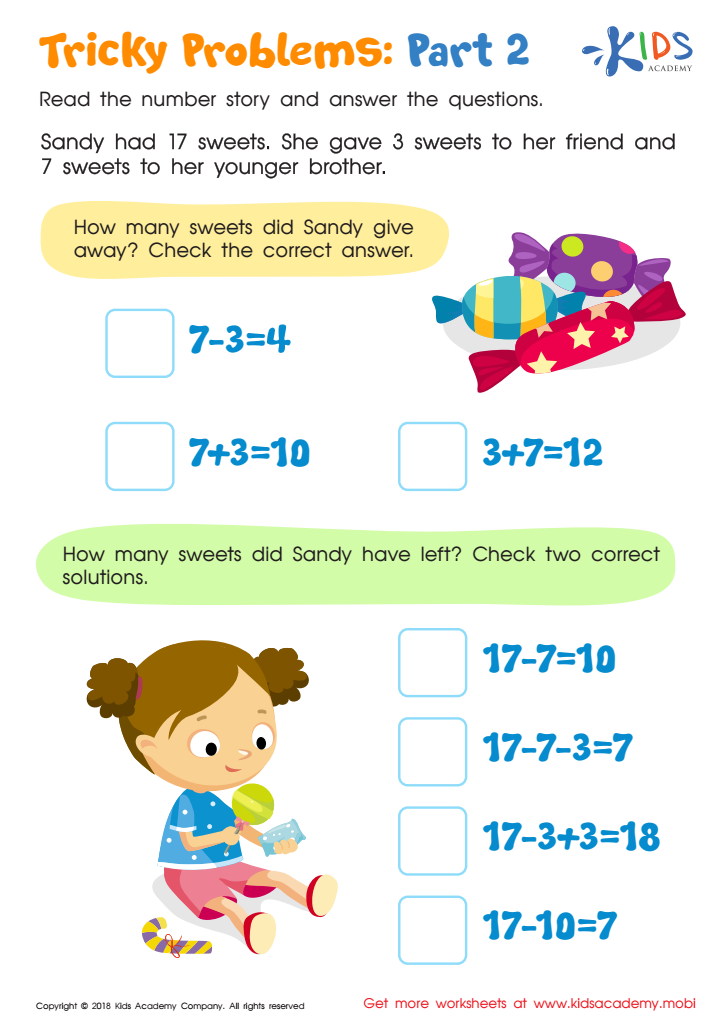
Tricky Problems Worksheet: Part 2
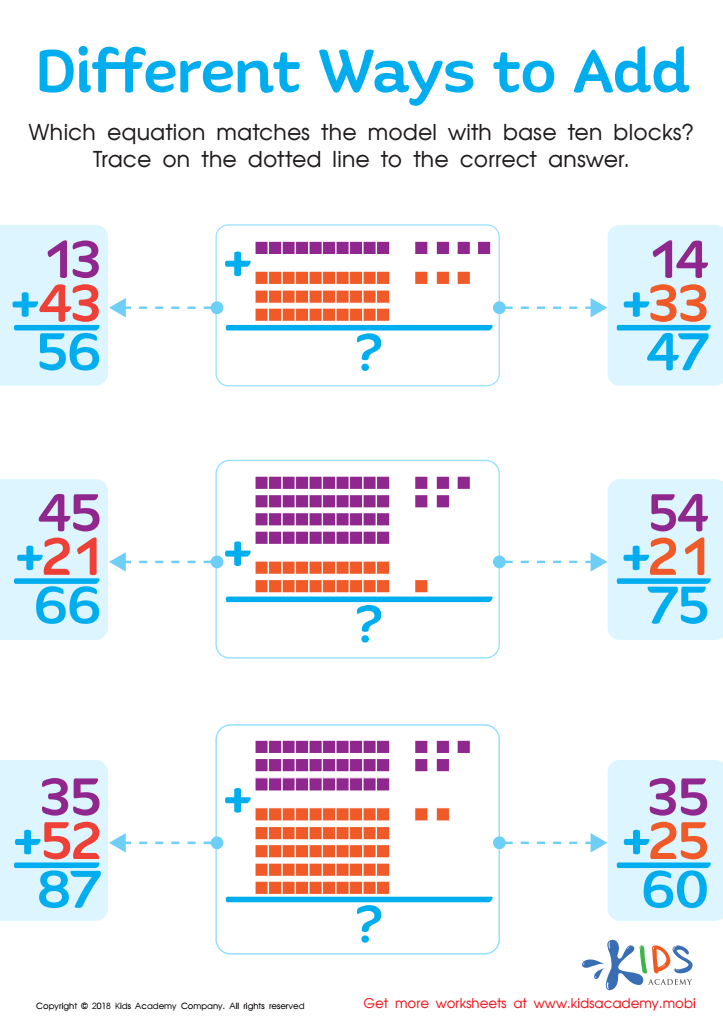
Different Ways to Add Worksheet






.jpg)

Parents and teachers should prioritize mental math practice for children aged 4-8 as it significantly contributes to their cognitive development and mathematical proficiency. At this early stage, children develop essential thinking skills, and mental math fosters problem-solving abilities, logical reasoning, and number sense. Engaging children in mental math activities enhances their confidence in handling numbers, reducing anxiety associated with more complex mathematical concepts later in life.
Additionally, mental math encourages a deeper understanding of mathematical principles rather than rote memorization. It allows children to explore various strategies for solving problems, which promotes flexibility in thinking. This skill set not only aids in academic success but also helps in everyday situations, giving children practical tools for managing finances, measuring, and estimating.
Another vital aspect is the social element of learning mathematics. Group activities and discussions centered on mental math tools foster collaboration and communication among peers. This interaction helps to build a supportive learning environment. In an increasingly technology-driven world, mental math lays the groundwork for a strong mathematical foundation essential for future STEM endeavors. Therefore, prioritizing mental math practice is crucial for nurturing well-rounded learners equipped to tackle future challenges successfully.








