
Pattern recognition Normal Matching Worksheets for Ages 4-8
6 filtered results
Difficulty Level
Grade
Age
-
From - To
Subject
Activity
Standards
Unlock your child’s potential with Pattern Recognition Normal Matching Worksheets for Ages 4-8 from Kids Academy! These engaging and educational worksheets are designed to enhance your young learner's cognitive abilities by improving critical skills such as pattern recognition, logic, and problem-solving. Perfectly tailored for children aged 4-8, each worksheet offers fun, vibrant, and interactive exercises that keep young minds engaged while reinforcing key mathematical concepts. With a variety of patterns to match, your child will build a strong foundation for advanced math skills. Empower your child’s learning journey with expertly crafted resources from Kids Academy!
Favorites
With answer key
Interactive
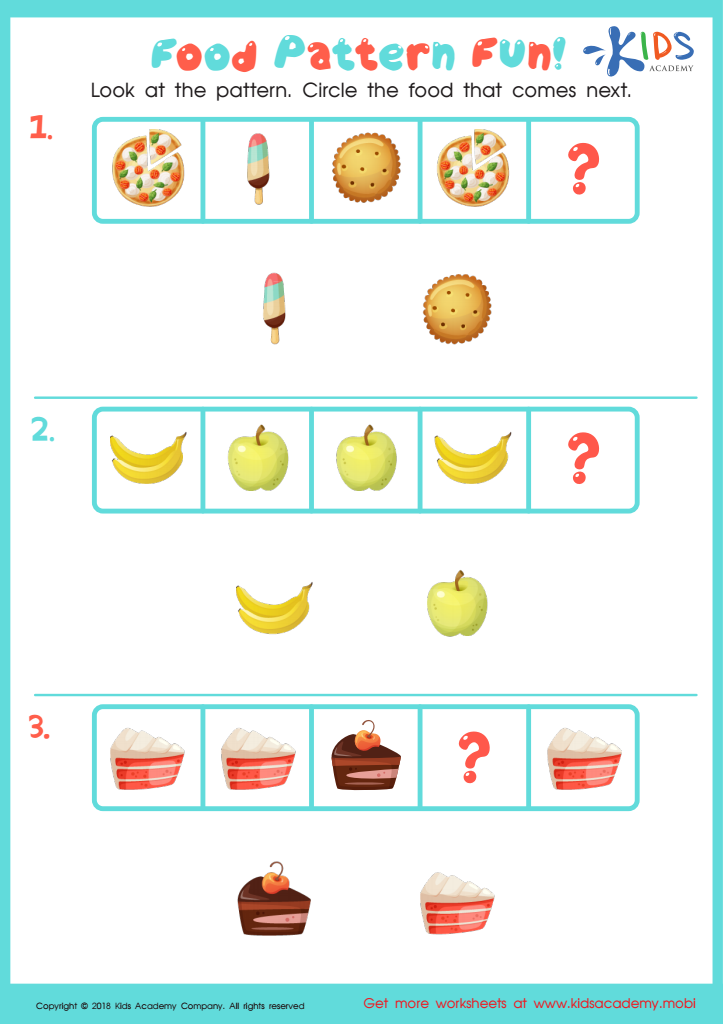
Food Pattern Fun Worksheet
Got kids who love snacks? Get them excited with this fun food pattern worksheet! Ask them to identify the foods in the printout then spot the pattern and circle the next food in each row. It's a great way to get them thinking and have fun at the same time!
 Assign to My Students
Food Pattern Fun Worksheet
Worksheet
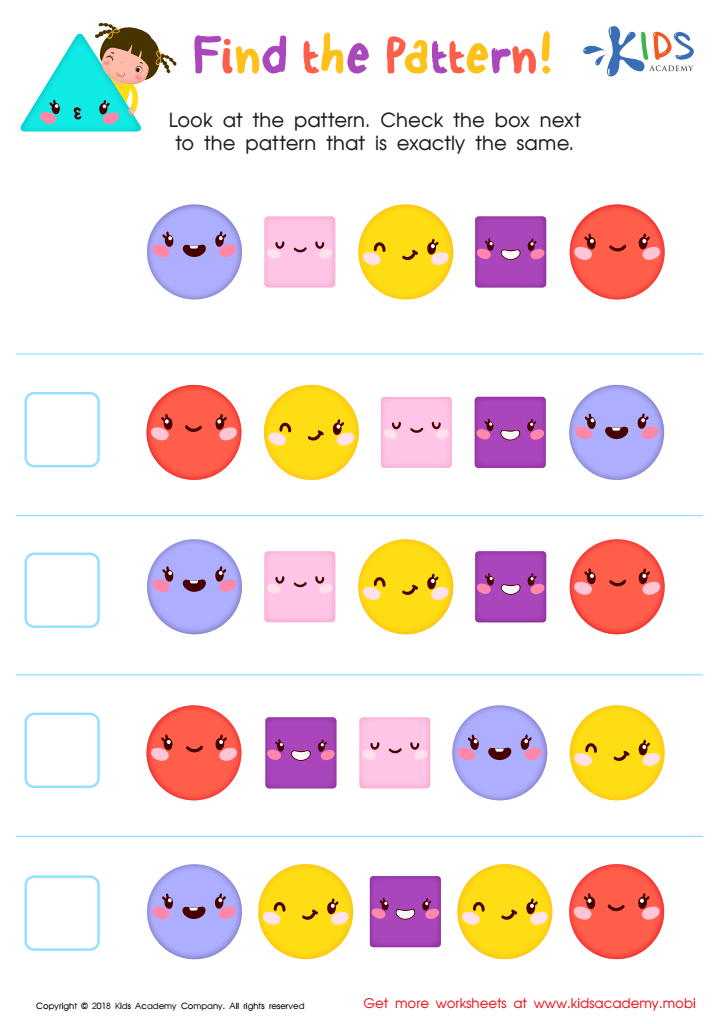
Find the Pattern Worksheet
This colorful pattern worksheet is perfect for testing your kids' pattern recognition. The bright colors will keep them engaged, while they check the box next to the pattern that is the same. Ask your kids to identify the colors used and see how well they can spot similarities!
Find the Pattern Worksheet
Worksheet
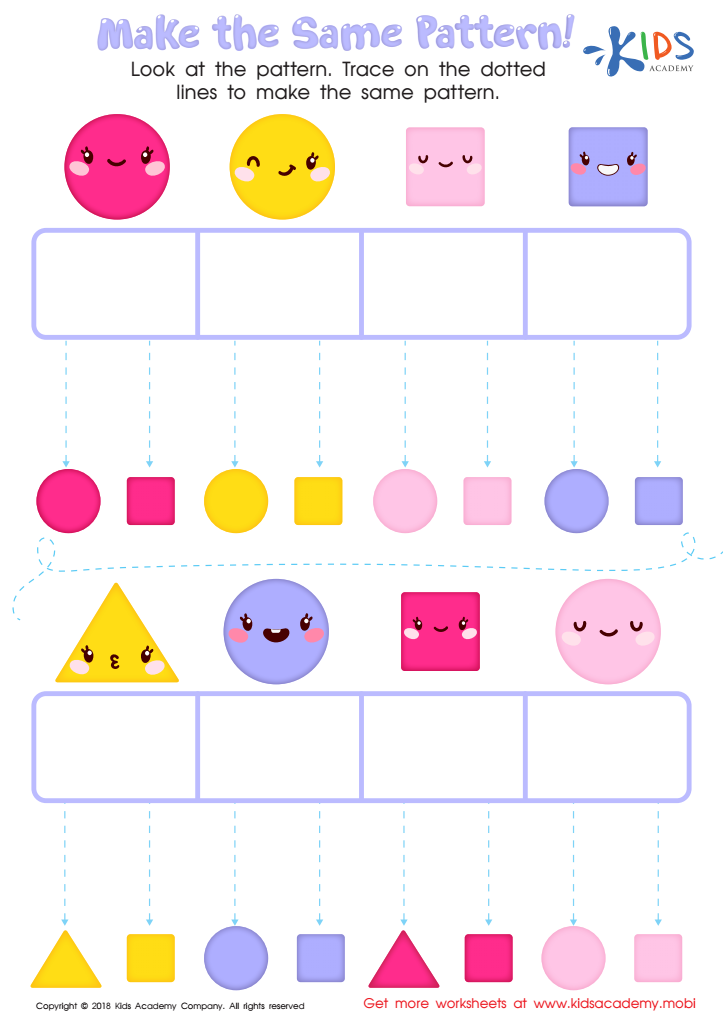
Make the Same Pattern Worksheet
Help your child look at the patterns in the tracing sheet and guide them to trace the dotted lines to match the shapes. This exercise tests their ability to copy pictures correctly, so emphasize the importance of paying attention to the instructions and details.
Make the Same Pattern Worksheet
Worksheet
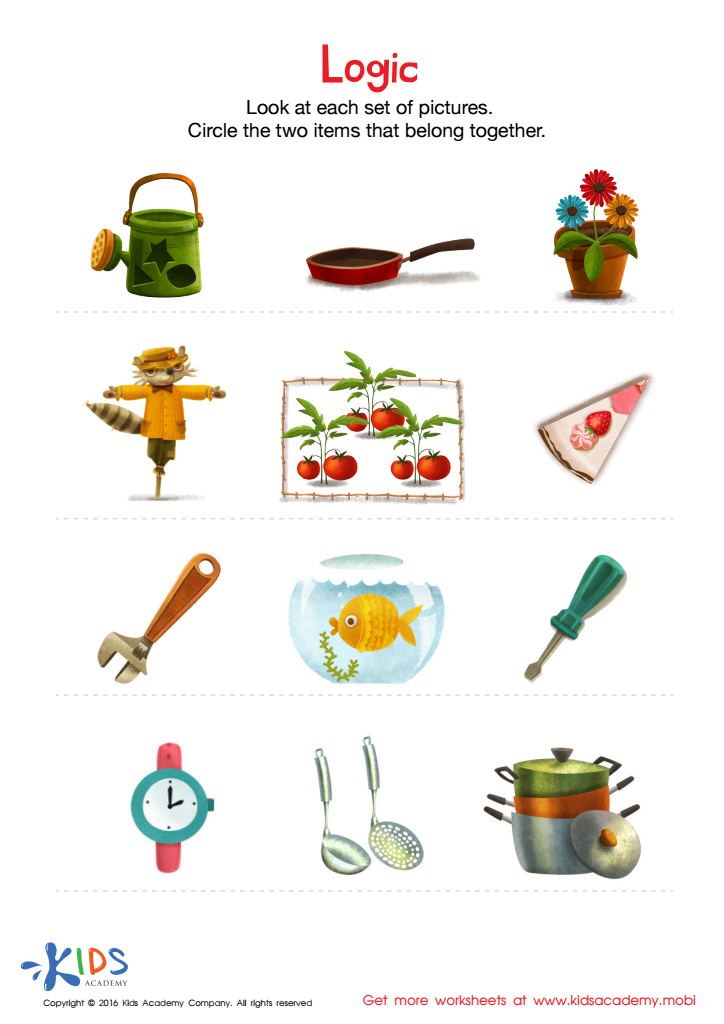
Logic Game Sorting Worksheet
Start your child's logic and reasoning development early with this fun matching worksheet! Through cute images and simple conversations, your little one can learn problem-solving, categorization, and matching skills. Plus, it's a great way for children to explore how items are used in real life. Try it and watch them boost skills with ease and fun!
Logic Game Sorting Worksheet
Worksheet
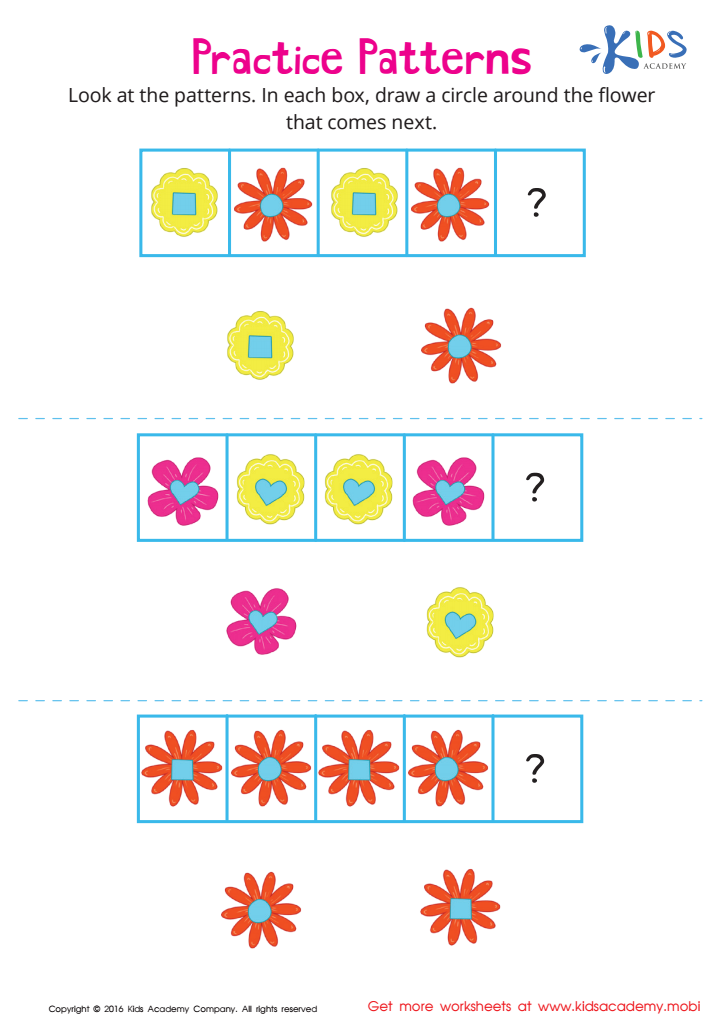
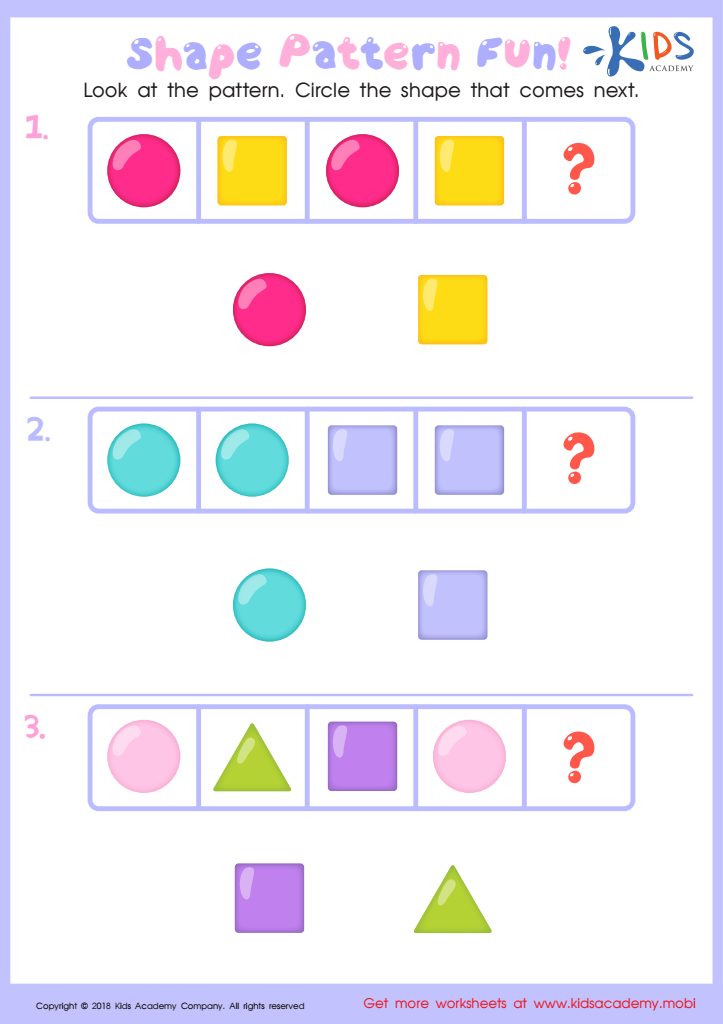
Shape Pattern Fun Worksheet
Challenge your kids to look at the pictures and identify colors, shapes and patterns. Ask them to circle the shapes that follow the sequence. See if they can spot the pattern and stick to it!
Shape Pattern Fun Worksheet
Worksheet
Join Kids Academy for Free
Who is primarily going to use this learning content?


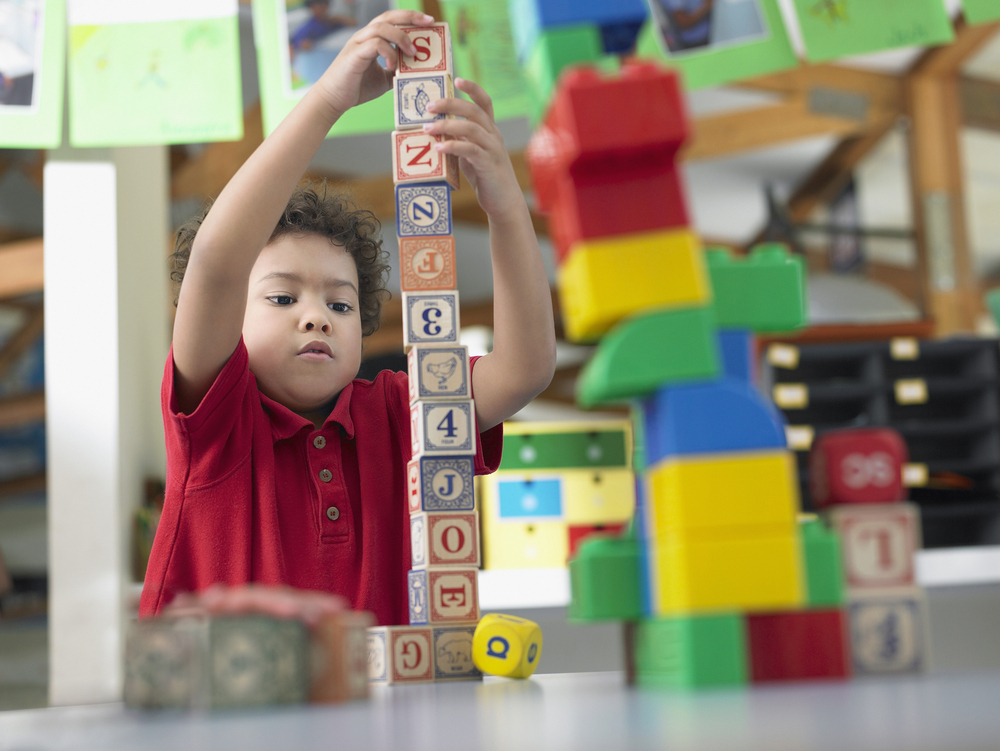




Pattern recognition and normal matching activities play a crucial role in the cognitive, social, and academic development of children aged 4-8. These activities help young learners develop vital thinking skills and lay the foundation for more complex tasks essential for success in school and beyond.
Firstly, pattern recognition helps children improve their critical thinking and problem-solving abilities. Identifying and predicting patterns enable them to make sense of the world, foster logical thinking, and improve their ability to understand and organize information.
Secondly, these activities enhance mathematical skills. Recognizing patterns is a cornerstone of early math concepts, such as sequencing, counting, and identifying shapes. This foundational knowledge supports the learning of more advanced math concepts later on.
Thirdly, pattern recognition and matching exercises improve language skills. By identifying patterns in language, such as rhyming, letter combinations, and sentence structures, children enhance their reading and writing proficiency.
Additionally, these activities promote attention to detail and concentration. Matching games require children to focus and pay attention to subtle similarities and differences, which aids in developing persistence and attention spans.
Lastly, engaging in pattern recognition activities can boost self-esteem, as mastering these tasks provides a sense of achievement. Thus, parents and teachers should prioritize these exercises to support and enrich a child’s developmental journey, setting a strong foundation for future learning and problem-solving abilities.








