Categorizing objects Normal Science Worksheets for Ages 4-8
4 filtered results
-
From - To
Discover our engaging "Categorizing Objects Science Worksheets" designed for children aged 4-8. These interactive worksheets help young learners develop crucial science skills by sorting and categorizing a variety of objects. Through fun activities and colorful images, kids enhance their observation abilities, improve critical thinking, and learn to identify and classify everyday items. Perfect for early grade students, these worksheets offer a hands-on approach to understanding patterns and relationships in the world around them. Ideal for both classroom and home use, make science learning enjoyable and educational with our expertly crafted resources.
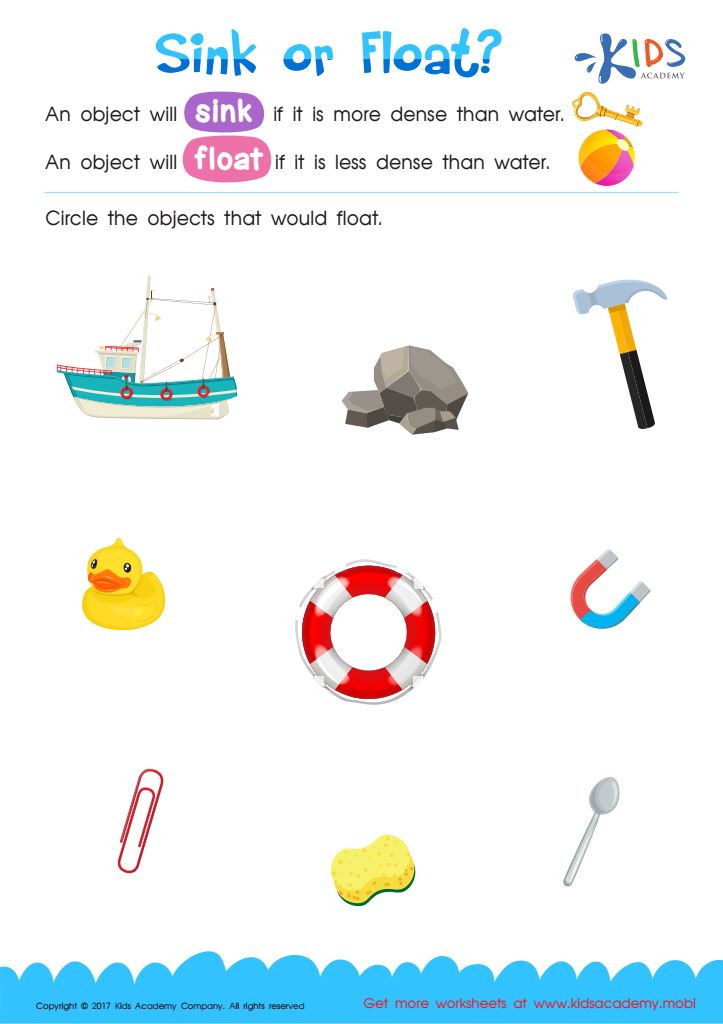
Sink or Float Printable
 Assign to My Students
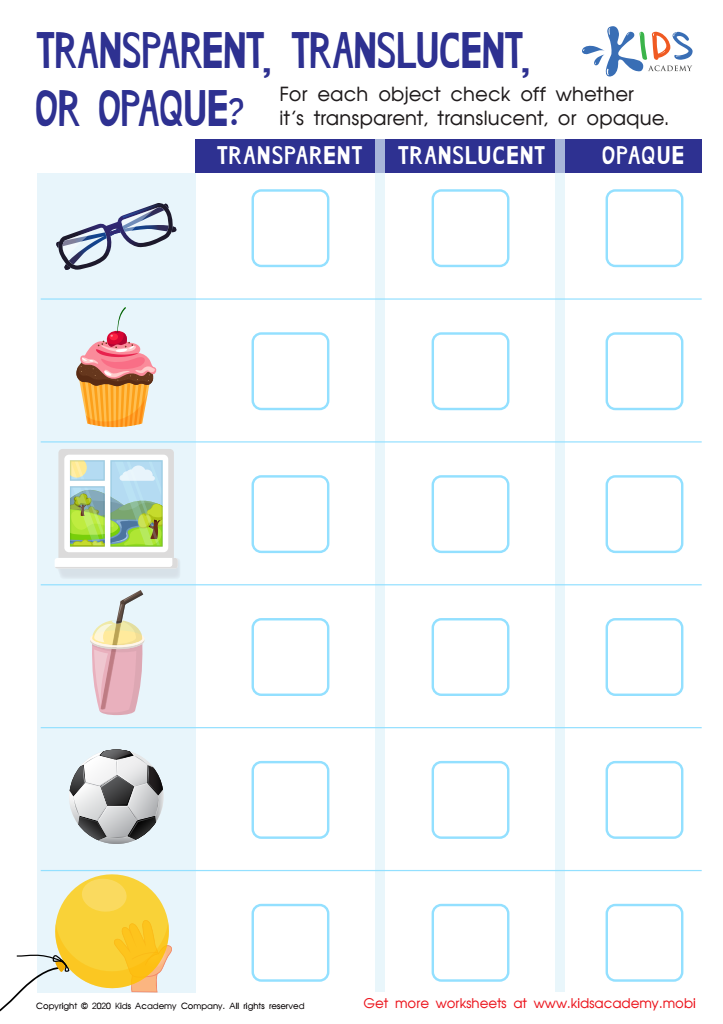
Transparent, Translucent, or Opaque Worksheet
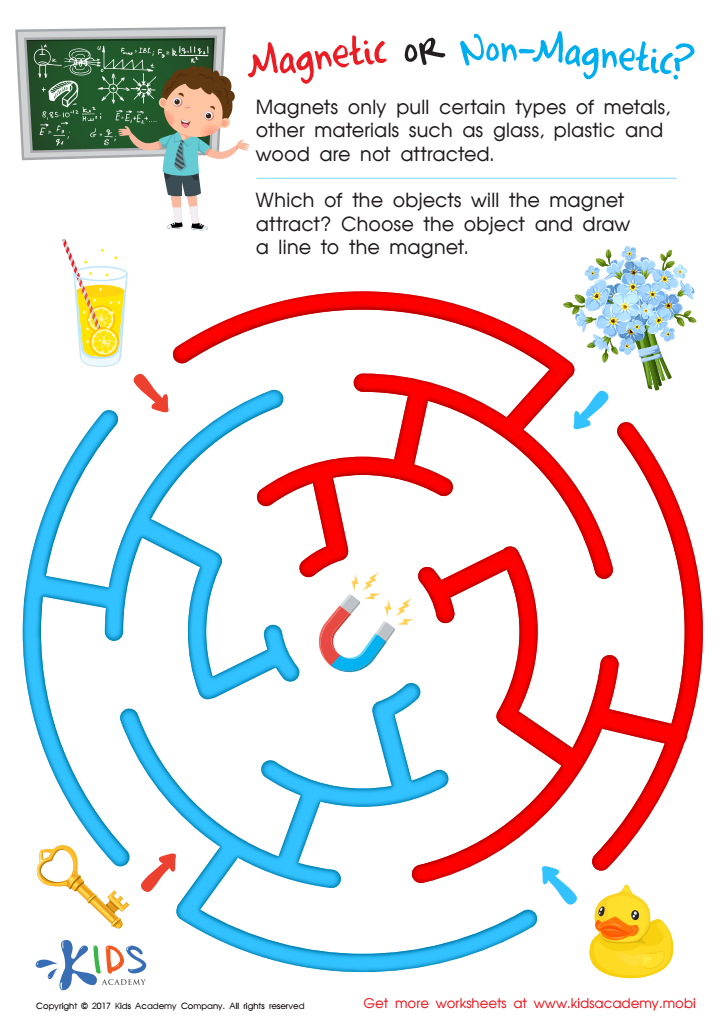
Magnetic or Non–Magnetic Worksheet
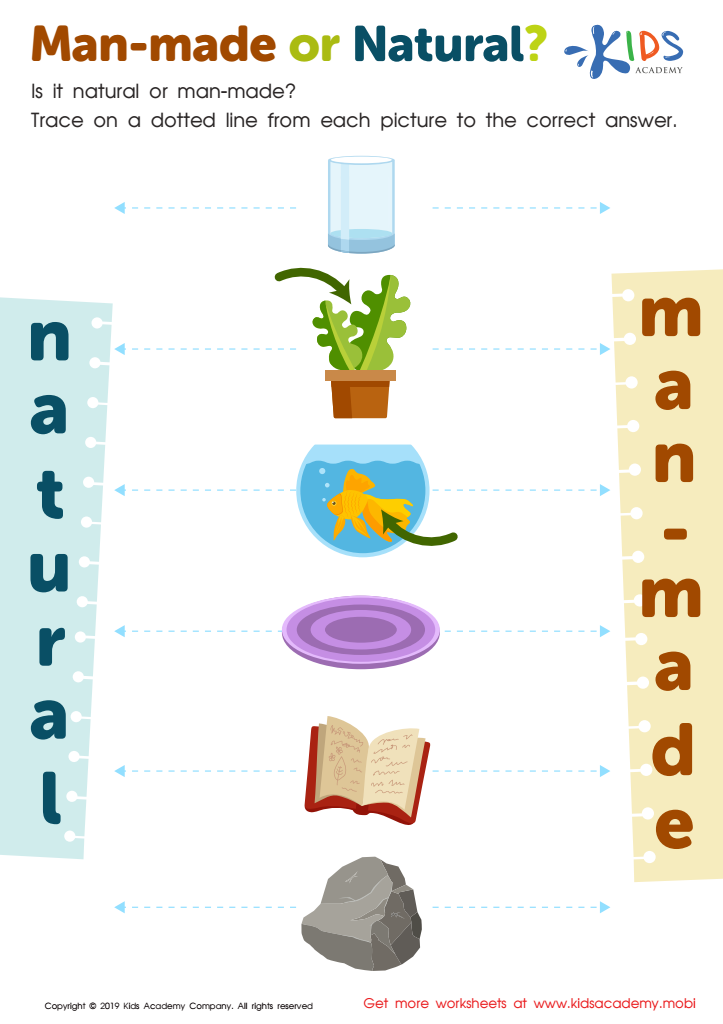
Man-Made or Natural? Worksheet





Categorizing objects is a critical early science skill that helps young children ages 4-8 develop cognitive abilities essential for understanding the world. This activity involves sorting items based on attributes such as color, size, shape, or function, which fosters pattern recognition and organizational skills. For parents and teachers, encouraging categorization benefits children's overall development in multiple ways.
Firstly, categorizing enhances problem-solving abilities. By identifying similarities and differences, children learn to make decisions and use logic, setting a foundation for future math and science learning. These skills help in understanding ecosystems, physics, and other scientific domains where organizing information is crucial.
Secondly, categorizing supports language development. As children discuss their sorting choices, they expand their vocabulary and improve communication skills. Terms like "same," "different," "group," or "classify" become meaningful as they articulate their reasoning.
Moreover, categorizing nurtures attentiveness to detail and builds fine motor skills when handling objects. Emotional and social growth are also stimulated as children often engage in collaborative sorting activities, promoting teamwork and social interactions.
Overall, fostering categorization in early childhood equips children with the ability to make sense of their environment, laying a strong groundwork for future academic success and everyday life skills. It's an easy yet effective way to stimulate young minds and spark their curiosity about the world around them.







