Comparing sizes Normal Worksheets for Ages 4-9
3 filtered results
-
From - To
Explore our engaging "Comparing Sizes Normal Worksheets" designed specifically for children aged 4 to 9! These printable resources foster essential skills in understanding and comparing different sizes through fun activities. Perfect for early learners, our worksheets help kids recognize concepts of big and small, larger and smaller, and everything in between. Each worksheet is crafted to encourage critical thinking while keeping learning enjoyable. Tailored for various learning levels, these activities provide valuable practice in a variety of formats, ensuring comprehensive skill development. Dive into a world of learning with our easy-to-use worksheets that make comparing sizes exciting and accessible for young minds!
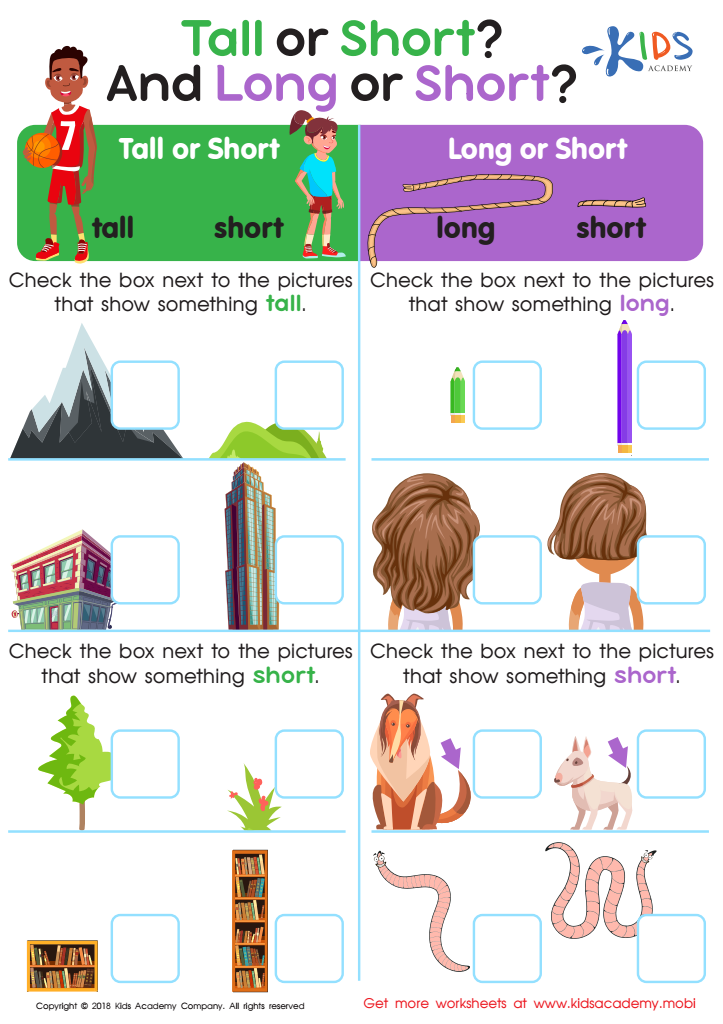
Tall or Short and Long or Short? Worksheet
 Assign to My Students
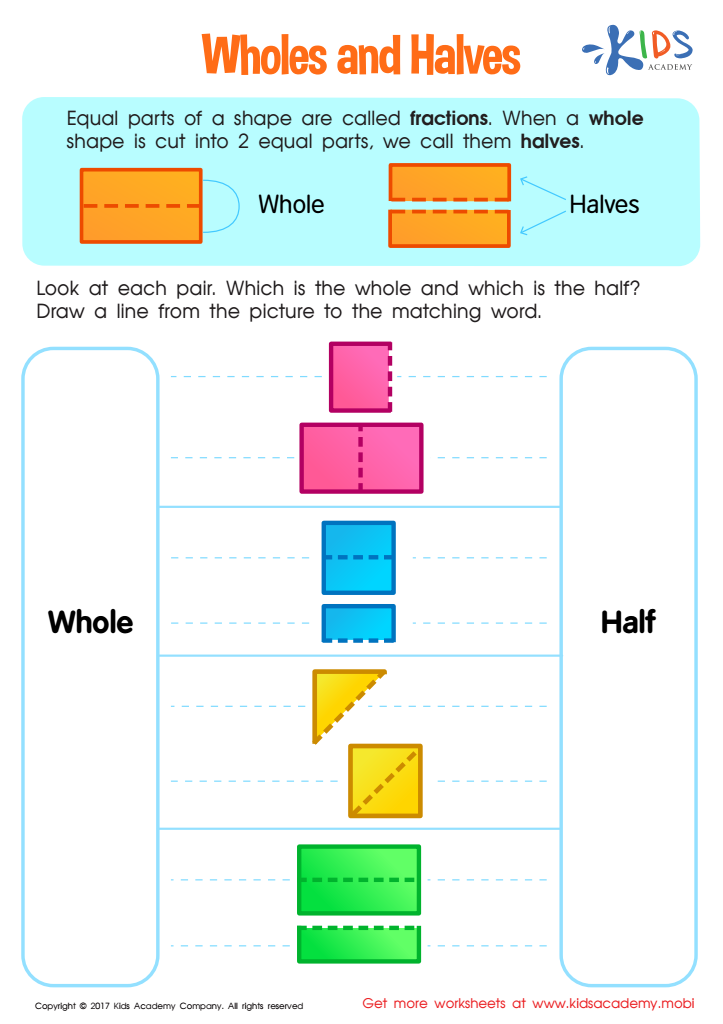
Wholes and Halves Worksheet
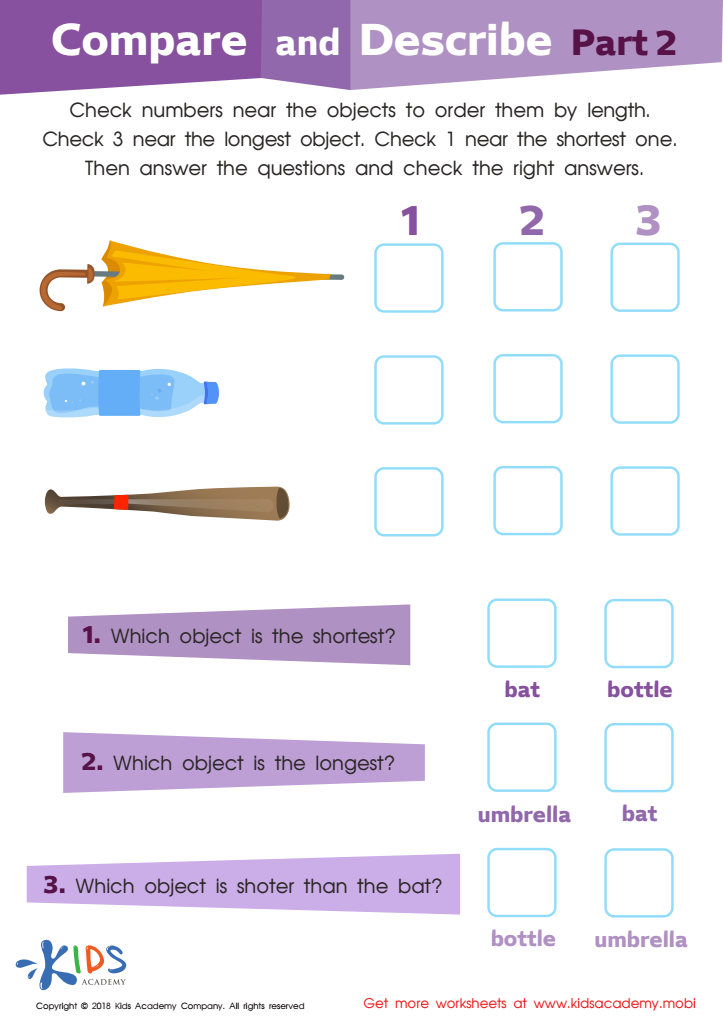
Compare and Describe: Part 2 Worksheet








Comparing sizes is a fundamental skill that plays a crucial role in the cognitive development of children aged 4-9. This foundational mathematical concept enhances young learners' understanding of the world around them. Engaging in activities that involve comparing sizes—such as identifying which object is taller, wider, or heavier—helps children develop critical thinking and problem-solving skills.
Parents and teachers should care about this topic because it fosters early numeracy skills necessary for future math learning. Connecting size comparisons to everyday experiences—like measuring ingredients for a recipe or arranging toys—creates practical learning opportunities.
Moreover, comparing sizes builds vocabulary and language skills as children learn to describe and articulate their observations. This practice encourages curiosity and exploration, strengthening their ability to ask relevant questions and seek answers.
Socially, activities that involve comparing sizes can also promote descriptive language during peer interactions and collaborative play, enhancing communication abilities. Therefore, emphasizing size comparison in educational settings and at home not only develops vital academic skills but also promotes social and emotional growth in young children, preparing them for greater academic challenges ahead. Through playful and engaging experiences, children learn to notice and interpret the world, building a robust foundation for lifelong learning.








