Understanding measurements Normal Worksheets for Ages 4-9
8 filtered results
-
From - To
Help your child master the essential skill of understanding measurements with our engaging and fun worksheets, tailored for kids ages 4-9. Designed to stimulate curiosity, these printables cover fundamental measurement concepts such as length, weight, and volume. Kids will join delightful characters in activities that build practical and mathematical skills, fostering a love for learning. Each easy-to-follow worksheet combines colorful visuals and simple instructions to ensure an enriching experience for every young learner. Enhance their confidence and knowledge with our carefully crafted measurement worksheets today!
Discover more at Kids Academy: https://www.kidsacademy.mobi/printable-worksheets/normal/age-4-9/learning-skills/understanding-measurements/
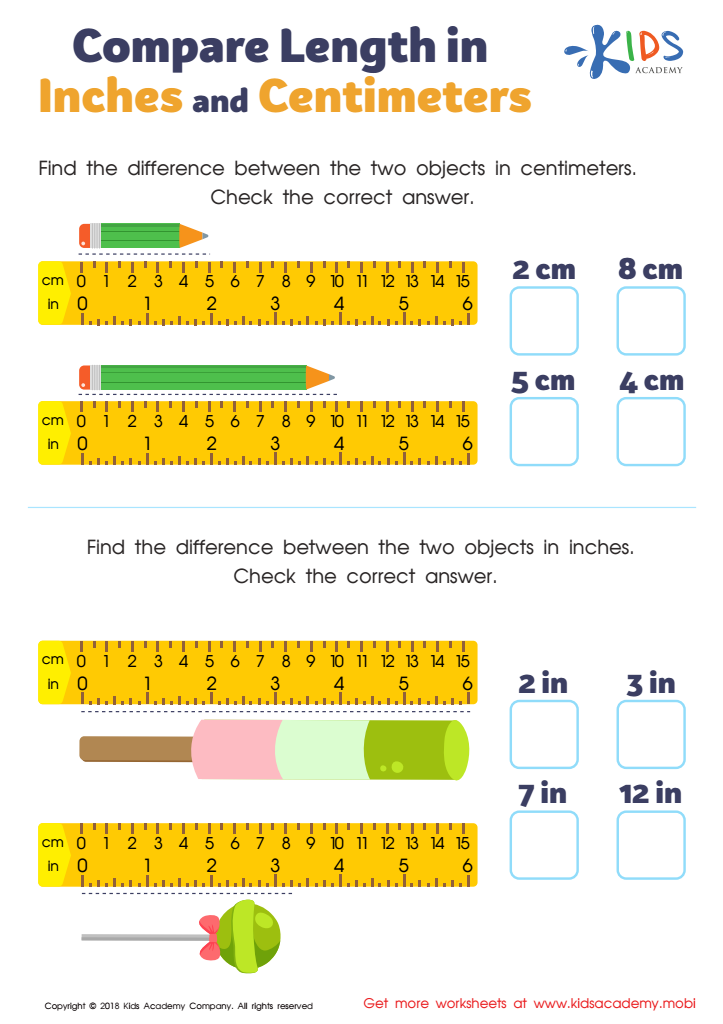
Compare Length in Inches and Centimeters Worksheet
 Assign to My Students
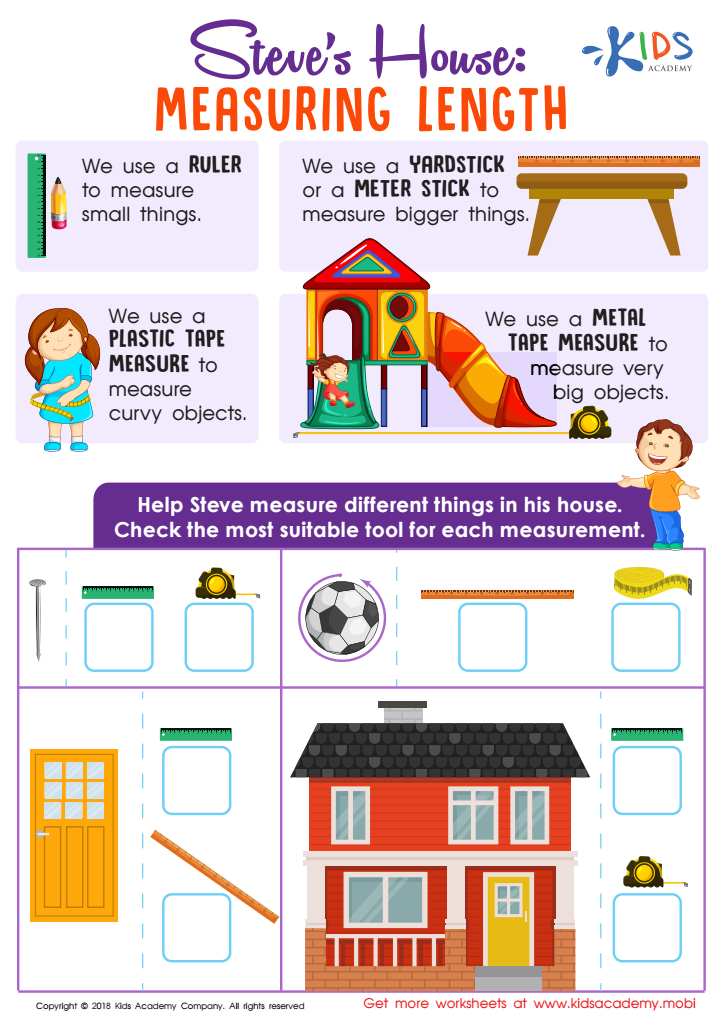
Steve's House: Measuring Length Worksheet
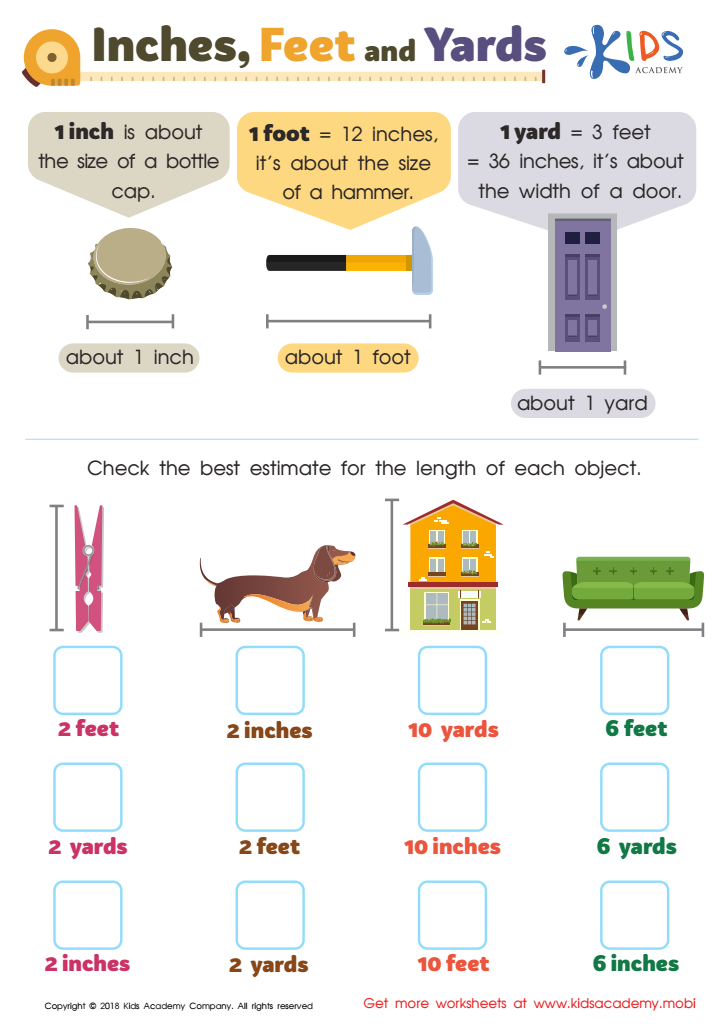
Inches, Feet and Yards Worksheet
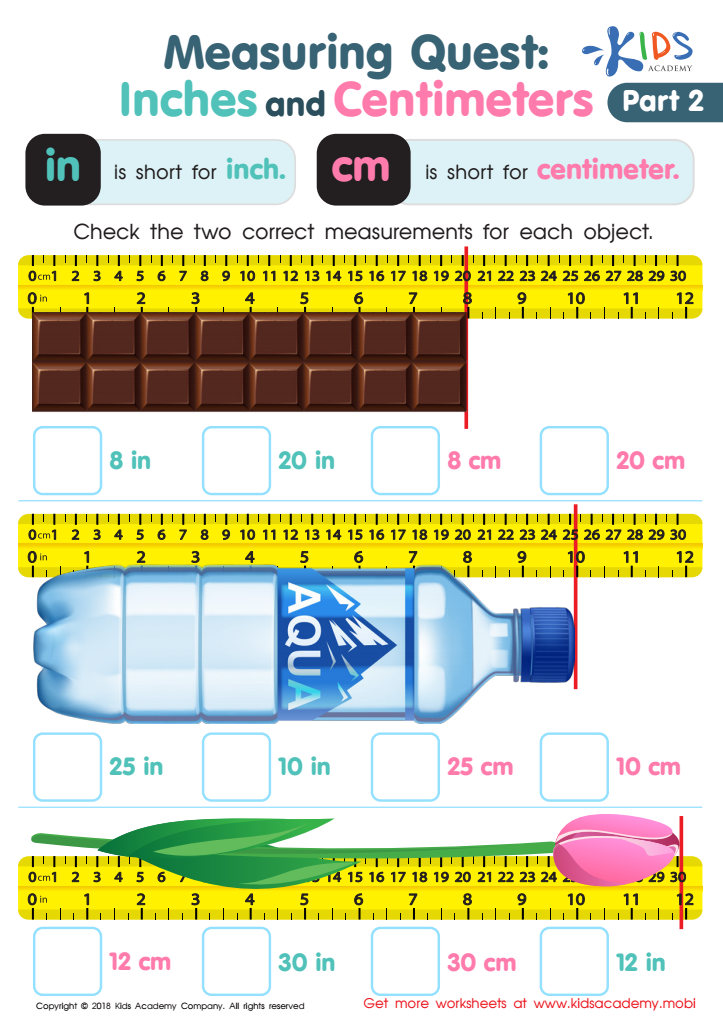
Measuring Quest: Inches and Centimeters - Part 2 Worksheet
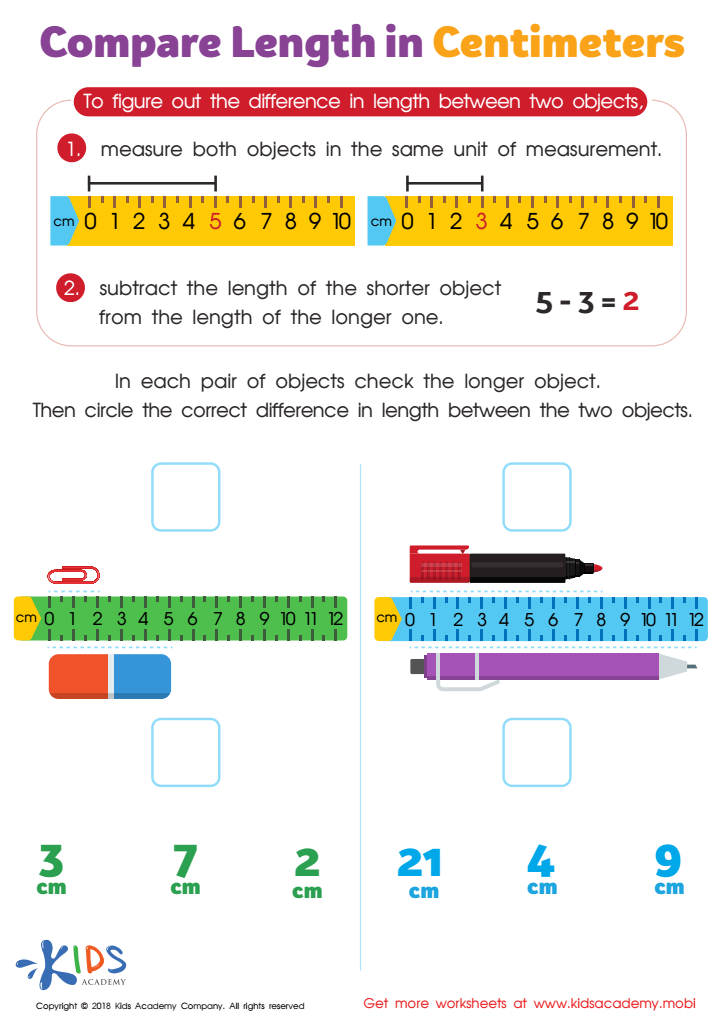
Compare Length in Centimeters Worksheet
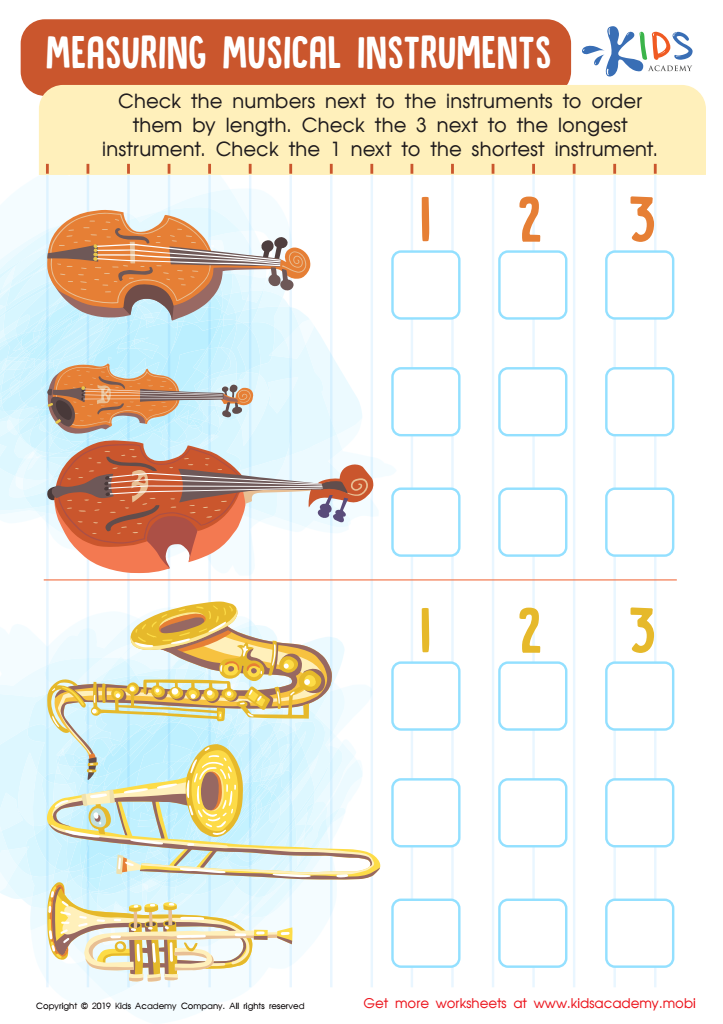
Measuring Musical Instruments Worksheet
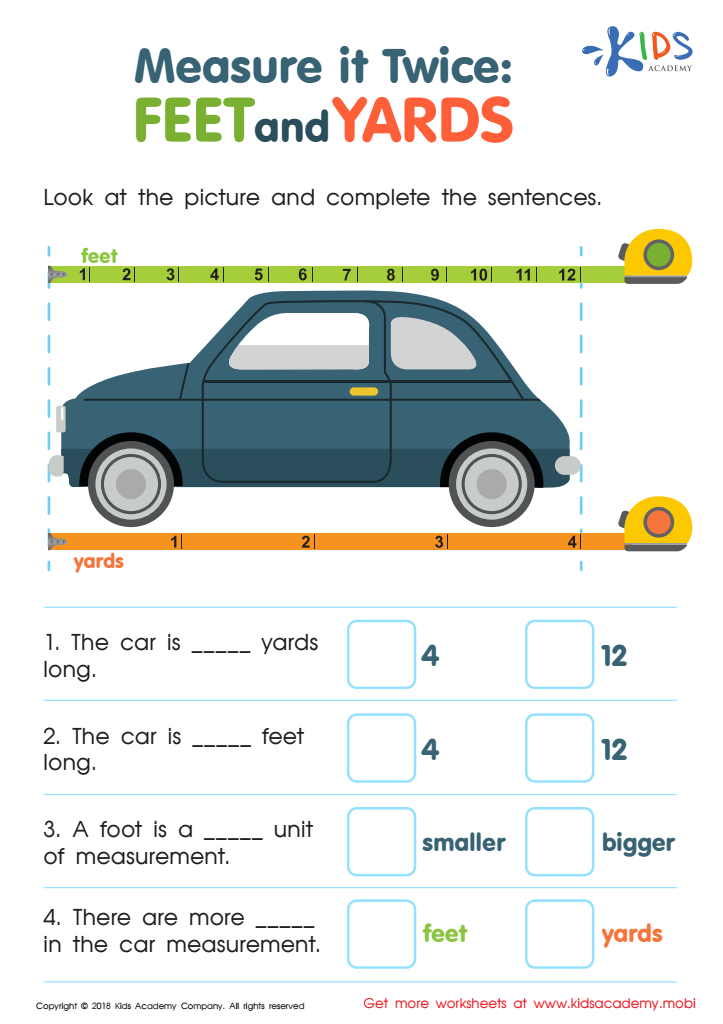
Measure It Twice: Feet and Yards Worksheet
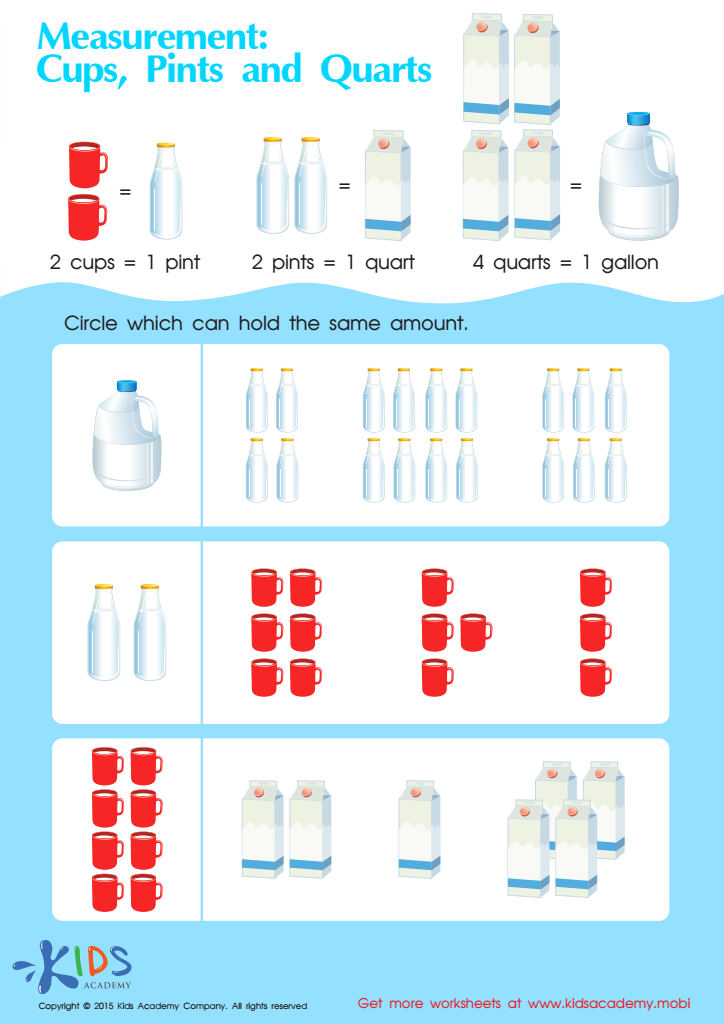
Cups, Pints and Quarts 2 Worksheet




.jpg)

Understanding measurements is crucial for children aged 4-9 as it forms a foundational concept for future mathematical learning and practical life skills. Measurements, including length, weight, volume, and time, play an intrinsic role in a child's daily life. When parents and teachers prioritize teaching these concepts, they enable youngsters to comprehend and navigate their environment more effectively.
First, familiarity with measurements enhances cognitive development. Activities like comparing heights, weighing objects, or timing activities promote critical thinking and problem-solving skills. For example, a child learning about time can better manage their schedule, balancing play and homework.
Secondly, accurate measurement knowledge is key to success in STEM (Science, Technology, Engineering, and Mathematics) fields. Without grasping basic measuring tools and units, children may struggle with more advanced topics in later schooling.
Furthermore, understanding measurements has practical benefits. It can empower children to participate in everyday tasks like cooking, where recipes require precise quantities, or even in sports, where understanding time and distance is essential.
Lastly, an early emphasis on measurement promotes lifelong habits of precision and accuracy, invaluable traits in various contexts from academic work to daily chores. Hence, both parents and teachers should invest time and resources to ensure children develop these critical measurement skills during their formative years.








