Understanding subtraction Normal Addition & Subtraction Worksheets for Ages 4-9
10 filtered results
-
From - To
Unlock the world of subtraction with our "Understanding Subtraction Normal Addition & Subtraction Worksheets" designed specifically for children ages 4-9. These engaging worksheets provide a fun and interactive way to help young learners grasp fundamental subtraction concepts. Through a variety of activities, kids will learn to recognize subtraction signs, solve simple problems, and understand the relationship between addition and subtraction. Tailored to support different learning styles, our resources foster confidence and strengthen math skills. Whether at home or in the classroom, our worksheets are a perfect tool to enhance your child's mathematical journey and make subtraction enjoyable and accessible!
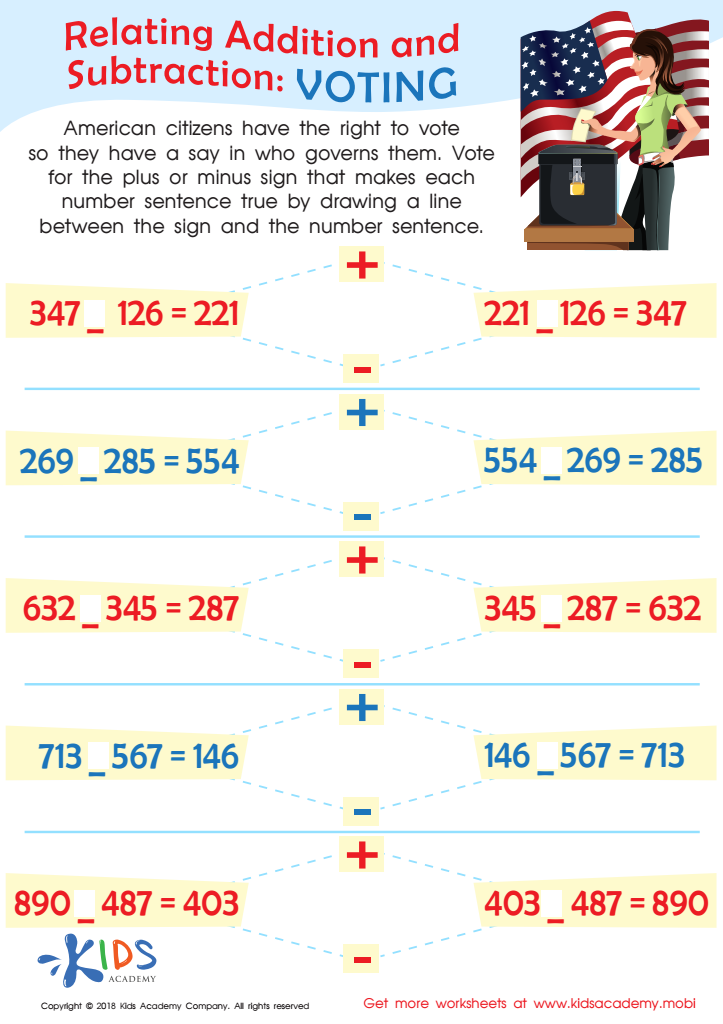
Voting Worksheet
 Assign to My Students
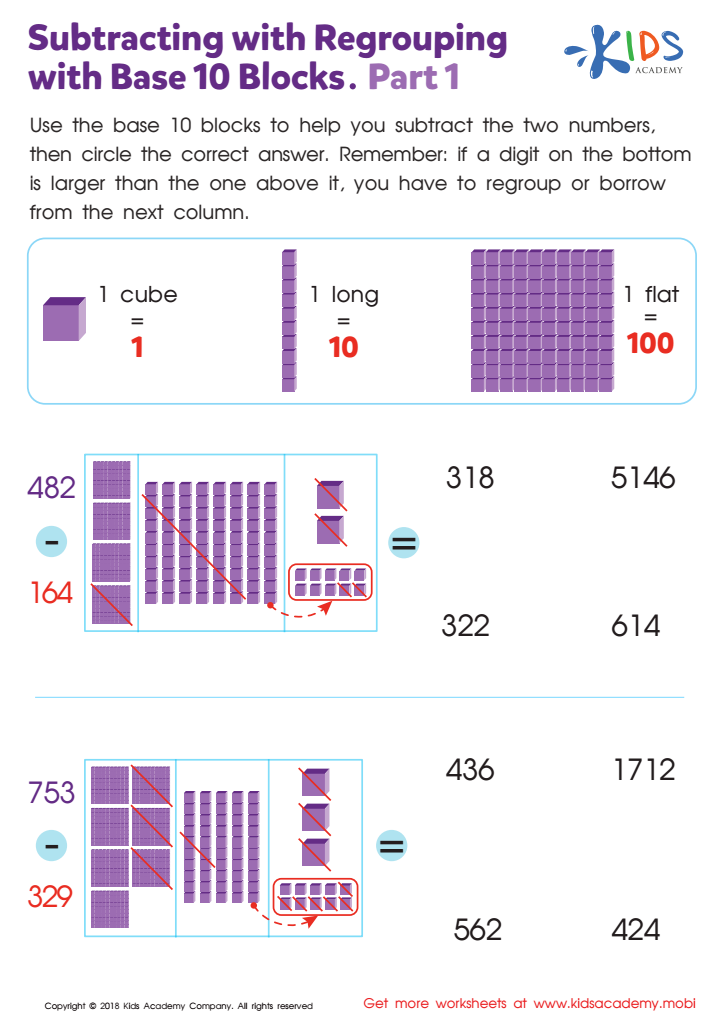
Subtracting with Regrouping with Base 10 Blocks. Part1 Worksheet
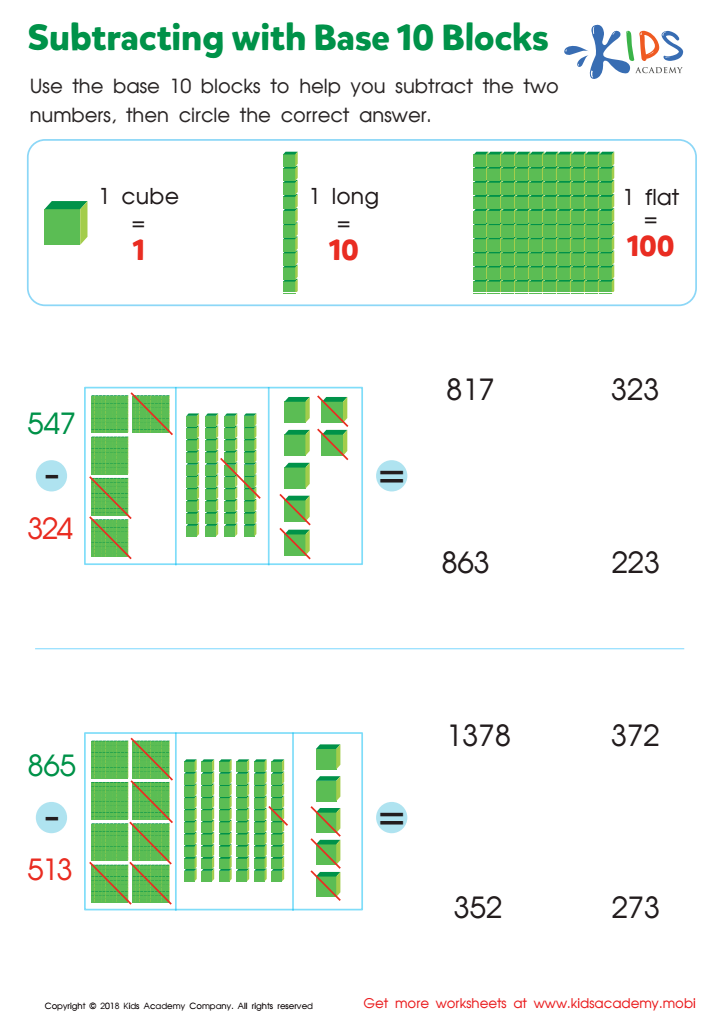
Subtracting with Base 10 Blocks Worksheet
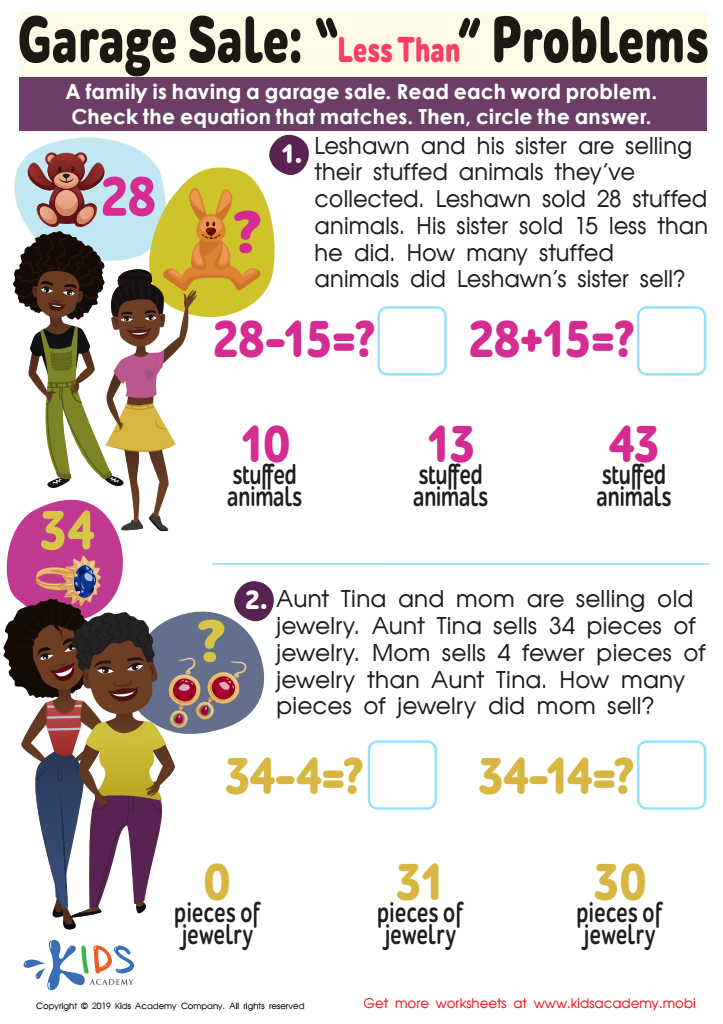
Garage Sale Less Than Worksheet
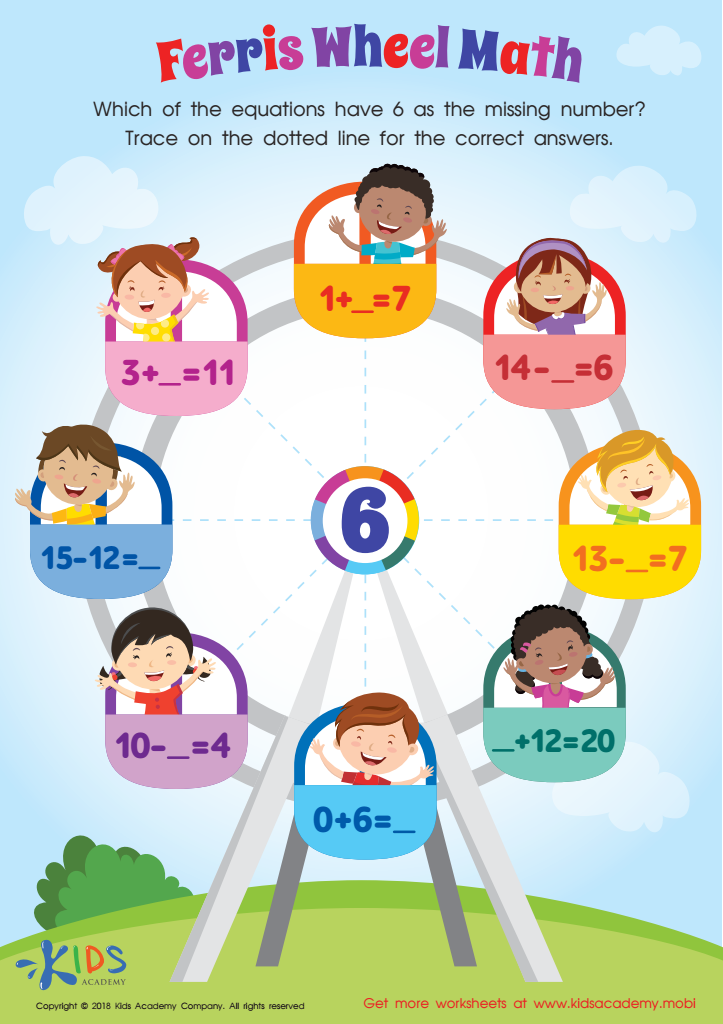
Missing Number: Ferris Wheel Math Worksheet
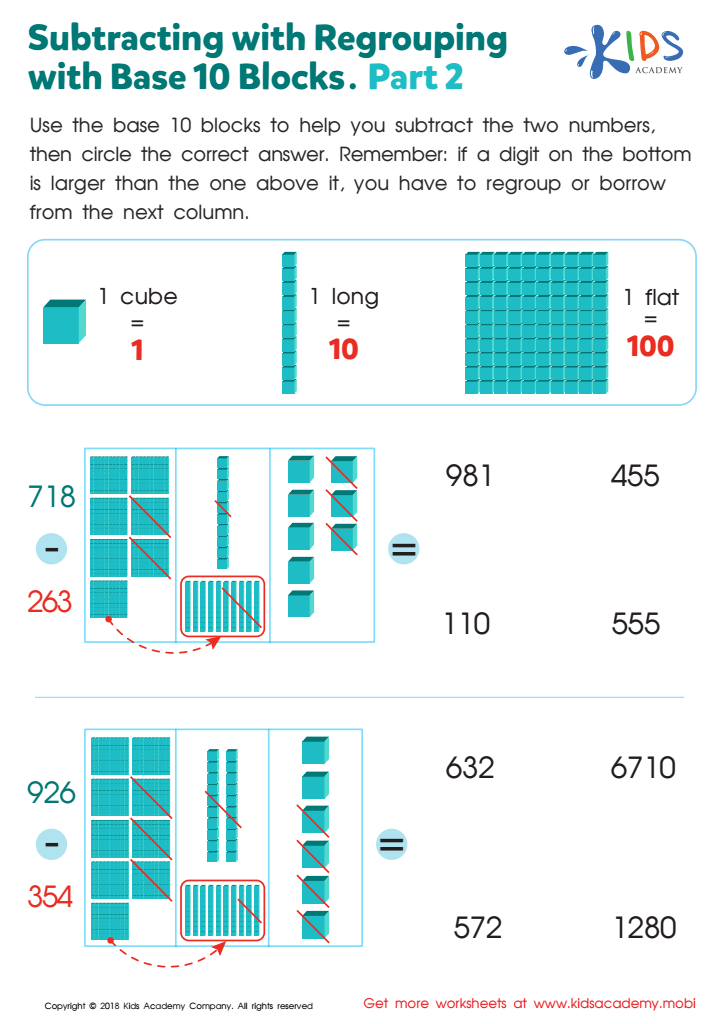
Subtracting with Regrouping with Base 10 Blocks. Part 2 Worksheet
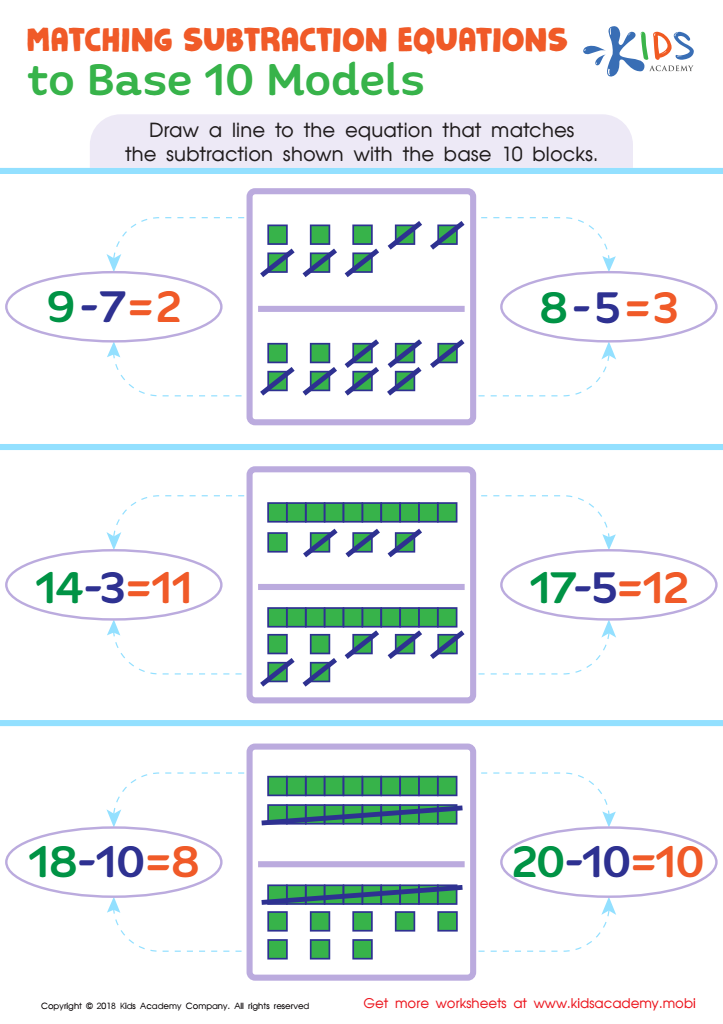
Matching Subtraction Equations To Base 10 Models Worksheet
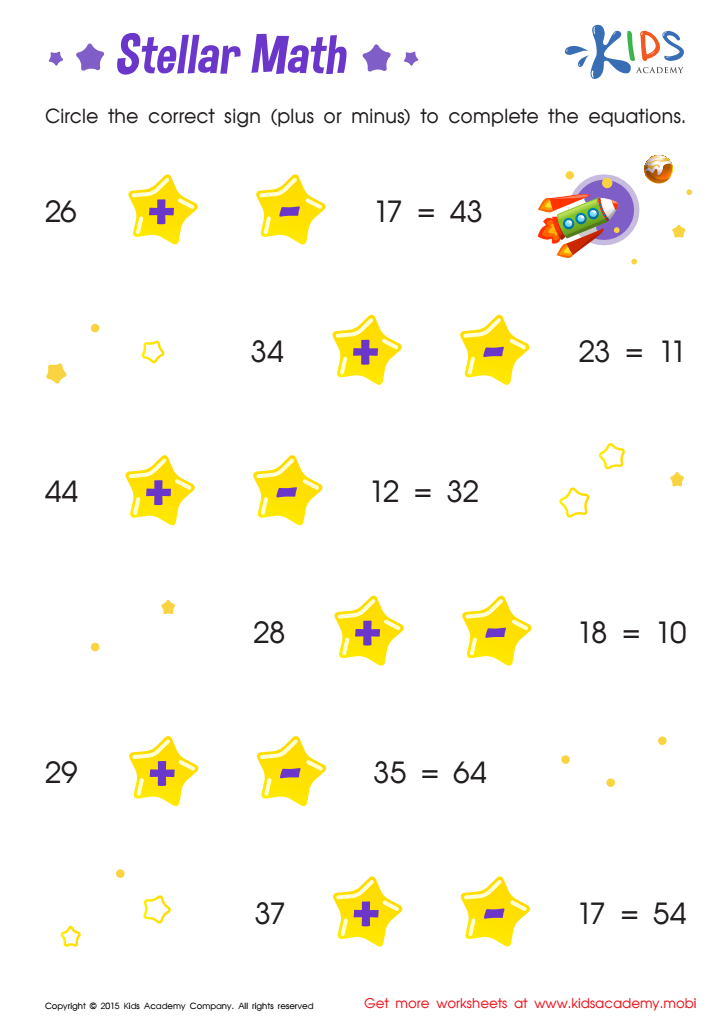
Stellar Math Substraction Worksheet
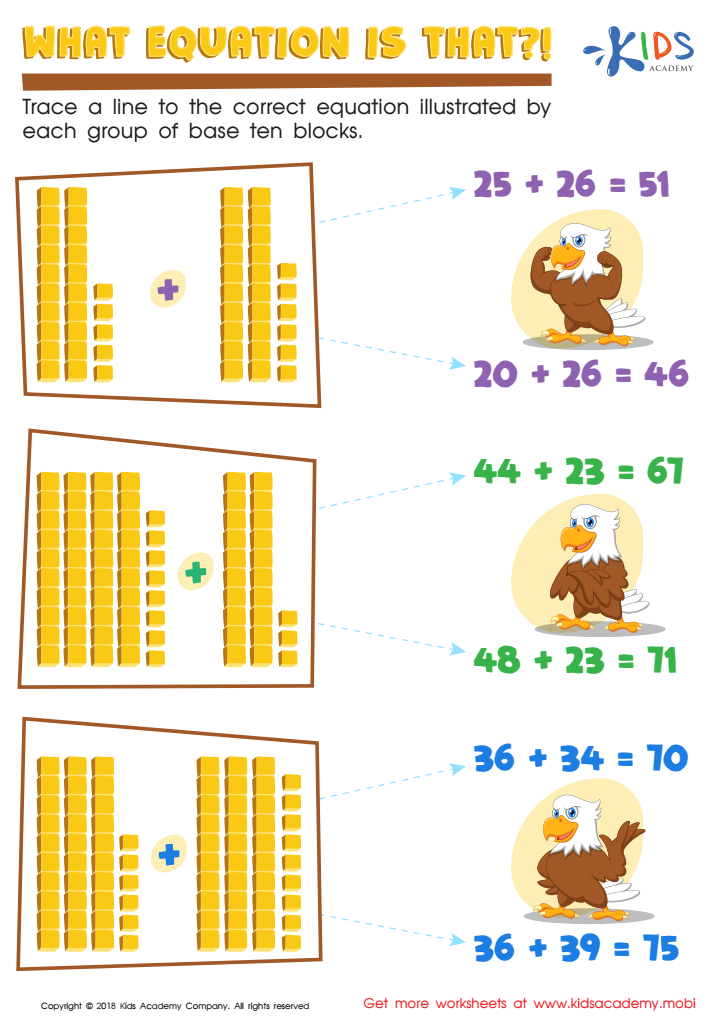
What Equation Is That? Worksheet
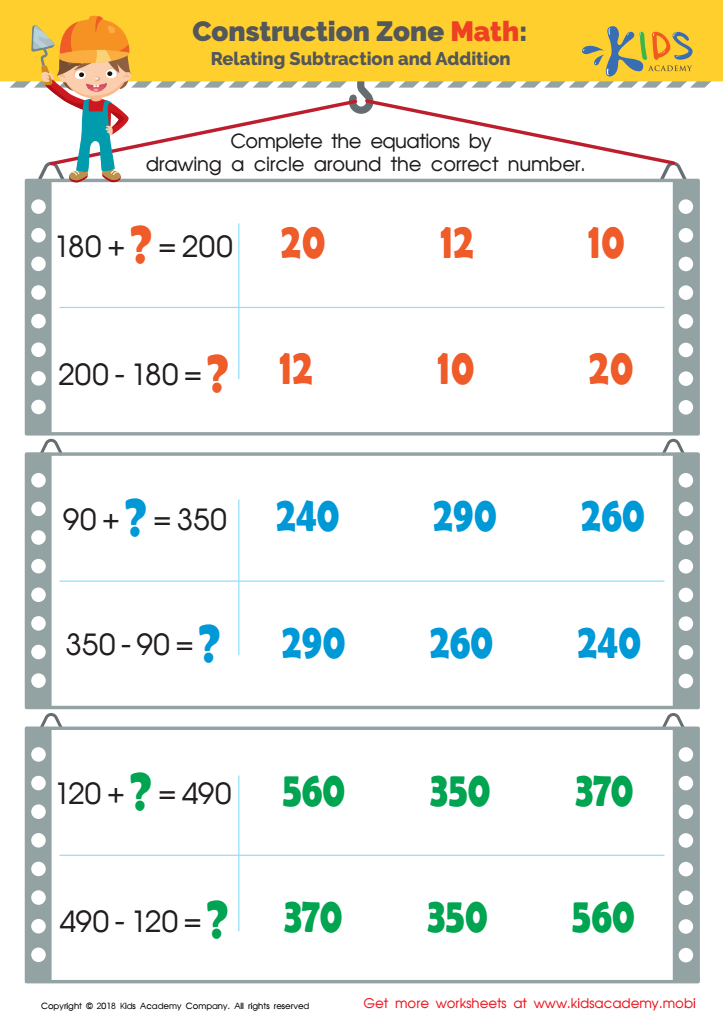
Construction Zone Math: Relating Subtraction and Addition Worksheet








Understanding subtraction, alongside basic addition, is essential for children aged 4-9 as it forms the foundation for essential mathematical skills that they will build on throughout their education. Early comprehension of these concepts promotes critical thinking and problem-solving abilities, helping children make sense of the world around them.
For parents and teachers, fostering a solid grasp of both addition and subtraction supports children’s cognitive development. Mastery in these areas not only improves arithmetic skills but also enhances logical reasoning and pattern recognition. Additionally, it prepares them for more complex mathematical operations, such as multiplication and division, which they will encounter in later grades.
Furthermore, proficiency in these skills builds confidence in young learners, making them more willing to engage in classroom activities and tackle new challenges. It is essential that adults provide support through engaging activities, such as games, storytelling, and real-life problem solving, to create a positive learning environment. This not only nurtures a child’s mathematical ability but also fosters a love for learning, paving the way for academic success in school and beyond. Informed parents and teachers can make a significant impact in shaping children's attitudes towards mathematics.








