Critical Thinking Normal Geometry Worksheets for Ages 4-9
5 filtered results
-
From - To
Enhance your child's critical thinking skills with our engaging Geometry Worksheets designed specifically for ages 4-9. Each printable worksheet combines enjoyable activities with foundational geometric concepts, fostering spatial awareness and logical reasoning. From identifying shapes to solving simple puzzles, these worksheets encourage children to think critically as they explore shapes and their properties. Perfect for at-home learning or classroom use, our resources aim to stimulate curiosity and comprehension in young learners. Download now and provide your child with the tools they need to succeed in Math while having fun! Ideal for parents and educators alike. Start your geometric adventure today!
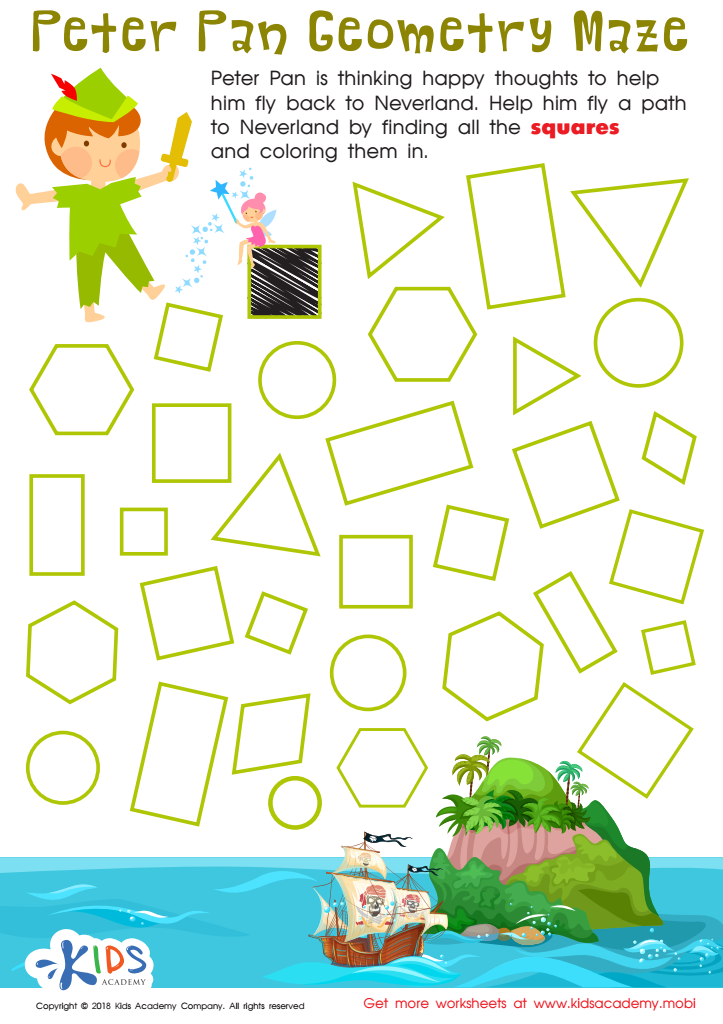
Peter Pan Worksheet
 Assign to My Students











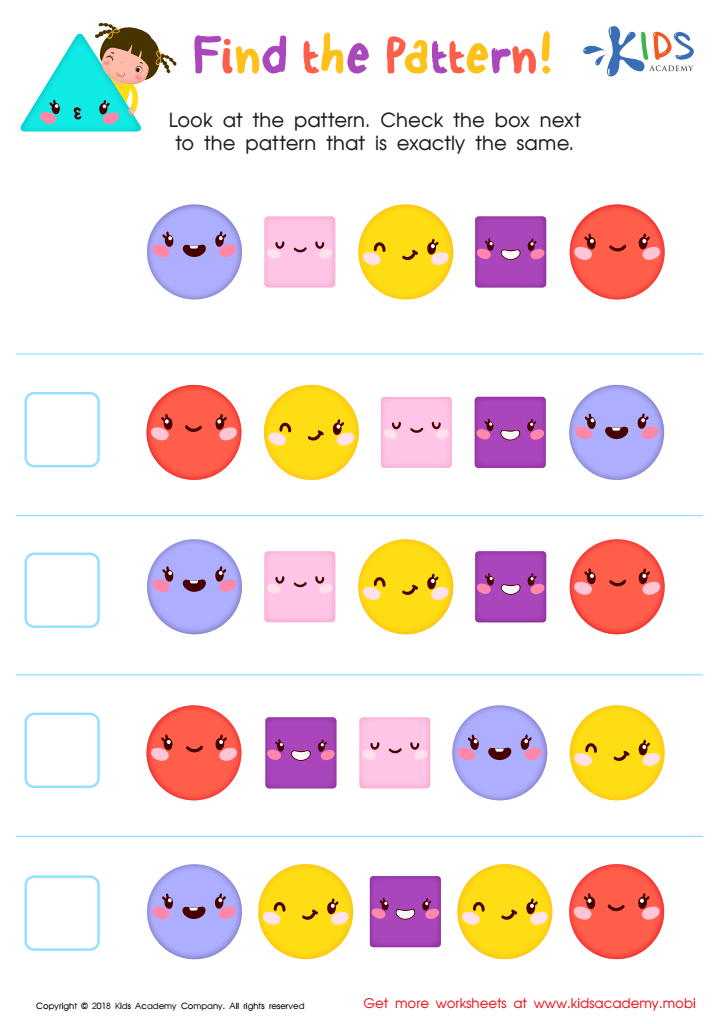
Find the Pattern Worksheet
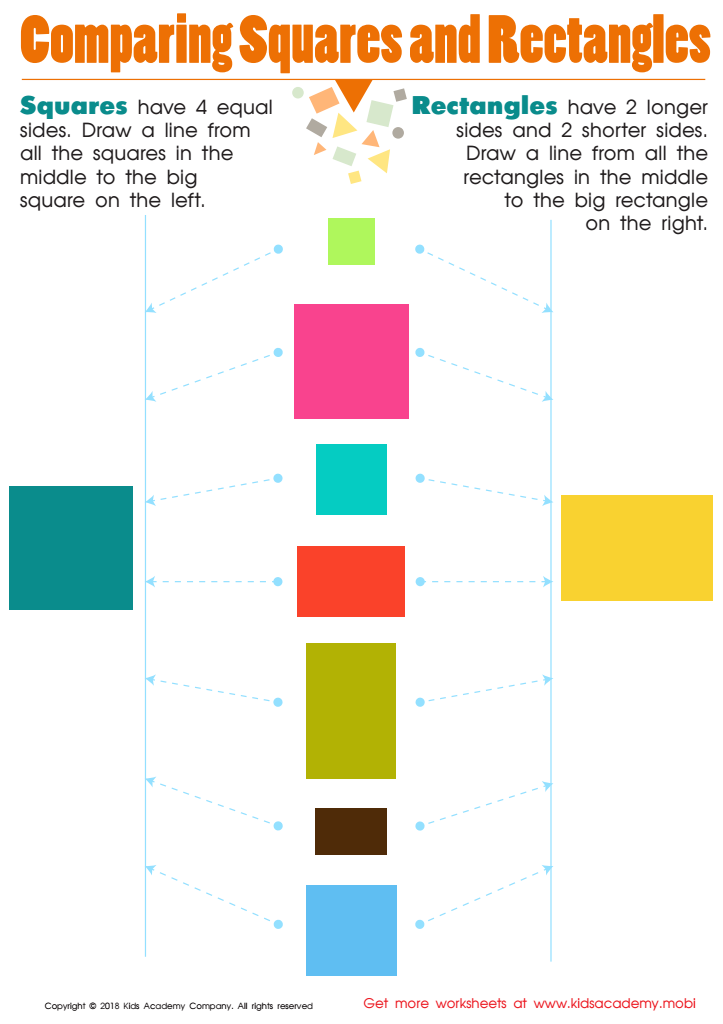
Comparing Squares Rectangles Worksheet
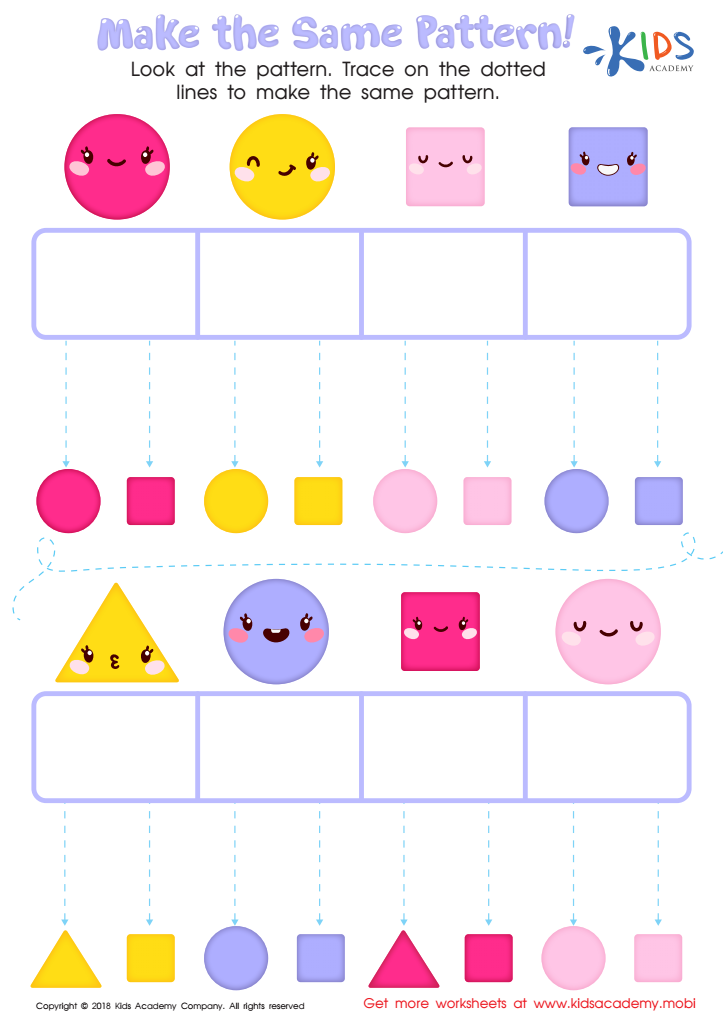
Make the Same Pattern Worksheet
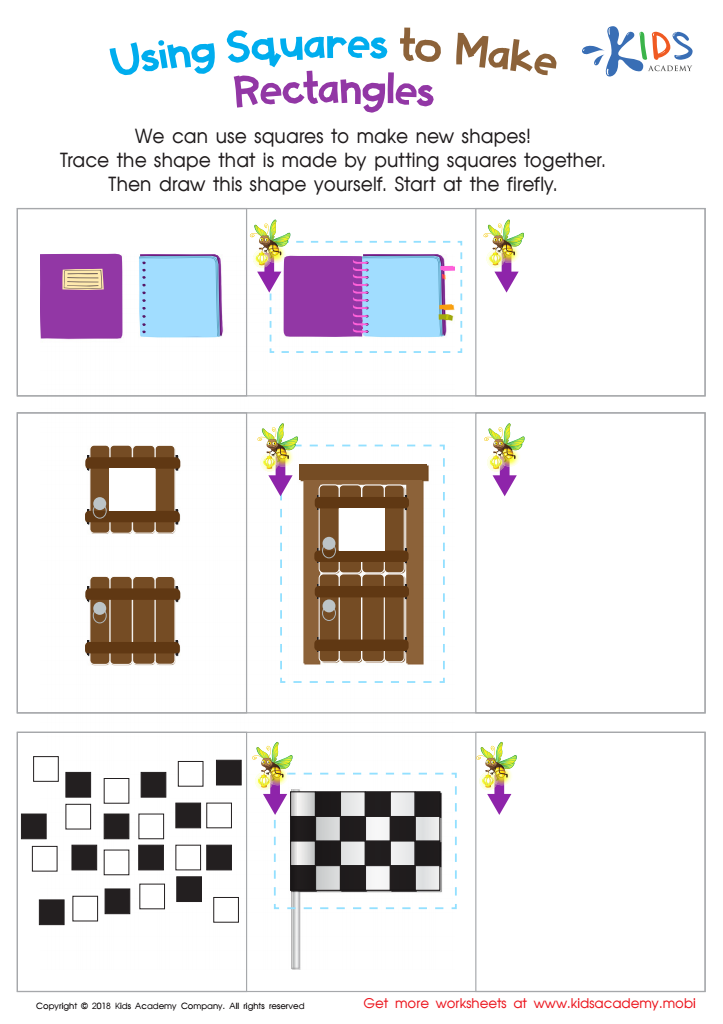
Using Squares to Make Rectangles Worksheet








Parents and teachers should care about Critical Thinking in Normal Geometry for ages 4-9 because it lays the foundation for essential cognitive skills that support a child's overall development. At this age, children are naturally curious and eager to explore their surroundings. Introducing geometric concepts not only enriches their understanding of shapes and spatial relationships but also fosters critical thinking, problem-solving, and analytical skills.
Engaging children in geometric activities encourages them to observe, question, and reason, aiding in the development of logical thinking. It allows them to recognize patterns, explore properties of shapes, and apply their knowledge in real-world contexts, strengthening their mathematical literacy. Additionally, critical thinking in geometry cultivates perseverance, as children learn to approach problems collaboratively and creatively bounce back from challenges.
Moreover, these skills are fundamental for future learning across disciplines, enhancing a child's ability to innovate and adapt in an increasingly complex world. By investing interest and resources in geometric education at an early age, parents and teachers empower children to develop a strong mathematical foundation while also fostering life skills that transcend academics. In conclusion, prioritizing critical thinking in geometry instills confidence while nurturing inquisitive learners who can tackle real-world situations with confidence.








