Understanding fractions Normal Geometry Worksheets for Ages 4-9
6 filtered results
-
From - To
Discover our "Understanding Fractions Normal Geometry Worksheets" tailored for children aged 4-9! These engaging worksheets provide young learners with a solid foundation in fractions, focusing on geometric concepts through fun, visual exercises. Our activities are designed to enhance kids' comprehension of parts of a whole using shapes, encouraging them to identify, compare, and manipulate fractions in an interactive way. With vibrant illustrations and age-appropriate challenges, these worksheets make learning fractions enjoyable and effective, helping to build confidence in math skills. Perfect for teachers and parents, they promote independent learning while reinforcing essential geometric and fraction concepts. Start learning today!
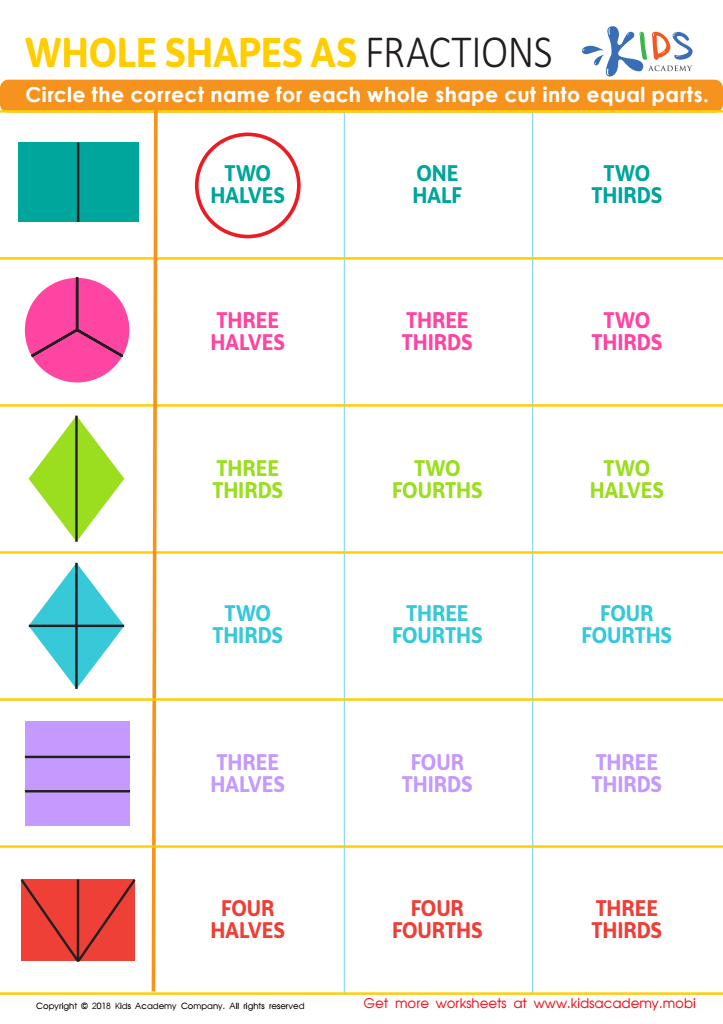
Whole Shapes as Fractions Worksheet
 Assign to My Students











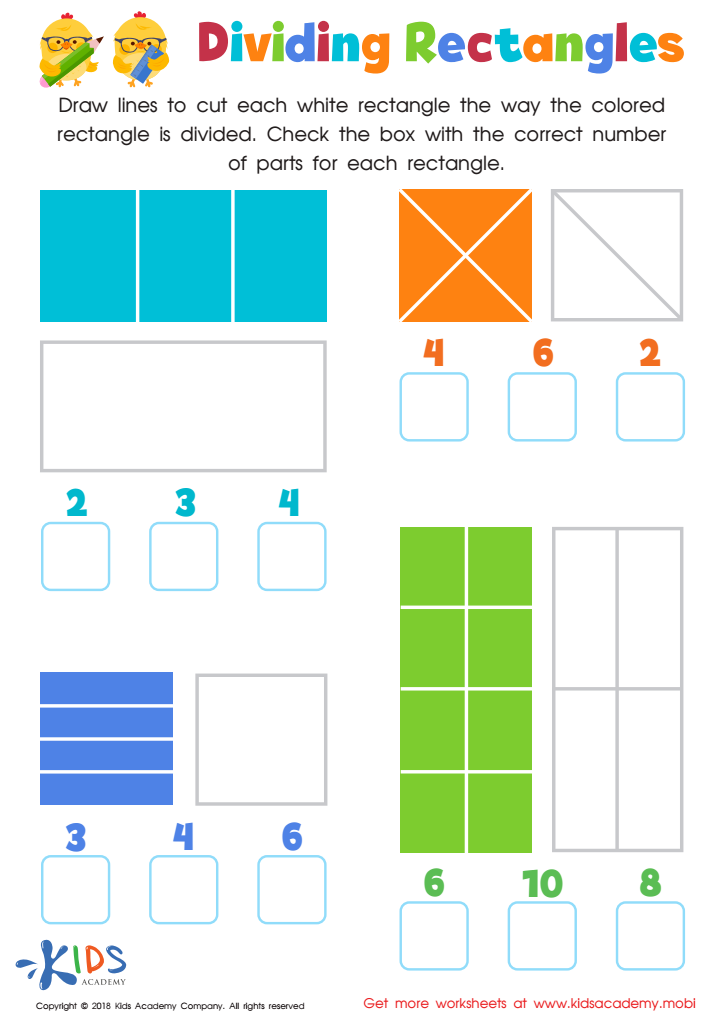
Dividing Rectangles Worksheet
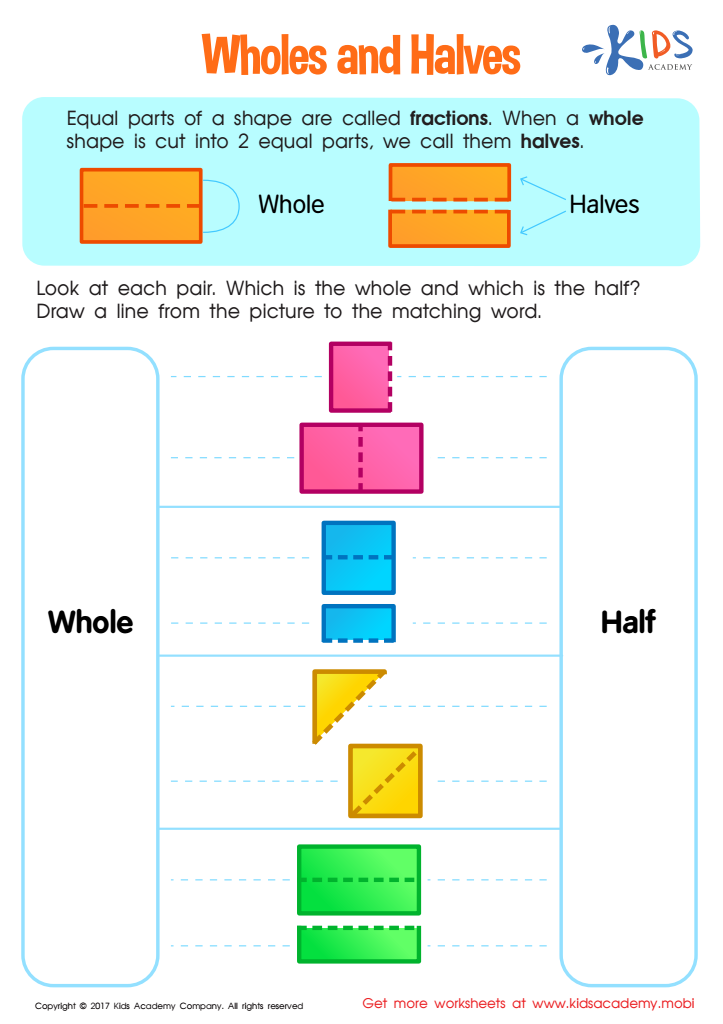
Wholes and Halves Worksheet
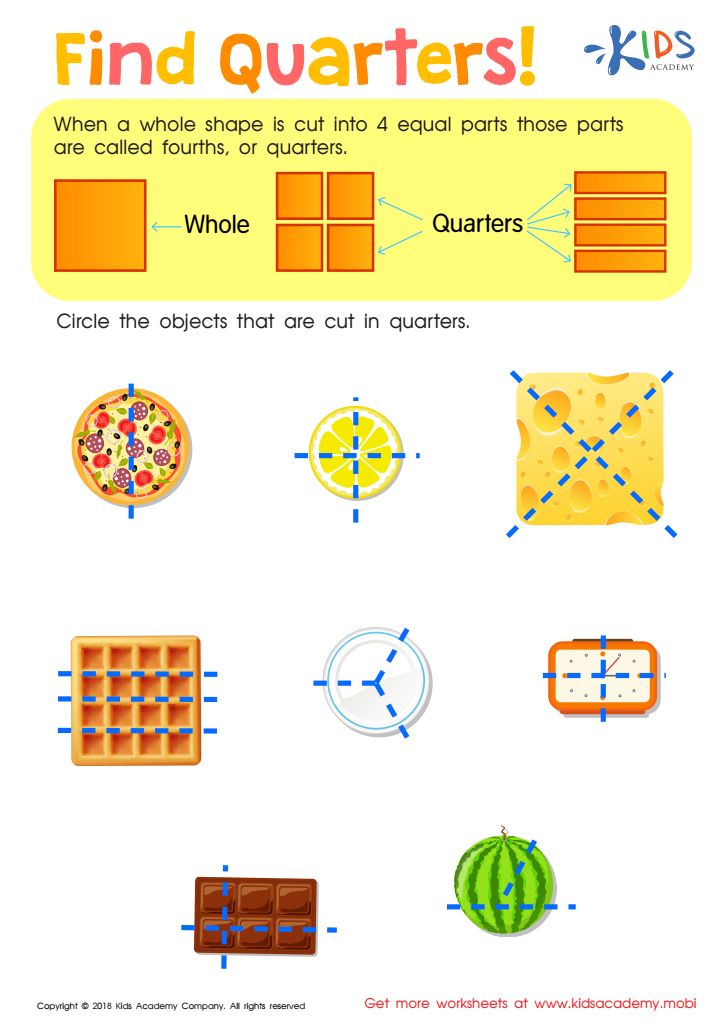
Find Quarters Worksheet
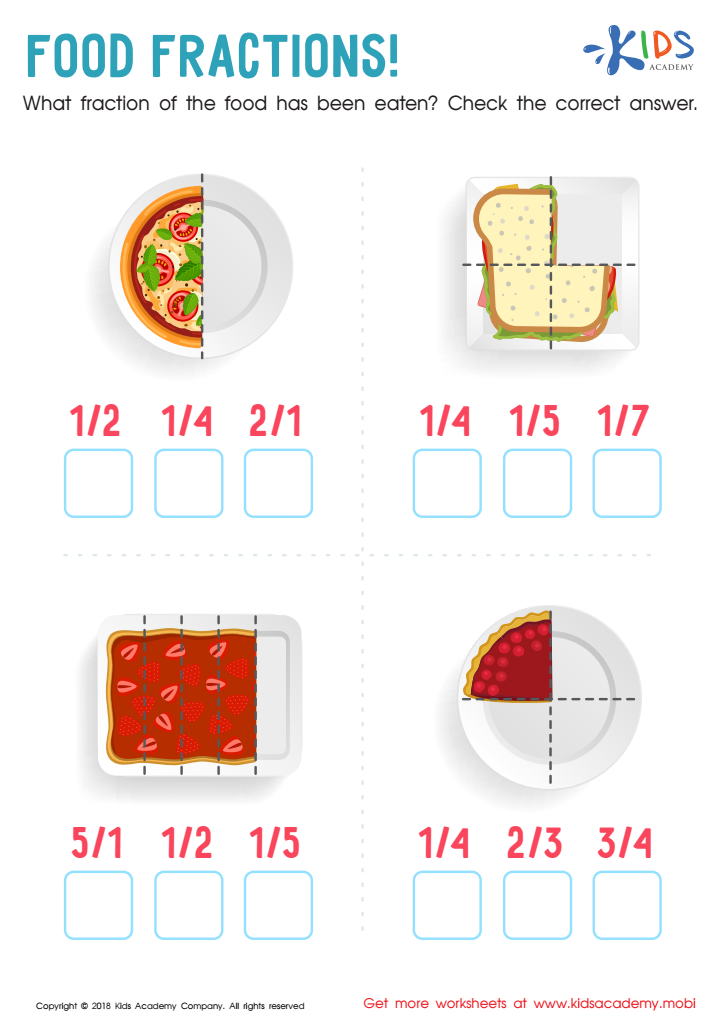
Food Fractions Worksheet
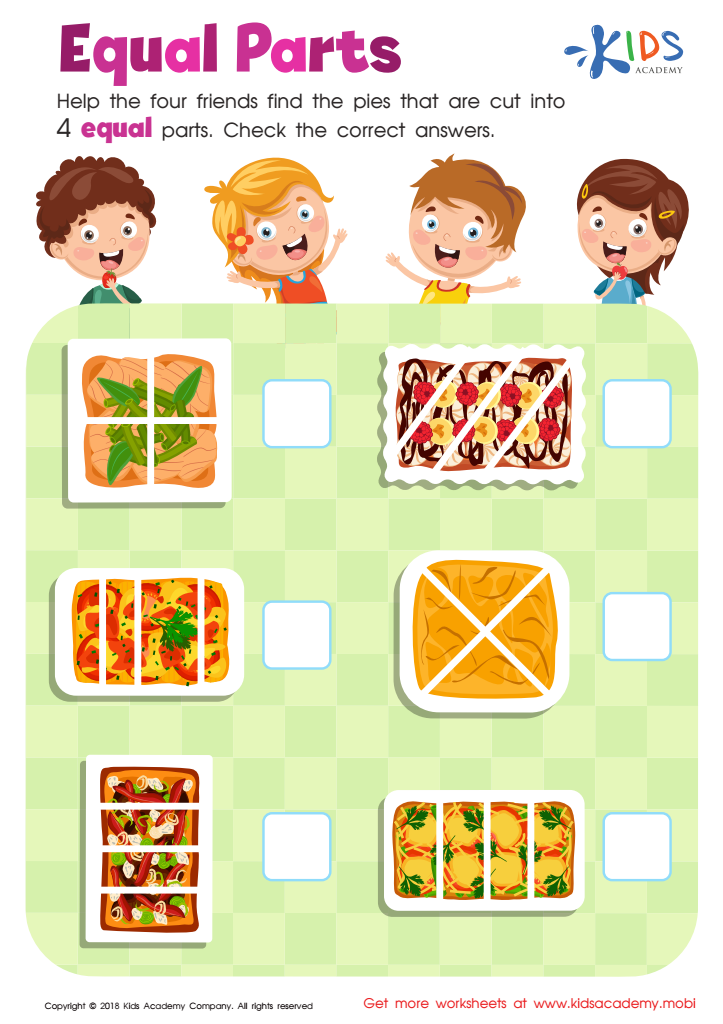
Equal Parts: Food Worksheet








Understanding fractions and basic geometry is crucial for children aged 4-9, as these concepts form the building blocks for future mathematical learning and critical thinking skills. Parents and teachers should care about these subjects because they help children develop a strong foundation in mathematics, which is essential for academic success and everyday life.
Fractions introduce children to the idea of parts and wholes, fostering an understanding of division and sharing. This concept is essential not just in math classes, but also in real-world situations like cooking or sharing resources among friends, promoting collaboration and negotiation skills.
Geometry, on the other hand, helps children recognize shapes, understand spatial relationships, and fosters essential visualization skills. Mental visualization in geometry enhances problem-solving abilities and encourages creativity, which can be beneficial in STEM-related fields.
Moreover, incorporating these subject areas into early education stimulates cognitive development and boosts confidence through hands-on learning experiences. Engaging activities, such as manipulatives and fun visuals, make these subjects enjoyable, promoting a positive attitude towards math.
Ultimately, understanding fractions and geometry equips children with essential tools for reasoning, logical thinking, and everyday decision-making, laying the groundwork for a lifetime of mathematical literacy.








