Comparing Fractions Normal Numbers Worksheets for Ages 4-9
4 filtered results
-
From - To
Discover our engaging "Comparing Fractions Normal Numbers Worksheets," designed for children ages 4 to 9! These interactive resources provide a fun and educational way for young learners to master the concept of comparing fractions. With vibrant illustrations and age-appropriate activities, students will develop critical thinking skills as they learn to understand relationships between different fractions. Our worksheets encourage hands-on practice, helping kids enhance their mathematical skills with ease. Perfect for home or classroom use, these worksheets ensure foundational math confidence while fostering a love for learning. Start your child's fraction journey today—explore our user-friendly worksheets for an enriching experience!
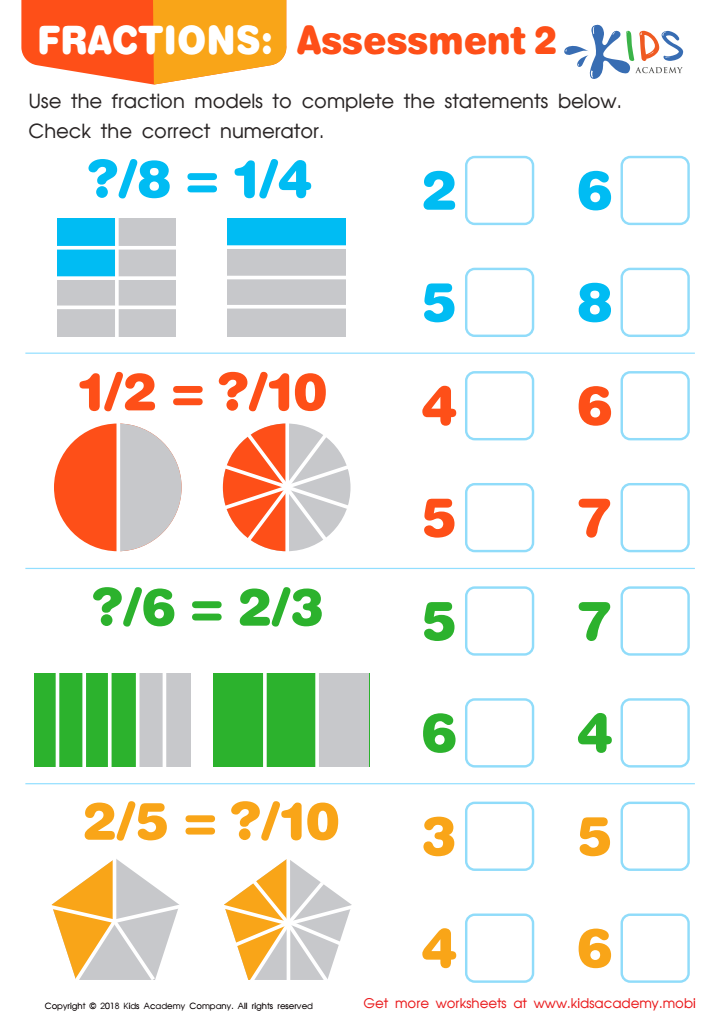
Fractions: Assessment 2 Worksheet
 Assign to My Students
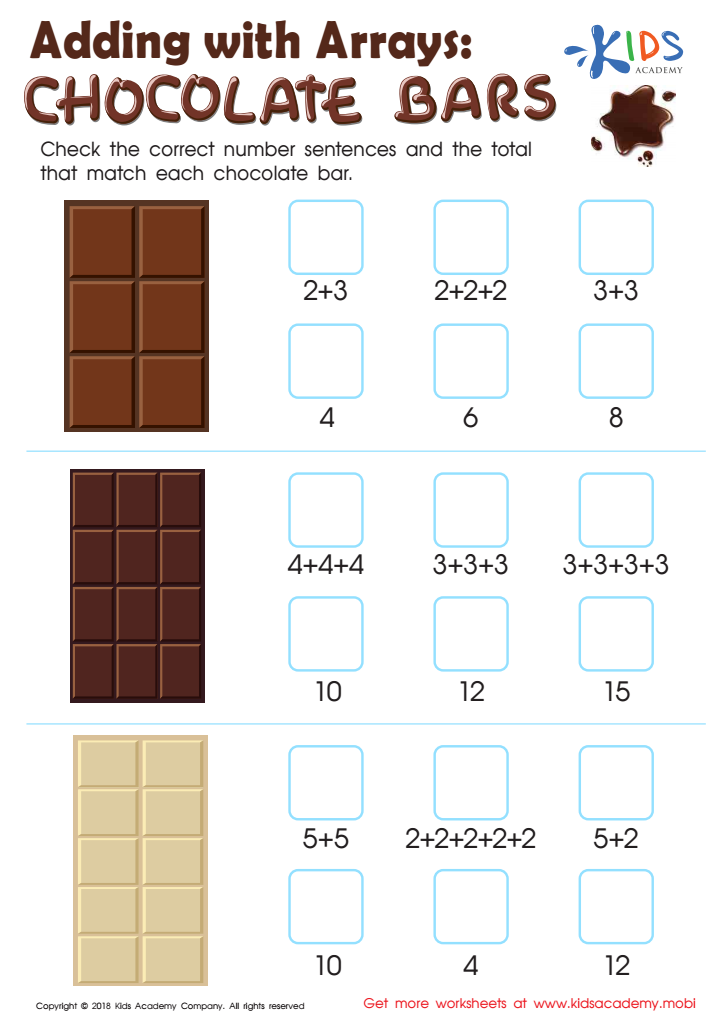
Adding with Arrays: Chocolate Bars Worksheet
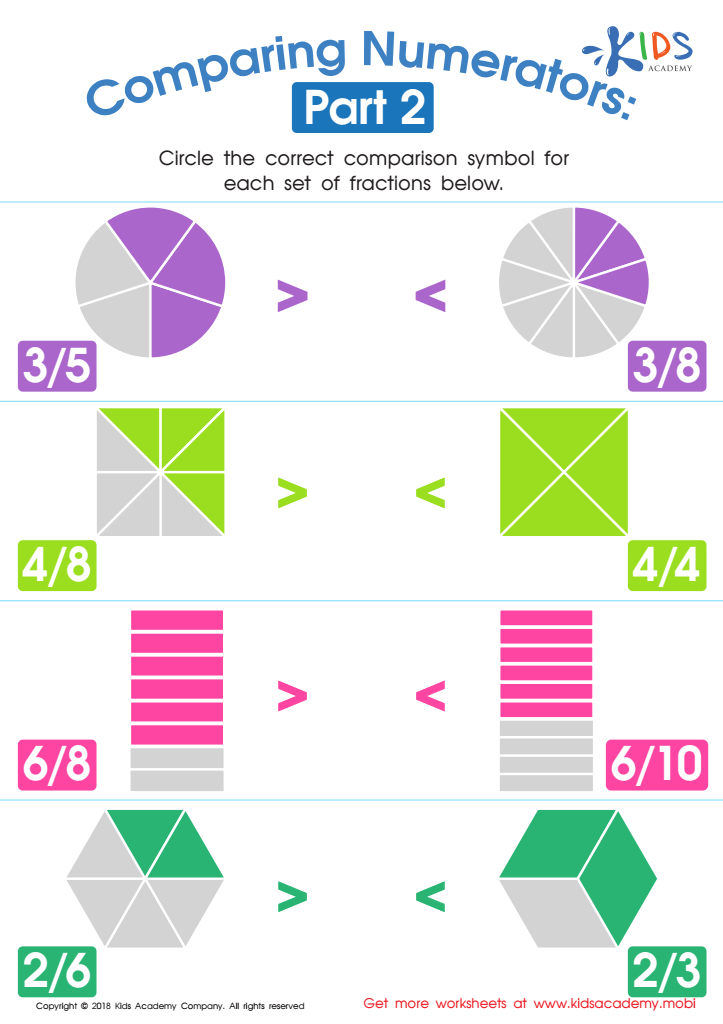
Comparing Numerators Part 2 Worksheet
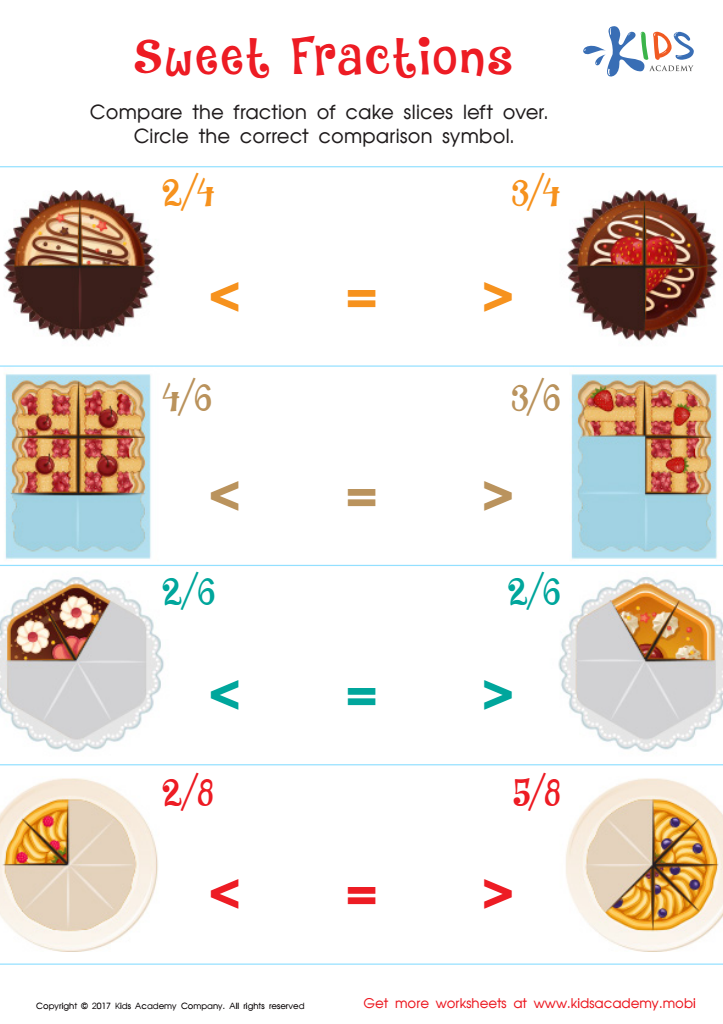
Compare Fractions Worksheet







%20(1).jpg)
Teaching young children to compare fractions is essential for their foundational understanding of mathematics. For ages 4-9, this skill not only enhances numerical literacy but also fosters critical thinking and logical reasoning. Unlike simple whole numbers, fractions introduce concepts of parts and wholes, helping children grasp how quantities relate to each other.
Understanding fractions encourages children to visualize and manipulate real-world situations, such as sharing food or dividing objects, making math more relevant and engaging. These early experiences set the stage for more advanced mathematical concepts in later years, such as operations with fractions, ratios, and proportions.
Parents and teachers care about comparing fractions because it builds confidence and competency in young learners. When children succeed in comparing fractions, they experience a sense of achievement, motivating them to explore mathematics further.
Additionally, incorporating games and interactive activities while learning about fractions can make the process enjoyable, fostering a positive attitude towards math. Ultimately, instilling an understanding of fractions in early education not only prepares children for future math challenges but also helps them develop essential life skills in problem-solving and decision-making. In short, caring about comparing fractions is an investment in a child's success in and outside the classroom.








