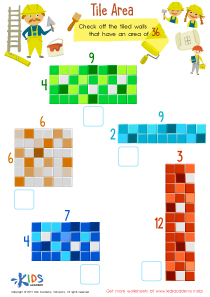
Number comparison Normal Numbers Worksheets for Ages 4-9
5 filtered results
-
From - To
Discover engaging Number Comparison Worksheets designed specifically for children aged 4 to 9! These printables provide a fun and interactive way for young learners to develop essential math skills. Through a variety of activities, kids will explore the concepts of greater than, less than, and equal to, enhancing their numerical understanding. Our worksheets are colorful, easy to follow, and perfect for use at home or in the classroom. Tailored to promote critical thinking, these resources support foundational math learning while keeping children motivated and excited about numbers. Perfect for early-grade teachers and parents alike—let’s make math fun together!
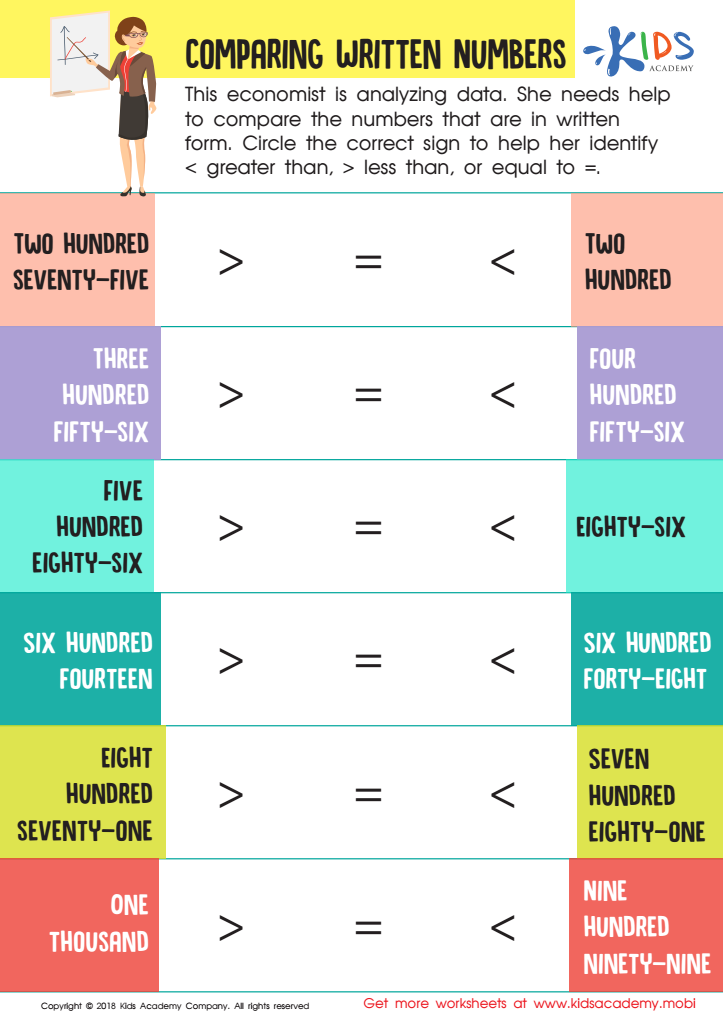
Comparing Written Numbers Worksheet
 Assign to My Students
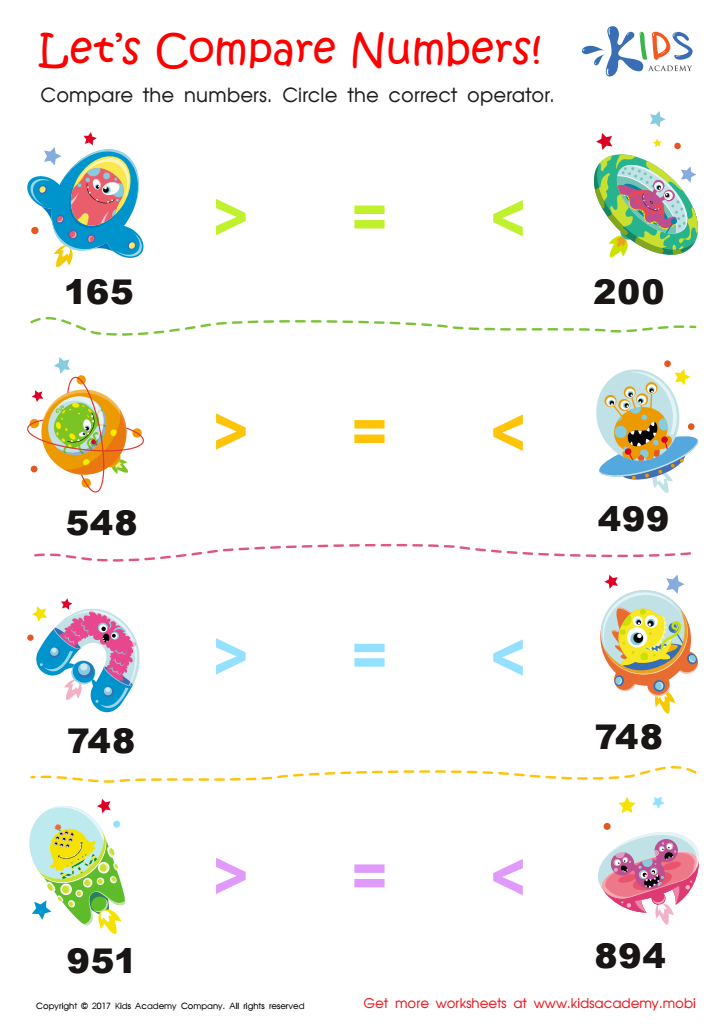
Comparing Numbers Worksheet for 2nd Grade
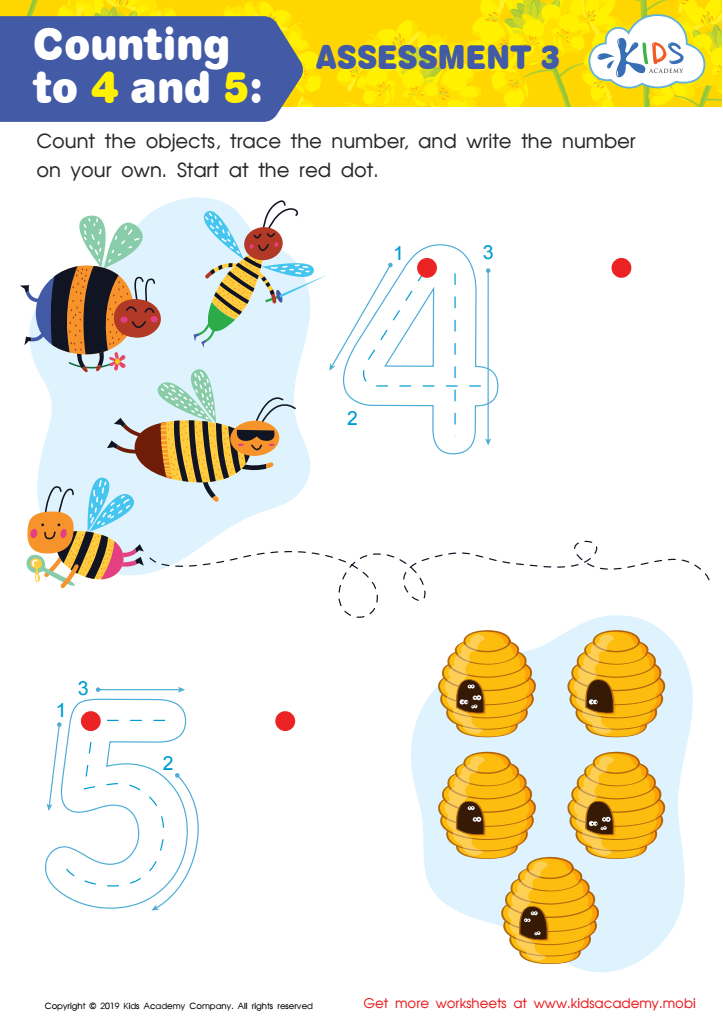
Counting to 4 and 5: Assessment 3 Worksheet
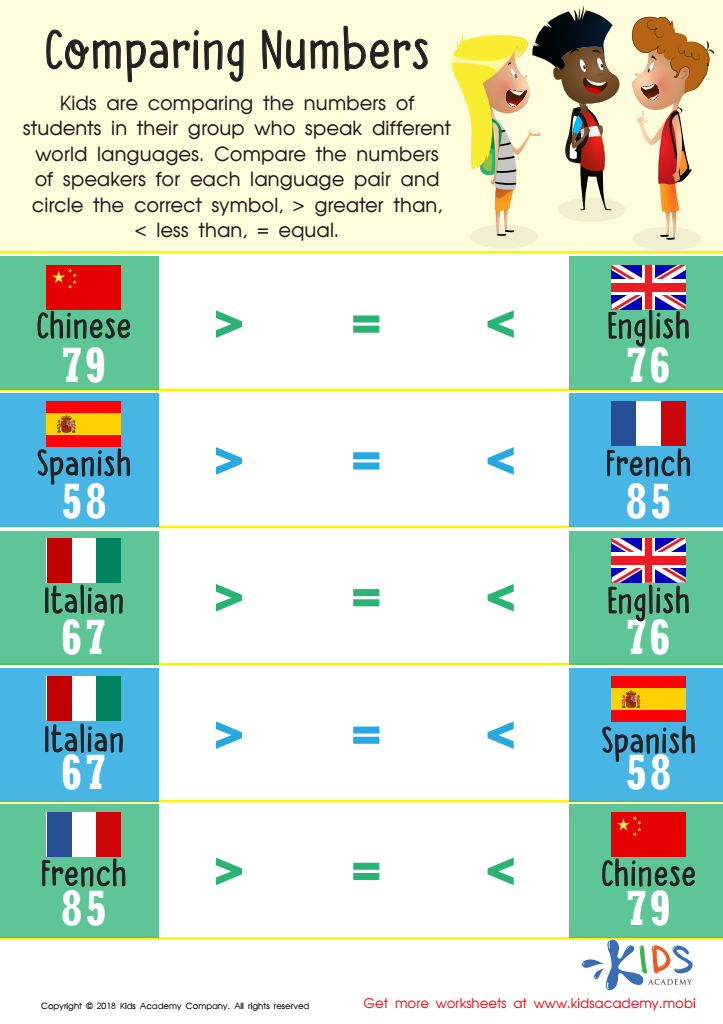
Comparing Numbers Worksheet for 1st Grade
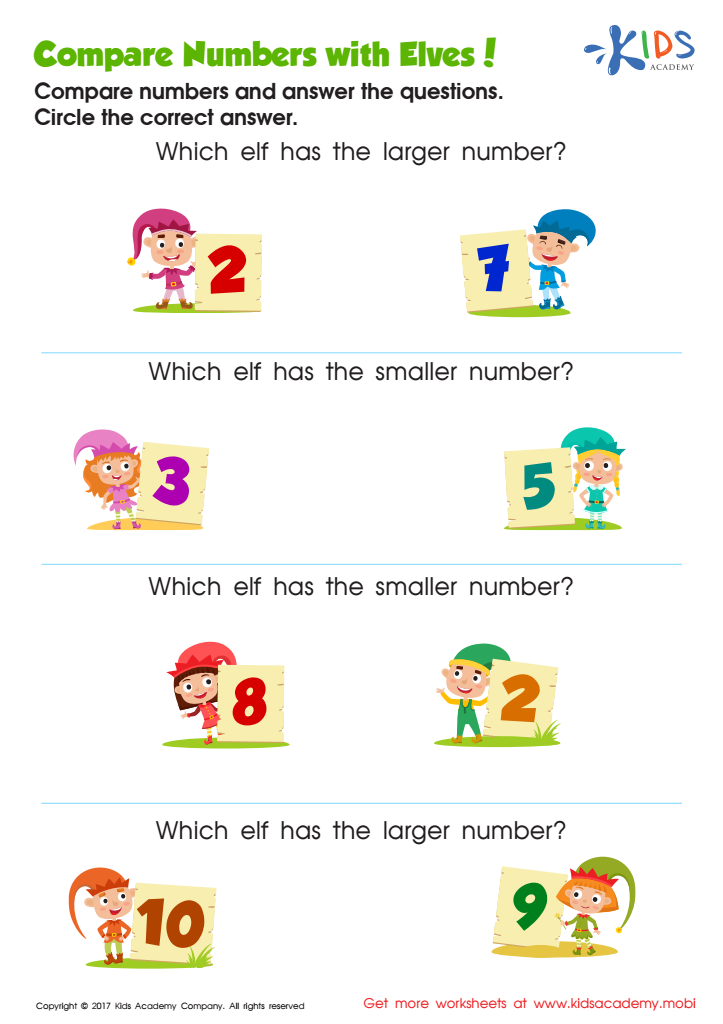
Comparing Numbers Worksheet for Kindergarten








Understanding number comparison and normal numbers is essential for children aged 4-9, as it lays the foundation for their mathematical skills. During these formative years, children begin to grasp the concepts of quantity, magnitude, and order, which are crucial for more advanced math. Teaching number comparison—how to identify which number is greater, smaller, or equal—helps develop critical thinking skills.
When parents or teachers emphasize the importance of these concepts, they enable children to engage with numbers in practical ways, such as in everyday situations like sharing snacks or counting toys. This practical application reinforces what they learn in a real-world context.
Additionally, mastering number comparison aids in the development of computational skills, supporting children in learning addition and subtraction more effectively. It nurtures a sense of confidence and ensures that children are equipped for future mathematical challenges.
By caring about and actively engaging in children’s understanding of number comparison, parents and teachers play a vital role in helping them build a strong foundation necessary for academic success in math. These early experiences significantly influence children’s attitudes towards math, fostering a growth mindset and a love for learning that can last a lifetime.