Subtraction practice Normal Numbers Worksheets for Ages 4-9
4 filtered results
-
From - To
Enhance your child's math skills with our "Subtraction Practice Normal Numbers Worksheets for Ages 4-9." These thoughtfully designed worksheets provide engaging subtraction exercises to develop fundamental math abilities in young learners. Tailored for children aged 4-9, the worksheets help improve number recognition, subtraction techniques, and problem-solving skills. Each sheet presents colorful illustrations and age-appropriate challenges to sustain interest and boost confidence in math. Our subtraction practice worksheets are perfect for both classroom activities and at-home practice, offering an enjoyable and effective way for children to master essential subtraction skills. Empower your child's math journey today!
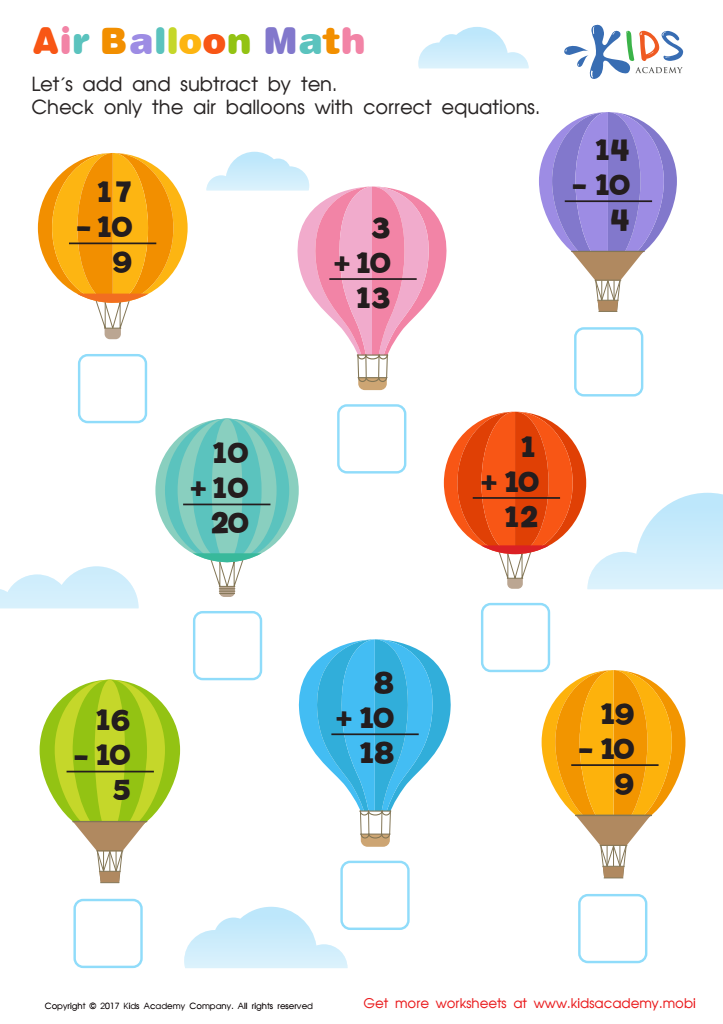
Air Balloon Math Worksheet
 Assign to My Students
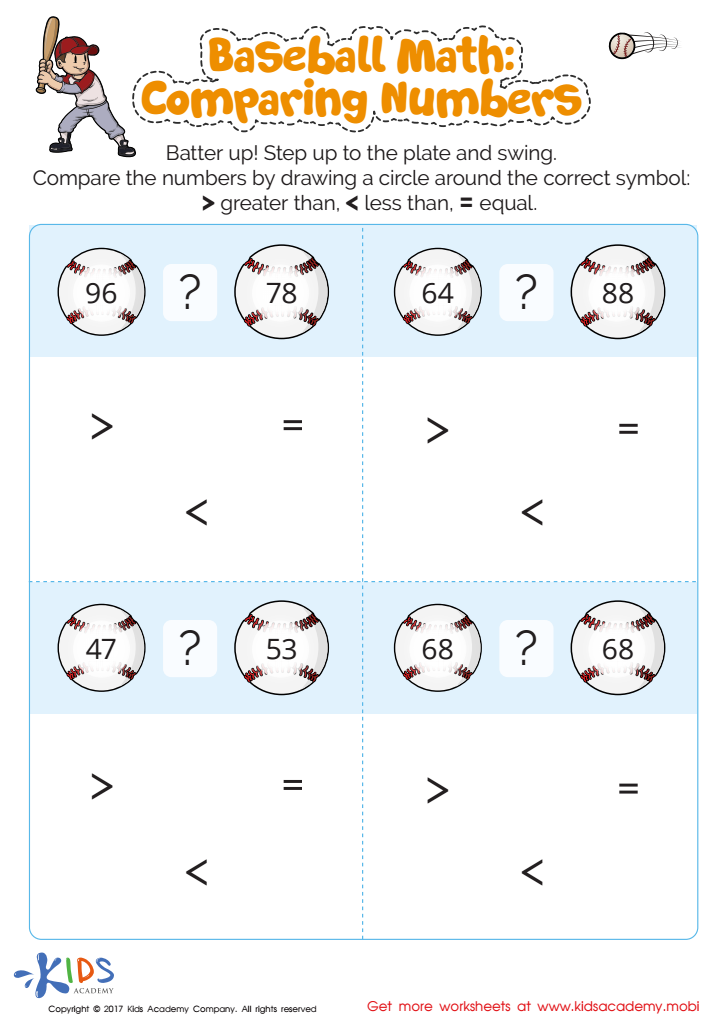
Compare Numbers Printable
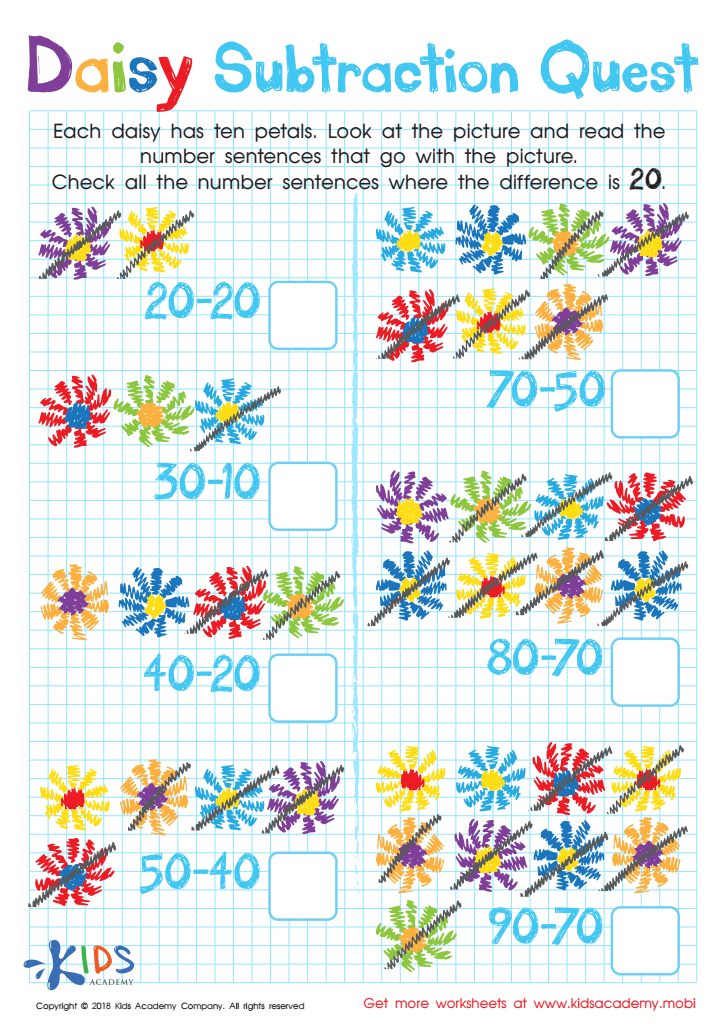
Daisy Subtraction Quest Worksheet

Ten in the Bed Worksheet








Parents and teachers should care about subtraction practice for normal numbers for ages 4-9 because it lays the foundational building blocks for more advanced mathematical concepts. Mastery of basic subtraction fosters strong numeracy skills by helping young learners develop an understanding of the relationships between numbers. This early mathematical comprehension is crucial as children advance in their education, allowing them to better tackle complex operations such as multiplication, division, fractions, and algebra.
Engaging in regular subtraction practice also enhances problem-solving skills and critical thinking. When children learn to subtract, they acquire techniques to approach a problem methodically, equipping them with the confidence to face challenges in both academic settings and daily life. Additionally, achieving proficiency in subtraction can boost a child's self-esteem. When children feel competent in their mathematical abilities, they are more likely to participate actively in classroom activities and feel motivated to continue learning.
Subtraction practice furthermore aids in the development of logical reasoning and pattern recognition, essential skills for cognitive development. As children repeatedly solve subtraction problems, they start to notice patterns and craft mental strategies, which enhances their overall reasoning abilities.
In conclusion, focusing on subtraction practice between the ages of 4-9 is pivotal for building a solid mathematical foundation, supporting academic success, encouraging resilience, and promoting cognitive development. Parents and teachers play a key role in providing opportunities and resources to practice these skills effectively.








