Comparing sizes Normal Math Worksheets for Ages 5-6
3 filtered results
-
From - To
Explore our "Comparing Sizes Normal Math Worksheets for Ages 5-6" designed to make learning fun and effective. These expertly crafted worksheets help young learners develop essential math skills by engaging them in activities that teach size comparison. Whether comparing objects, animals, or everyday items, kids will enhance their ability to differentiate between big, small, tall, and short. Perfect for classroom or at-home practice, these worksheets cater to the developmental needs of preschool and kindergarten children. Boost your child's confidence in math and prepare them for future success with our interactive and visually appealing comparing sizes worksheets.
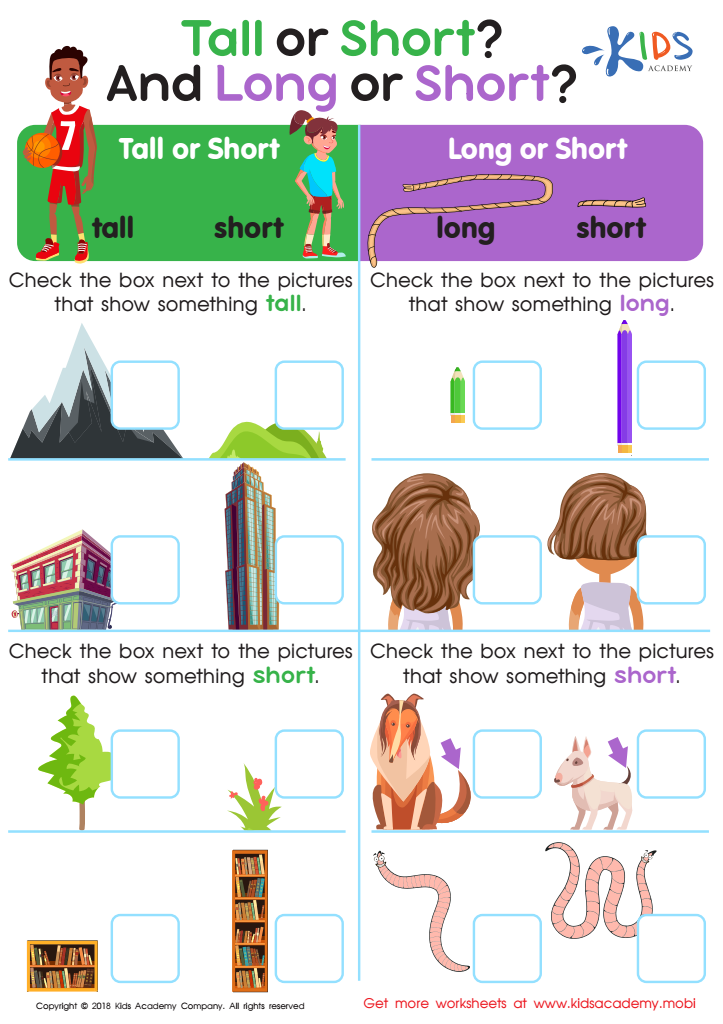
Tall or Short and Long or Short? Worksheet
 Assign to My Students
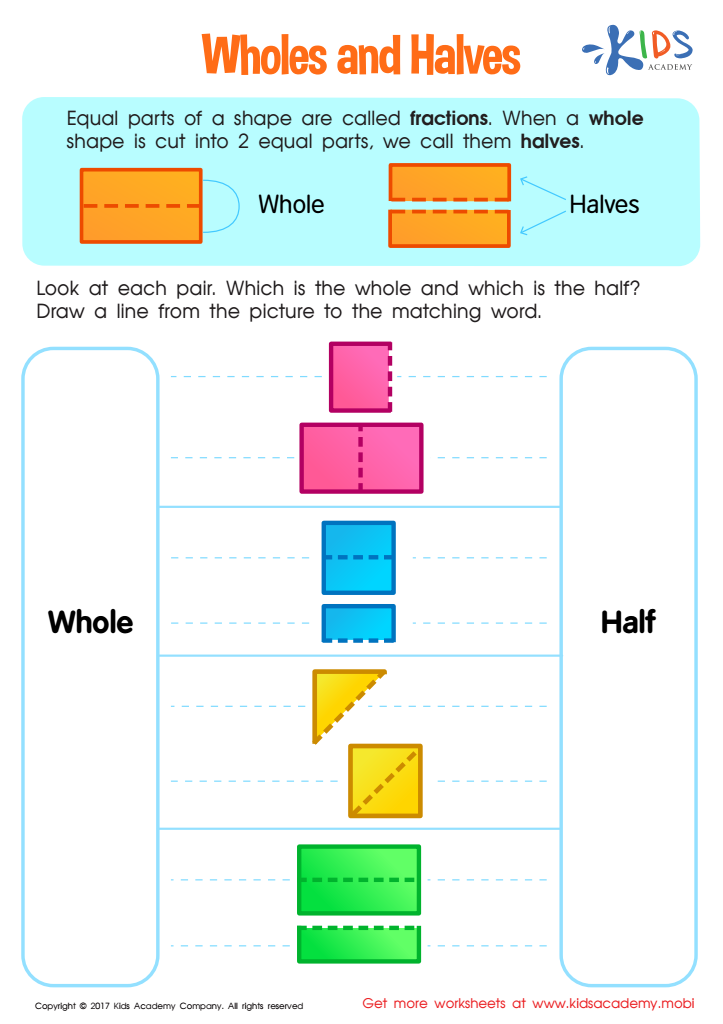
Wholes and Halves Worksheet
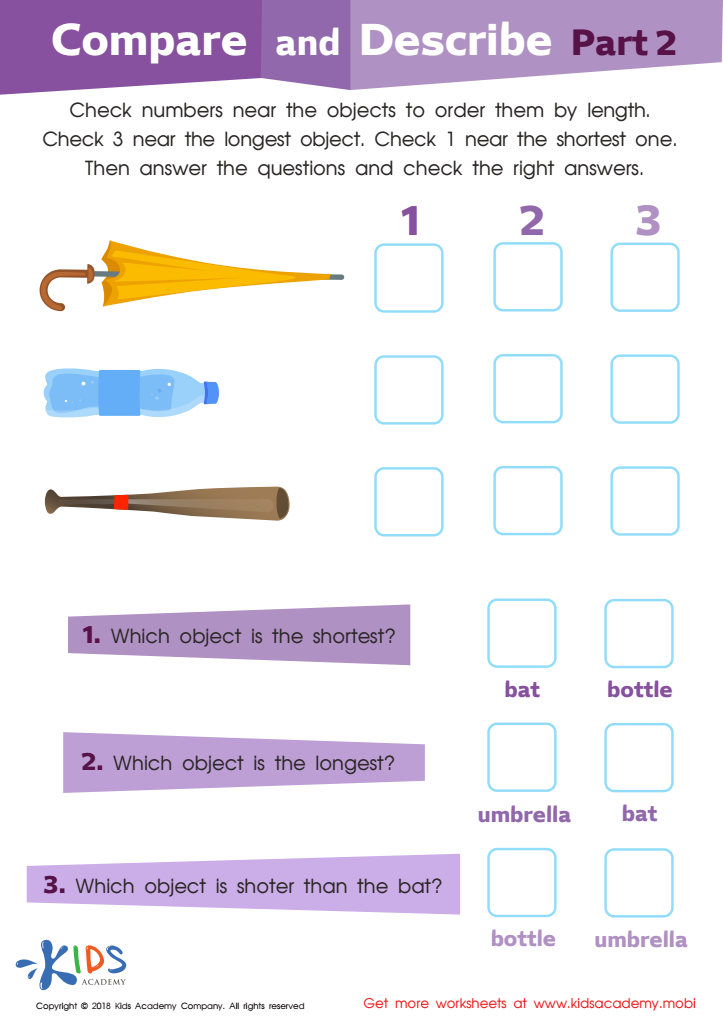
Compare and Describe: Part 2 Worksheet








Caring about teaching children ages 5-6 to compare sizes in mathematics is crucial for several reasons, and parents and teachers should prioritize it. At this formative age, children are developing foundational cognitive skills that will support their lifelong learning. Comparing sizes helps them understand and interact with the world around them, laying the groundwork for critical mathematical concepts such as measurement, spatial awareness, and geometry.
Engaging in size comparison exercises enhances a child's reasoning and problem-solving abilities. It encourages them to observe, describe, and categorize objects based on attributes like length, height, and weight. These activities foster vocabulary development as children learn words such as "taller," "shorter," "bigger," and "smaller." This expanded vocabulary aids in their overall language development and improves their ability to communicate effectively.
Furthermore, comparing sizes helps children develop fine and gross motor skills. Tasks involving measuring and comparing objects often require manipulation and movement, which enhances hand-eye coordination and physical development.
Incorporating size comparison into early math education creates a solid foundation for more complex mathematical concepts children will encounter later. By establishing these fundamental skills early, parents and teachers set children up for greater success and confidence in math and everyday problem-solving. Hence, it's essential to nurture these abilities during this critical developmental period.








