Normal Middle Vowel Worksheets for Ages 5-8
4 filtered results
-
From - To
Introduce your young learners to the vibrant world of vowels with our "Normal Middle Vowel Worksheets for Ages 5-8." Carefully crafted by educators for young minds, these engaging resources provide essential practice through interactive and fun worksheets. Each activity focuses on identifying and using middle vowel sounds in words, reinforcing reading and phonics foundations. Perfect for classroom or home use, these worksheets help children build essential literacy skills in a captivating way. Discover the power of phonetic learning and inspire early reading success with Kids Academy’s expertly designed middle vowel worksheets!
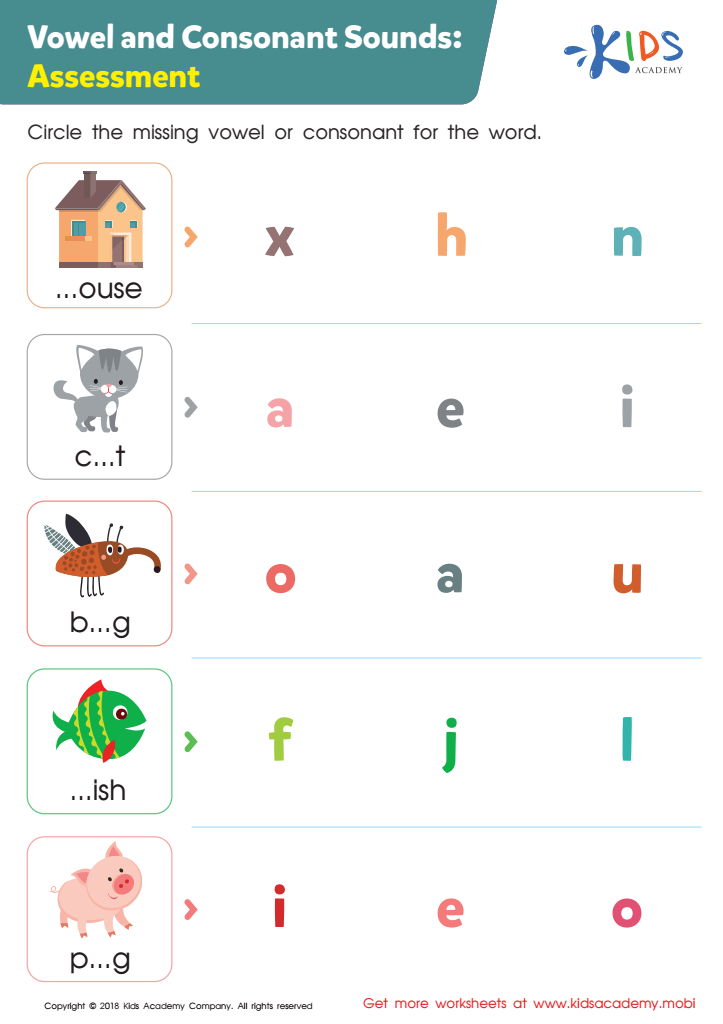
Vowel and Consonant Sounds: Assessment Worksheet
 Assign to My Students
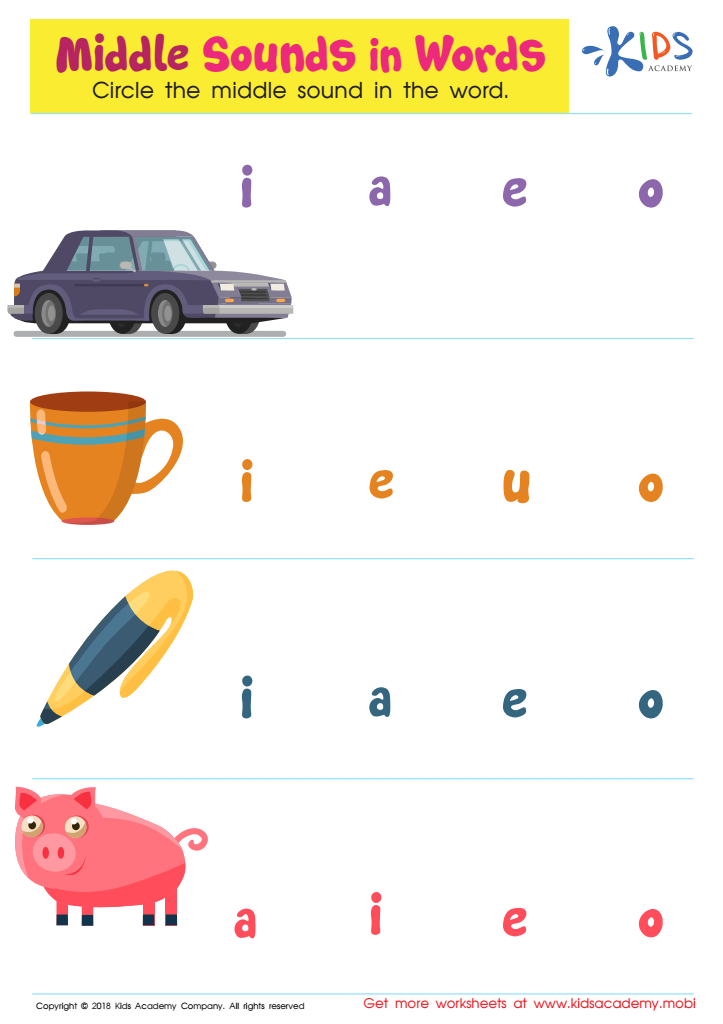
Middle Sounds in Words Worksheet
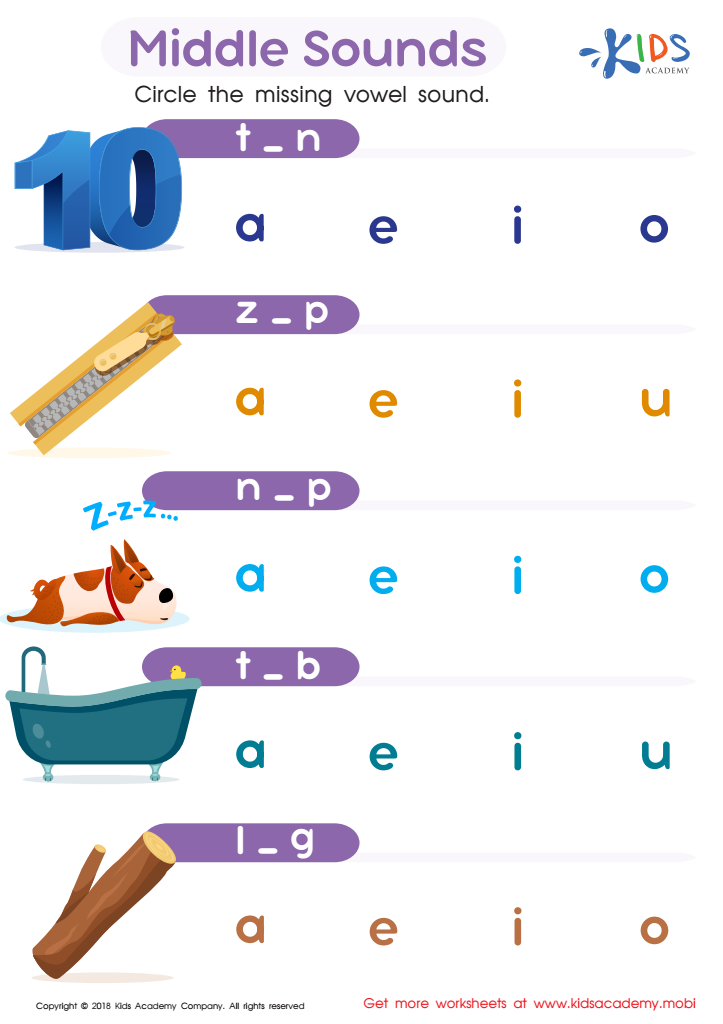
Middle Sounds Worksheet
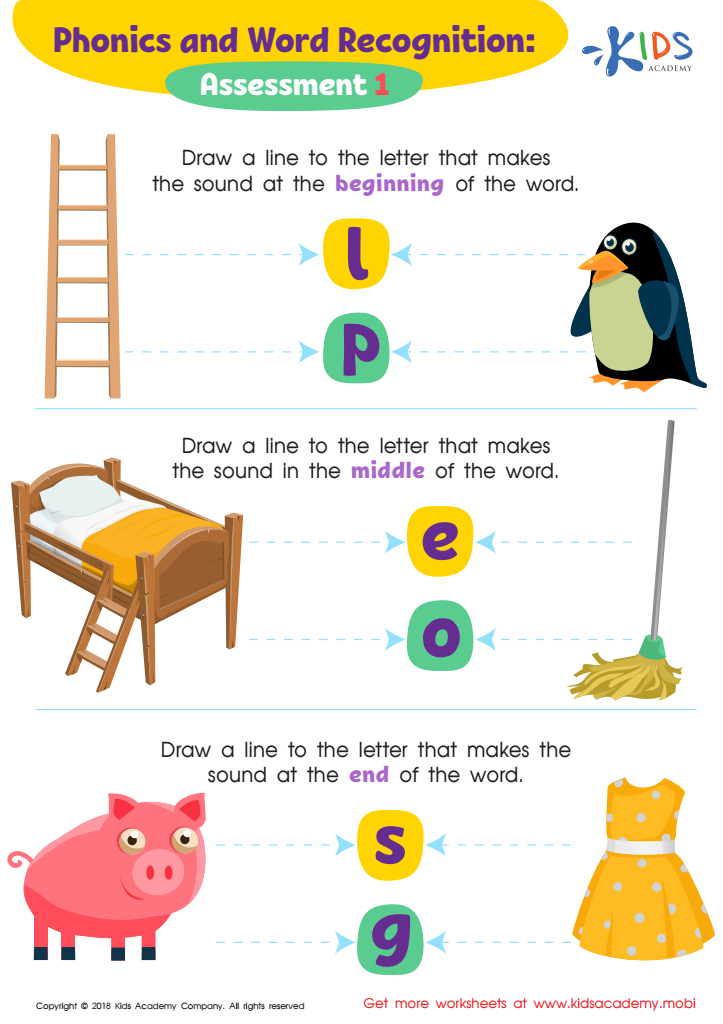
Phonics and Word Recognition: Assessment 1 ELA Worksheet



Parents and teachers should care deeply about normal middle vowel development in children aged 5-8 because it forms a critical foundation for literacy. During this formative period, children are transitioning from recognizing individual letters and sounds to actual reading, where understanding vowel sounds becomes crucial. Middle vowels, often appearing in the middle of words, can significantly affect a child's ability to decode new words, spell accurately, and comprehend text. These skills are the building blocks of communication and learning across all subjects.
When children progress normally with middle vowel sounds, they gain confidence in their reading abilities, fostering a love for reading that will impact their academic performance positively. On the other hand, difficulties in grasping these sounds can lead to struggles, causing frustration and a potential aversion to reading. This delay can affect their overall learning trajectory, as reading proficiency is linked to understanding instructions, grasping new concepts, and overall cognitive development.
Therefore, early intervention and supportive learning practices focusing on middle vowels can help mitigate any emerging issues, ensuring children grasp these essential phonics skills. This lays a robust groundwork for future linguistic and academic success, making it an area of critical importance for educators and parents alike.