
Comparing sizes Normal Worksheets for Ages 5-8
3 filtered results
Difficulty Level
Grade
Age
-
From - To
Subject
Activity
Standards
Welcome to our "Comparing Sizes Worksheets" tailored specifically for children aged 5-8! These engaging, printable worksheets are designed to help young learners develop their understanding of size comparisons in a fun and interactive way. Children will explore concepts like big vs. small, tall vs. short, and more, enhancing their critical thinking and observational skills. Each worksheet features colorful illustrations and activities, ensuring an enjoyable learning experience that keeps kids motivated. Perfect for classrooms or at-home learning, these resources align with early math education objectives to build a solid foundation in size recognition. Start comparing sizes today and watch your child thrive!
Favorites
With answer key
Interactive
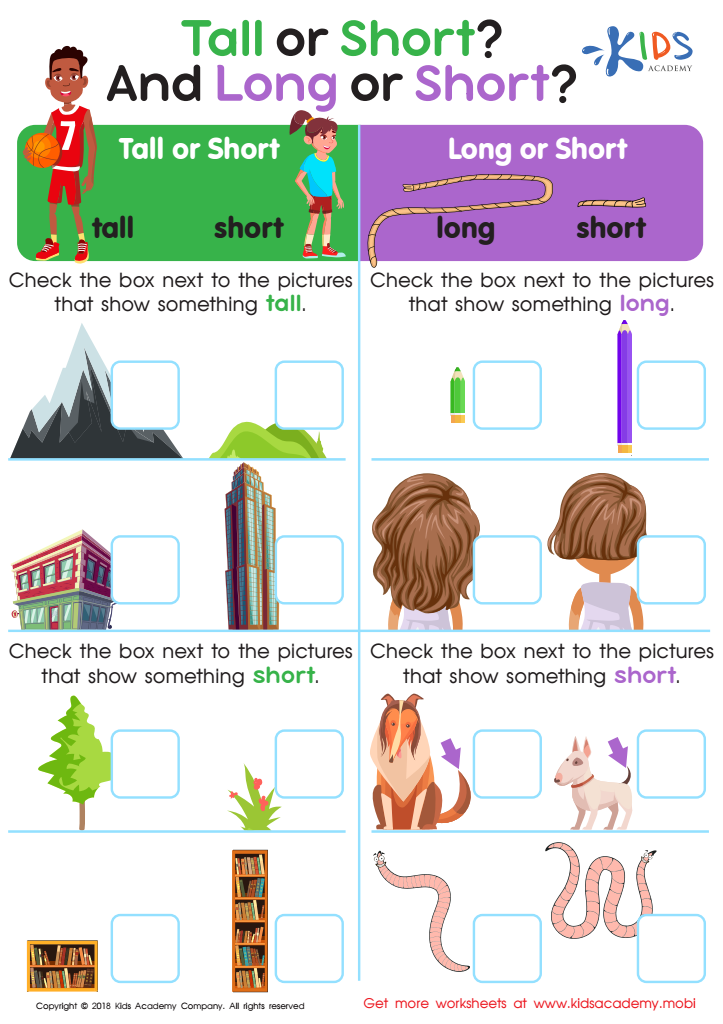
Tall or Short and Long or Short? Worksheet
This worksheet is fun and helpful for kids to understand the difference between height and length. With pictures of familiar objects, they can compare and choose the box with the right answer. This helps them gain skills and a better foundation for future measuring.
 Assign to My Students
Tall or Short and Long or Short? Worksheet
Worksheet
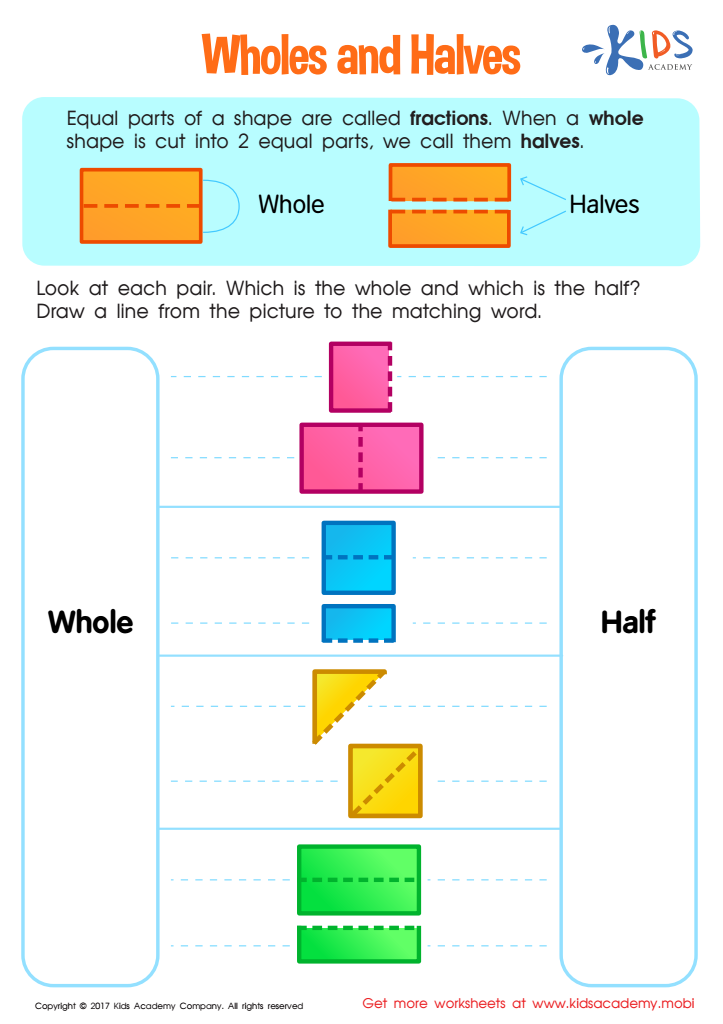
Wholes and Halves Worksheet
Students can feel overwhelmed with fractions. Help take the stress off by using a colorful worksheet to explain whole shapes and how to find halves. Ask them to identify the whole and point to the matching word for the half. A free printout can help guide them.
Wholes and Halves Worksheet
Worksheet
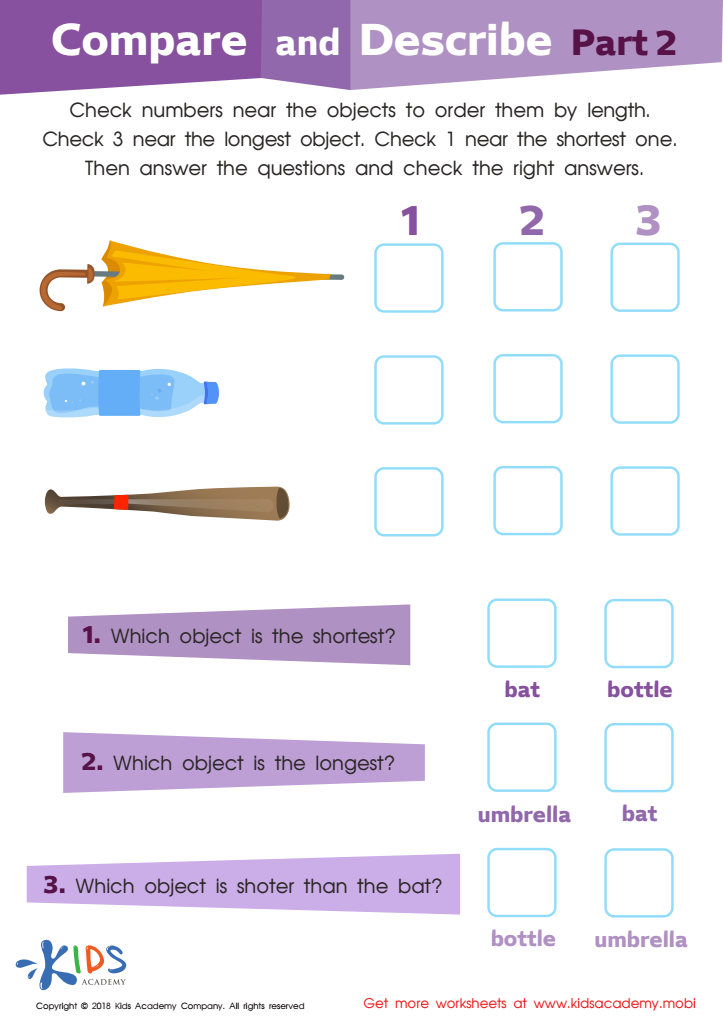
Compare and Describe: Part 2 Worksheet
Help kids hone their comparison skills with this fun measurement worksheet! Kids will sort objects by length and check off the boxes as they go. At the bottom, they'll read the questions and take a final look at the images to complete the exercise. An exciting way to learn measurement!
Compare and Describe: Part 2 Worksheet
Worksheet
Join Kids Academy for Free
Who is primarily going to use this learning content?







Comparing sizes is a fundamental early math skill that significantly impacts children's cognitive development and everyday problem-solving abilities. For parents and teachers of children ages 5-8, understanding this concept is essential for fostering critical thinking and analytical skills.
At this age, children begin to grasp the concepts of big and small, long and short, heavy and light. These comparisons help them understand the world around them, as size relates to numerous real-life scenarios—like sorting toys, choosing appropriate clothing, or even understanding food portions. By encouraging them to compare sizes, educators and families promote spatial awareness, which is foundational for later learning in mathematics, geometry, and science.
Additionally, mastering size comparison builds confidence and independence in young learners. When children successfully identify and categorize objects by size, they enhance their ability to think logically and make decisions.
Incorporating size comparison games and activities also makes learning engaging and fun, fostering a sense of curiosity. By caring about and emphasizing this skill, parents and teachers not only support academic growth but also help children develop a deeper understanding of their environment, laying a strong foundation for future learning.








