
Information retention Normal Worksheets for Ages 5-8
6 filtered results
Difficulty Level
Grade
Age
-
From - To
Subject
Activity
Standards
Enhance your child's learning experience with our Information Retention Normal Worksheets designed for ages 5-8! These engaging, age-appropriate worksheets focus on improving memory and comprehension skills through fun activities that capture your child's attention. Children will explore various topics while developing essential cognitive abilities, including listening and recalling. Our carefully crafted worksheets are perfect for both classroom use and at-home learning, ensuring that concepts are understood and retained. Spark your child's curiosity and build a strong foundation for future learning with these interactive worksheets, which combine creativity and education for an enriching experience. Explore our collection today!
Favorites
With answer key
Interactive
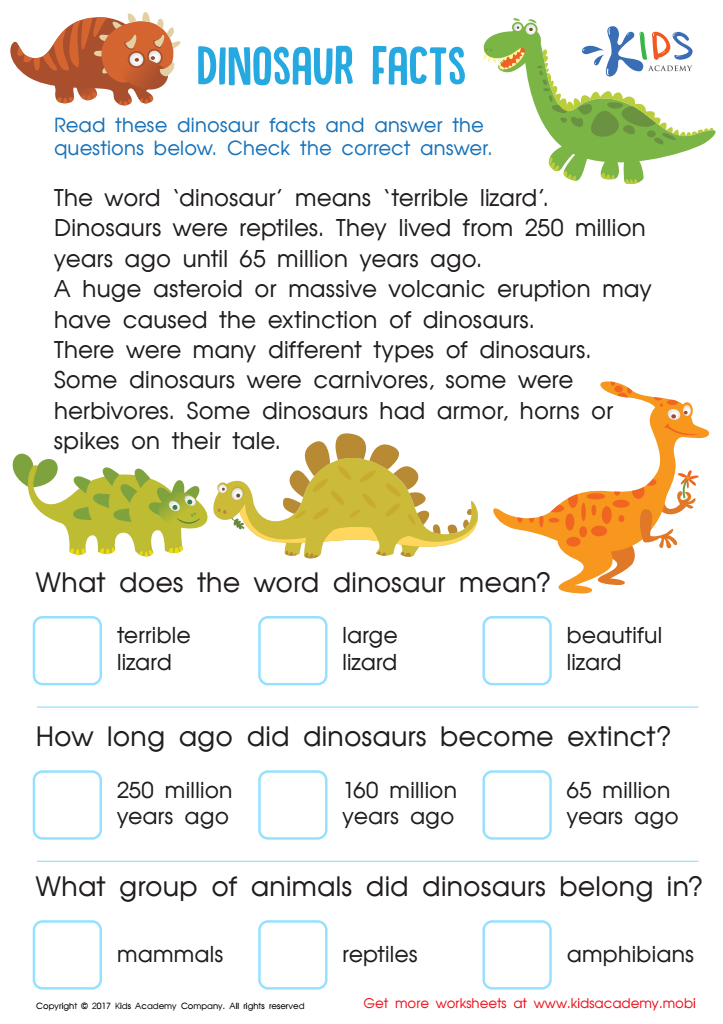
Dinosaur Facts Worksheet
Help your child improve reading skills with engaging nonfiction texts! This dinosaur facts worksheet will teach fun information and test kids on the key details. It'll keep them motivated and ready to learn!
 Assign to My Students
Dinosaur Facts Worksheet
Worksheet
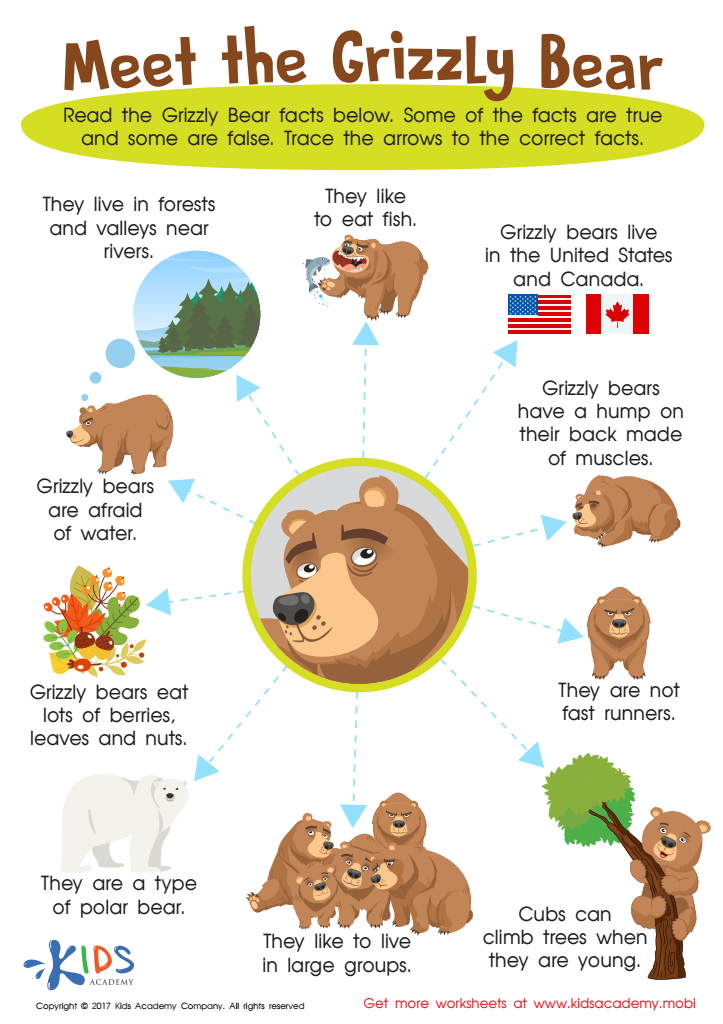
Grizzly Bear Facts Worksheet
Kids will separate truth from fiction in this engaging worksheet about the grizzly bear! Third graders will use their prior knowledge to read the facts and determine which are true and false. Give your child an interesting way to learn more with this vibrant worksheet!
Grizzly Bear Facts Worksheet
Worksheet
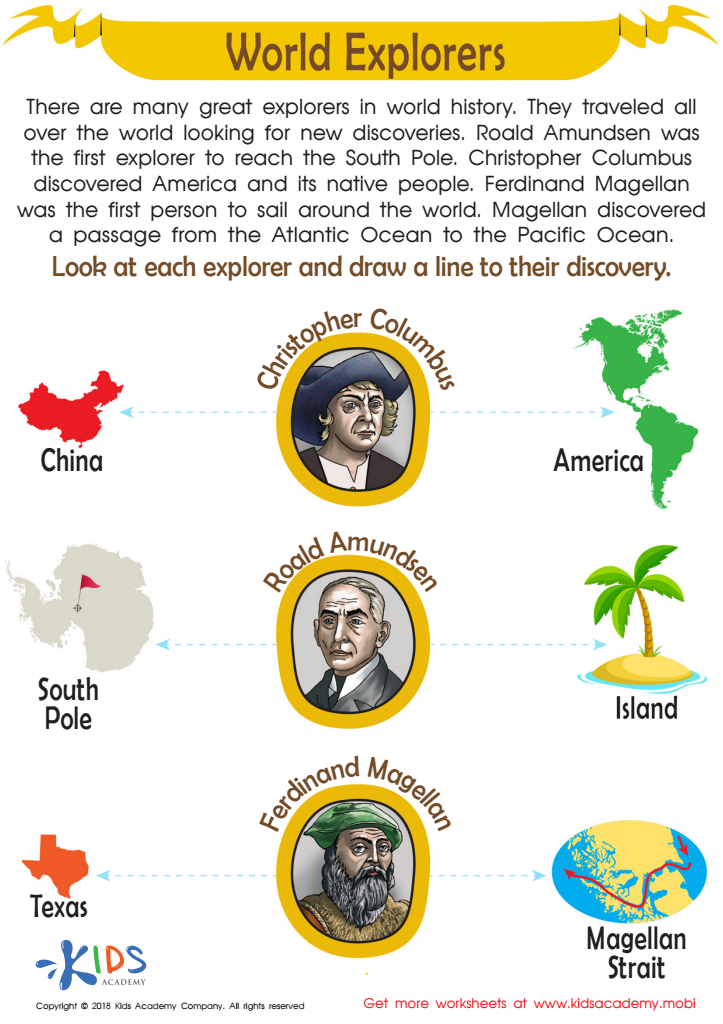
World Explorers Worksheet
Kids are citizens of the world, so it's important to teach them about different cultures and famous explorers. This social studies worksheet helps children learn about the great explorers of history and trace their travels. They'll link Ferdinand Magellan, Christopher Columbus and Roald Amundsen to the places they explored.
World Explorers Worksheet
Worksheet
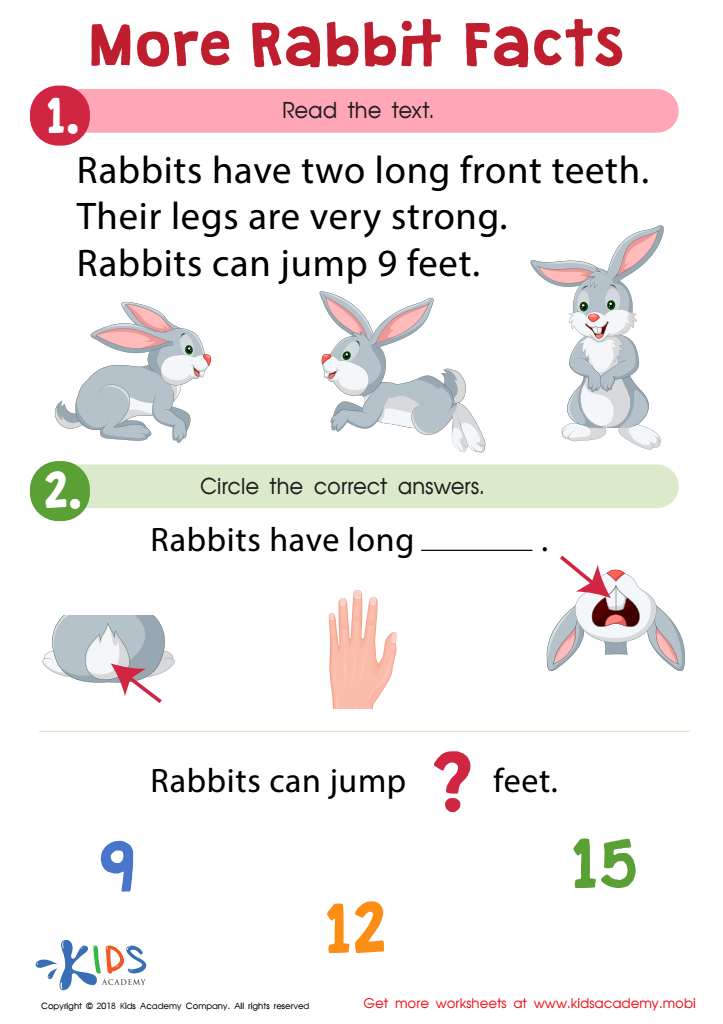
More Rabbit Facts Worksheet
Improve your child's reading comprehension skills with this fun worksheet! Read the paragraph at the top of the page, view the pictures and circle the correct answers indicating what was learned. Develop a better understanding of rabbits while learning how to recall important information from texts.
More Rabbit Facts Worksheet
Worksheet
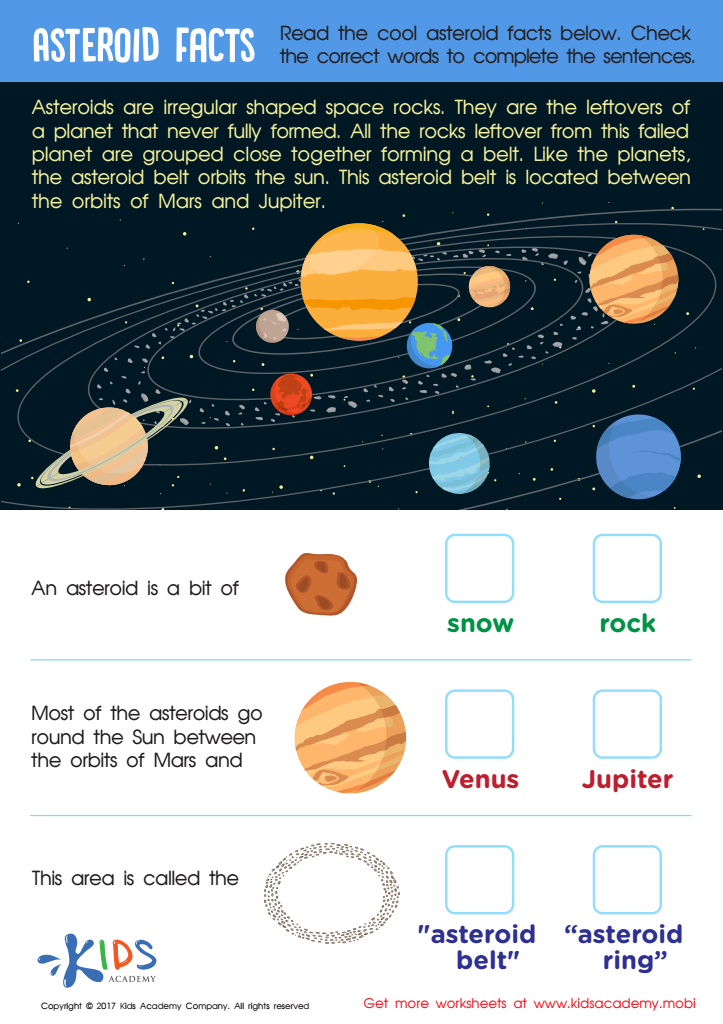
Asteroid Facts Worksheet
Your child can learn about asteroids and hone their comprehension skills with this 2nd-grade asteroid facts worksheet. They'll read a short non-fiction text and select the correct answers to demonstrate understanding of the orbit and properties of these fascinating objects!
Asteroid Facts Worksheet
Worksheet
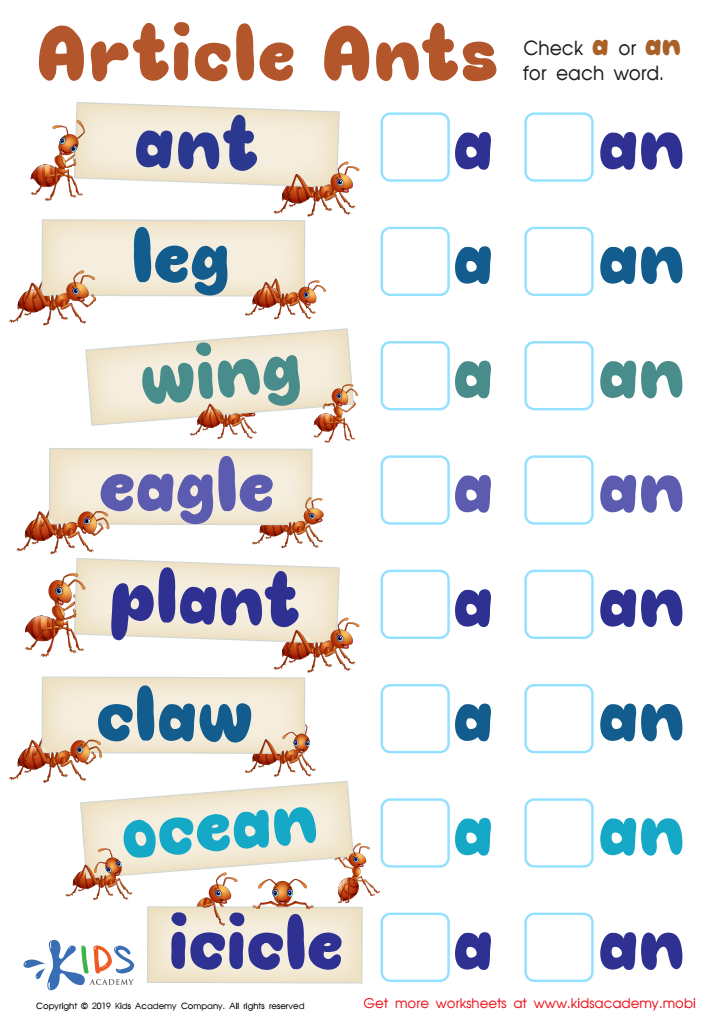
Article Ants Worksheet
Help your child master using "a" and "an" with this fun worksheet! Remind them that "an" goes with vowel sounds, while "a" is used for consonants. Have them check the right box next to each word to complete the activity.
Article Ants Worksheet
Worksheet
Join Kids Academy for Free
Who is primarily going to use this learning content?






Information retention in children aged 5-8 is crucial for their cognitive development and learning foundation. During these formative years, children are rapidly acquiring new skills and knowledge across various domains, including literacy, numeracy, and social cues. When parents and teachers prioritize retention, they enhance a child's ability to build upon what they've learned, reinforcing their understanding of concepts rather than just memorizing facts.
Engaging activities that support information retention, such as storytelling, interactive learning games, and hands-on projects, stimulate curiosity and encourage exploration. This not only makes learning enjoyable but also aids in the development of critical thinking and problem-solving skills. Effective retention strategies help in creating meaningful connections, allowing children to transfer knowledge to new contexts.
Moreover, children who retain information effectively tend to exhibit increased confidence in their abilities, facilitating a positive attitude toward learning. This can lead to improved academic performance and a lifelong love for education. By focusing on strategies that enhance retention, parents and educators can empower children with the tools they need to succeed academically and socially, fostering a solid intellectual foundation for future learning experiences.








