Understanding biodiversity Normal Worksheets for Ages 5-8
4 filtered results
-
From - To
Discover the wonders of nature with our "Understanding Biodiversity" worksheets tailored for children aged 5-8. Our engaging activities introduce young learners to the rich variety of life on Earth, including plants, animals, and ecosystems. These worksheets foster curiosity and scientific thinking while aligning with educational standards. With vibrant illustrations and simple explanations, children develop an appreciation for biodiversity and the importance of conservation. Perfect for homeschooling or classroom use, our printable resources make learning fun and accessible. Empower your child's journey in science and adventure today with "Understanding Biodiversity" at Kids Academy!
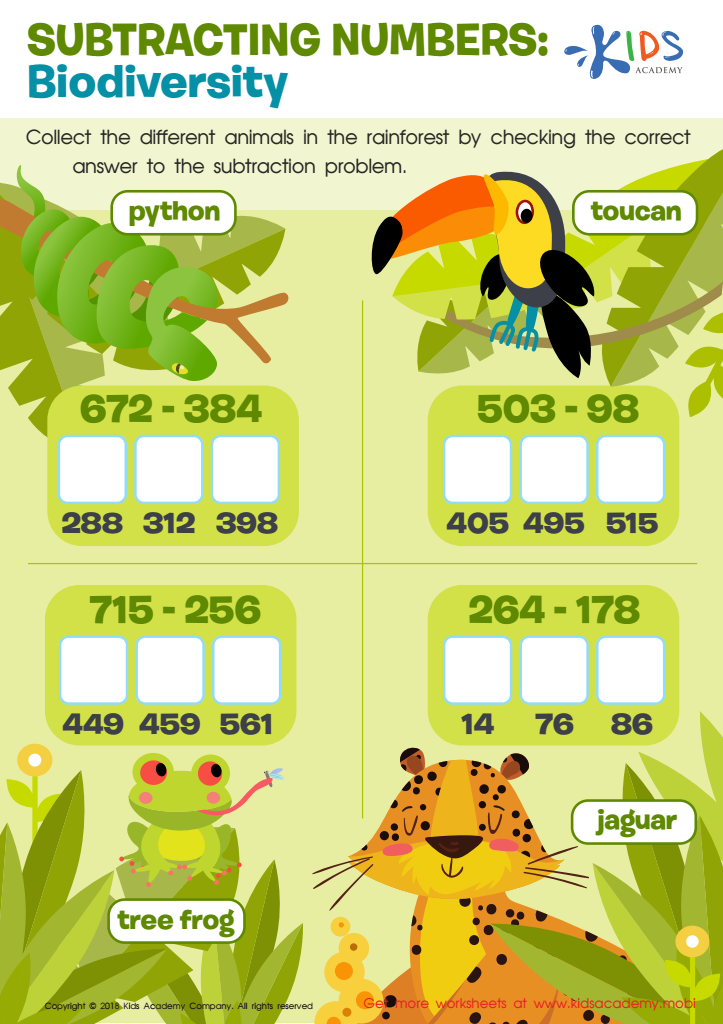
Subtracting Numbers: Biodiversity Worksheet
 Assign to My Students
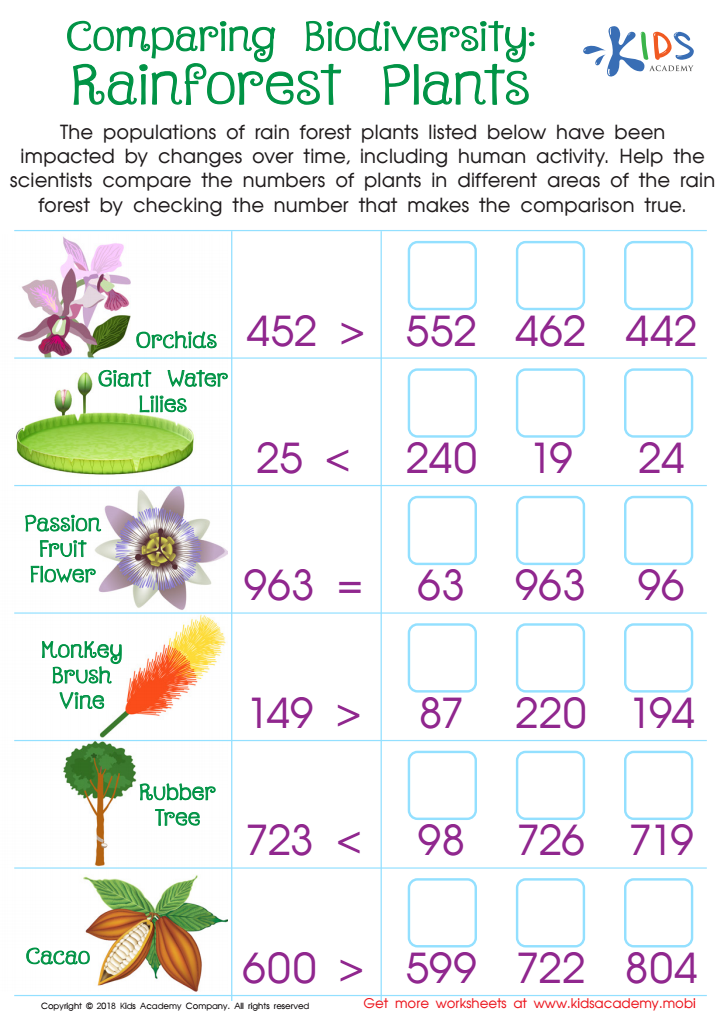
Comparing Biodiversity: Rainforest Plants Worksheet
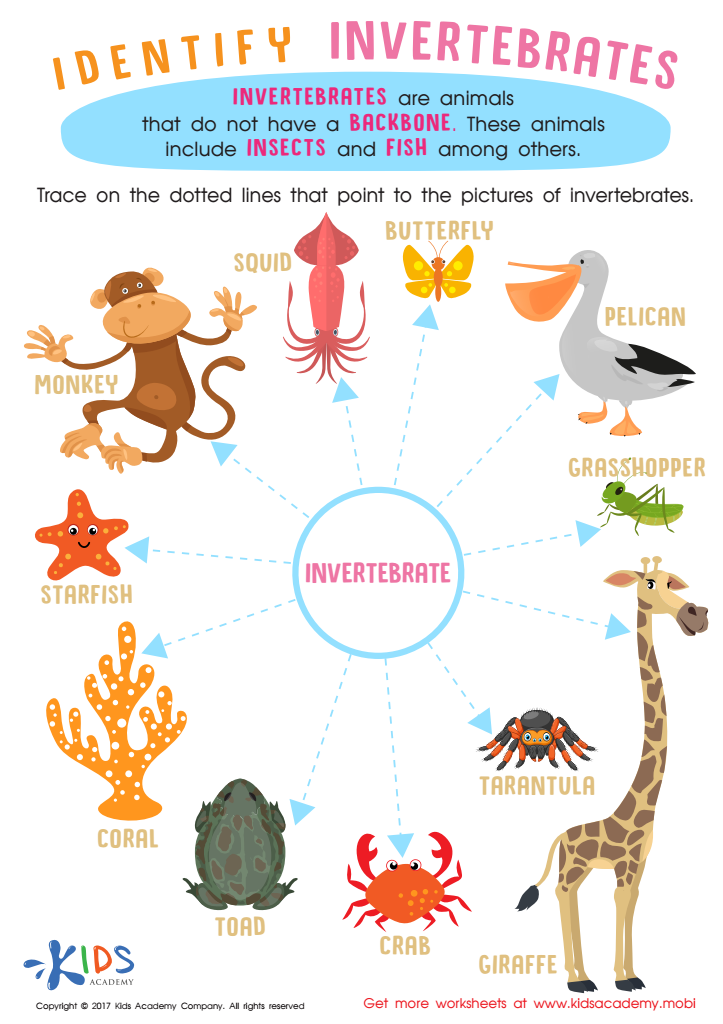
Invertebrates Worksheet for Grade 3
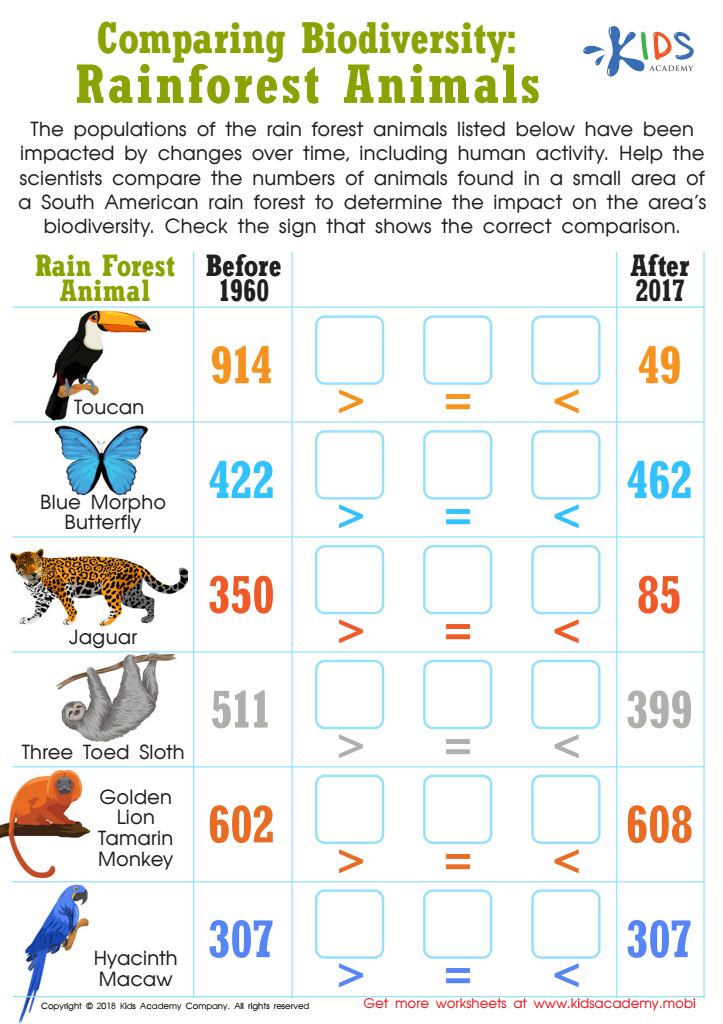
Comparing Biodiversity: Rainforest Animals Worksheet







Understanding biodiversity is essential for young children because it helps shape their appreciation and respect for nature. When parents and teachers emphasize the importance of diverse life forms, children begin to see the interconnectedness of all living things, fostering empathy and awareness. This foundational knowledge is critical for raising environmentally conscious individuals who will value and protect natural habitats.
For children aged 5-8, learning about biodiversity can be engaging and fun. Activities such as exploring local parks, observing insects, or growing plants can spark curiosity and wonder. These experiences help children establish a connection with the environment, making abstract concepts like ecosystems and life cycles relatable and tangible.
Moreover, understanding biodiversity at a young age supports cognitive and emotional development. It encourages critical thinking as children learn to identify different species and discern relationships within ecosystems. Social skills are similarly bolstered when activities involve group exploration and discussion, fostering cooperation and communication among peers.
Lastly, by teaching young children about biodiversity, we are investing in the future stewards of our planet. These early lessons plant the seeds for sustainable behaviors, ensuring our natural world continues to thrive for generations to come. Therefore, parents and teachers play a crucial role in imparting the importance of biodiversity to young minds.








