Visual discrimination skills Normal Worksheets for Ages 5-8
5 filtered results
-
From - To
Enhance your child's visual discrimination skills with our engaging worksheets designed for ages 5-8. These printable resources focus on improving the ability to notice differences and similarities in shapes, letters, and objects, which is crucial for early learning development. Each worksheet is crafted to create an enjoyable learning experience, helping children sharpen their observation abilities while building essential skills for reading and math. Perfect for home or classroom use, these normal worksheets encourage children to identify patterns, complete puzzles, and enhance their critical thinking. Download now to support your child’s learning journey with fun and effective visual discrimination activities!
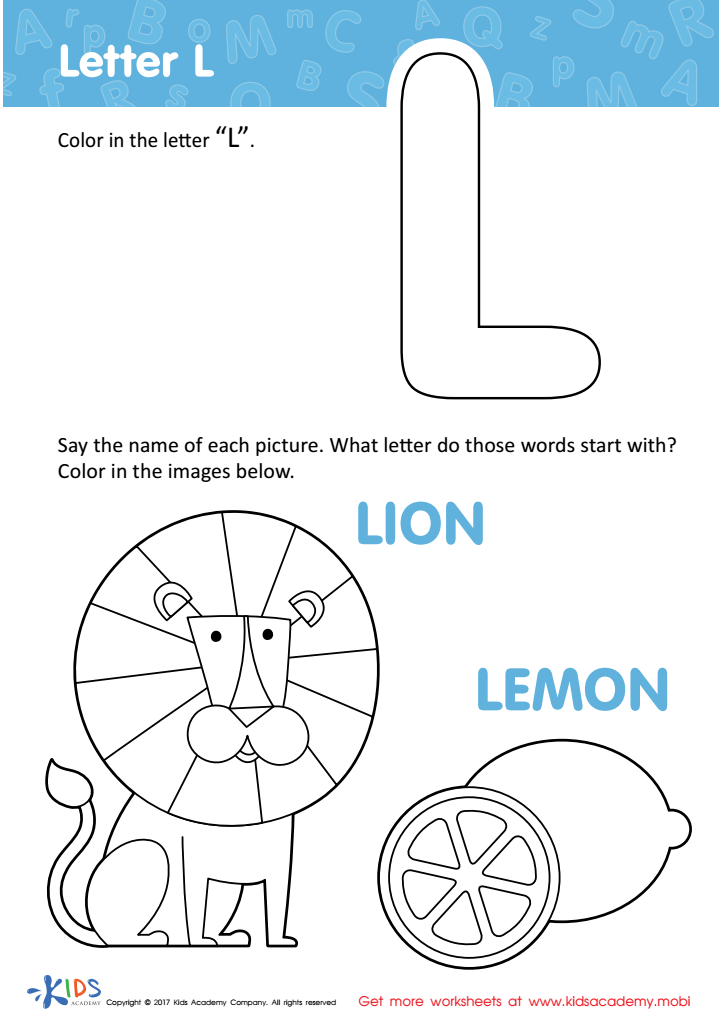
Letter L Coloring Sheet
 Assign to My Students

Find Uppercase Letters A, B, and C Worksheet
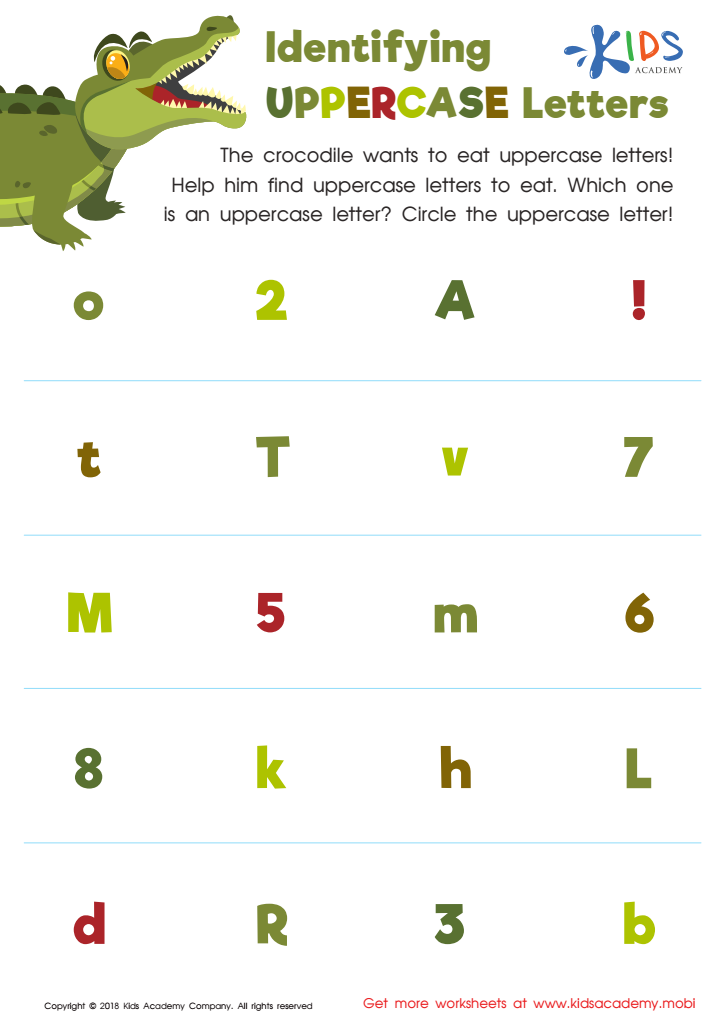
Identifying Uppercase Letters Worksheet
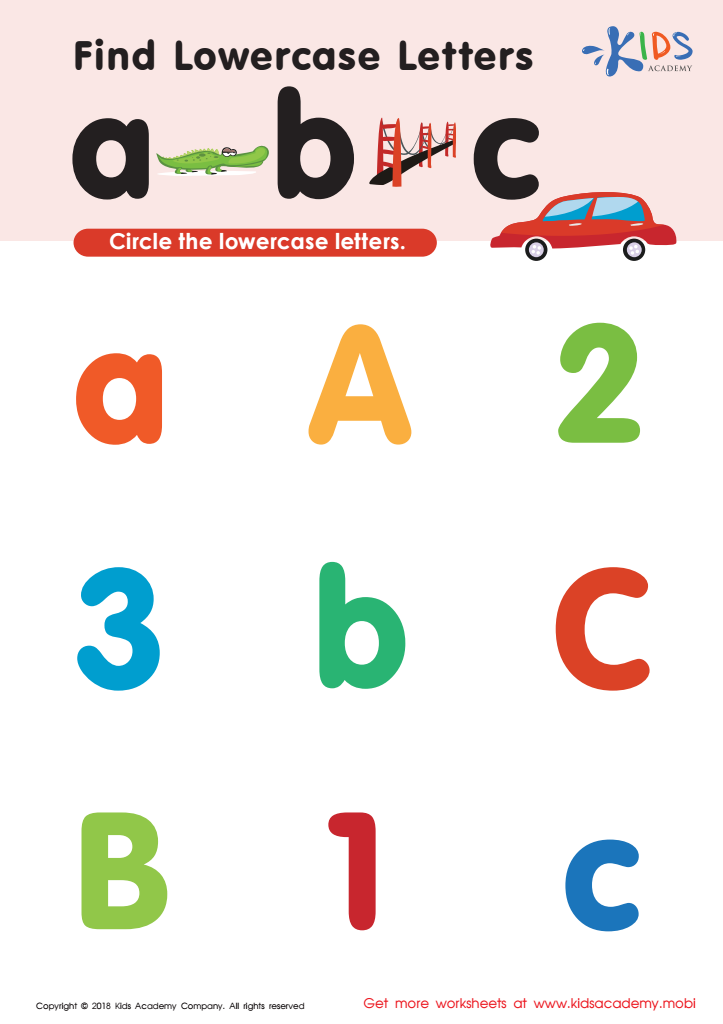
Find lowercase letters a b c Worksheet
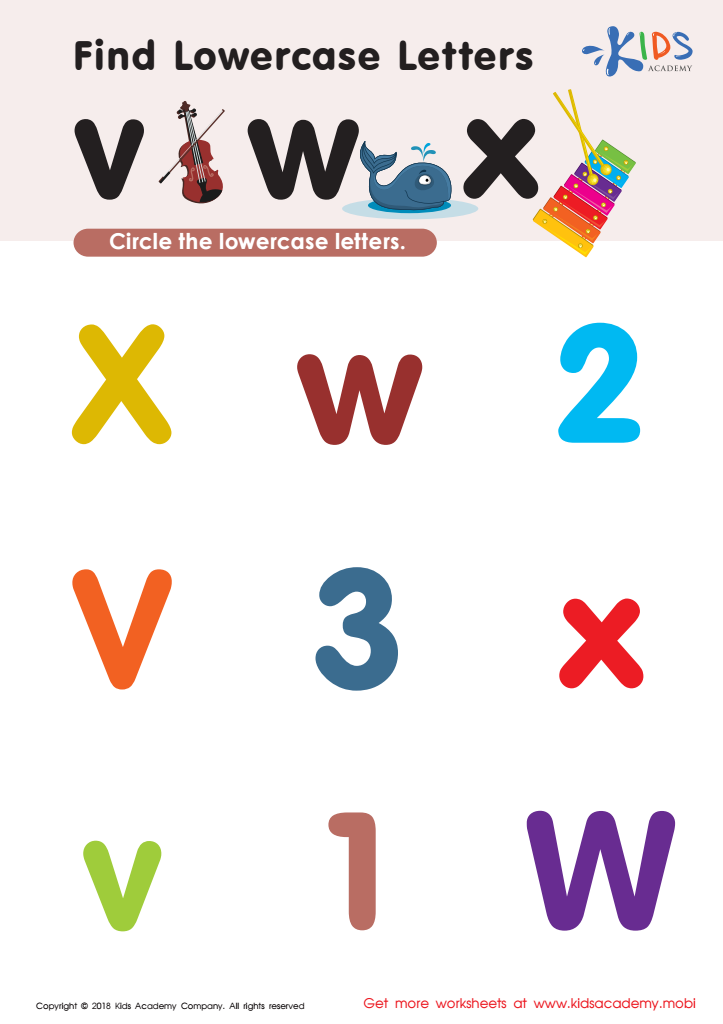
Find Lowercase Letters v w x Worksheet



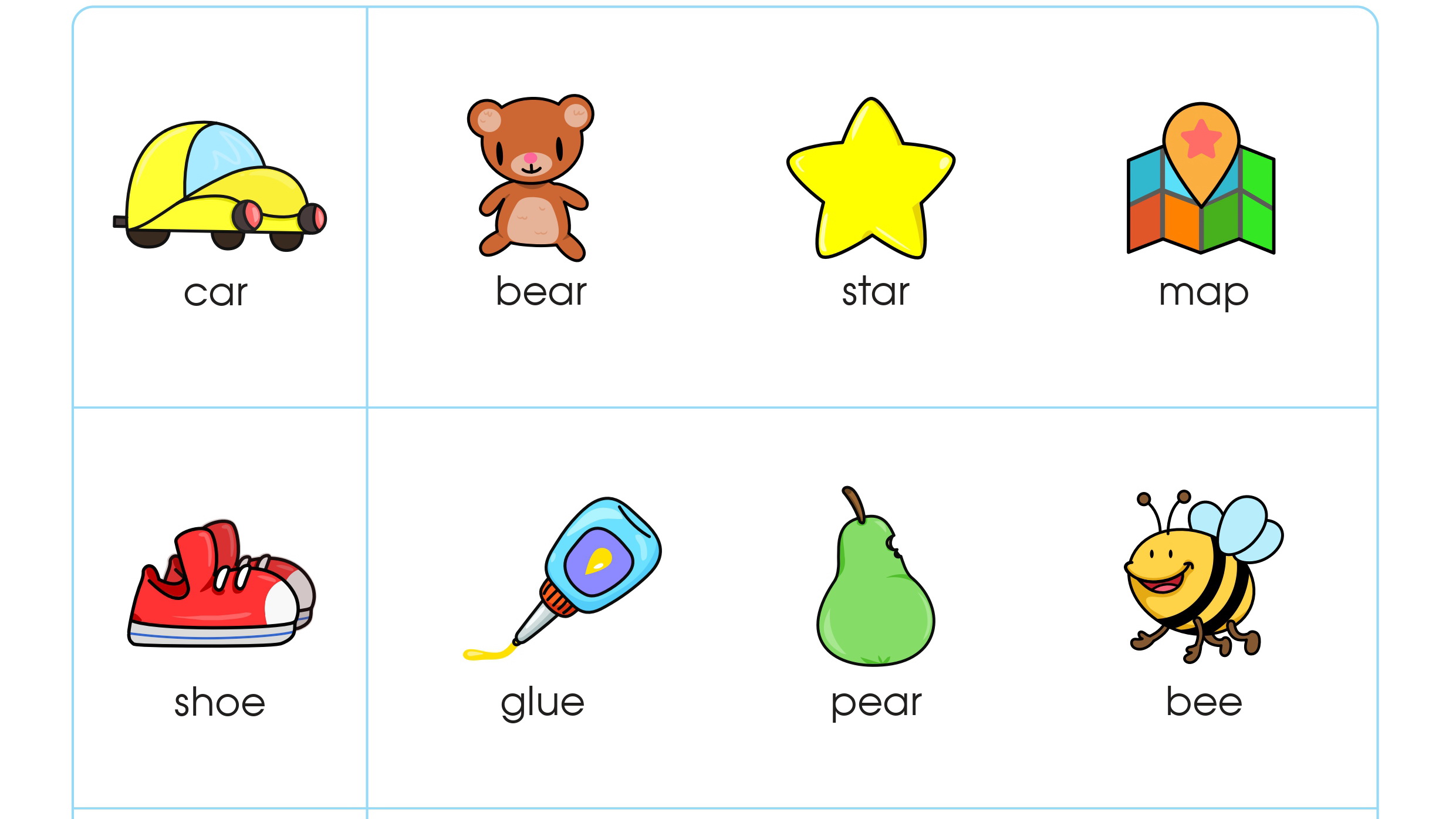




Visual discrimination skills are essential for children aged 5-8 as they lay the foundation for effective learning and daily functioning. These skills enable children to notice differences and similarities among objects, shapes, letters, and numbers, critical for developing reading and math abilities. For instance, recognizing the difference between similar letters, like 'b' and 'd,' is pivotal for mastering reading.
Moreover, strong visual discrimination aids in problem-solving and critical thinking. Children who can distinguish details are better equipped to complete puzzles, understand graphics, or engage in activities requiring attention to detail. This is particularly important as children begin to tackle more complex tasks in school.
Teachers and parents should care about cultivating these skills because early development influences overall academic performance and self-esteem. Children who struggle with visual discrimination may experience frustration, lag in learning, and thus become disengaged. By prioritizing activities that enhance these skills—like matching games or visual puzzles—educators and caregivers can help foster confidence and competence in their children's learning journey, ultimately shaping their educational outcomes and lifelong attitudes toward learning. Supporting visual discrimination is crucial for setting up children for success both in school and beyond.








