Enhancing Counting Skills Normal Addition & Subtraction Worksheets for Ages 5-8
3 filtered results
-
From - To
Discover our "Enhancing Counting Skills: Normal Addition & Subtraction Worksheets" designed specifically for children aged 5-8. These engaging worksheets aim to strengthen essential counting skills while making learning fun and interactive. Each worksheet features a variety of activities that facilitate the understanding of basic addition and subtraction concepts, allowing young learners to practice their math skills at their own pace. With colorful illustrations and age-appropriate challenges, our resources cater to diverse learning styles, ensuring every child feels confident in their counting abilities. Perfect for home or classroom use, these worksheets are essential tools to foster a love for math in early learners!
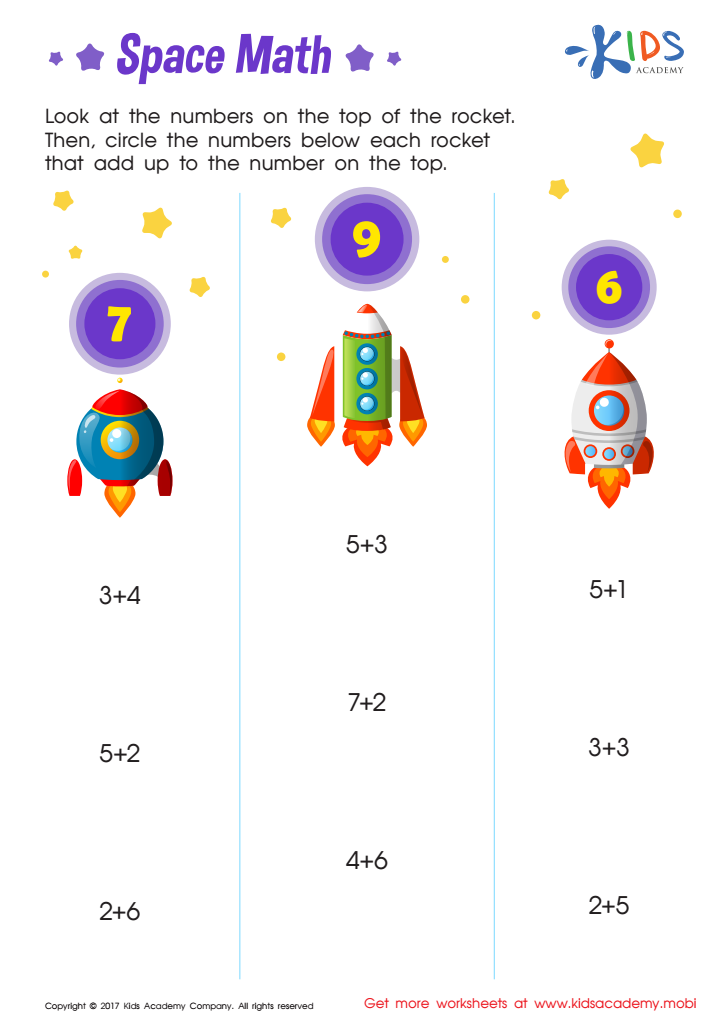
Addition: Space Math Worksheet
 Assign to My Students
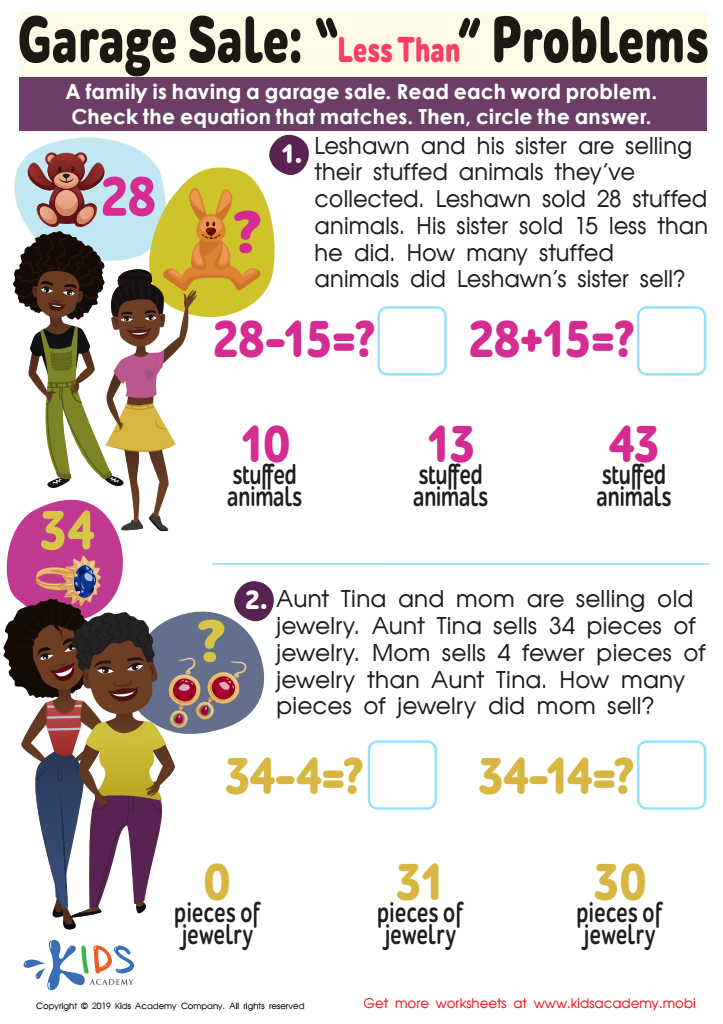
Garage Sale Less Than Worksheet
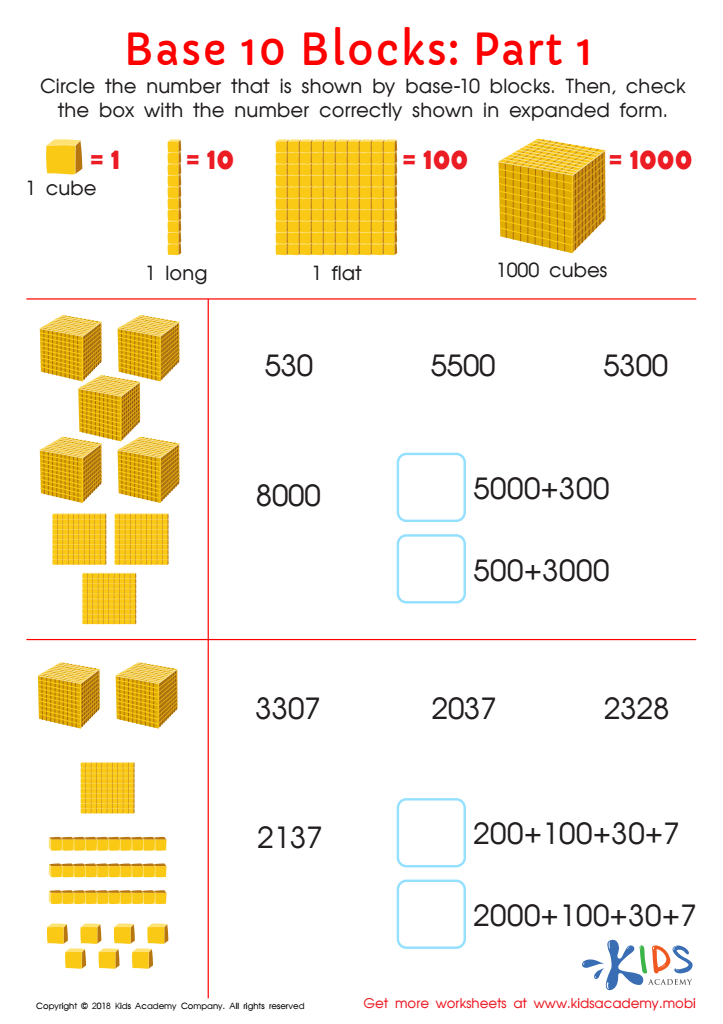
Base 10 Blocks Worksheet: Part 1








Enhancing counting skills, along with normal addition and subtraction, is crucial for children aged 5-8 as it lays the foundation for their future mathematical understanding and overall cognitive development. During these formative years, children are developing their number sense, which is essential not only in academic settings but also in everyday life. Strong counting skills help children recognize patterns, solve problems, and make connections between numbers in various contexts.
Fostering these skills builds confidence and enthusiasm for mathematics, reducing math anxiety as they progress in their education. By focusing on addition and subtraction, parents and teachers can encourage critical thinking and enhance analytical abilities, enabling children to approach complex problems with a positive attitude.
Moreover, understanding these basic operations allows children to navigate real-world situations, such as managing money or planning activities. Engaging in counting and simple arithmetic exercises at home or in the classroom not only reinforces these skills but also promotes a fun, interactive learning experience.
Investing time and resources into enhancing counting and arithmetic skills can significantly impact a child's academic trajectory and lifelong learning. Thus, parents and teachers should prioritize these foundational skills to ensure children are prepared for future mathematical challenges.








