Understanding patterns Normal Addition & Subtraction Worksheets for Ages 5-8
4 filtered results
-
From - To
Unlock your child's mathematical potential with our "Understanding Patterns: Normal Addition & Subtraction Worksheets" designed for ages 5-8. These engaging worksheets help young learners grasp the concepts of addition and subtraction while identifying and exploring numerical patterns. Combining fun and education, our resources encourage critical thinking skills and mathematical reasoning. Each worksheet is crafted to captivate children's interest, fostering a love for math through colorful visuals and easily relatable problems. With a variety of exercises suitable for all skill levels, your child will build confidence in their mathematical abilities while discovering the fascinating world of patterns. Start their learning journey today!
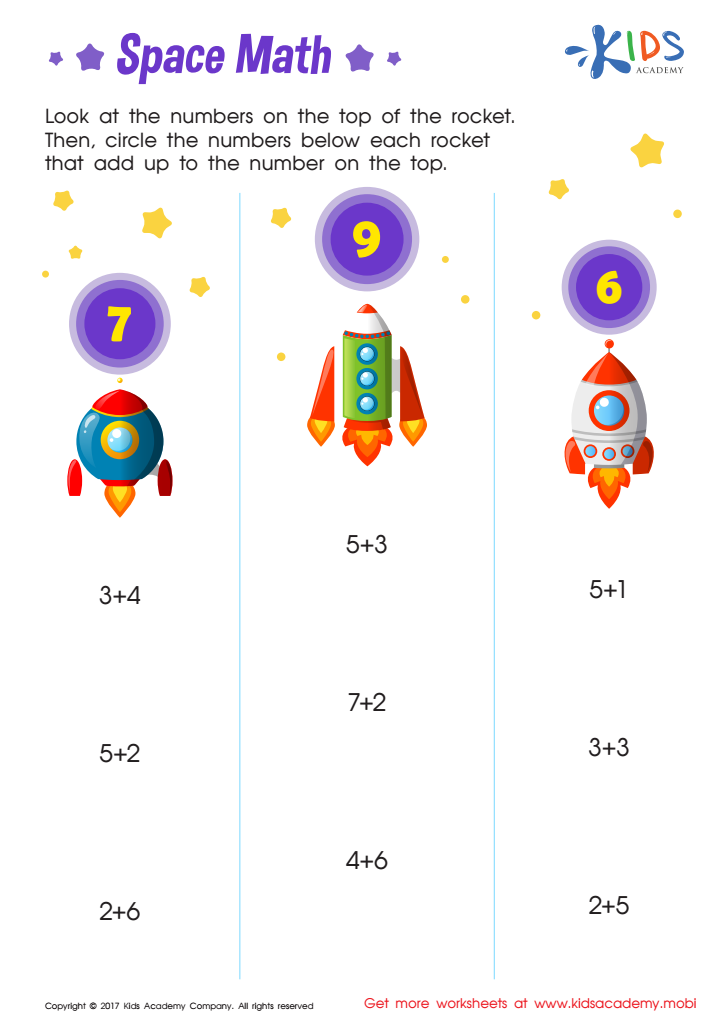
Addition: Space Math Worksheet
 Assign to My Students
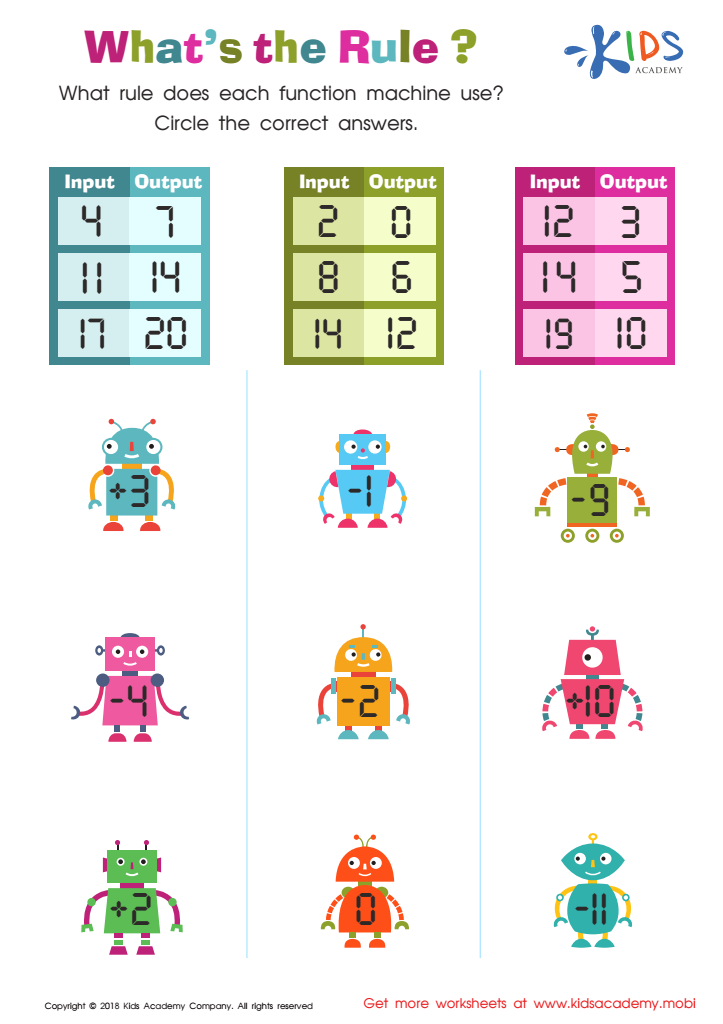
What's the Rule Worksheet
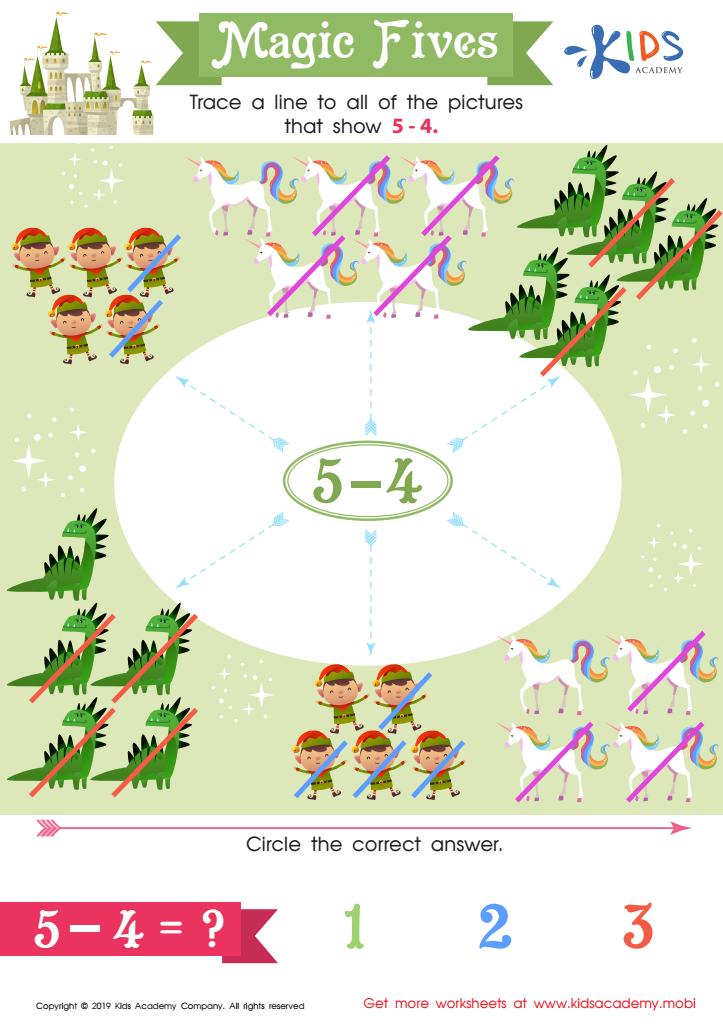
Magic Fives Worksheet
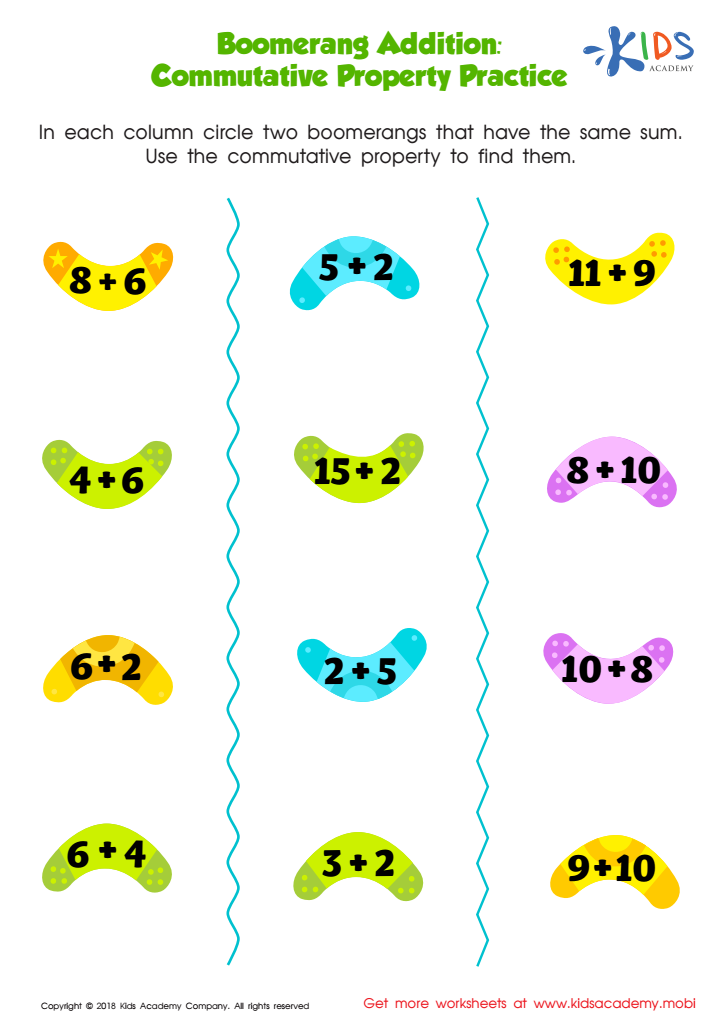
Boomerang Addition Worksheet








Understanding patterns in normal addition and subtraction is crucial for children aged 5-8 as it lays the foundation for their mathematical reasoning and problem-solving skills. This age group begins to grasp numerical relationships, making it an ideal time for them to identify, analyze, and extend patterns. Recognizing patterns helps children predict outcomes and enhances their ability to understand sequences, which is essential for mastering more complex mathematical concepts later on.
For parents and teachers, fostering this understanding contributes significantly to a child’s cognitive development. Engaging children in pattern recognition leads to improved critical thinking and analytical abilities, as they become adept at spotting relationships among numbers. Moreover, patterns are prevalent in everyday life—from the seasons of the year to the arrangement of objects—which can also enrich a child’s learning experience.
By cultivating skills in pattern recognition alongside addition and subtraction, educators and caregivers support the development of a mathematical mindset. This can build confidence in young learners, encourage curiosity, and promote a love for math, making it an enjoyable subject rather than a daunting one. Ultimately, establishing this foundational understanding can lead to long-lasting academic success.








