
Basic Math Skills Normal Geometry Worksheets for Ages 5-8
6 filtered results
Difficulty Level
Grade
Age
-
From - To
Subject
Activity
Standards
Unlock your child's potential with our engaging "Basic Math Skills Normal Geometry Worksheets" designed for ages 5-8. These worksheets introduce foundational geometric concepts through fun activities that reinforce learning. Children will explore shapes, patterns, and spatial awareness, building essential skills for future math success. Our thoughtfully crafted materials cater to different learning styles, promoting confidence and enjoyment in math. Each worksheet is easy to print, making homework or skill reinforcement convenient for parents and educators. Help your child develop a strong mathematical foundation and a love for geometry with our interactive and visually stimulating worksheets. Start their learning journey today!
Favorites
With answer key
Interactive
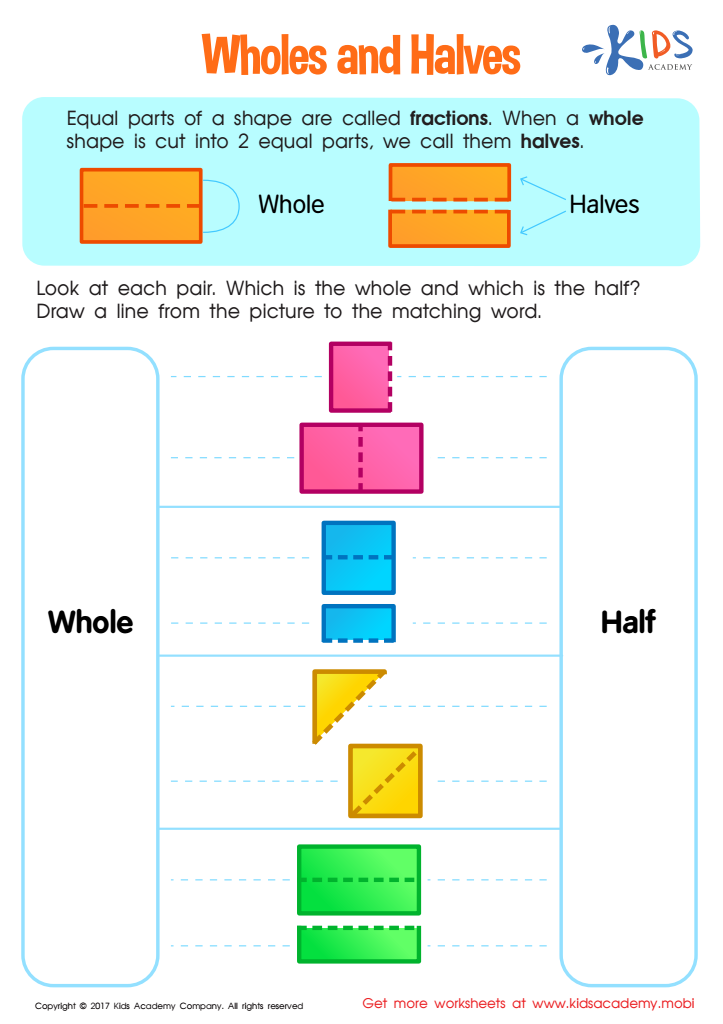
Wholes and Halves Worksheet
Students can feel overwhelmed with fractions. Help take the stress off by using a colorful worksheet to explain whole shapes and how to find halves. Ask them to identify the whole and point to the matching word for the half. A free printout can help guide them.
 Assign to My Students
Wholes and Halves Worksheet
Worksheet











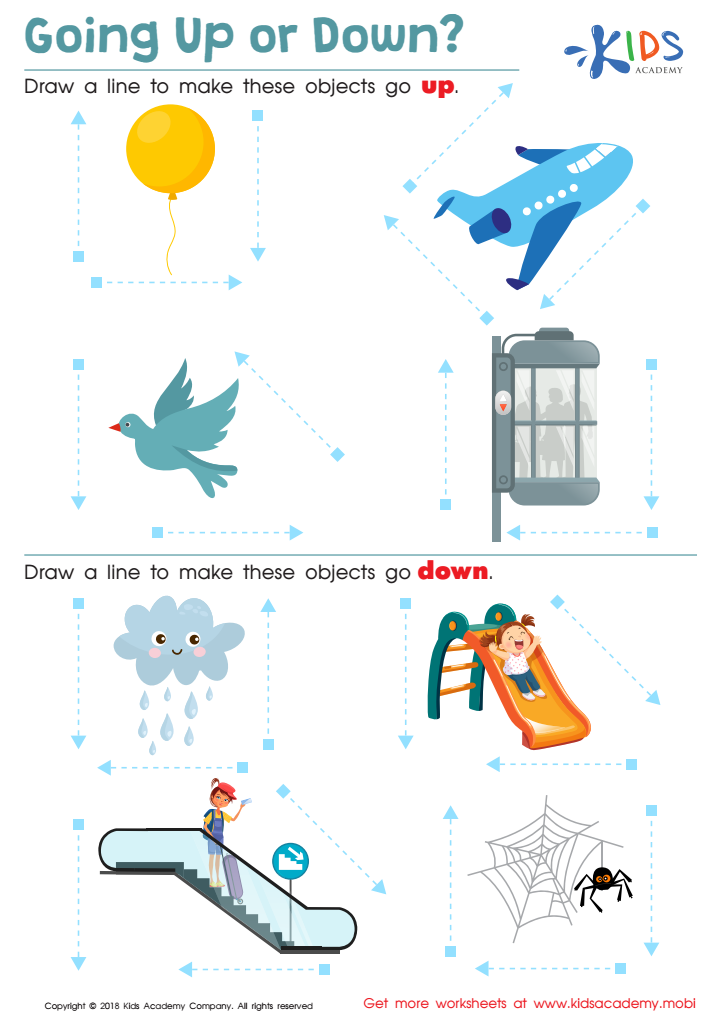
Going up or Down? Worksheet
Young students learn the concept of up and down with this geometry worksheet. They trace lines to identify relative positioning as an object travels. Kids can use position words to describe an object's movement, enhancing their spatial relationship skills - an important geometry foundation.
Going up or Down? Worksheet
Worksheet
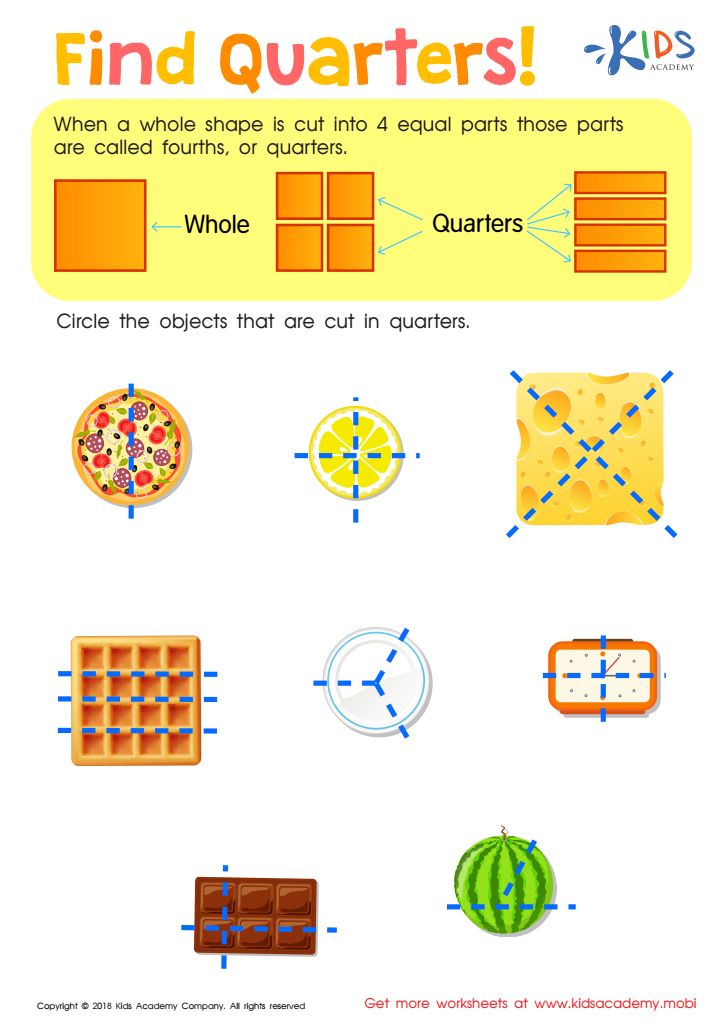
Find Quarters Worksheet
Ask your child if they know what it is called when a shape is cut into two equal parts. If yes, introduce them to quarters. Tell them that when a shape is cut into 4 equal parts, each part is called a quarter. Have them do this exercise by finding and circling objects split into quarters.
Find Quarters Worksheet
Worksheet
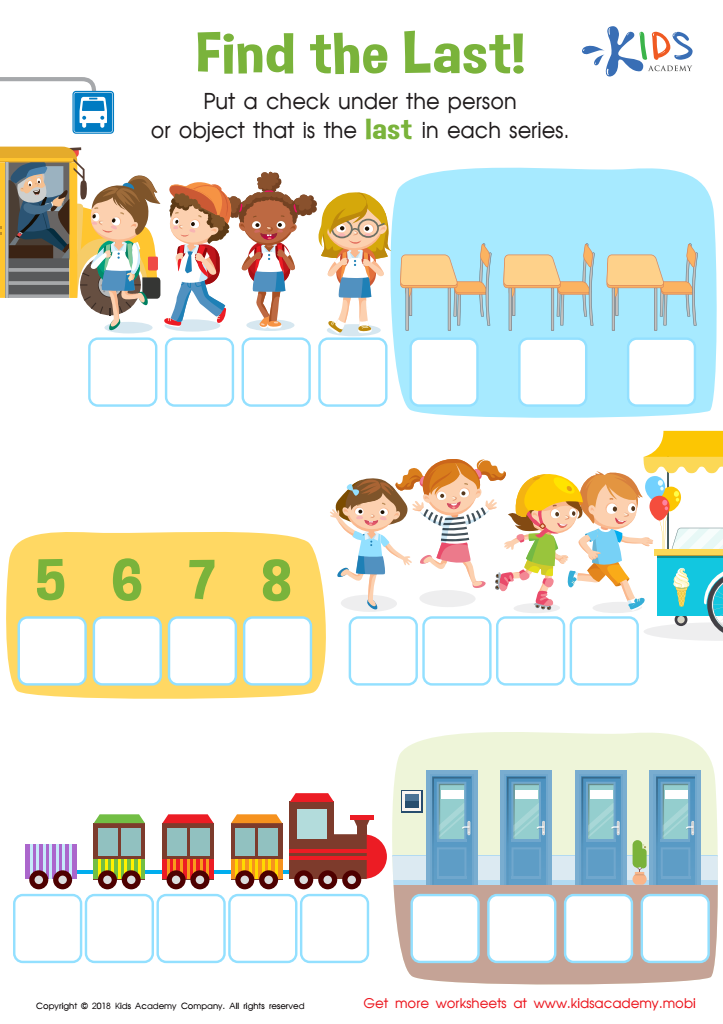
Find the Last! Worksheet
Teach young students about sequence words with this free worksheet. Have them look at sets of people or objects and choose the one that is last. Engage them further by having them describe or act out their day, and what happens last? Enjoy this printout and have fun!
Find the Last! Worksheet
Worksheet
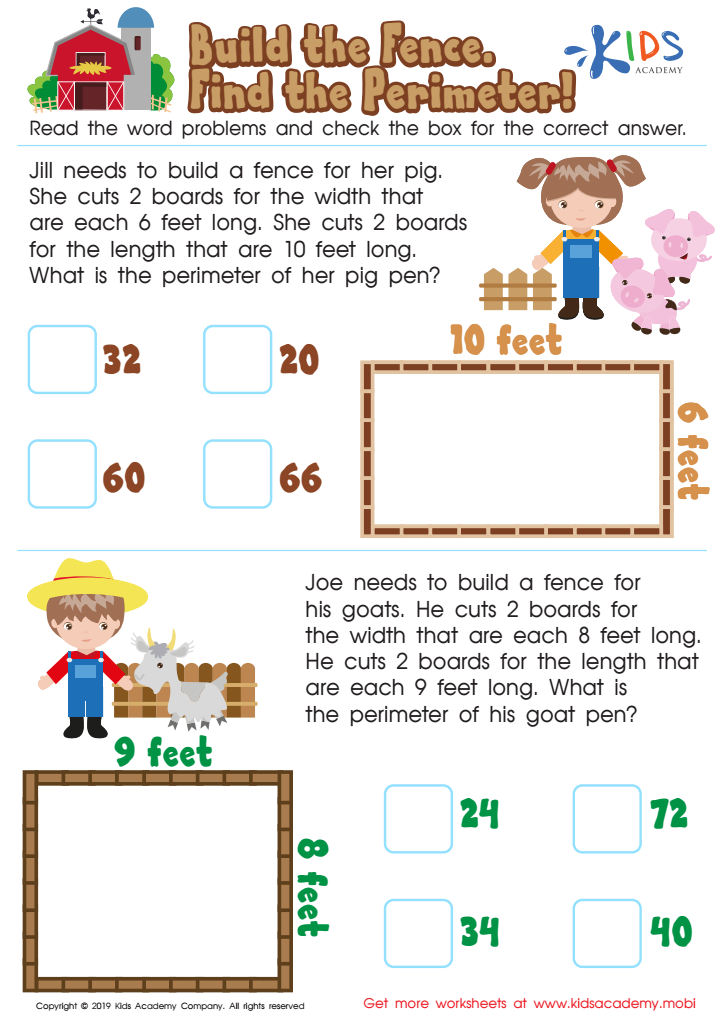
Build the Fence, Find the Perimeter Worksheet
This worksheet is great for kids needing extra help with geometry and maths. Read the problems to your kids and assist them in answering them correctly by ticking the box. This way, they'll be combining their addition and subtraction skills with literacy to help them learn.
Build the Fence, Find the Perimeter Worksheet
Worksheet
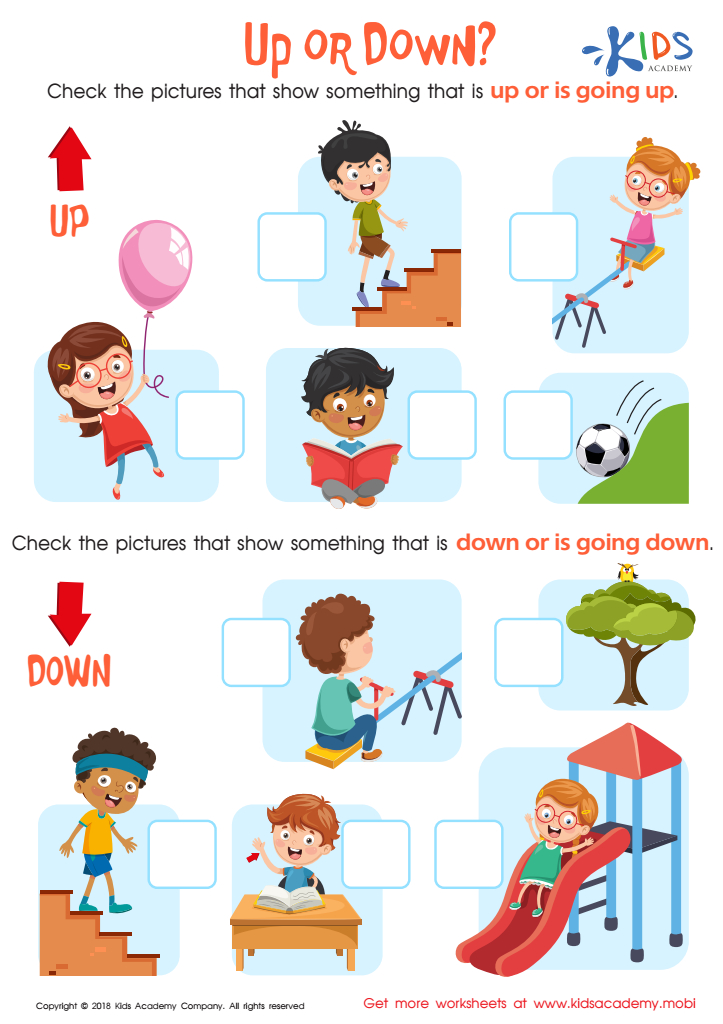
Up or Down Worksheet
Teach your toddlers the concepts of up and down with Kids Academy's vivid worksheet! Use the seesaw analogy to reinforce this language with them and build a strong foundation for future learning. Show them how a balloon can float up but must come back down too.
Up or Down Worksheet
Worksheet
Join Kids Academy for Free
Who is primarily going to use this learning content?








Understanding basic math skills, particularly foundational geometry for ages 5-8, is crucial for young learners. During this developmental stage, children are not only honing their cognitive abilities but also crystallizing their initial perceptions of math and shapes, which can influence their future attitudes towards the subject. Teaching basic geometry at this age helps children recognize and understand shapes, spatial relationships, and patterns in their environment—skills that are essential for everyday problem-solving and logical thinking.
Moreover, early exposure to geometry fosters critical thinking and lays the groundwork for advanced mathematical concepts. As children learn to identify shapes and their properties, they also develop skills in classification, measurement, and reasoning. For parents and teachers, nurturing these skills can boost children's confidence, making them more willing to engage with challenging material as they progress in their education.
Incorporating engaging activities, such as hands-on exploration and real-life applications, can make learning geometry enjoyable. When parents, caregivers, and educators prioritize basic math skills like geometry, they ultimately contribute to a child's overall academic success and lifelong interest in mathematics. This foundational knowledge paves the way for confidence and competence in future math courses, helping children navigate their educational journey effectively.








