Understanding fractions Normal Geometry Worksheets for Ages 5-8
6 filtered results
-
From - To
Discover our "Understanding Fractions Normal Geometry Worksheets" designed specifically for children ages 5-8. These engaging worksheets provide a fun and interactive way for young learners to grasp the concepts of fractions through relatable geometric shapes. Your child will practice recognizing, comparing, and visualizing fractions while enhancing their mathematical skills, all within a colorful and stimulating format. Tailored to support early education, these resources help foster a solid foundation in math, making learning enjoyable and effective. Ideal for home or classroom use, our worksheets encourage hands-on practice that builds confidence and comprehension in understanding fractions through geometry. Start your learning adventure today!
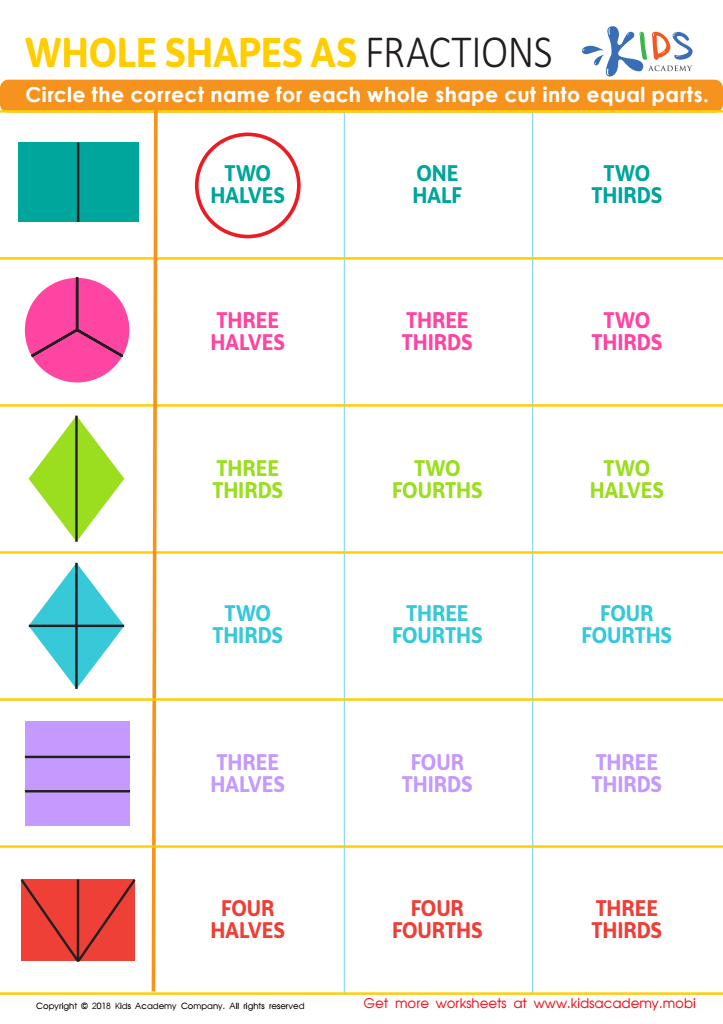
Whole Shapes as Fractions Worksheet
 Assign to My Students











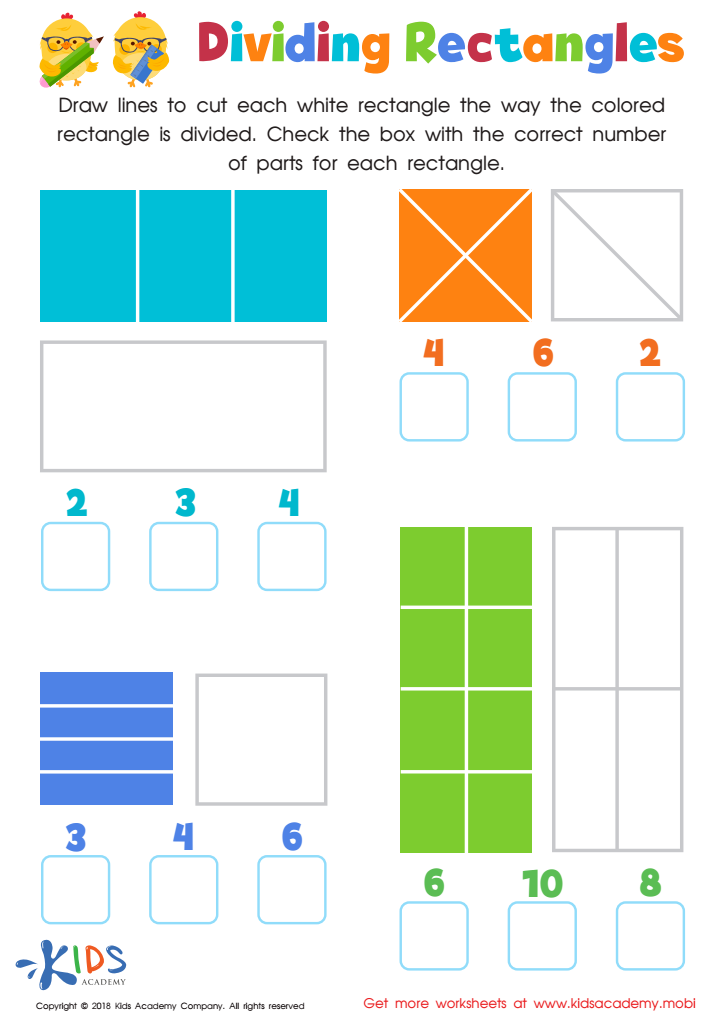
Dividing Rectangles Worksheet
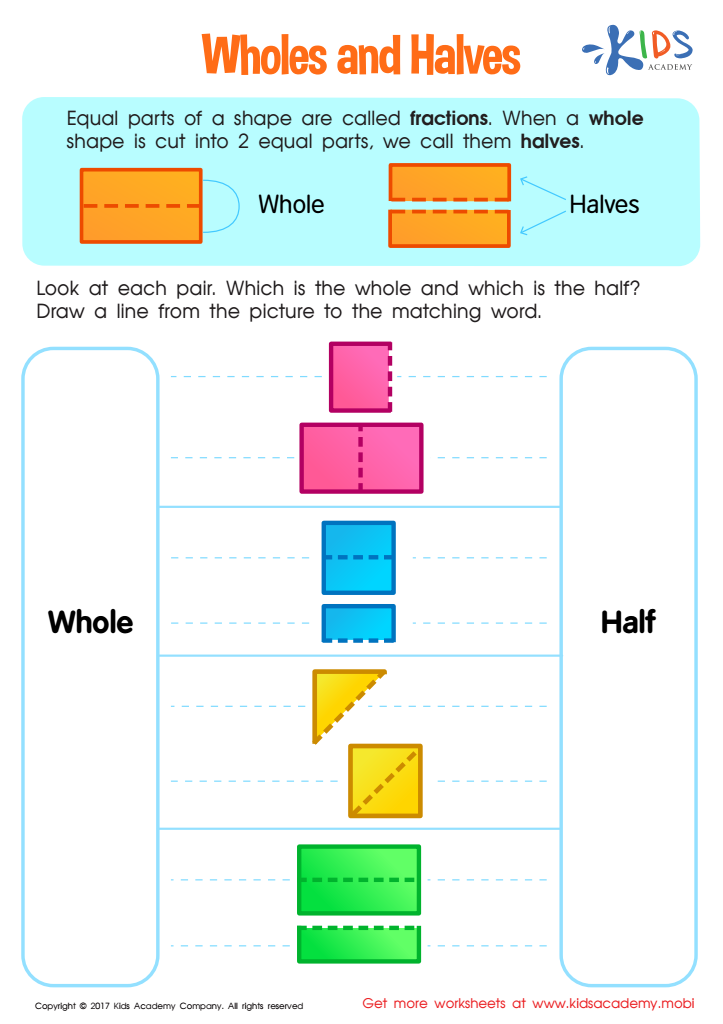
Wholes and Halves Worksheet
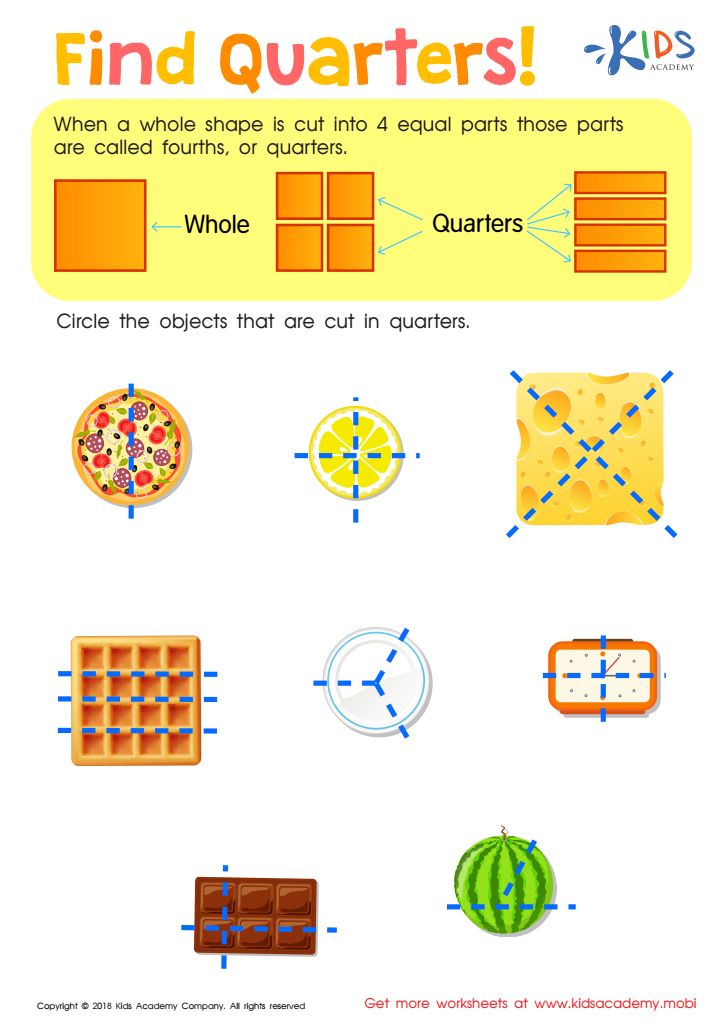
Find Quarters Worksheet
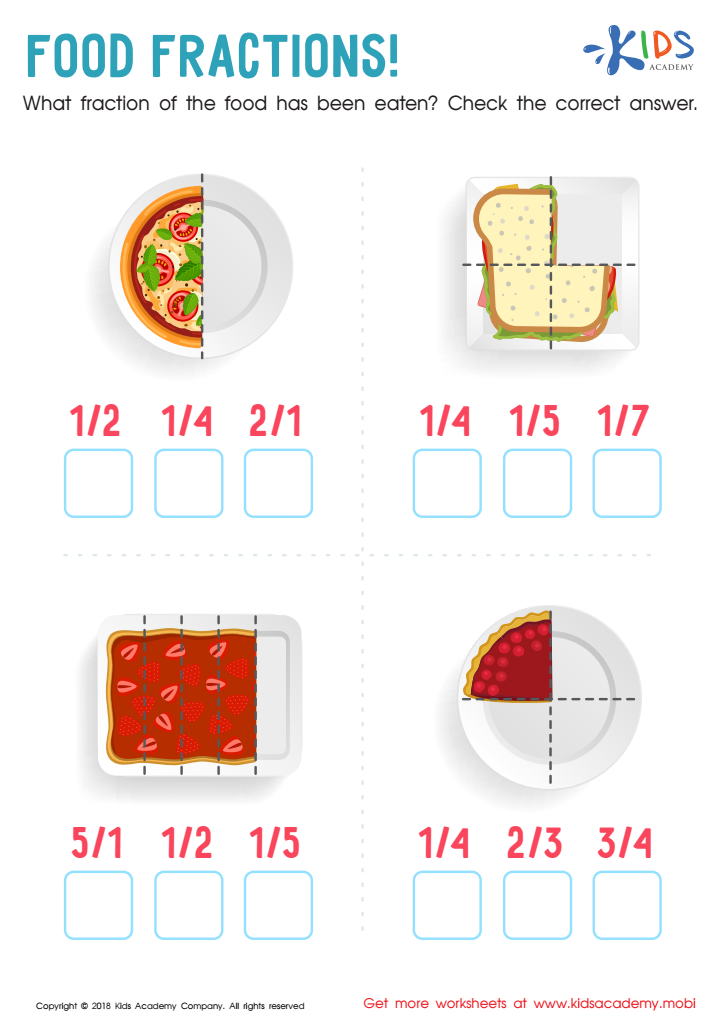
Food Fractions Worksheet
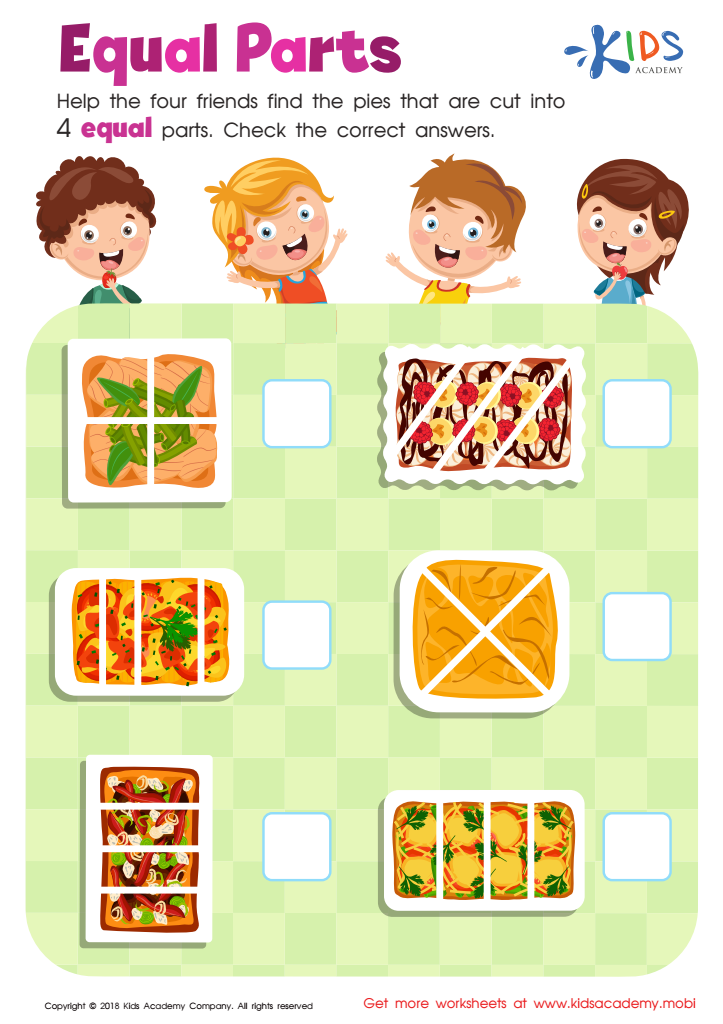
Equal Parts: Food Worksheet








Understanding fractions and basic geometry is crucial for children aged 5-8, as it lays a strong foundation for their mathematical development. At this stage, children are naturally curious and eager to explore patterns, shapes, and quantities. Engaging them in these concepts fosters critical thinking and problem-solving skills, which are essential for their academic journey.
Fractions introduce children to the idea of parts of a whole, helping them grasp concepts of sharing, dividing, and quantities. This foundational understanding is vital for real-world applications, such as cooking, shopping, and understanding time.
Normal geometry, on the other hand, helps children recognize and categorize shapes in their environment. By learning about basic shapes, spatial relationships, and perspective, children enhance their visual perception and cognitive skills. This knowledge supports the development of more complex concepts that they will encounter in later grades, such as area and volume.
Teachers and parents play a pivotal role in shaping a child's understanding of these concepts. By integrating fun activities like games, hands-on projects, and everyday tasks, they can nurture a positive attitude toward math, fostering confidence and a lifelong love for learning. Overall, understanding fractions and geometry empowers young learners, equipping them with essential skills for future success.








