Interpreting data Normal Numbers Worksheets for Ages 5-8
3 filtered results
-
From - To
Discover our engaging "Interpreting Data Normal Numbers Worksheets" designed for children ages 5-8! These worksheets expertly help young learners develop their data interpretation skills while introducing them to basic numerical concepts. Through fun and interactive activities, students will analyze and compare information, enhancing their critical thinking abilities. Bright visuals and relatable examples keep the learning experience enjoyable and tailored to early grades. Perfect for both classroom settings and home learning, our worksheets encourage exploration of numbers and data in a playful way. Equip your child with essential skills in a fun, educational manner—start exploring our worksheets today!
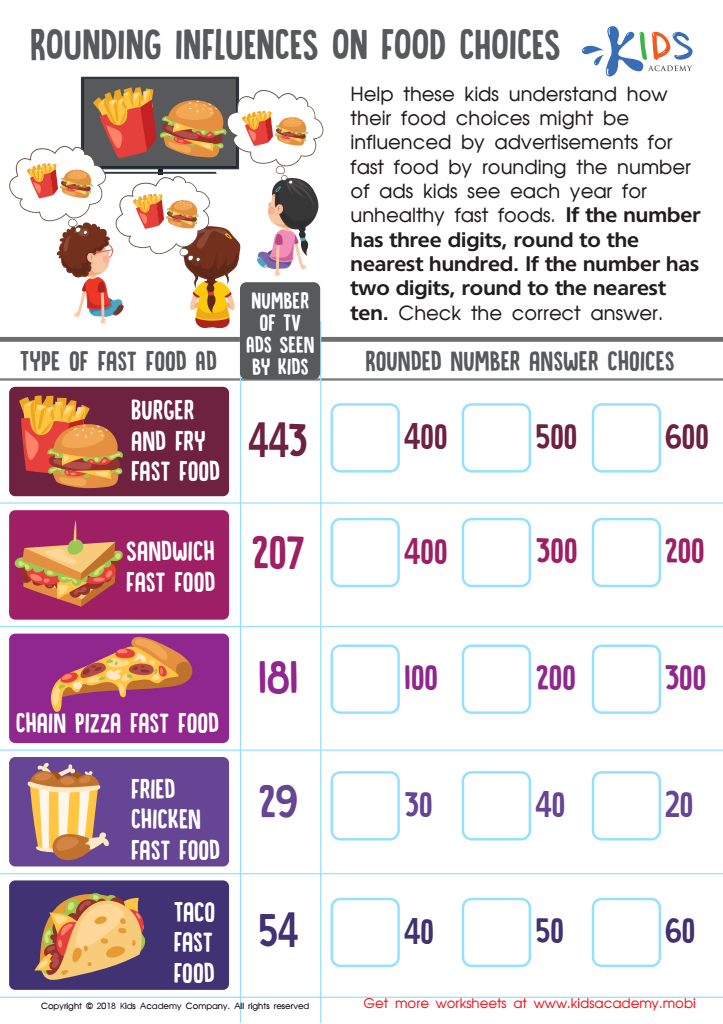
Rounding Influences Food Choices Worksheet
 Assign to My Students
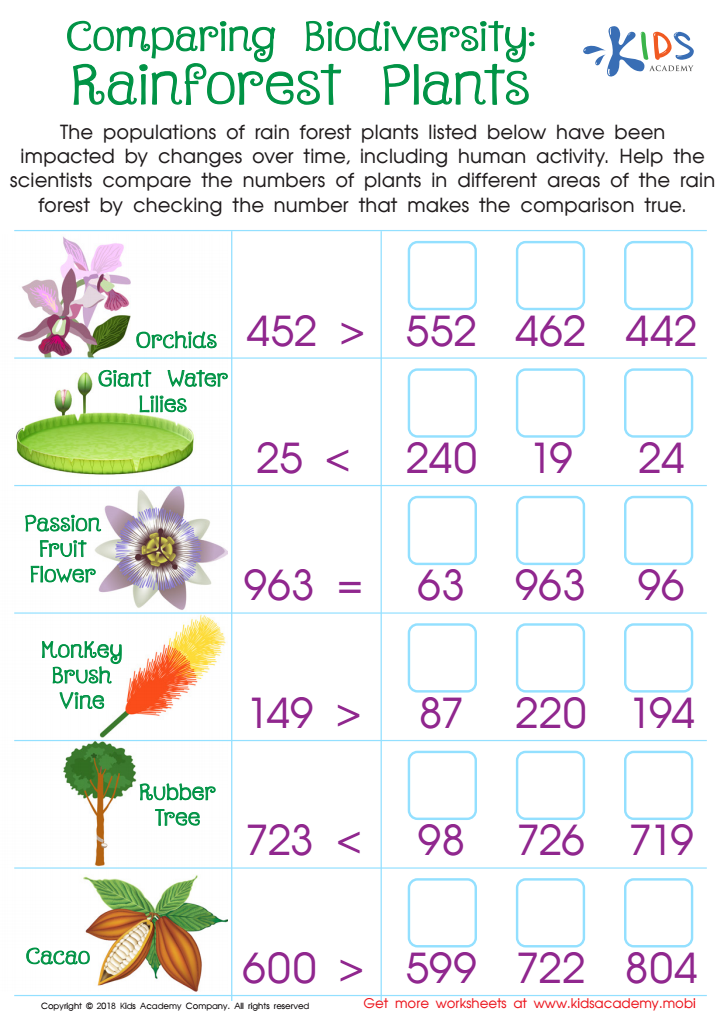
Comparing Biodiversity: Rainforest Plants Worksheet
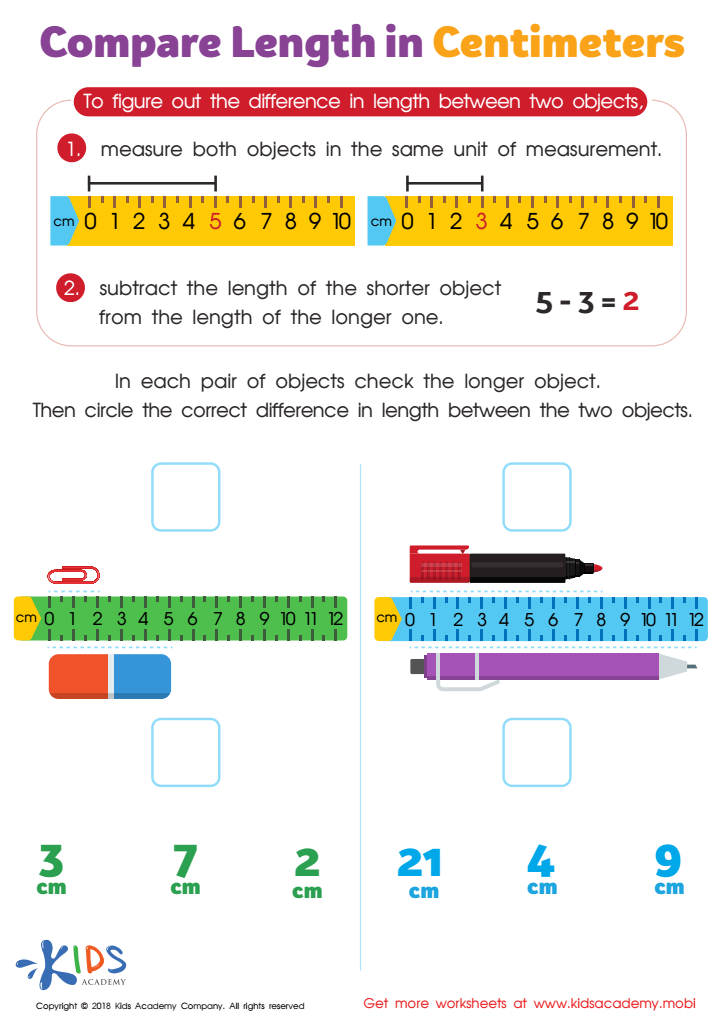
Compare Length in Centimeters Worksheet








Interpreting data in normal numbers is crucial for parents and teachers of children ages 5-8 as it lays the foundation for critical thinking and quantitative reasoning. At this developmental stage, children are naturally curious and eager to understand the world around them. When they learn to interpret data—whether through simple graphs, charts, or real-life examples—they develop essential skills that will benefit their academic journey and everyday decision-making.
Understanding normal numbers, like counting and basic statistics, helps children grasp concepts such as comparison, trends, and patterns. Parents and teachers can use data interpretation to make learning engaging, as children can relate examples to their own experiences, like favorite foods or class attendance. Furthermore, fostering these skills prepares kids for more complex mathematical concepts in later grades.
Encouraging children to explore data not only enhances numeracy skills but also cultivates a mindset of inquiry and analytical thinking. Additionally, when parents and teachers collaborate in the process, they create a supportive environment that values education, reinforcing the importance of data interpretation. In today's data-driven world, these skills are vital, enabling children to navigate and engage with increasingly complex information as they grow.








