Comparing lengths Normal Math Worksheets for Ages 5-8
4 filtered results
-
From - To
Explore our engaging "Comparing Lengths" math worksheets designed for children aged 5-8! These interactive, skill-building activities are perfect for young learners developing their measurement skills. Our worksheets provide a variety of exercises, allowing students to compare and contrast the lengths of different objects through fun illustrations and relatable contexts. From identifying longer and shorter items to practical exercises that stimulate critical thinking, these resources foster a solid understanding of measurement concepts. Enhance your child's confidence in math with our colorful and age-appropriate materials, tailored to make learning both enjoyable and effective! Access our comprehensive collection today to ignite your child's math journey!
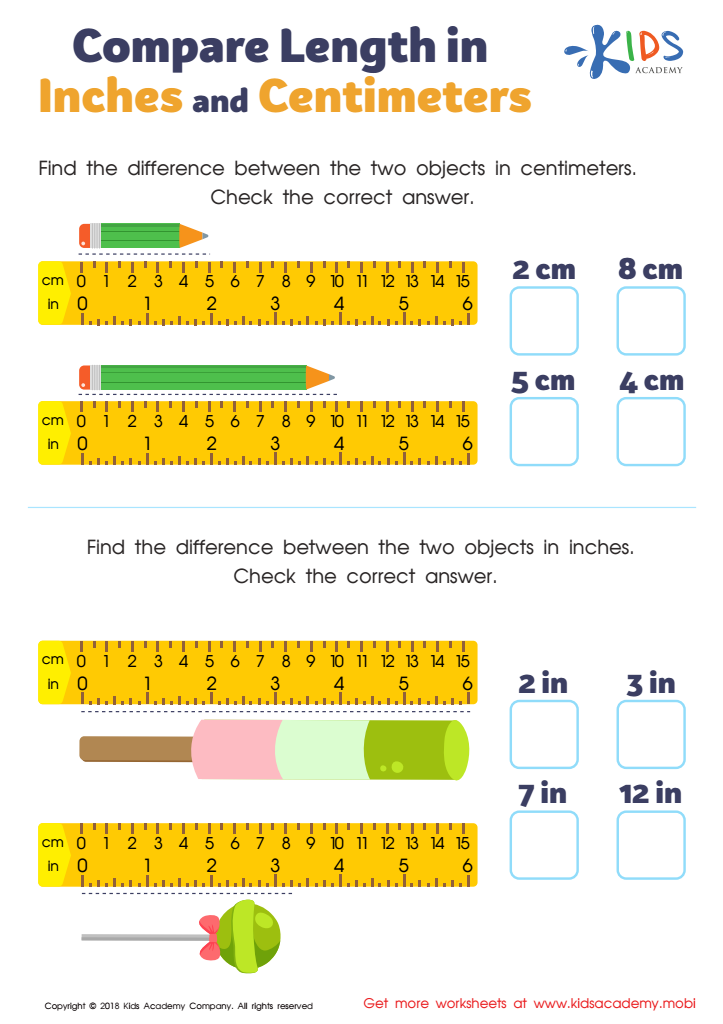
Compare Length in Inches and Centimeters Worksheet
 Assign to My Students
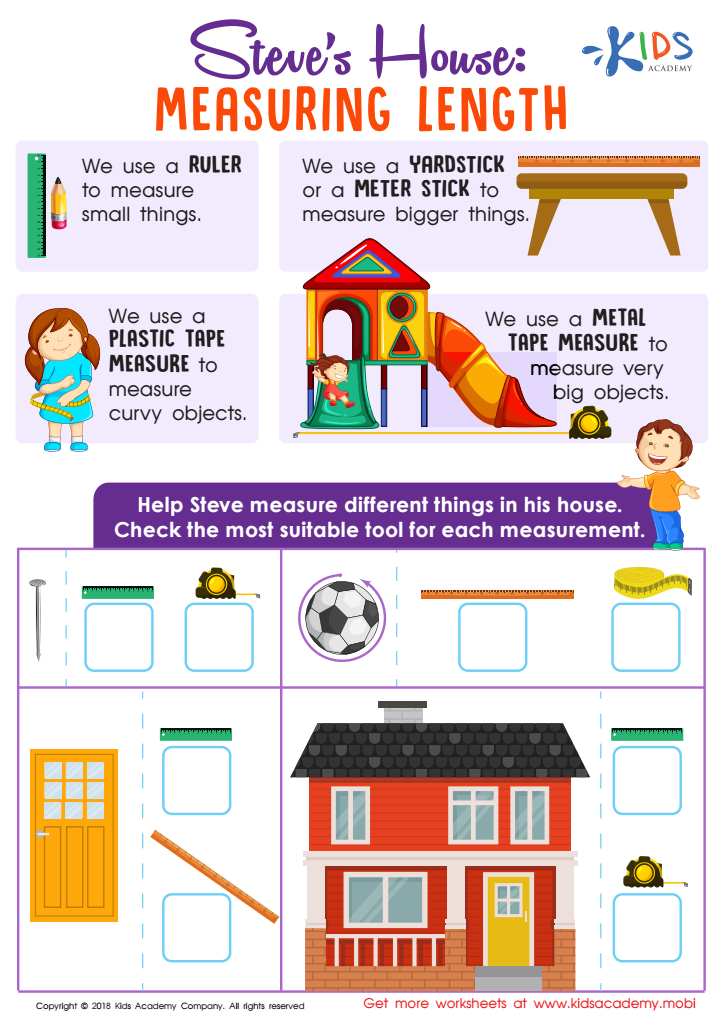
Steve's House: Measuring Length Worksheet
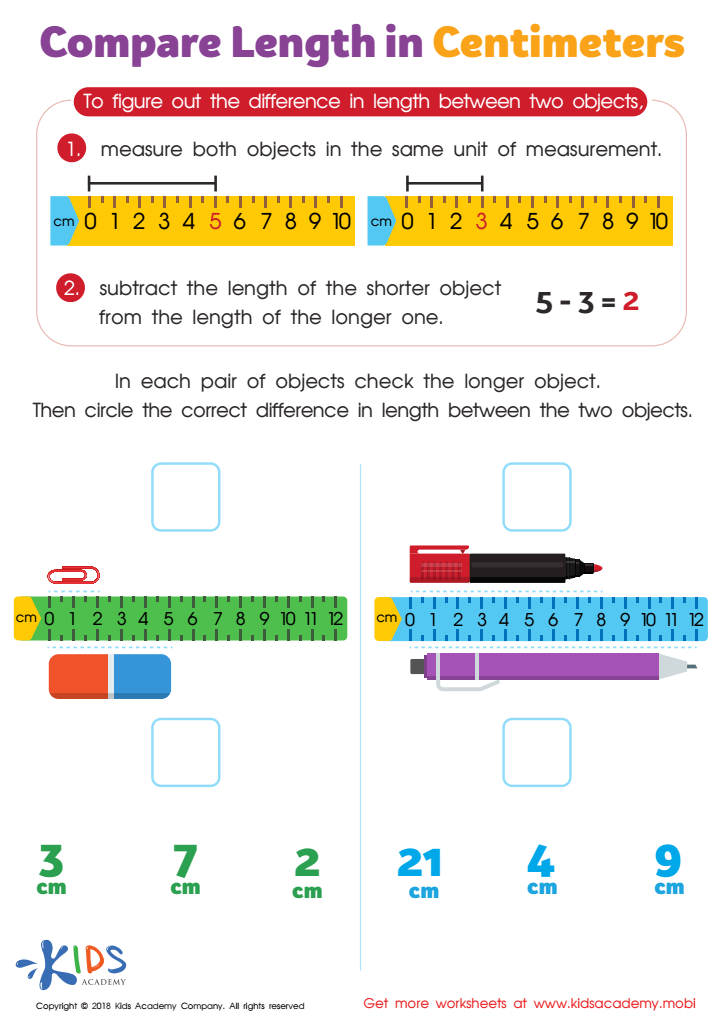
Compare Length in Centimeters Worksheet
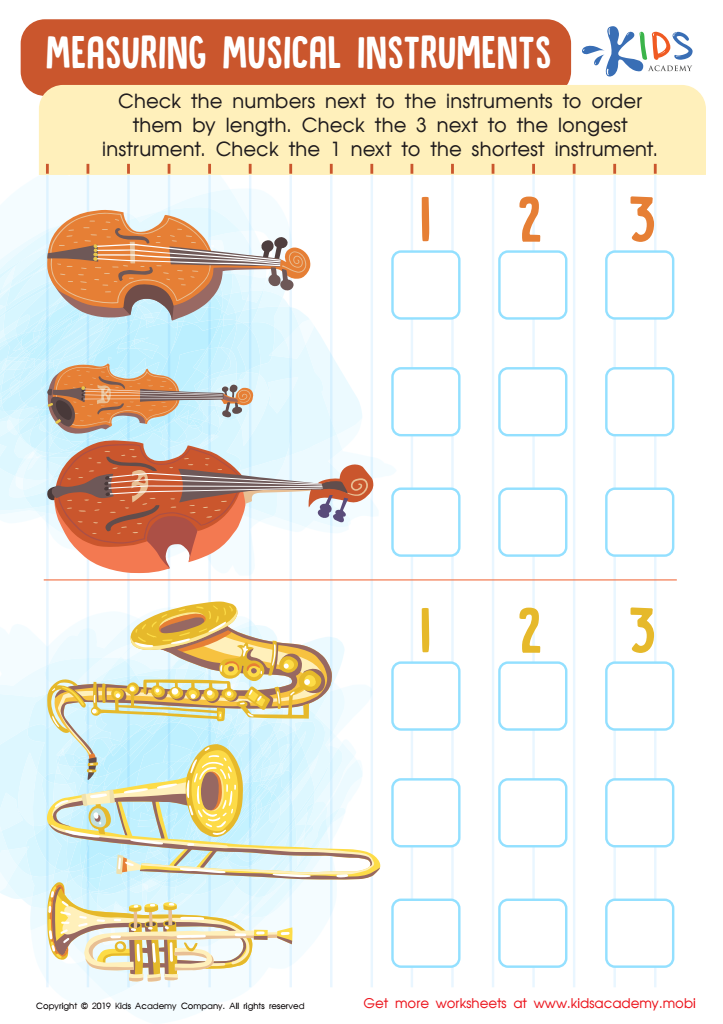
Measuring Musical Instruments Worksheet








Comparing lengths is an essential mathematical skill that lays the foundation for future learning in mathematics and critical thinking. For children aged 5 to 8, understanding length comparison helps them make sense of the world around them through tangible, hands-on experiences. When parents and teachers emphasize this skill, they help children develop spatial awareness, logical reasoning, and problem-solving abilities.
Through activities that involve comparing lengths, children learn to use comparative language (like "longer," "shorter," and "equal") and can apply these concepts to everyday situations. For example, they might compare the lengths of various objects during play or real-life activities, fostering natural curiosity and engagement.
Furthermore, these foundational skills link to various academic areas, such as science (measuring ingredients for a recipe), reading (interpreting charts), and even art (creating proportional artwork). Practicing length comparison can enhance a child's confidence in using math in daily scenarios.
Ultimately, when parents and teachers prioritize comparing lengths, they equip children with valuable skills that contribute to their overall cognitive development, numeracy skills, and readiness for more advanced mathematical concepts in later grades. This early focus fosters a lifelong appreciation for math and empowers children to explore and understand their environment.








