
Interpreting data Normal Math Worksheets for Ages 5-8
3 filtered results
Difficulty Level
Grade
Age
-
From - To
Subject
Activity
Standards
Discover an engaging collection of Interpreting Data Normal Math Worksheets designed for children ages 5-8. These carefully crafted worksheets from Kids Academy boost critical thinking and analytical skills, helping young learners grasp key concepts in data interpretation. Children will enjoy fun activities like sorting, comparing, and visualizing data using colorful charts and graphs. Perfect for both classroom and at-home learning, these worksheets encourage curiosity and foster a love for math. Each worksheet is geared towards building a strong foundation in mathematics, preparing children for future academic success with confidence and ease. Join Kids Academy for an interactive learning adventure!
Favorites
With answer key
Interactive
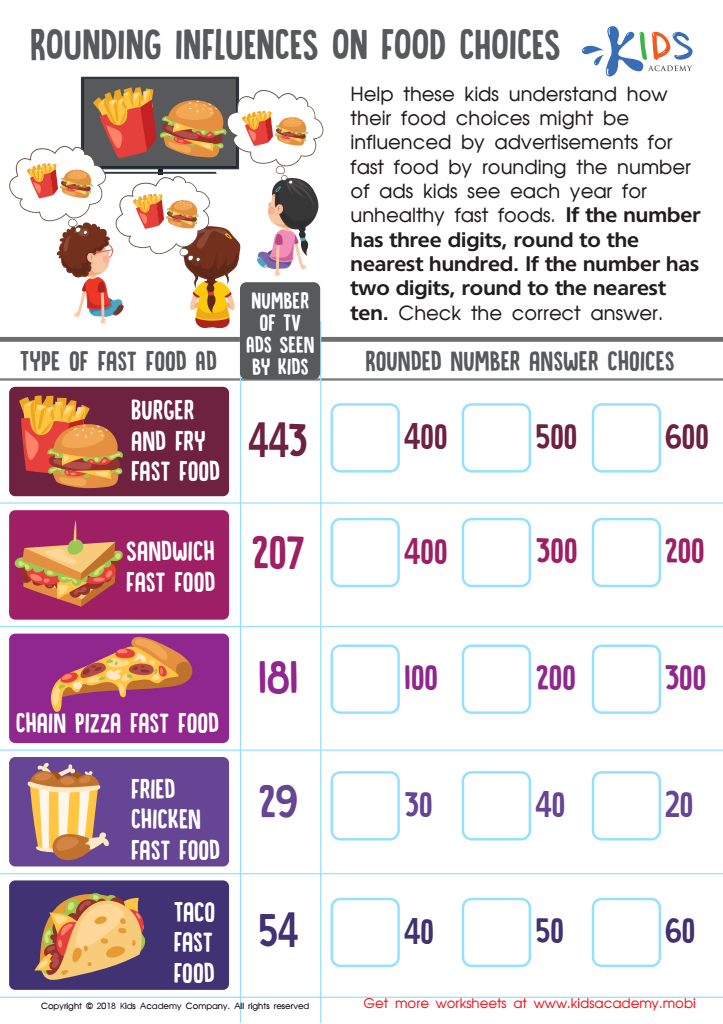
Rounding Influences Food Choices Worksheet
Kids find math more enjoyable when it reflects real-life scenarios. This free worksheet combines math and health! Kids view data on the number of ads they're exposed to in a year and must round the numbers to the nearest ten or hundred. Solve and check the correct answers to finish.
 Assign to My Students
Rounding Influences Food Choices Worksheet
Worksheet
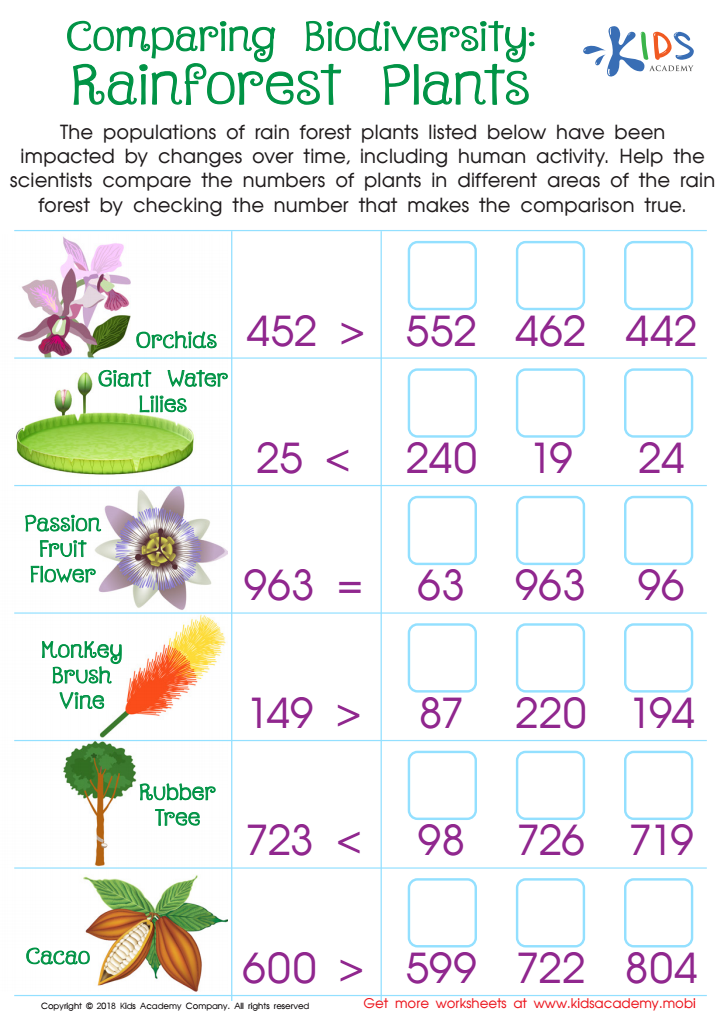
Comparing Biodiversity: Rainforest Plants Worksheet
Have your students learn about biodiversity in the rainforest and practice number sense and reasoning with this colorful PDF worksheet. Comparing the numbers of plants found in different areas of the rainforest, they'll combine eco-friendly science and math to make the number comparisons true.
Comparing Biodiversity: Rainforest Plants Worksheet
Worksheet
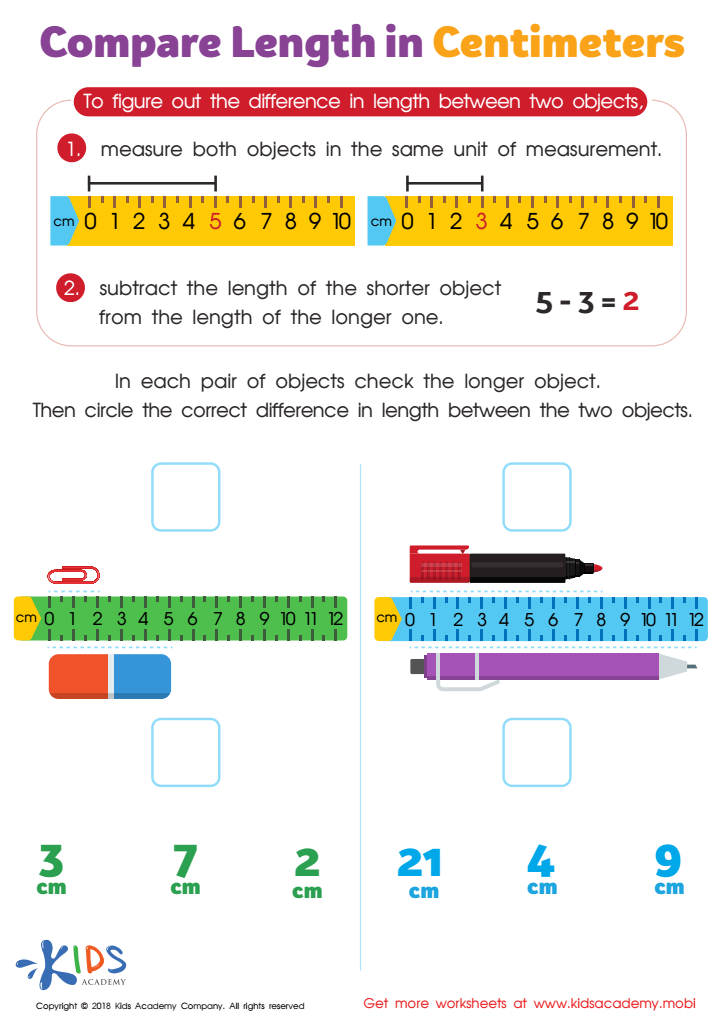
Compare Length in Centimeters Worksheet
To do this worksheet, your child needs to be able to measure accurately, add and subtract. They must measure both items and subtract the shorter from the longer to work out the difference in length.
Compare Length in Centimeters Worksheet
Worksheet
Join Kids Academy for Free
Who is primarily going to use this learning content?








Interpreting data is a foundational skill that can set the stage for children’s future success not only in math but in everyday life. For children aged 5-8, understanding data in simple terms—like tally marks, picture graphs, or bar charts—helps them develop critical thinking and problem-solving skills early on.
Teachers and parents should care because this skill encourages children to observe patterns, make comparisons, and draw conclusions based on evidence. These abilities are crucial not just in academic settings but are also essential life skills. Through this process, children learn how to approach problems methodically, a technique that is applicable in various aspects of life.
Moreover, proficiency in interpreting data supports other areas of math learning, like number sense and basic arithmetic, by providing practical contexts in which abstract concepts make sense. This context-based learning can enhance a child’s engagement and retention.
Lastly, fostering an ability to interpret data nurtures an early interest in STEM fields (Science, Technology, Engineering, and Mathematics), providing a gateway to more complex subjects. When children see firsthand how data interpretation applies to their world—whether tallying favorite fruits or measuring classroom items—they gain a sense of relevance and curiosity for further learning.
In summary, prioritizing data interpretation skills for young children equips them with essential tools for both academic success and functioning effectively in everyday environments.








