Understanding measurements Normal Math Worksheets for Ages 5-8
8 filtered results
-
From - To
Explore our "Understanding Measurements" normal math worksheets designed specifically for children ages 5-8. These engaging resources help young learners grasp foundational measurement concepts, including length, height, weight, and volume. With vivid illustrations and age-appropriate tasks, our worksheets foster critical thinking skills while making math enjoyable. Children will practice comparing measurements, using everyday objects, and developing their problem-solving abilities through hands-on activities. Perfect for classroom use or at-home practice, these worksheets promote a solid understanding of measurements—laying the groundwork for future math success. Download our fun, easy-to-use worksheets today and watch your child gain confidence in measurement skills!
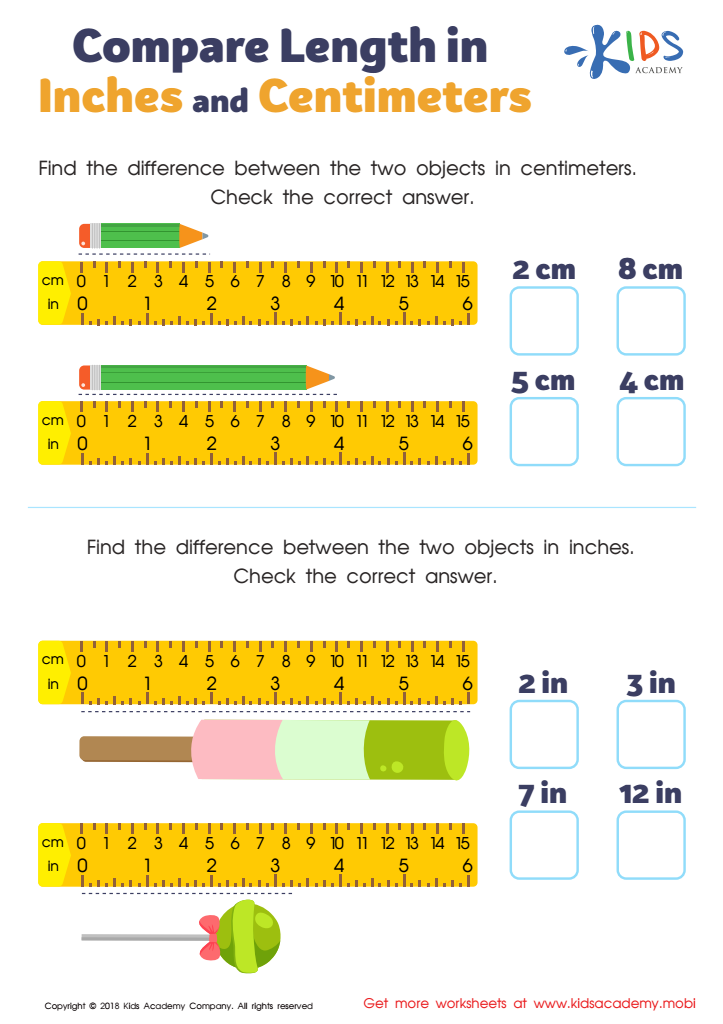
Compare Length in Inches and Centimeters Worksheet
 Assign to My Students
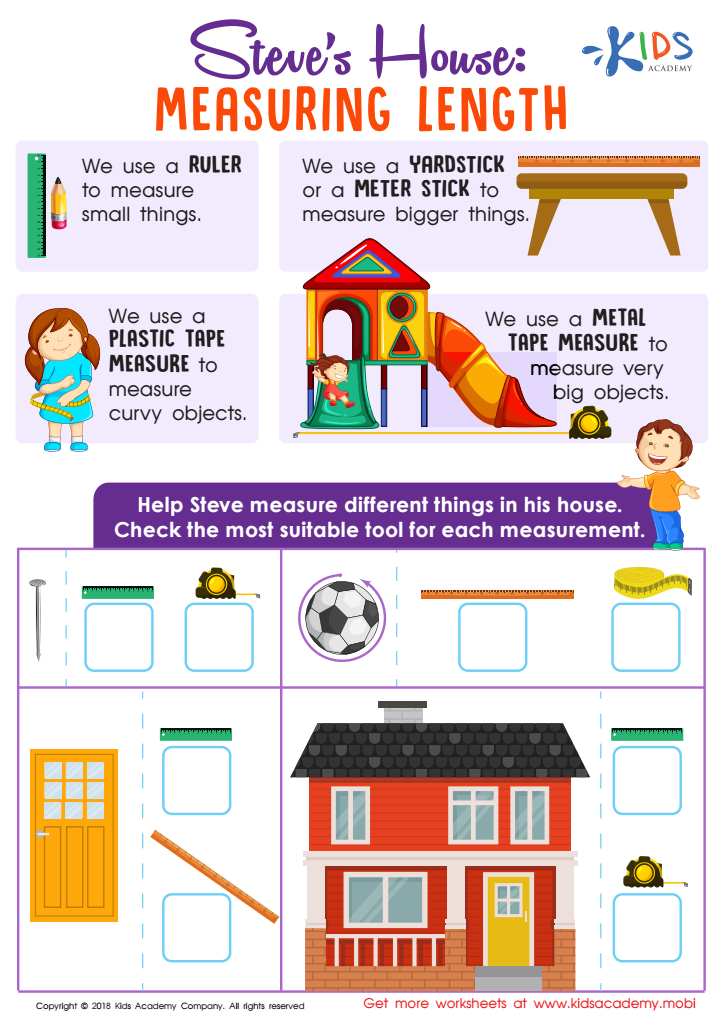
Steve's House: Measuring Length Worksheet
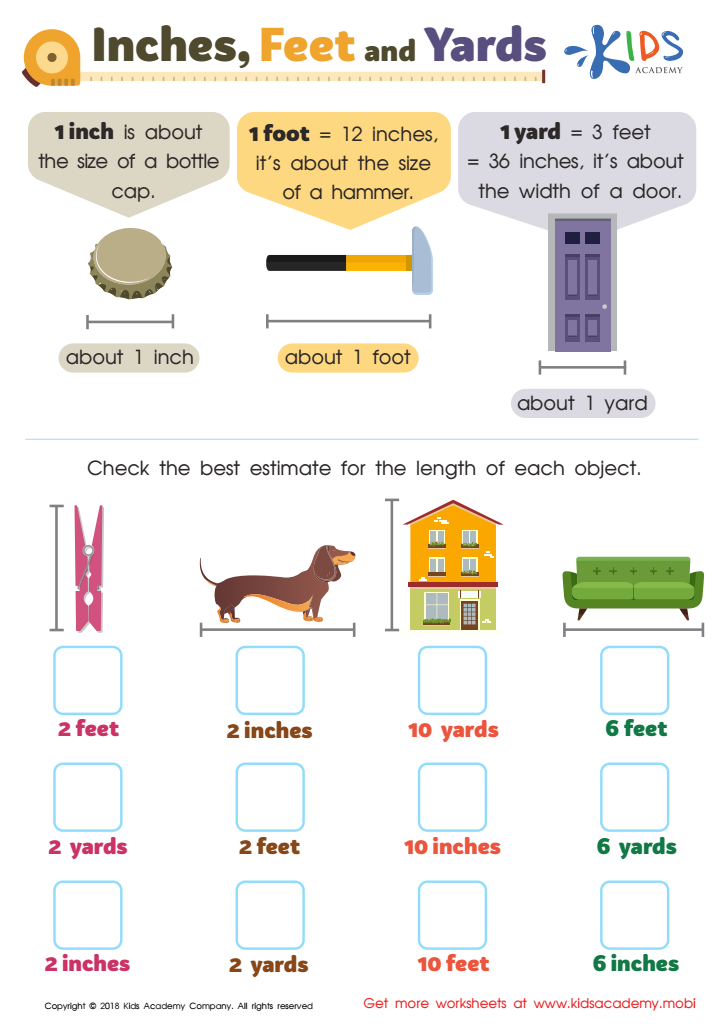
Inches, Feet and Yards Worksheet
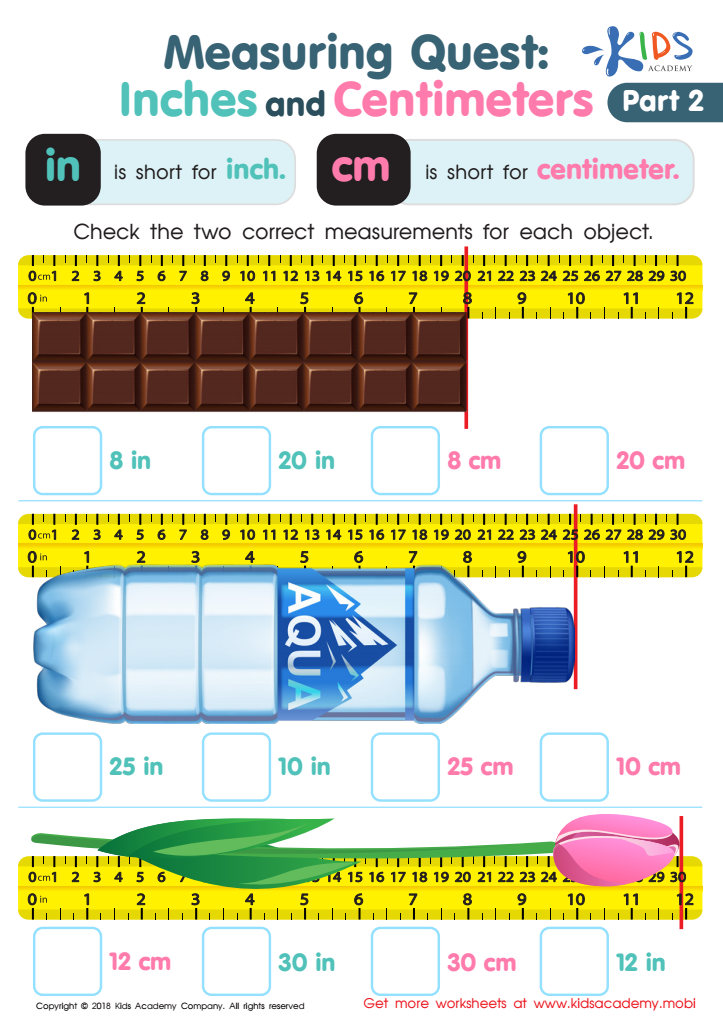
Measuring Quest: Inches and Centimeters - Part 2 Worksheet
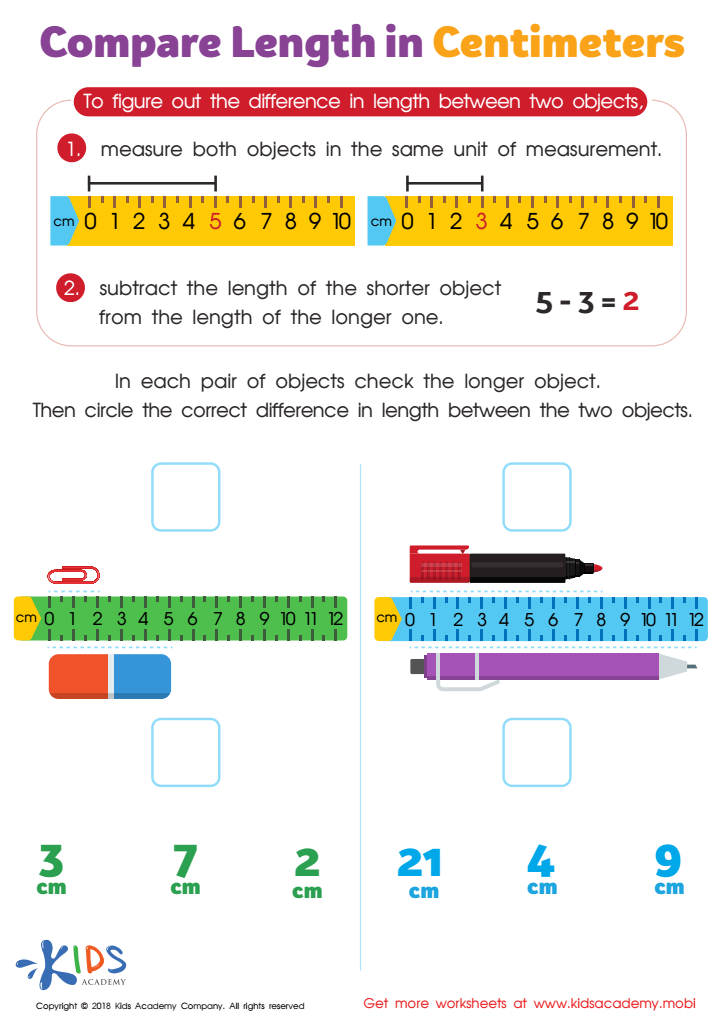
Compare Length in Centimeters Worksheet
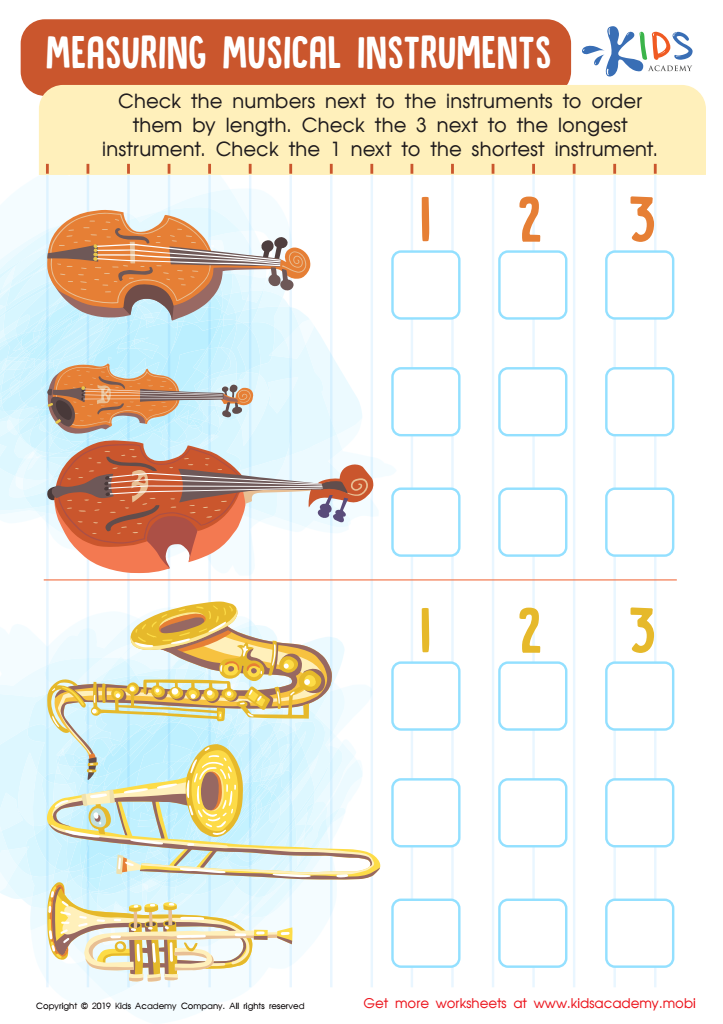
Measuring Musical Instruments Worksheet
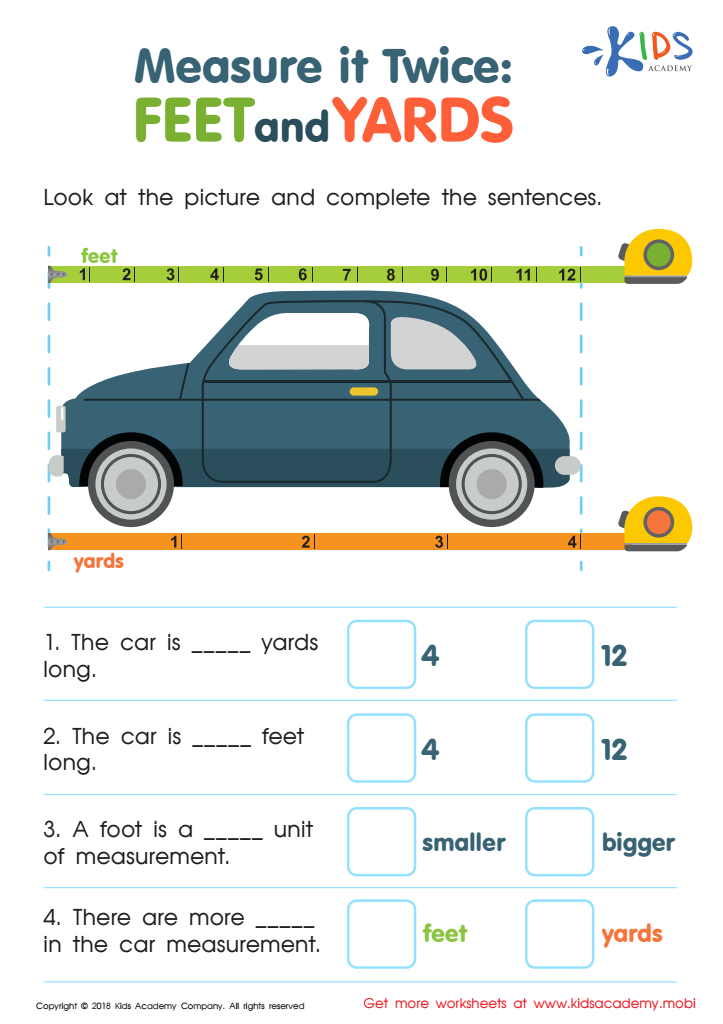
Measure It Twice: Feet and Yards Worksheet
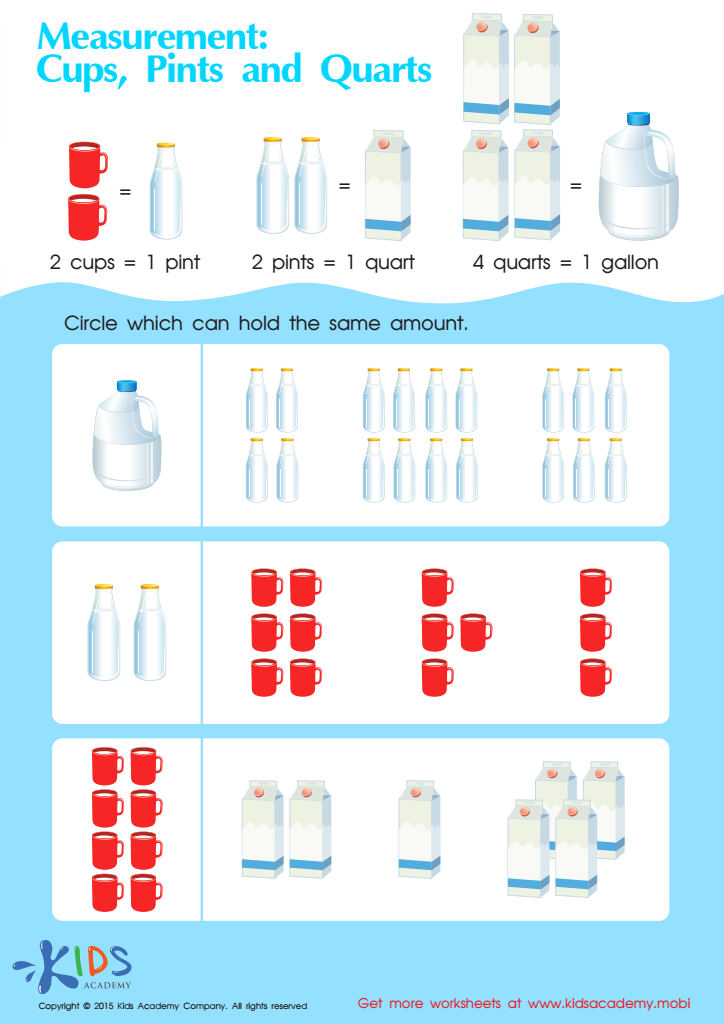
Cups, Pints and Quarts 2 Worksheet







Understanding measurements in early mathematics is crucial for children aged 5-8, as it lays a foundational skill set required for everyday life and advanced learning. Measurements help kids make sense of the world around them, fostering critical thinking and problem-solving abilities. By teaching children to compare lengths, weights, and volumes, parents and teachers equip them with tools necessary for tasks such as cooking, building, and even engaging in activities outside of school like sports and crafting.
Additionally, a grasp of measurement enhances grasping concepts of size, quantity, and spatial awareness, germinating curiosity and inviting exploration. As children measure and compare objects, they develop a sense of accuracy and precision. This skill ultimately extends beyond the classroom, linking to real-world applications, including science, engineering, and financial literacy in later grades.
Moreover, a sound understanding of measurements promotes confidence in mathematics. It alleviates anxiety around math concepts and offers a solid groundwork for future mathematical learning, such as fractions and geometry. Parents and educators play a critical role in fostering this understanding, guiding children through interactive, hands-on learning experiences. Ultimately, embedding measurement concepts early on enables young learners to appreciate the beauty of math in their everyday lives, inspiring a lifelong love for learning.








