Logical thinking Normal Reading Worksheets for Ages 5-8
6 filtered results
-
From - To
Boost your child's reading and logic skills with our engaging Normal Reading Worksheets for Ages 5-8. Designed to develop critical thinking and comprehension, these worksheets provide a blend of fun stories and challenging questions. Each activity aims to improve problem-solving abilities, reinforce understanding, and enhance vocabulary. Perfect for young learners, our worksheets align with early educational standards, making them an excellent resource for both classroom and home use. Watch your child gain confidence and a love for reading through interactive exercises that also build a strong foundation for future learning success. Download today and start learning fun!
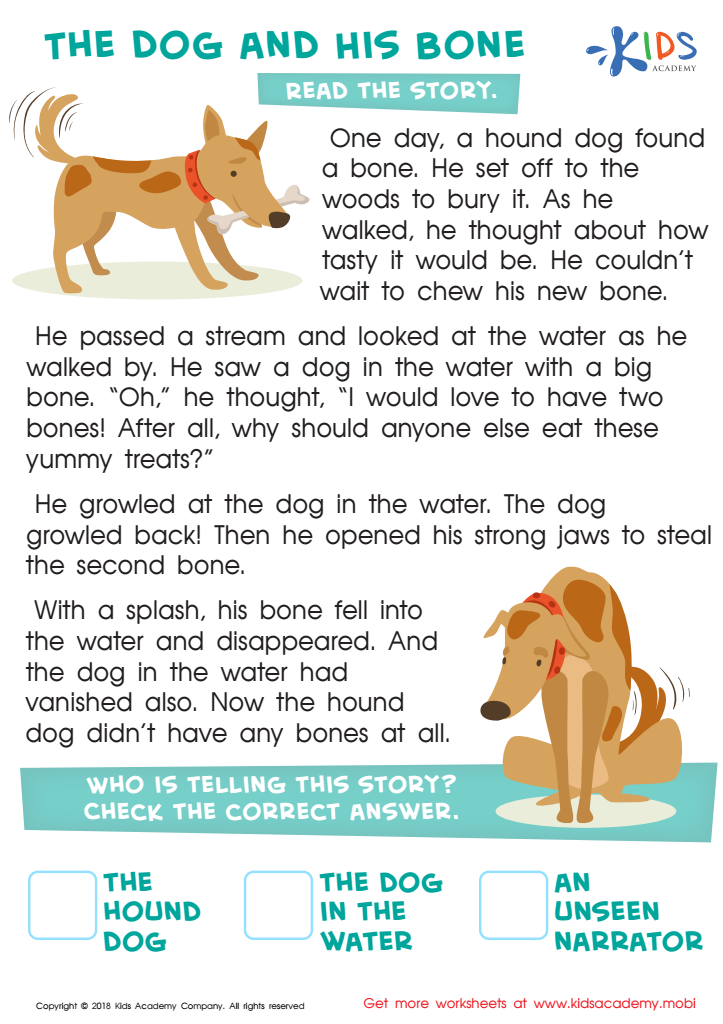
The Dog and His Bone Worksheet
 Assign to My Students
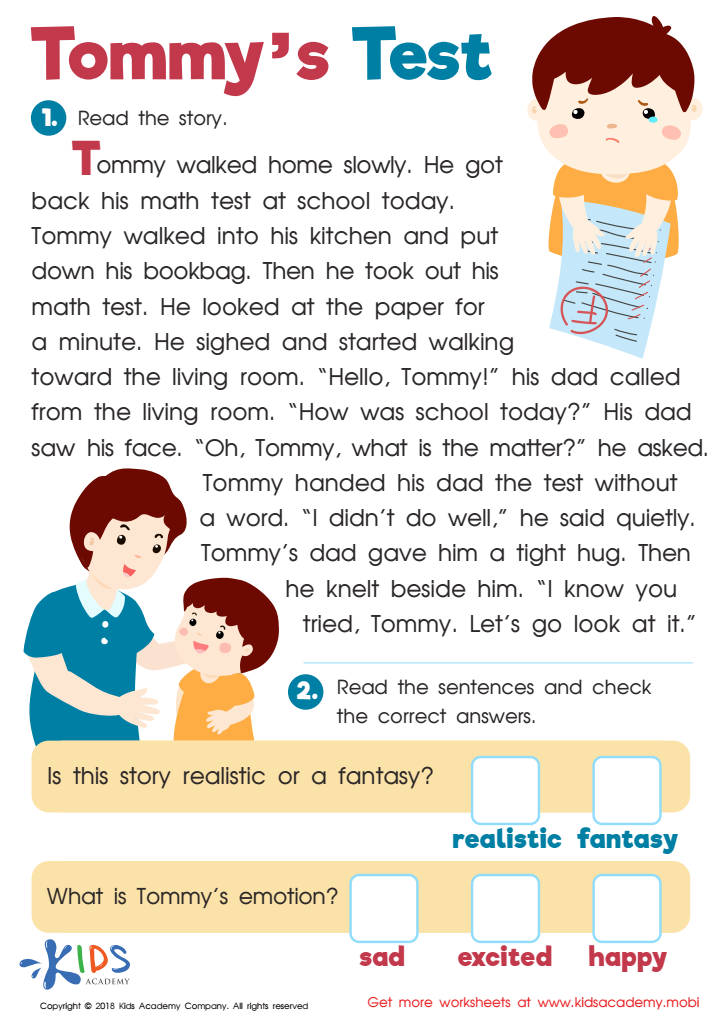
Tommys Test Worksheet
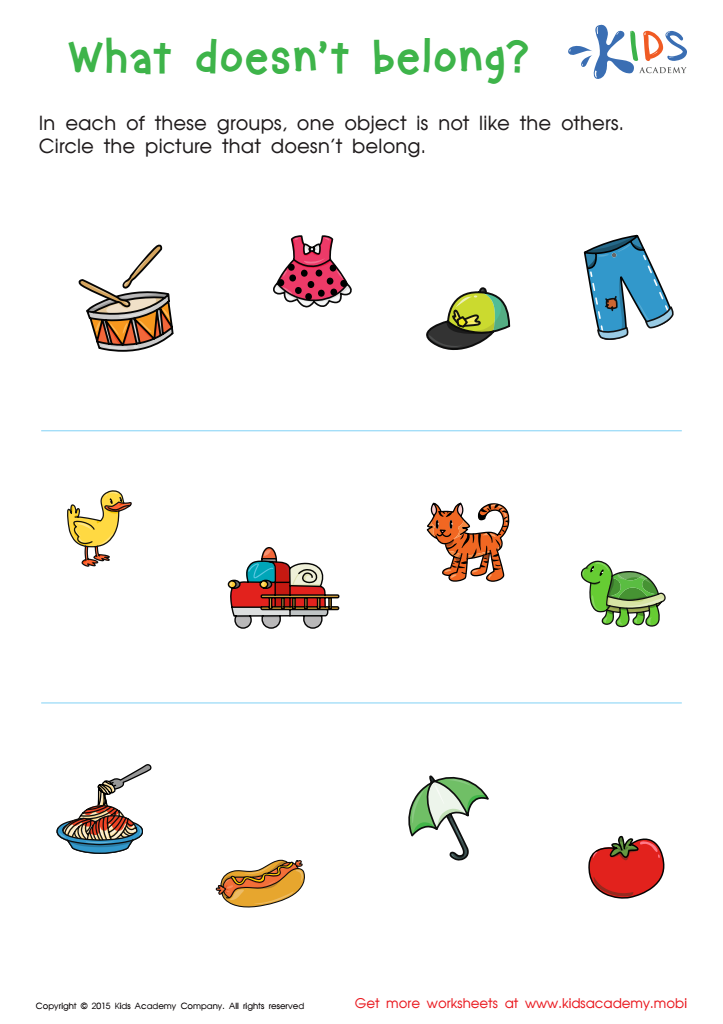
First Words: What Doesn't Belong Worksheet
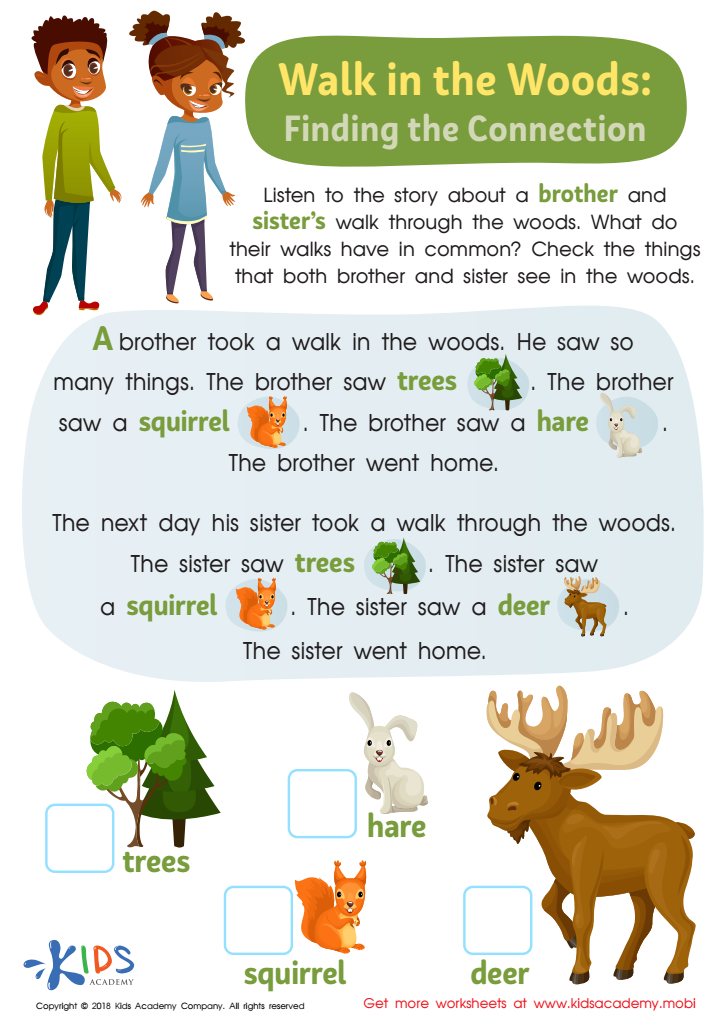
Walk In the Woods: Finding Connections Worksheet
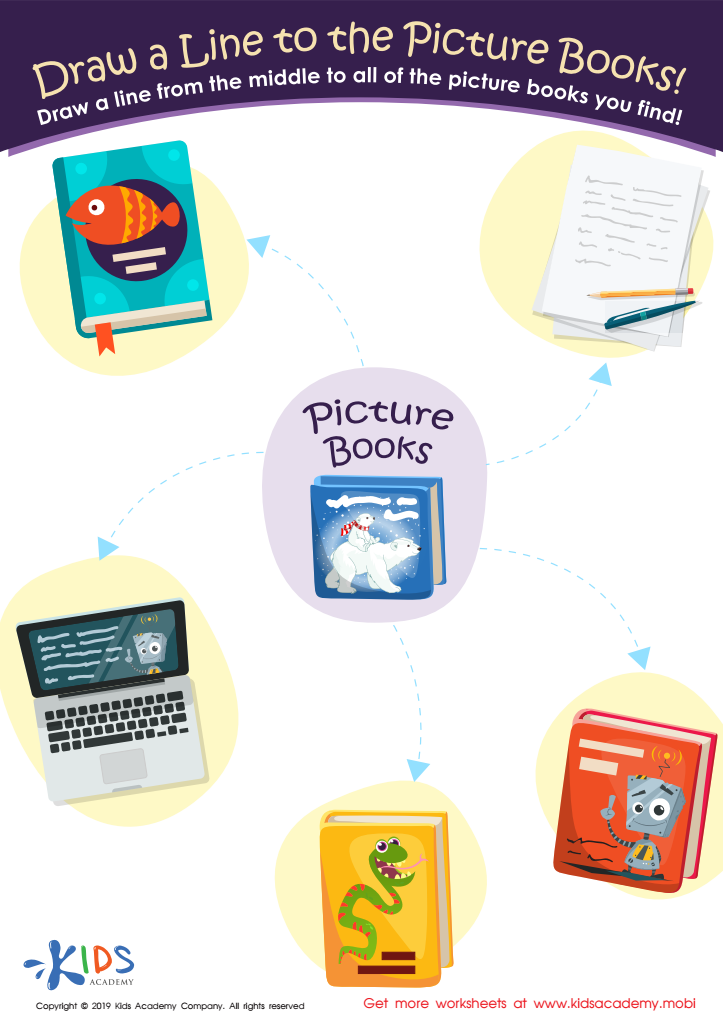
Draw a Line to the Picture Books Worksheet
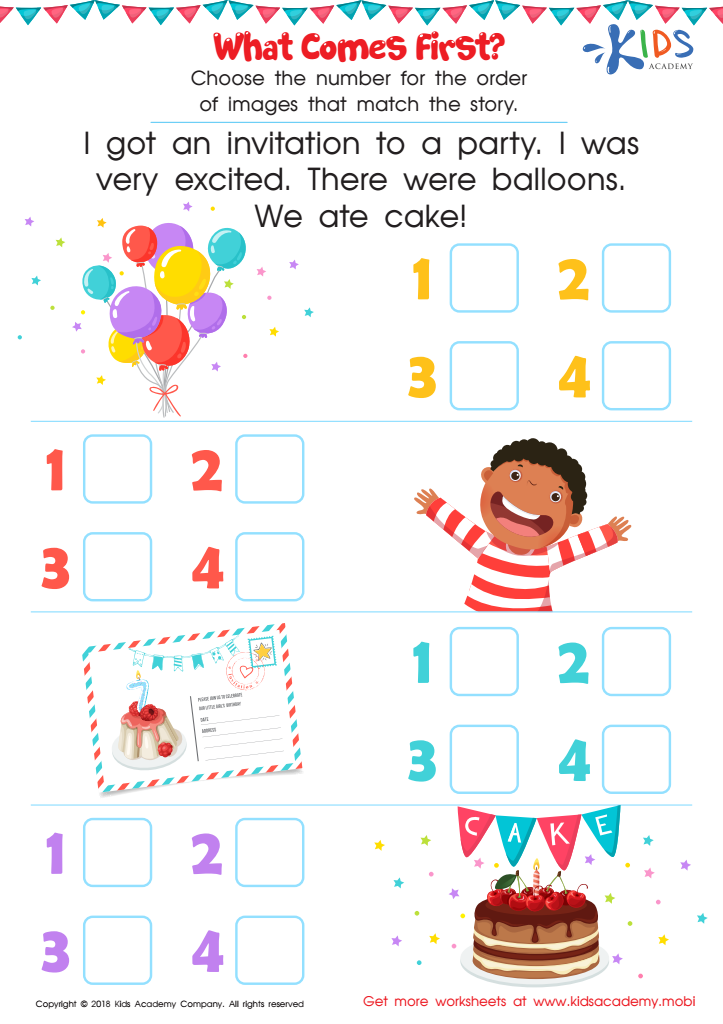
What Comes First Worksheet








Parents and teachers should prioritize the development of logical thinking and normal reading for children aged 5-8 because these fundamental skills are critical for their overall cognitive and educational growth. At this formative stage, children's brains are exceptionally adaptable, making it a prime time to nurture these abilities.
Logical thinking aids children in understanding patterns, solving problems, and making decisions. For example, it helps them in sequencing stories, recognizing cause-and-effect relationships, and improving their mathematical reasoning. These skills are not just essential for academic success but also for everyday problem-solving and making sense of the world around them.
Simultaneously, normal reading skills serve as the foundation for every other aspect of learning. Proficient reading enhances vocabulary, comprehension, and critical thinking. When children grasp basic reading skills early, they are more likely to enjoy reading and become lifelong learners. This joy of reading can translate into better performance across various subjects, including science, history, and social studies, as much of their understanding in these areas will come from reading.
Moreover, fostering these skills promotes self-confidence. Children who can read well and think logically are better prepared for academic challenges and social interactions. Therefore, emphasizing logical thinking and reading abilities in early education sets the stage for a child’s future success and well-being.








