Categorizing objects Normal Science Worksheets for Ages 5-8
4 filtered results
-
From - To
Explore our "Categorizing Objects Normal Science Worksheets" ideal for children ages 5-8. These educational resources are designed to make learning fun and interactive, helping young minds develop critical thinking and observational skills. Each worksheet provides engaging activities that teach kids to sort and classify objects based on various attributes. Easy to use and visually appealing, our worksheets are perfect for use both in classrooms and at home. Foster your child's cognitive skills and natural curiosity with activities that challenge them to recognize patterns, similarities, and differences in the world around them. Start the journey to effective learning today!
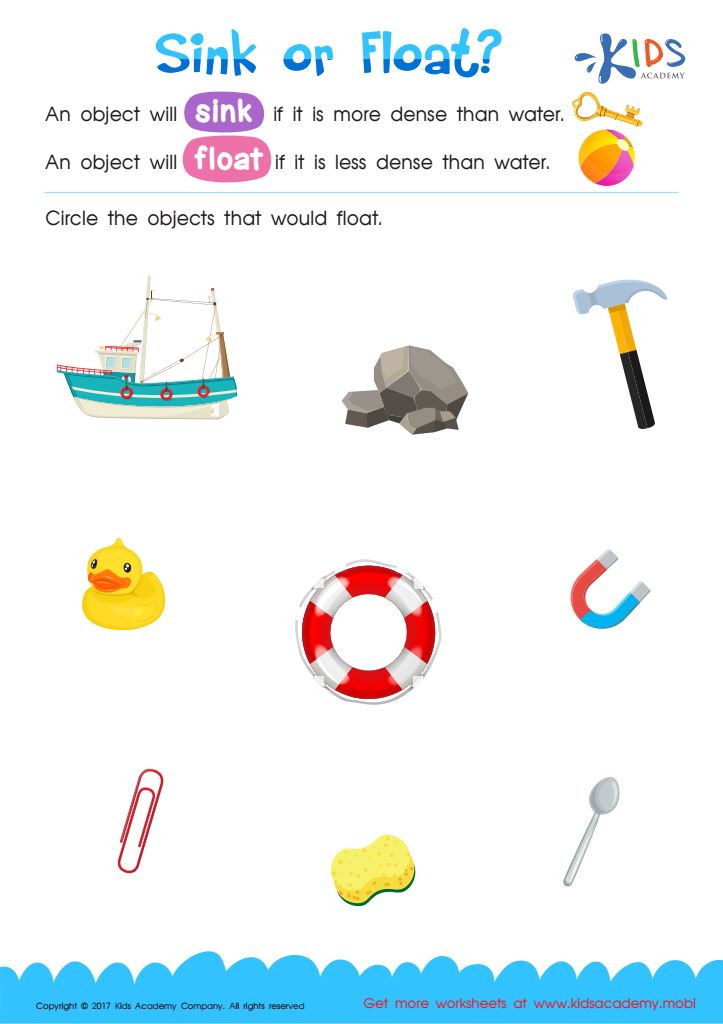
Sink or Float Printable
 Assign to My Students
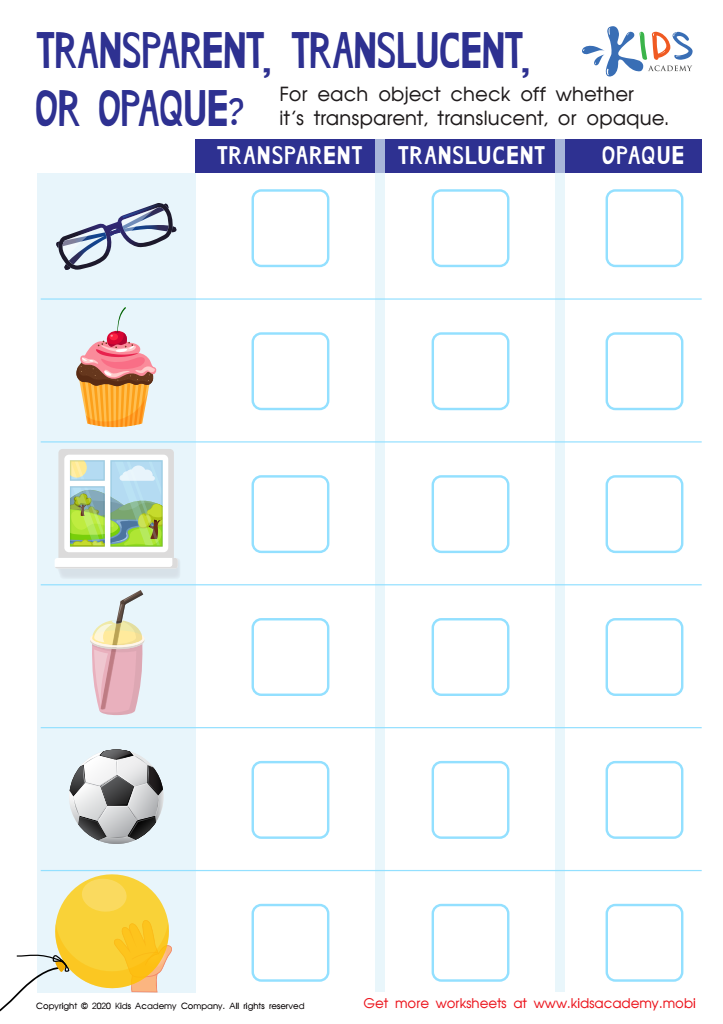
Transparent, Translucent, or Opaque Worksheet
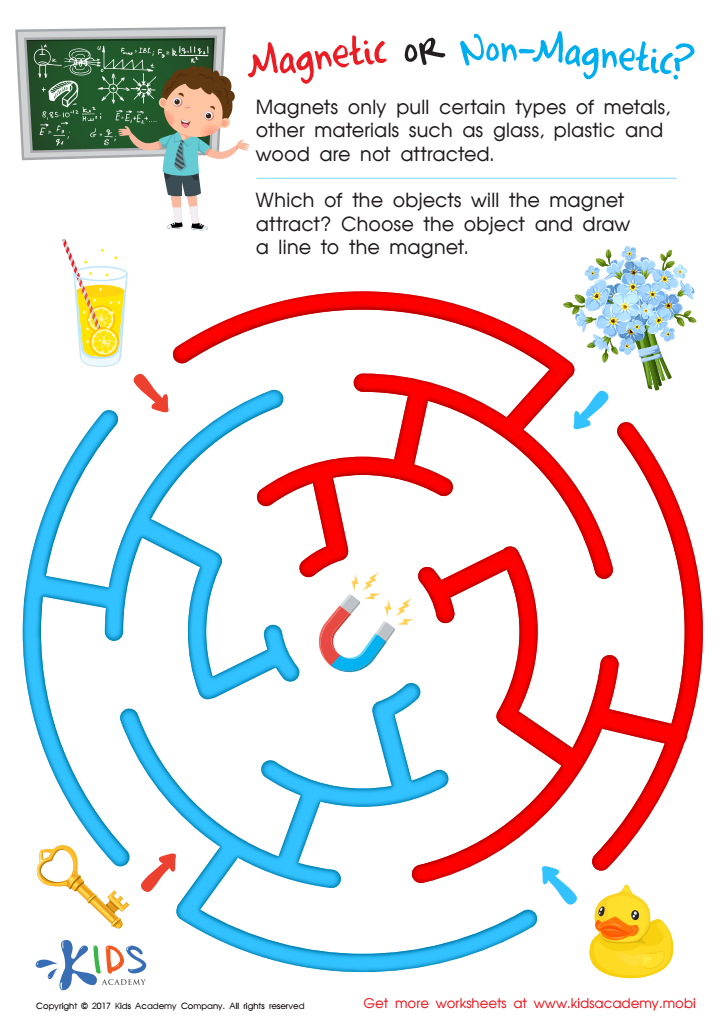
Magnetic or Non–Magnetic Worksheet
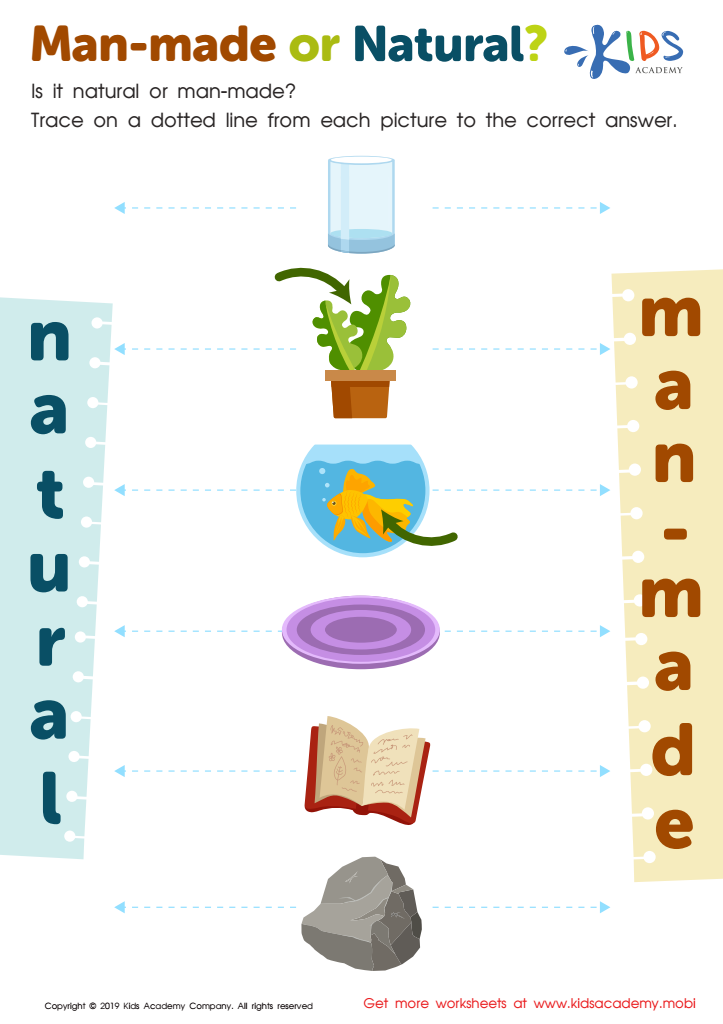
Man-Made or Natural? Worksheet








Categorizing objects is a foundational skill in early childhood education that plays a crucial role in cognitive development for children aged 5-8. Parents and teachers should prioritize this activity because it nurtures critical thinking and organizational skills. Through categorizing, children learn to observe attributes, recognize patterns, and make sense of the world around them. These activities enhance a child’s ability to distinguish between different traits, like shape, color, size, and function, which are essential for problem-solving and logical reasoning.
Engaging in categorization also supports language development. As kids group objects, they use descriptive language to communicate similarities and differences, expanding their vocabulary and comprehension skills. Moreover, the process of sorting and classifying objects enhances memory retention and improves concentration – foundational aspects for academic achievement in subjects like math and science.
Additionally, categorizing objects helps in developing fine motor skills through the handling and arranging tasks, essential for writing and other detailed activities. Socially, these activities encourage collaborative learning and sharing of ideas in group settings, fostering teamwork and peer interaction.
In summary, categorizing objects offers multi-dimensional benefits, fostering cognitive, linguistic, motor, and social skills. By supporting these activities, parents and teachers pave the way for a child's holistic development and readiness for more complex learning stages.







