Number Sequencing Normal Addition & Subtraction Worksheets for Ages 5-9
4 filtered results
-
From - To
Discover a fun and engaging way to help your child master number sequencing with our Normal Addition & Subtraction Worksheets, designed specifically for ages 5-9. These worksheets promote essential math skills, enhancing your child’s understanding of sequences while practicing addition and subtraction. Our resources combine colorful visuals and delightful themes to keep young learners motivated and stimulated. Each worksheet includes a variety of exercises tailored to develop critical thinking and promote confidence in their math abilities. Perfect for at-home learning or classroom use, our worksheets are a great tool to create a solid foundation in basic math concepts. Start exploring today!
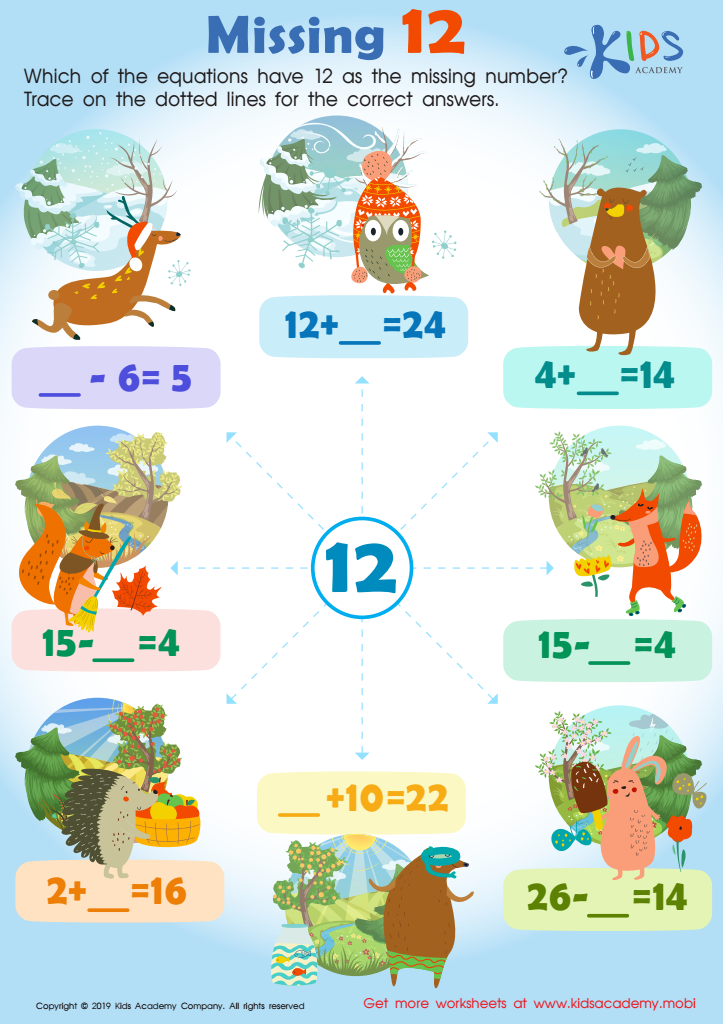
Missing 12 Worksheet
 Assign to My Students
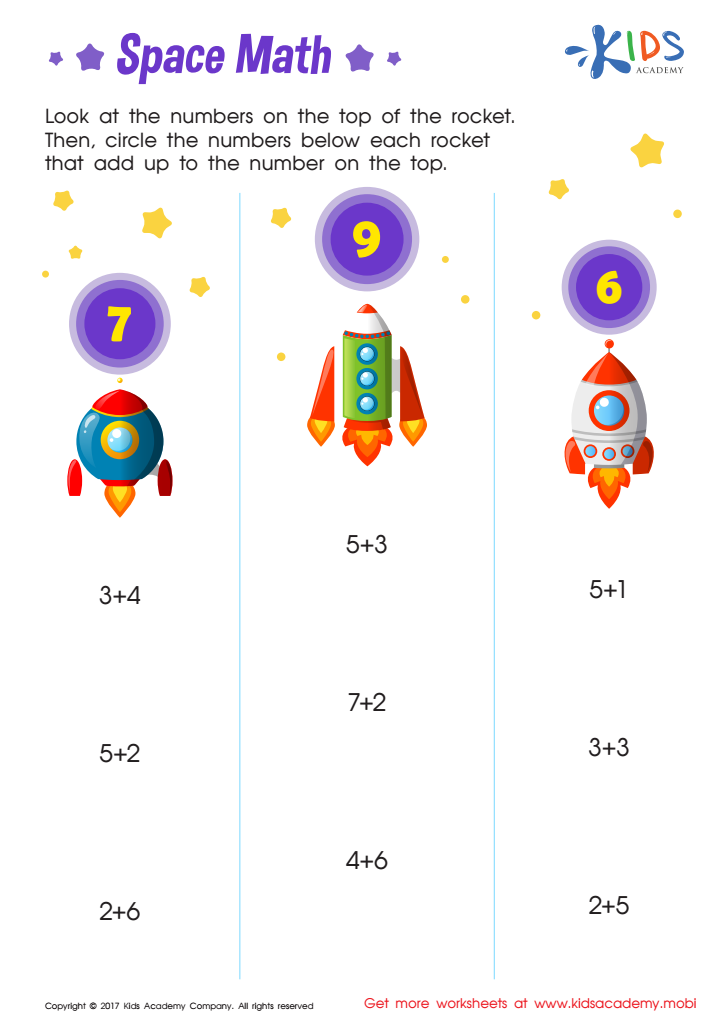
Addition: Space Math Worksheet
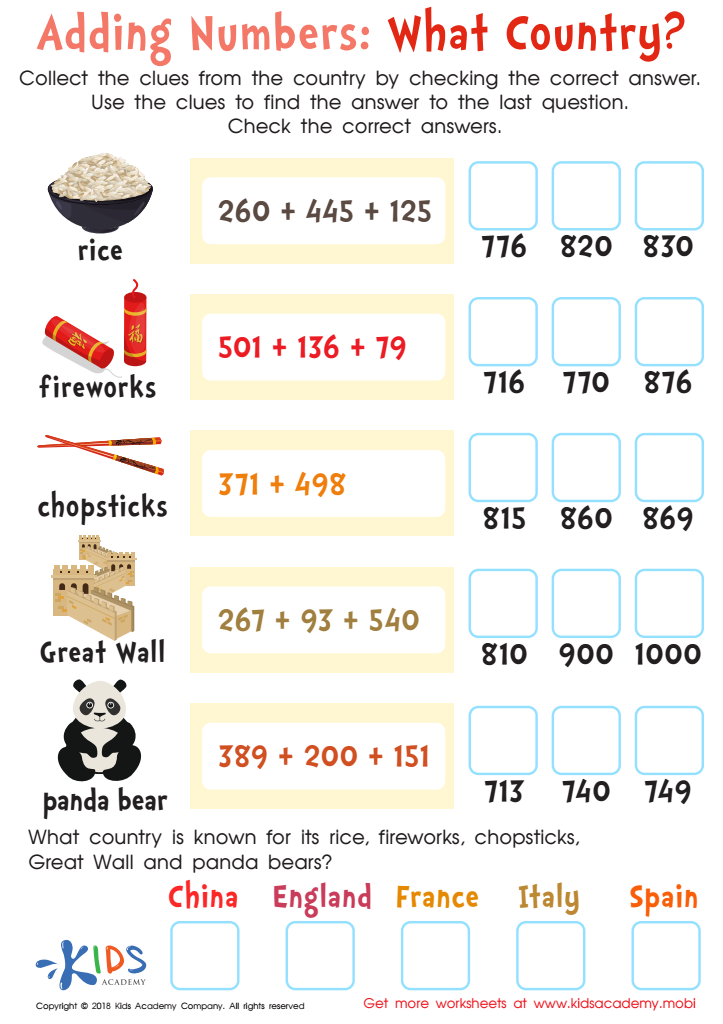
Adding Numbers: What Country Worksheet
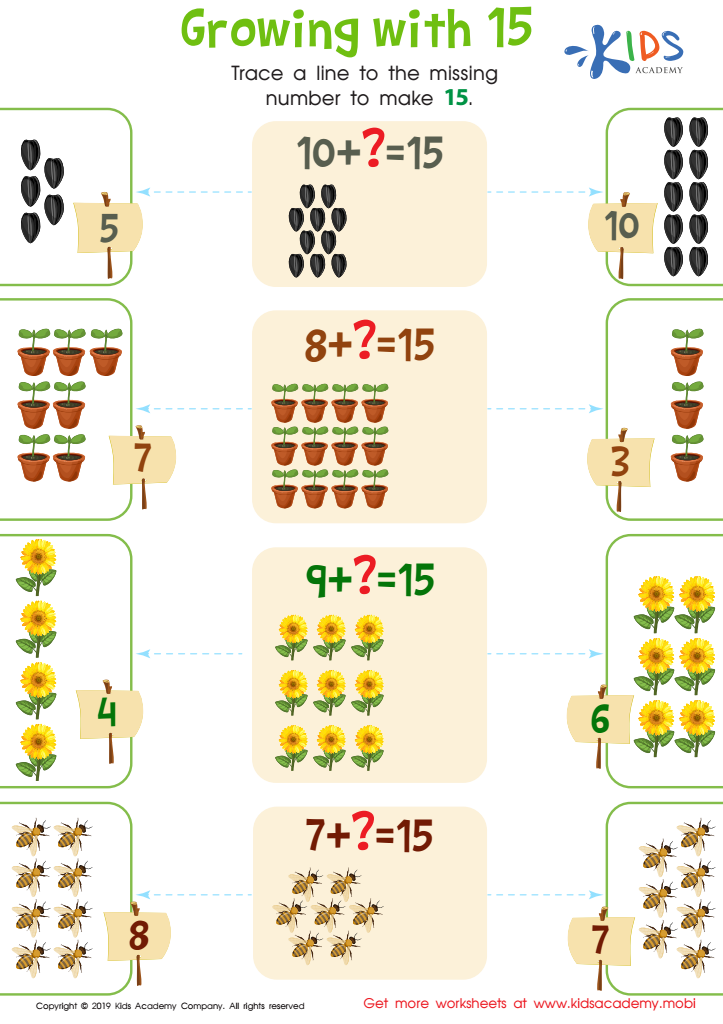
Growing with 15 Worksheet








Number sequencing, normal addition, and subtraction are foundational skills crucial for young learners aged 5-9. Understanding these concepts enhances children's mathematical fluency, enabling them to solve problems efficiently and develop critical thinking skills.
Firstly, number sequencing helps children recognize patterns and relationships between numbers, laying the groundwork for more complex mathematical operations. Grasping the sequence of numbers also aids in understanding basic addition and subtraction, as students learn how numbers are ordered and manipulated.
Moreover, mastering normal addition and subtraction is essential for daily life applications, from shopping to time management. These skills form the backbone of future mathematical education, including multiplication, division, and even algebra. When children have a solid grasp of basic arithmetic, they build confidence in their abilities, promoting a positive attitude toward math.
Teachers and parents play a vital role in nurturing these skills. By providing engaging activities and real-world examples, they can create a rich learning environment. Incorporating games, practical exercises, and everyday scenarios can make learning fun and effective. Ultimately, investing time in developing these competencies will foster a generation of enthusiastic learners prepared to tackle more advanced mathematical challenges.








