Problem-Solving Skills Normal Geometry Worksheets for Ages 5-9
9 filtered results
-
From - To
Unlock the world of shapes and spatial reasoning with our Problem-Solving Skills Normal Geometry Worksheets for ages 5-9! Perfectly crafted for young learners, these engaging worksheets foster critical thinking and problem-solving prowess. Each activity is designed to help children understand geometric concepts, from basic shapes and patterns to more advanced spatial relations. Our worksheets encourage independent thinking while being visually stimulating to capture attention. Ideal for both classroom and home use, they offer a fun and interactive way to enhance mathematical skills, promoting confidence and a love for learning in young minds. Foster early math success today!
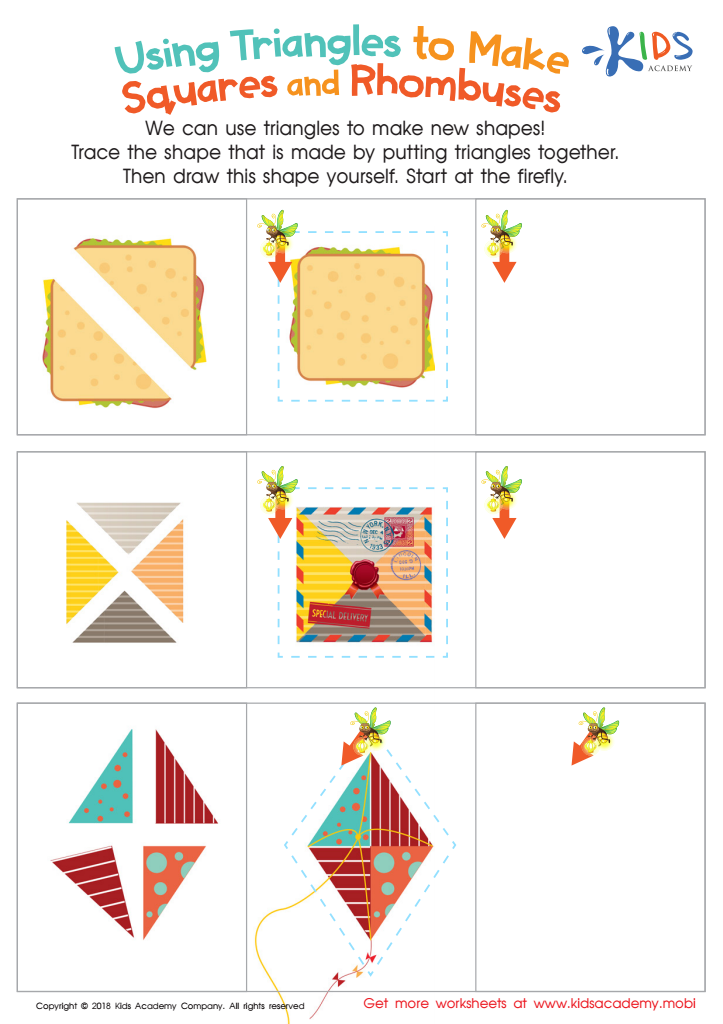
Using Triangles to Make Squares and Rhombuses Worksheet
 Assign to My Students











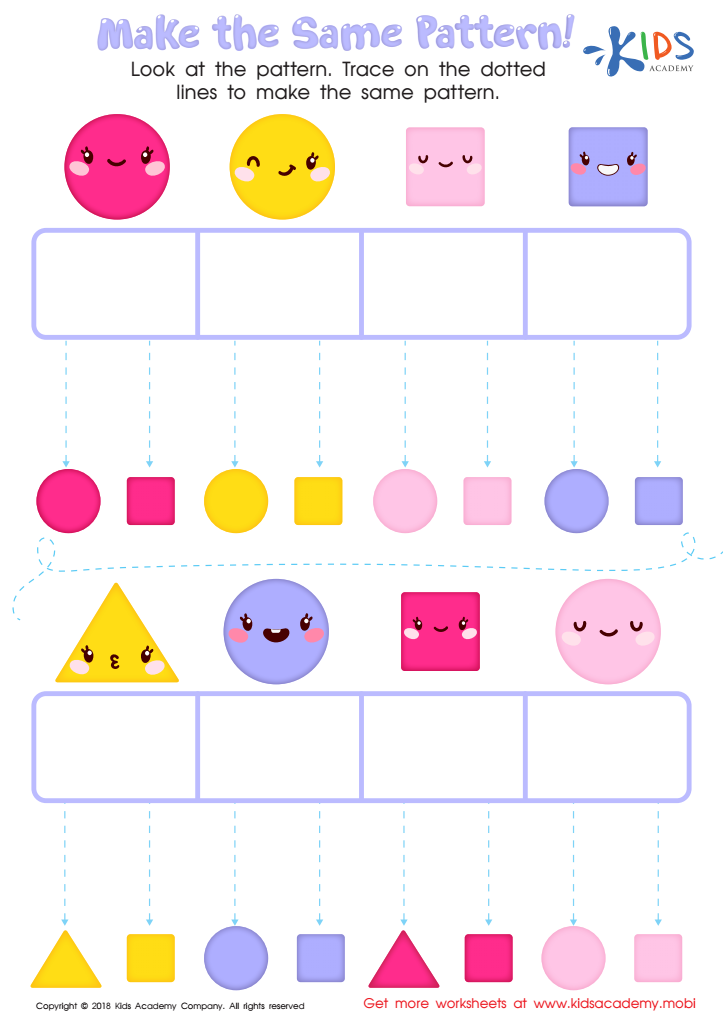
Make the Same Pattern Worksheet
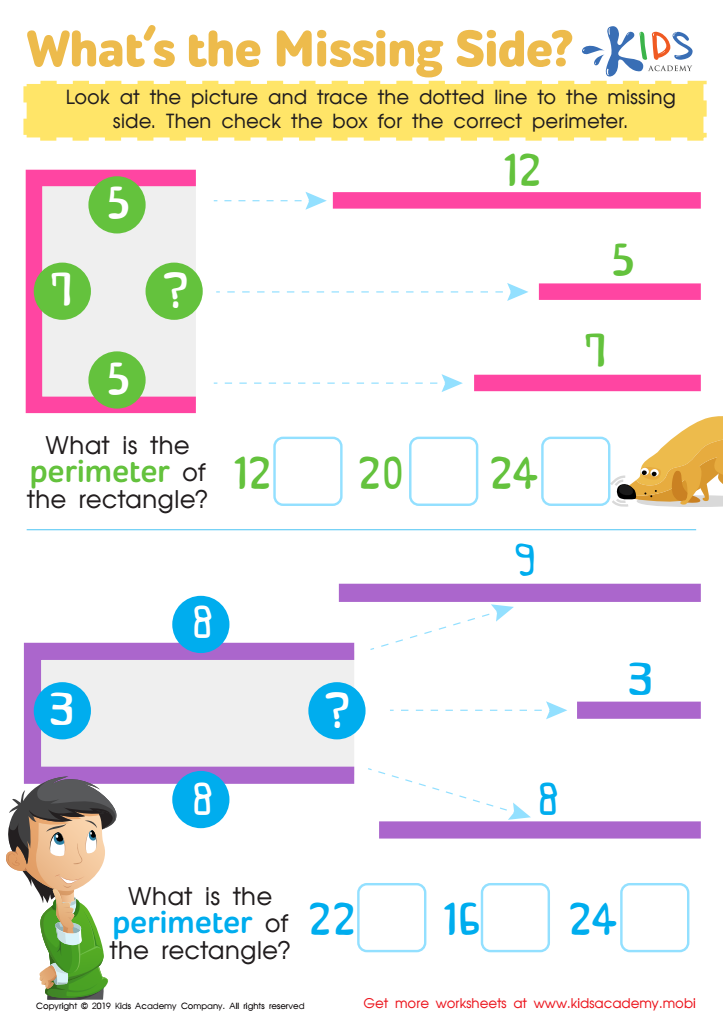
What's the Missing Side Worksheet
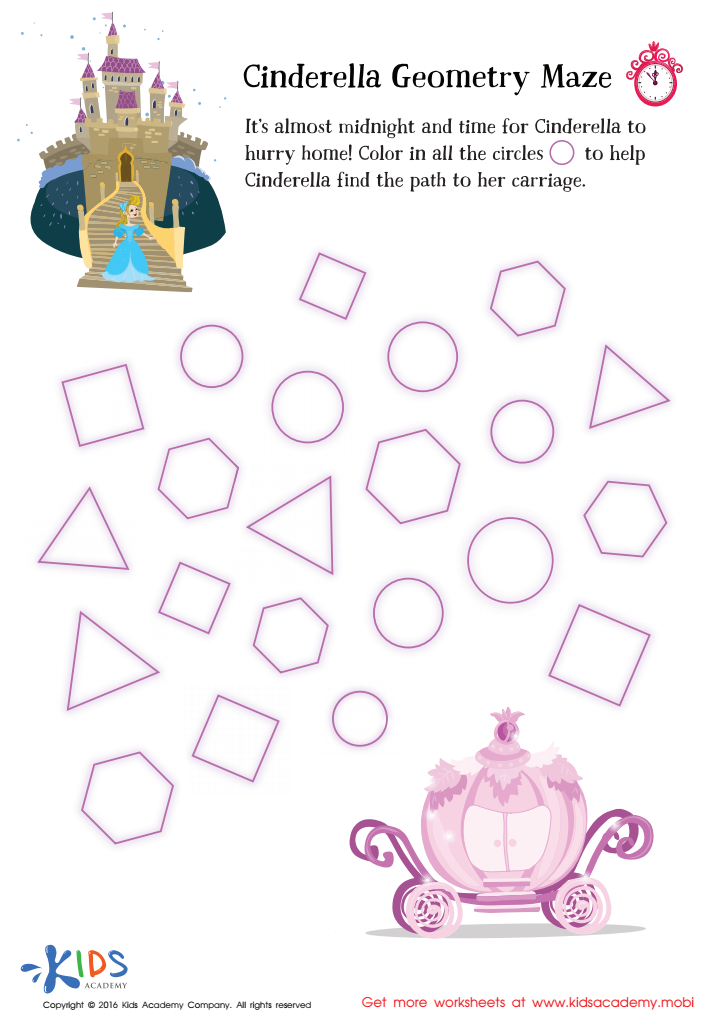
Cinderella Geometry Maze Worksheet
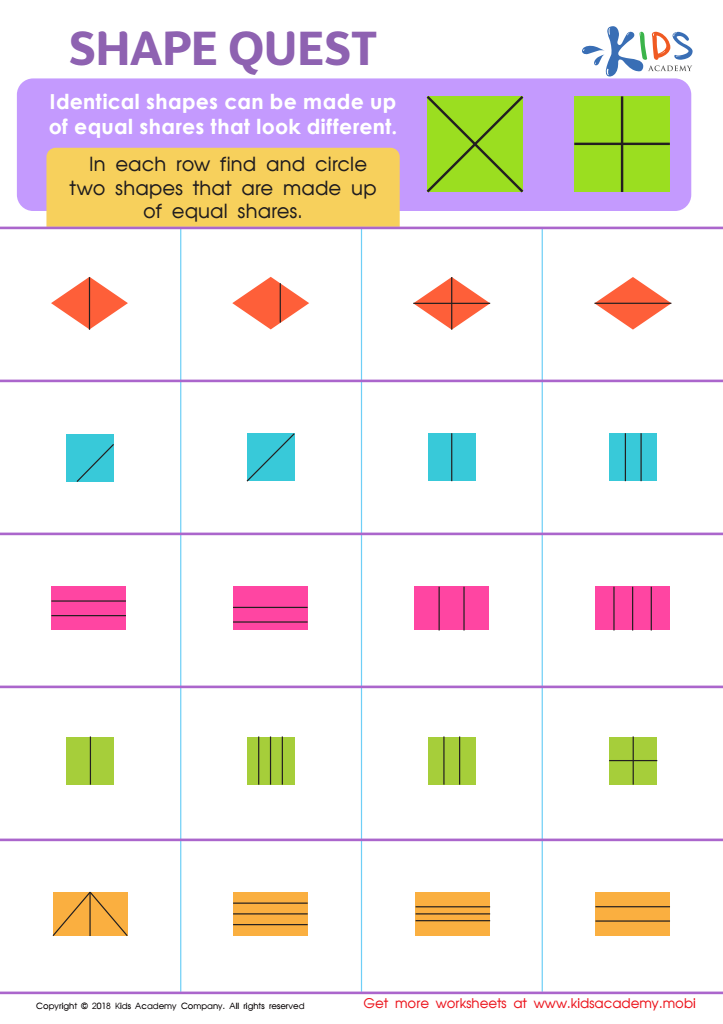
Shape Quest Worksheet

Learning to Draw Crescents And Triangles Worksheet
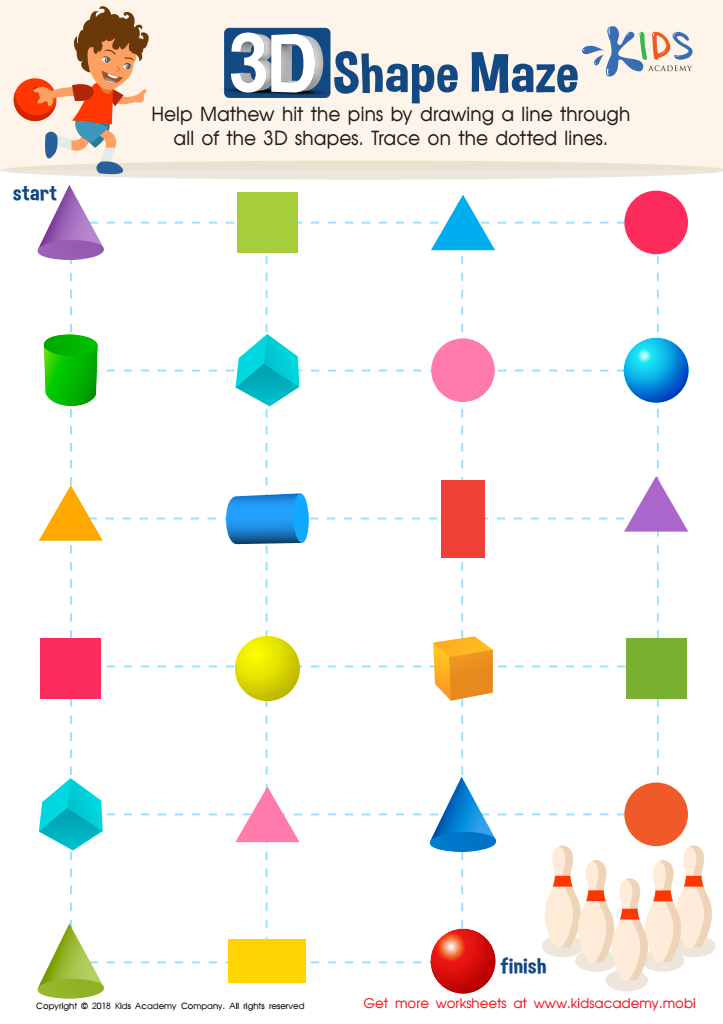
Shapes Maze Geometry Worksheet
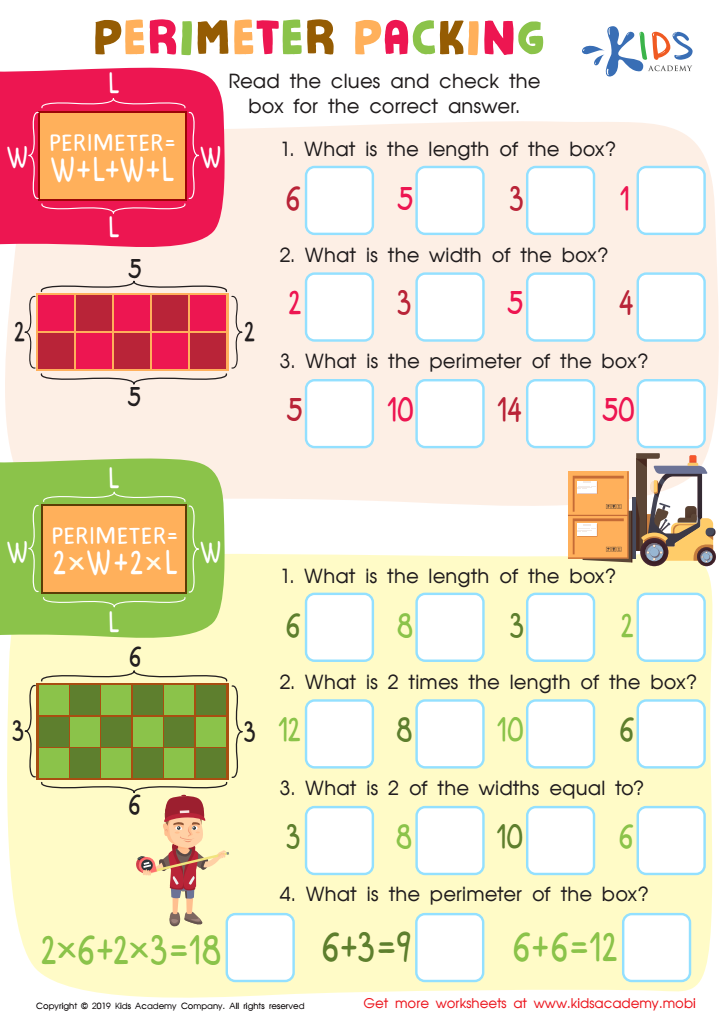
Perimeter Parking Worksheet
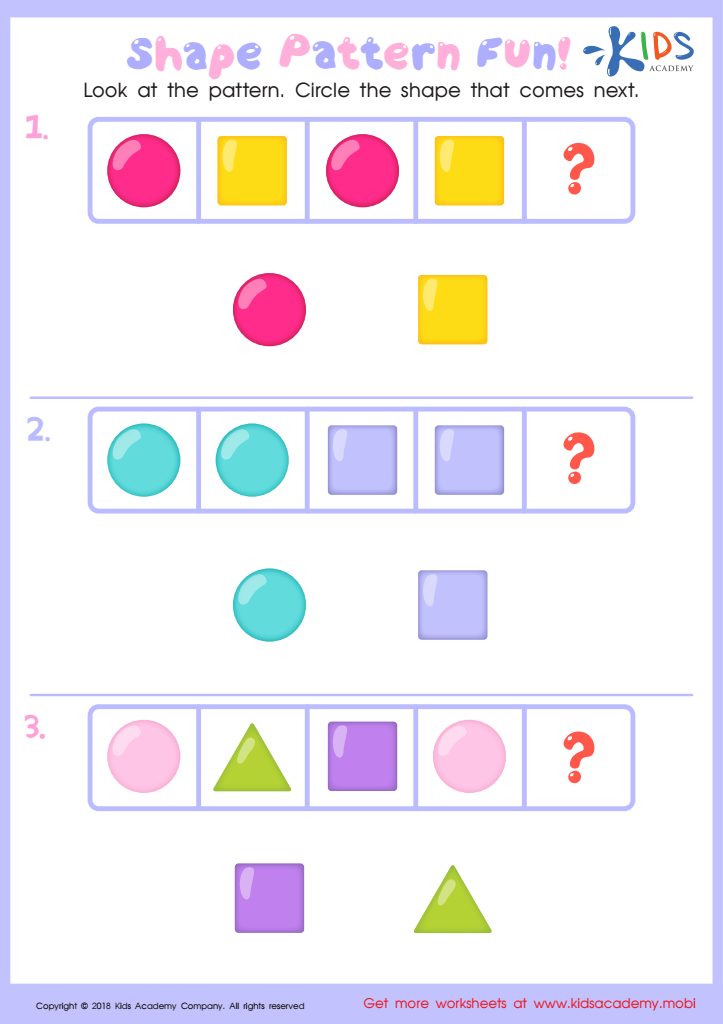
Shape Pattern Fun Worksheet








Problem-solving skills in normal geometry are essential for children aged 5-9, as they offer numerous cognitive and practical benefits. Firstly, geometry encourages spatial awareness, which is crucial as young learners navigate their physical and conceptual worlds. Understanding shapes, sizes, and the relationships between objects helps children make sense of their environment and can translate to better reasoning skills.
Secondly, engaging in geometric problem-solving nurtures critical thinking. When young students tackle geometric problems, they learn to identify patterns, experiment with solutions, and evaluate outcomes, building a strong foundation for logical thinking and perseverance. This process enhances their ability to approach challenges in various aspects of their academic and personal lives methodically.
Furthermore, geometry in early education promotes mathematical literacy. It helps children grasp fundamental math concepts such as measurements, scaling, and symmetry, which are pivotal for more advanced math topics they'll encounter later. This early exposure can demystify math, making it approachable and interesting, and potentially sparking a lifelong interest in STEM fields.
Moreover, integrating problem-solving in geometry fosters creativity. As students work through geometric puzzles, they are encouraged to explore multiple solutions and think outside the box. This creativity is not limited to math but spills over into other subjects and areas of life, fostering a well-rounded, adaptable mindset.
Overall, nurturing problem-solving skills in geometry from a young age equips children with valuable tools for academic success and everyday life challenges.








