Understanding fractions Normal Numbers Worksheets for Ages 5-9
10 filtered results
-
From - To
Help young learners master fractions with our engaging "Understanding Fractions Normal Numbers Worksheets" designed specifically for ages 5-9. These printable worksheets provide a variety of activities that simplify fraction concepts, making them accessible and fun. With colorful visuals and interactive exercises, children will learn to identify, compare, and create fractions, laying a solid foundation for future math skills. Perfect for home or classroom use, these resources promote critical thinking and boost confidence in budding mathematicians. Get started today and watch your child navigate the world of fractions with ease and enjoyment! Explore our collection for rich learning experiences!
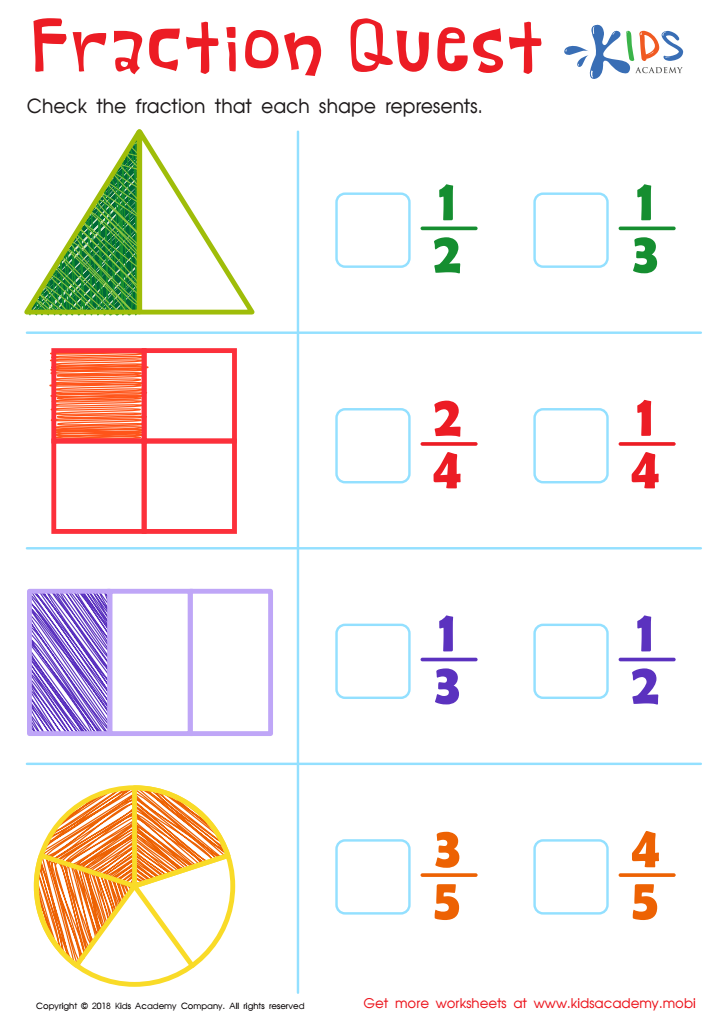
Fraction Quest Worksheet
 Assign to My Students
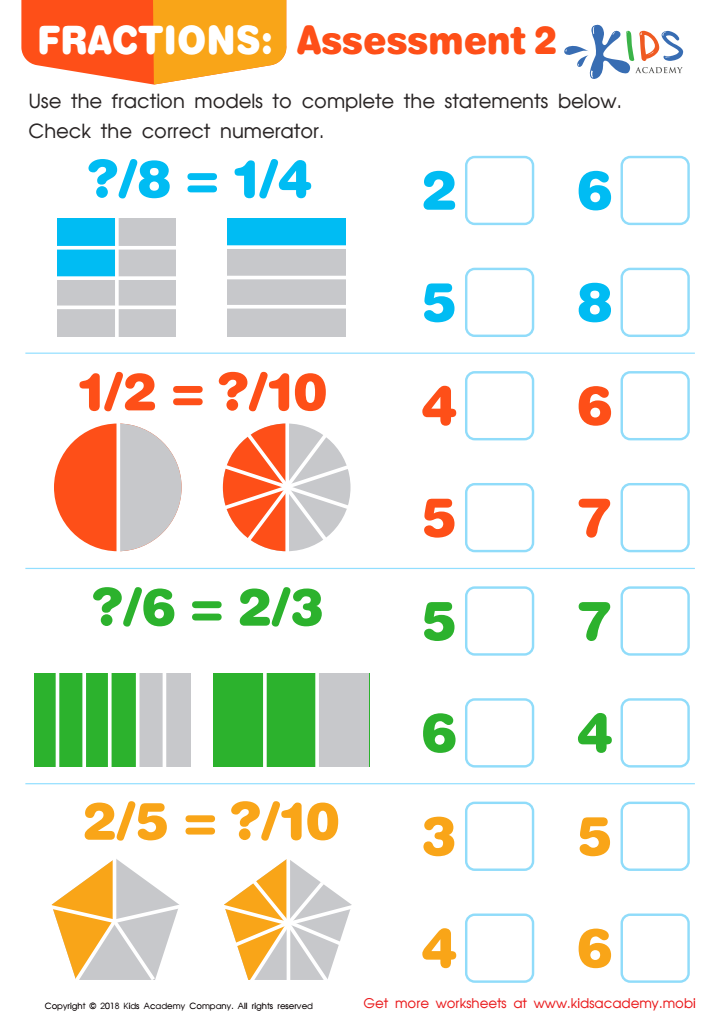
Fractions: Assessment 2 Worksheet
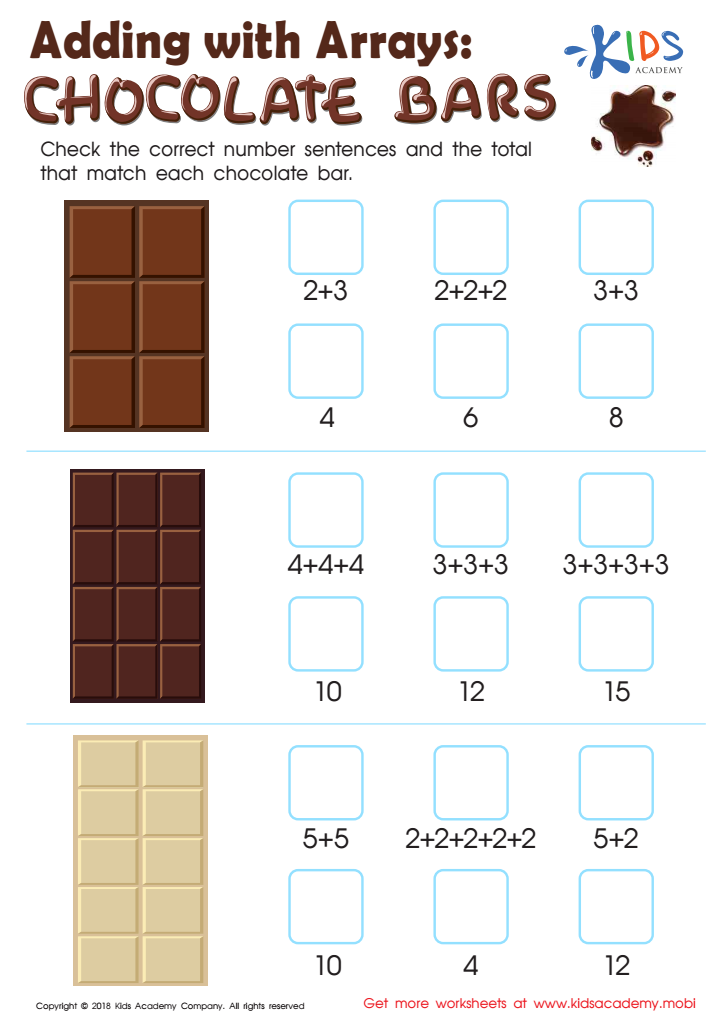
Adding with Arrays: Chocolate Bars Worksheet
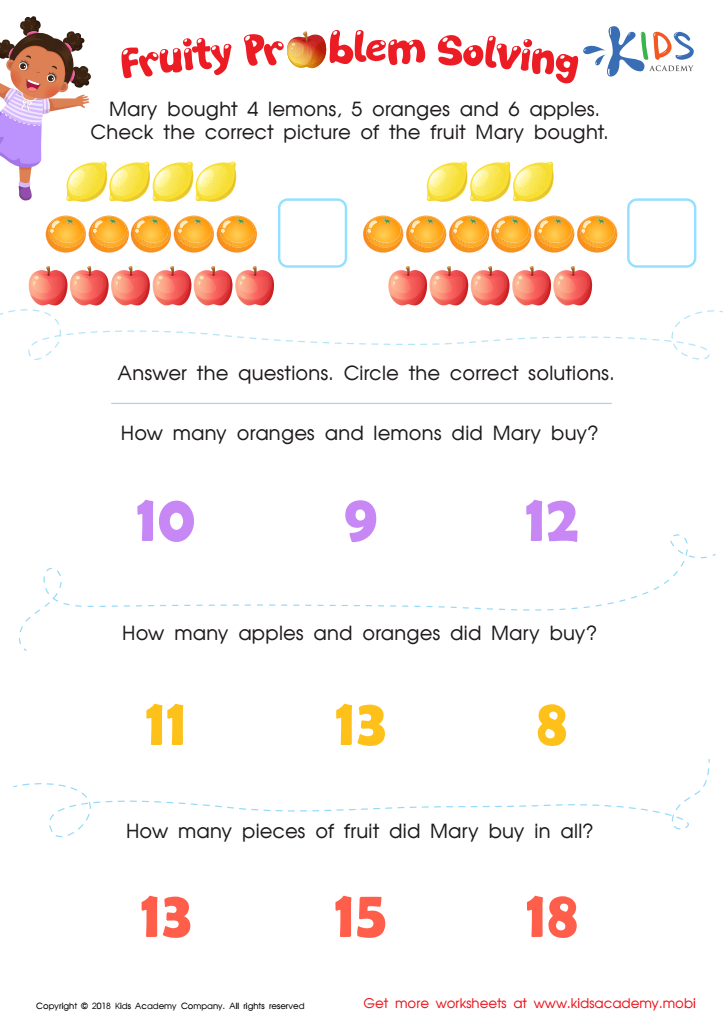
Fruity Problem Solving Worksheet
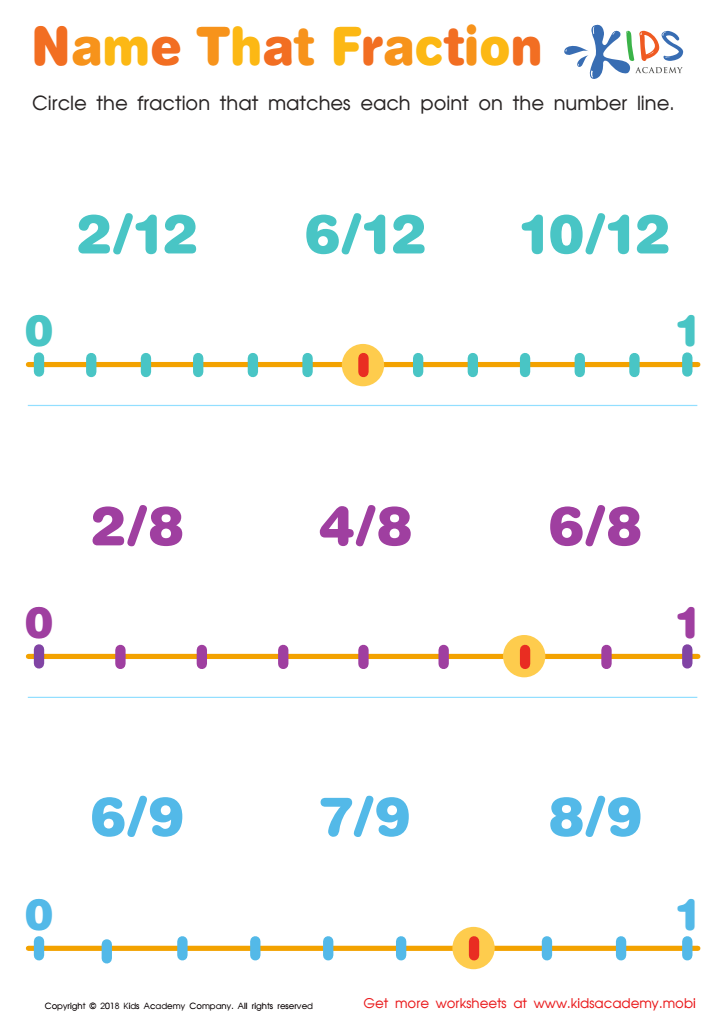
Name That Fraction Worksheet
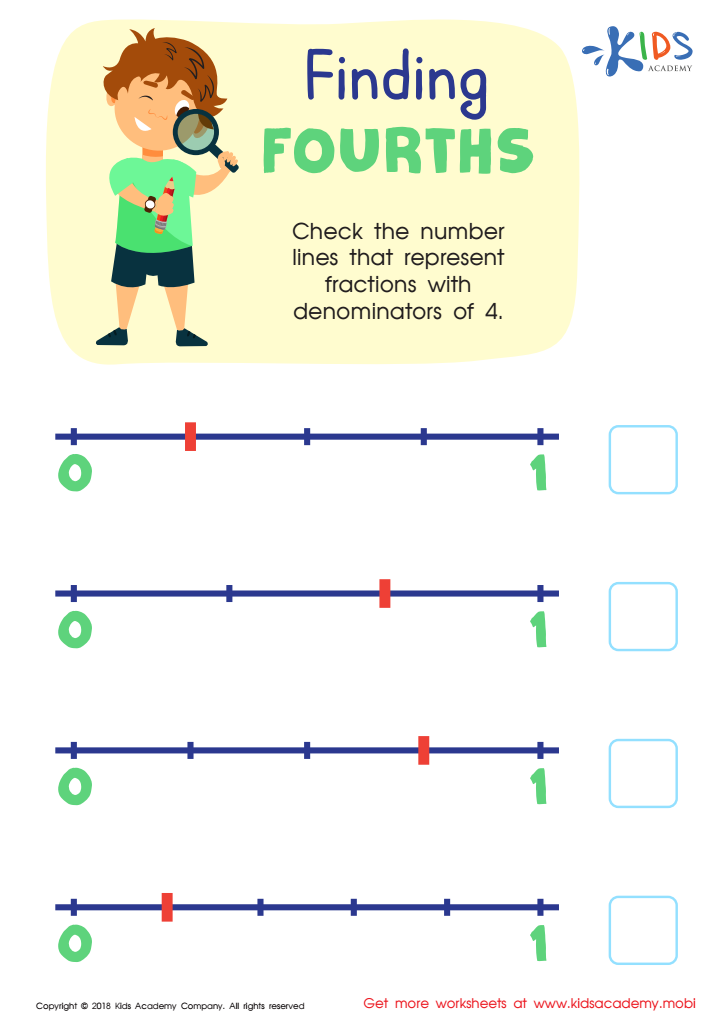
Finding Fourths Worksheet
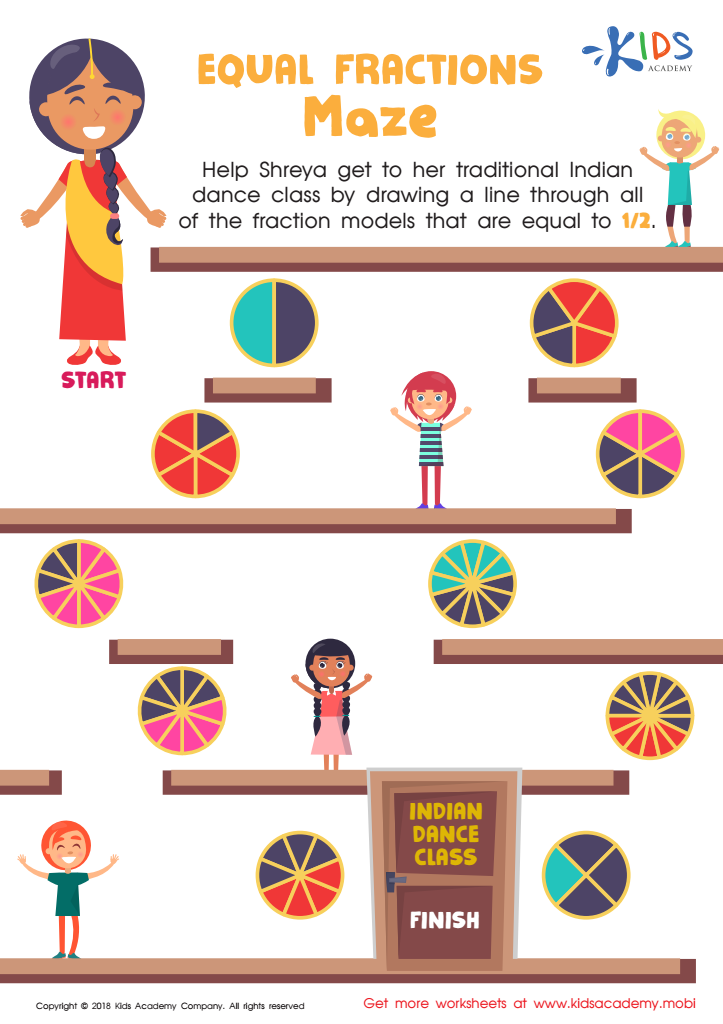
Equal Fractions Maze Worksheet
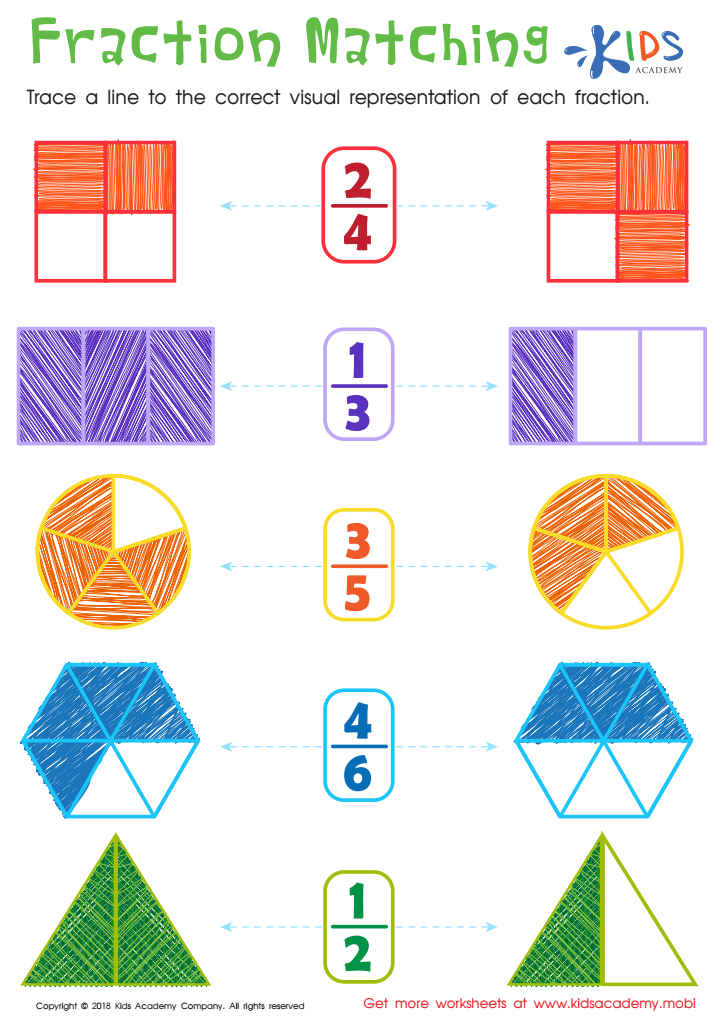
Fraction Matching Worksheet
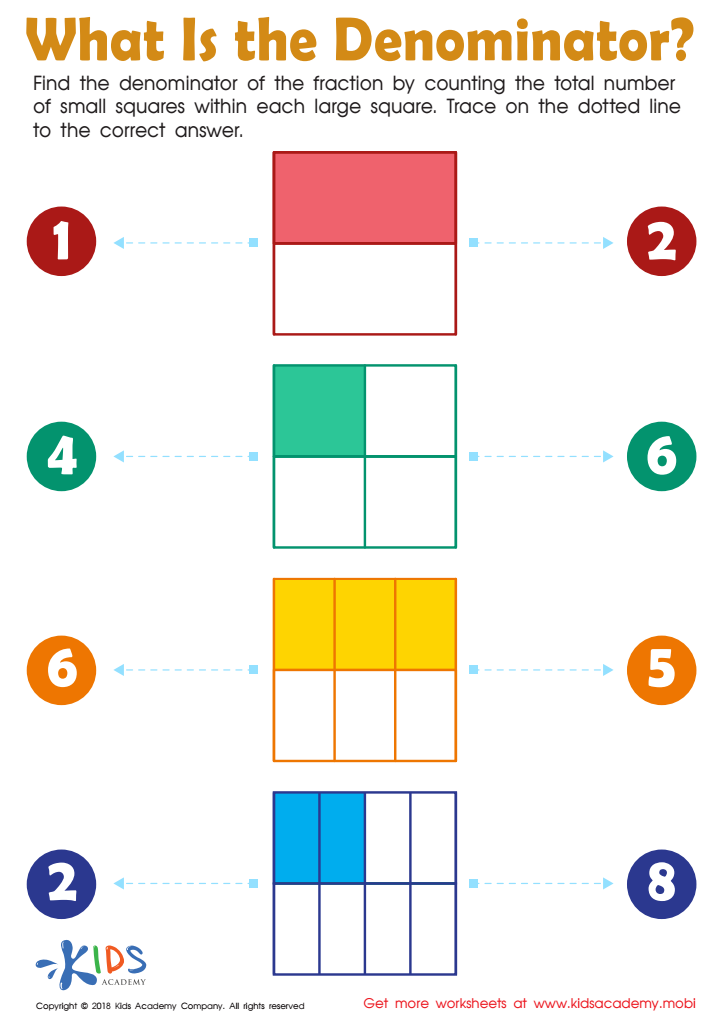
What Is the Denominator? Worksheet
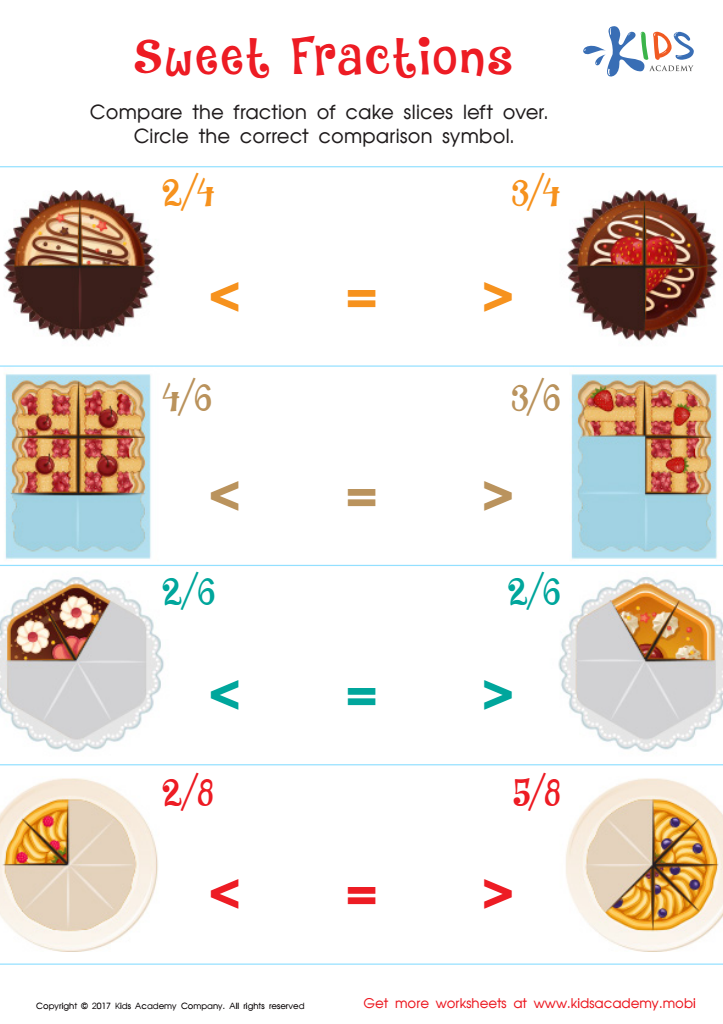
Compare Fractions Worksheet




%20(1).jpg)


Understanding fractions and normal numbers is crucial for children aged 5-9 as it lays the groundwork for their future mathematical comprehension. At this developmental stage, children are naturally curious and ready to explore concepts that connect to their everyday lives. By grasping fractions, they learn to recognize parts of a whole, which is fundamental for activities like sharing food, measuring ingredients for cooking, or dividing toys. This understanding fosters critical thinking skills and helps them perceive relationships between numbers, enhancing overall cognitive development.
Moreover, mastering fractions builds a bridge to more complex mathematical concepts encountered later. Teachers can creatively engage students through visual aids, games, and real-world scenarios, ensuring that learning remains fun and interactive. When parents are involved, reinforcing these concepts at home not only supports school learning but also strengthens the parent-child bond, making mathematics a shared adventure rather than a chore.
Additionally, early fraction education can help thwart future math anxiety by providing a strong foundation, promoting confidence, and encouraging a positive relationship with math. Supporting children in understanding fractions today ensures they are better prepared for academic success in the future, ultimately shaping their overall educational experience.