Basic geometry understanding Normal Worksheets for 5-Year-Olds
3 filtered results
-
From - To
Our "Basic Geometry Understanding Normal Worksheets for 5-Year-Olds" offer a fun and engaging way for young learners to grasp essential geometric concepts. These printable worksheets are designed to help children identify and differentiate between shapes, discover patterns, and develop spatial reasoning skills. Each activity fosters a hands-on learning approach, making geometry understandable and enjoyable. Our expertly crafted exercises ensure that kids remain interested and enthusiastic about learning. Perfect for home or classroom use, these worksheets build a solid foundation in geometry that will benefit young students in their future academic endeavors. Download now and watch your child's confidence in math grow!
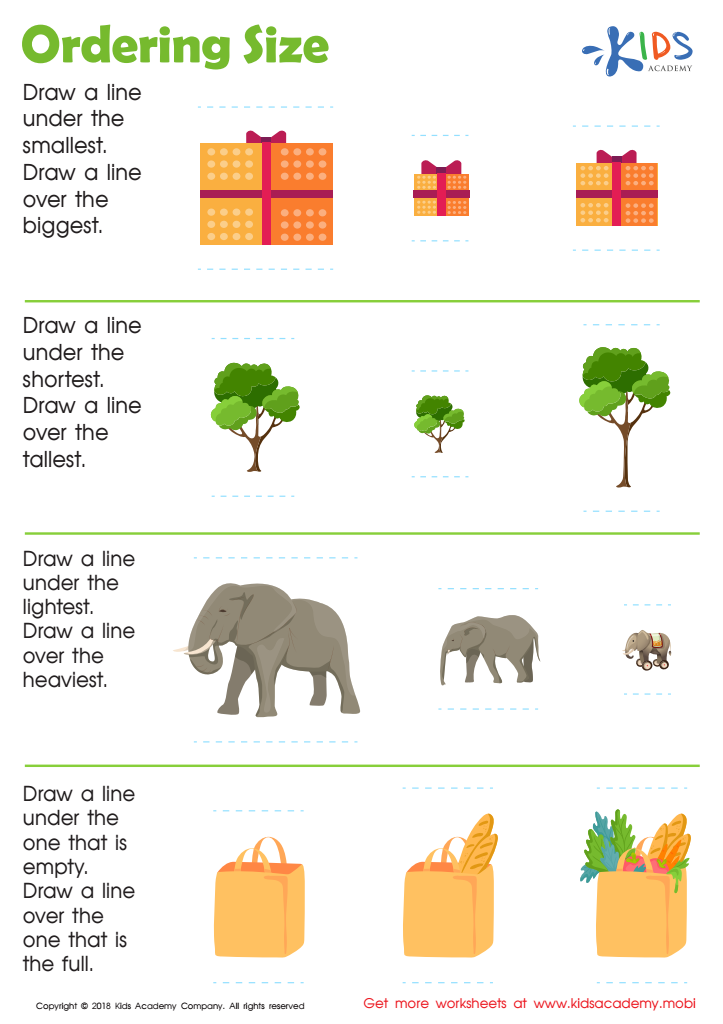
Ordering Size Worksheet
 Assign to My Students
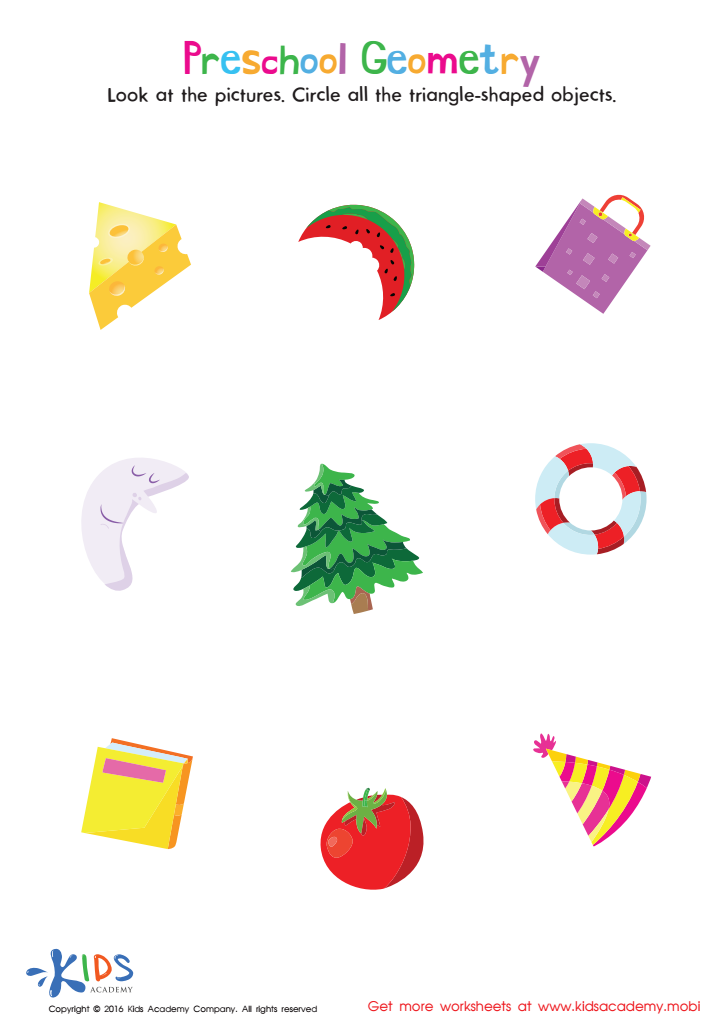
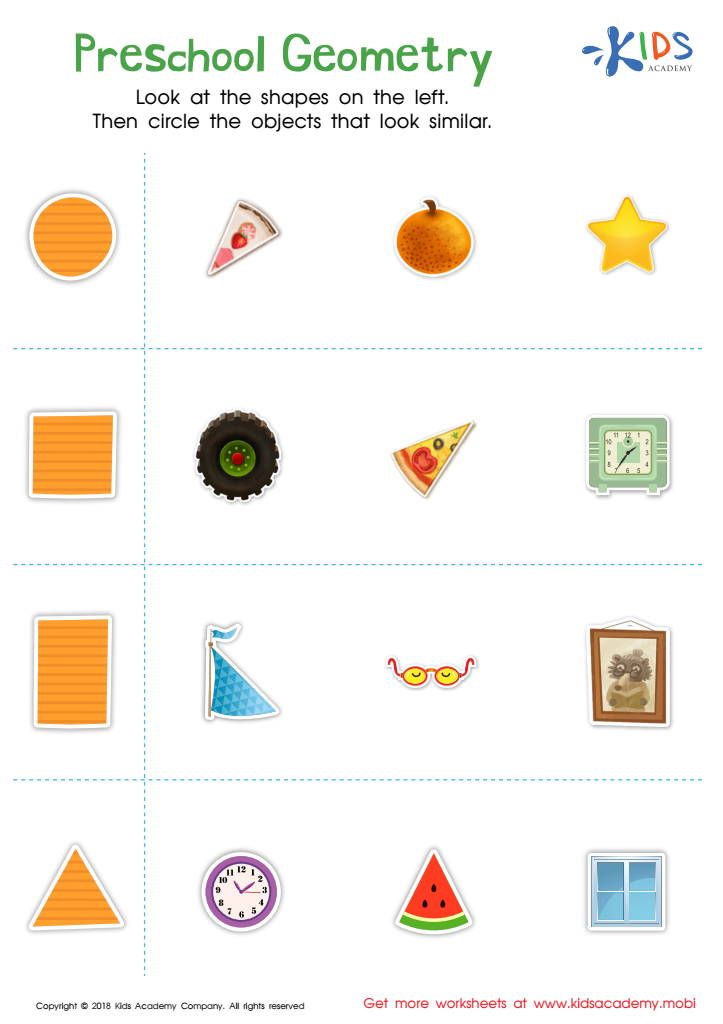
Preschool Geometry Worksheet





Basic geometry is foundational for a 5-year-old's cognitive and academic development, making it crucial for parents and teachers to prioritize. At this age, children are naturally curious and proficient at exploring their environments, which geometry helps them make sense of. Through basic geometric concepts, such as recognizing shapes and spatial relationships, children enhance their problem-solving and critical-thinking skills.
Early geometry understanding also directly impacts a child's abilities in other key areas of learning. For instance, being able to identify and differentiate shapes aids in reading, as letters can be seen as combinations of shapes. Geometry facilitates mathematical readiness, laying groundwork for more complex mathematical concepts like measurement, symmetry, and graph reading.
Moreover, spatial awareness gained through basic geometry is fundamental for everyday activities such as navigating spaces, building structures with blocks, and understanding directions. This awareness also underpins physical coordination skills that are vital for sports and other physical activities.
Finally, engaging with geometry boosts communication skills. Describing shapes, sizes, and spatial relationships enhances vocabulary and expressive abilities, forming a solid basis for language development. Thus, both parents and teachers nurturing an early understanding of geometry can greatly advantage children’s overall intellectual growth and real-world competence.








