Enhancing Counting Skills Normal Worksheets for 5-Year-Olds
3 filtered results
-
From - To
Discover our "Enhancing Counting Skills Normal Worksheets" designed specifically for 5-year-olds! These engaging, colorful worksheets provide a fun way for young learners to practice essential counting skills. With a variety of activities that include counting objects, connecting numbers to quantities, and simple addition tasks, children will build a solid foundation in numeracy. Each worksheet is tailored to keep your child motivated and interested, promoting hands-on learning. Perfect for parents and educators alike, these resources aim to cultivate a love for numbers while reinforcing important math concepts. Start your child's counting journey today and watch their confidence soar!
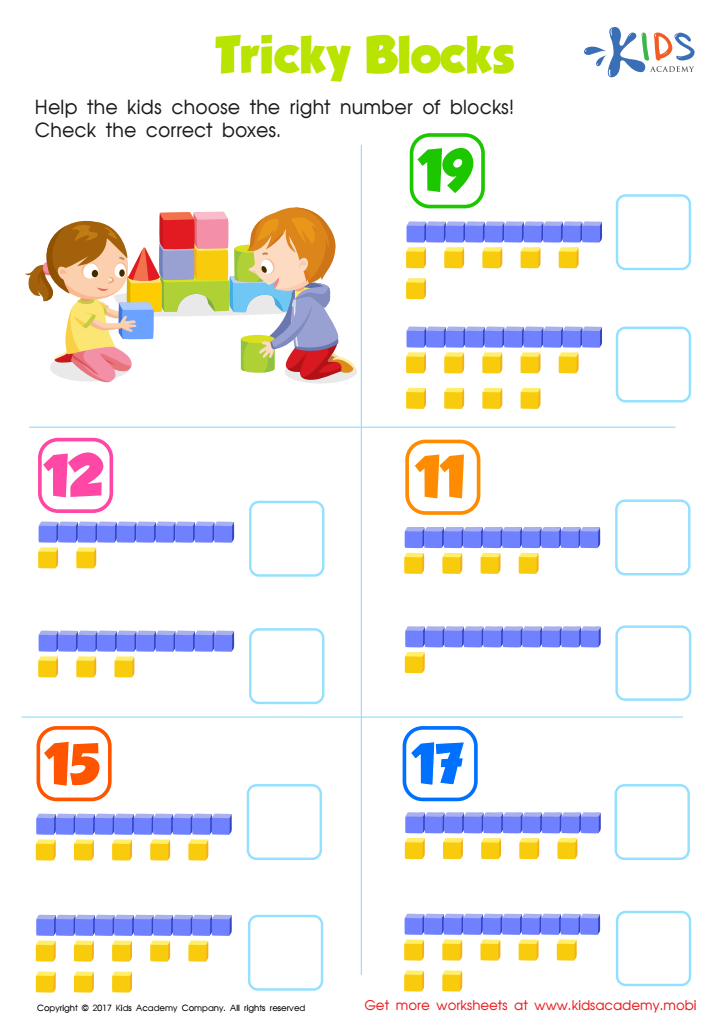
Tricky Blocks Worksheet
 Assign to My Students
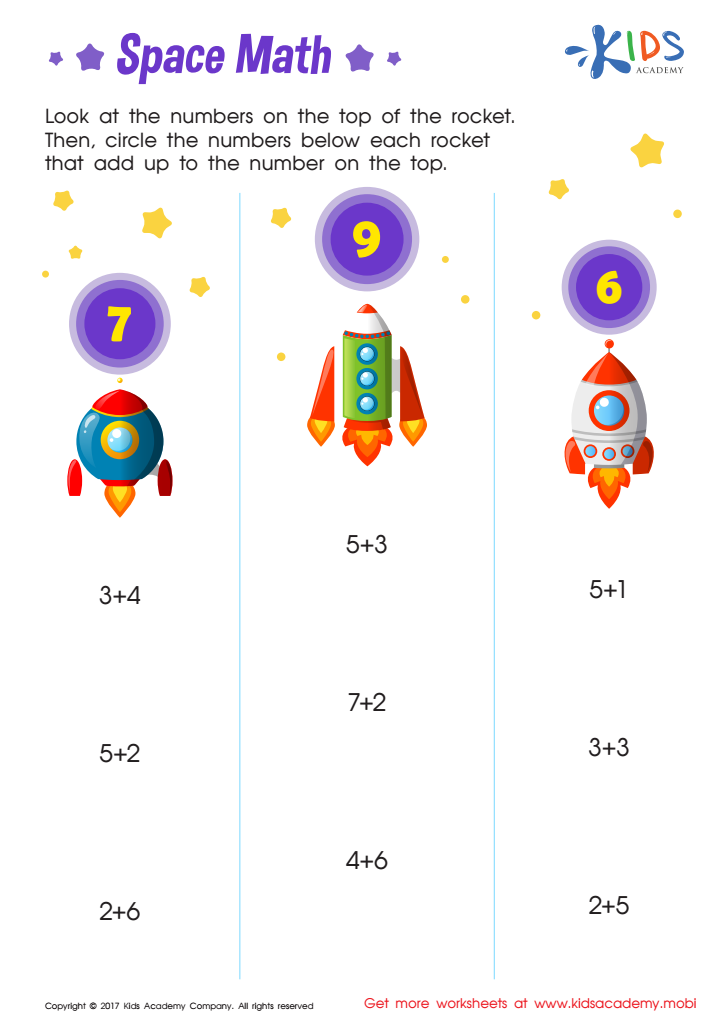
Addition: Space Math Worksheet
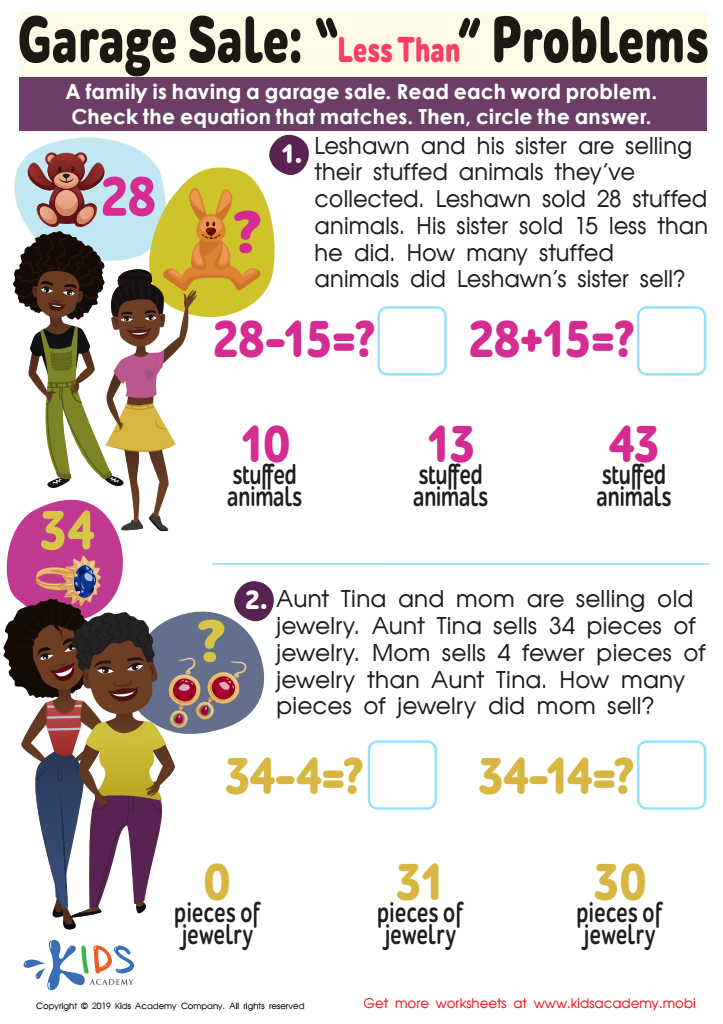
Garage Sale Less Than Worksheet






Enhancing counting skills in 5-year-olds is crucial for various reasons, making it a priority for parents and teachers alike. At this age, children are rapidly developing cognitive abilities, and counting serves as a foundational skill for their future mathematical understanding. Counting helps children develop a sense of number relationships and lays the groundwork for more complex mathematical concepts, such as addition and subtraction.
Additionally, counting skills contribute to children’s problem-solving abilities and critical thinking. When children learn to recognize numbers and understand their relationships, they gain confidence in tackling mathematical challenges, which fosters a positive attitude towards learning.
Furthermore, counting activities promote language development. Engaging children in counting also introduces them to new vocabulary related to numbers and quantities, enhancing their overall communication skills. These interactions can lead to a greater interest in learning and exploration in other subjects, including science, art, and literacy.
Lastly, enhanced counting skills support children's social interactions, as math often appears in play scenarios and group activities. Equipping children with strong counting abilities nurtures their independence and helps them navigate daily activities more effectively, making it essential for researchers and educators to invest time and resources in this vital developmental stage.








