Pattern recognition Normal Worksheets for 5-Year-Olds
10 filtered results
-
From - To
Introducing our engaging Pattern Recognition Worksheets for 5-Year-Olds! Designed to enhance critical thinking and observational skills, these worksheets feature colorful and interactive exercises that help young learners identify, create, and continue patterns. By working on these activities, children will improve their cognitive abilities while enjoying play-based learning. Each worksheet is crafted to meet the developmental needs of early learners, making it an ideal resource for both classroom and home education. Unlock the potential of your child’s mind as they discover the excitement of patterns in shapes, colors, and more. Start their journey to becoming problem solvers today!
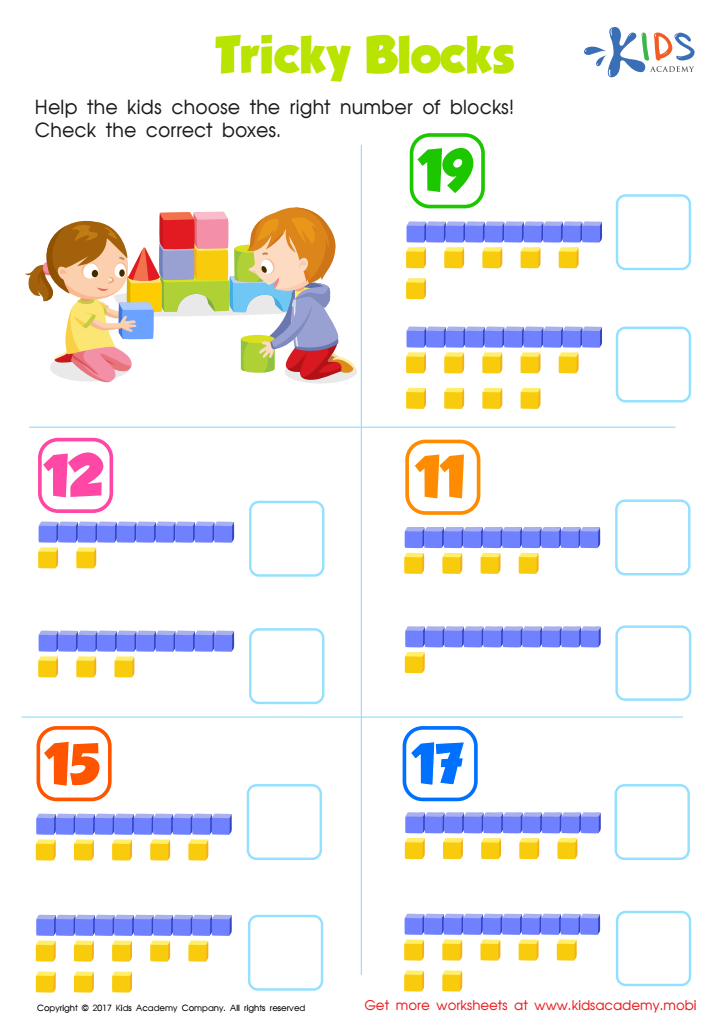
Tricky Blocks Worksheet
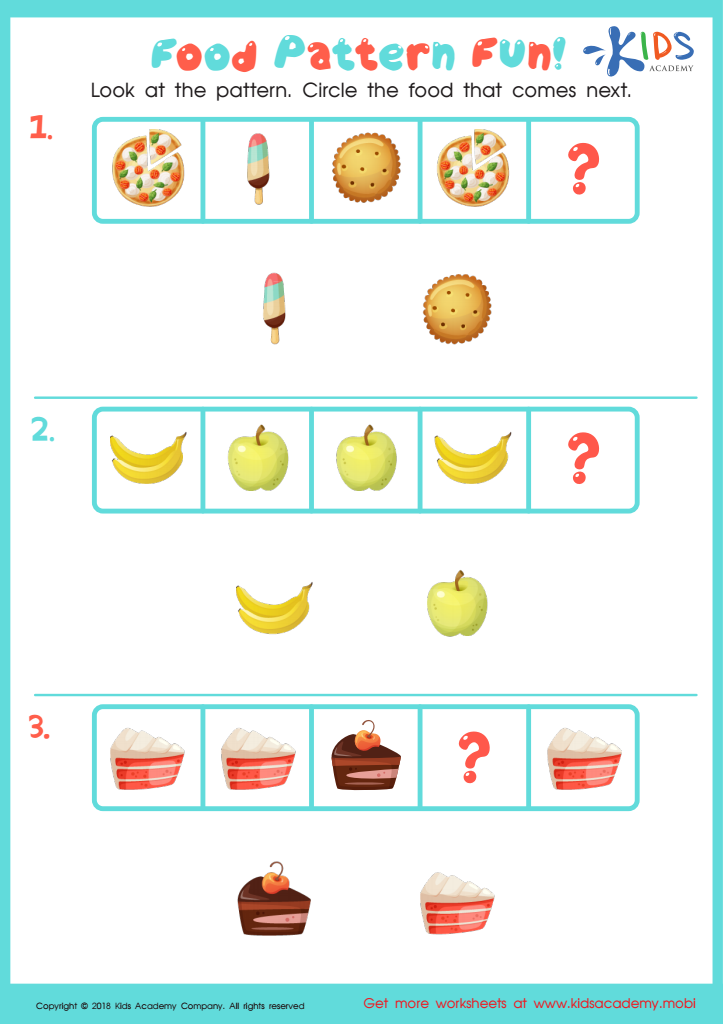
Food Pattern Fun Worksheet
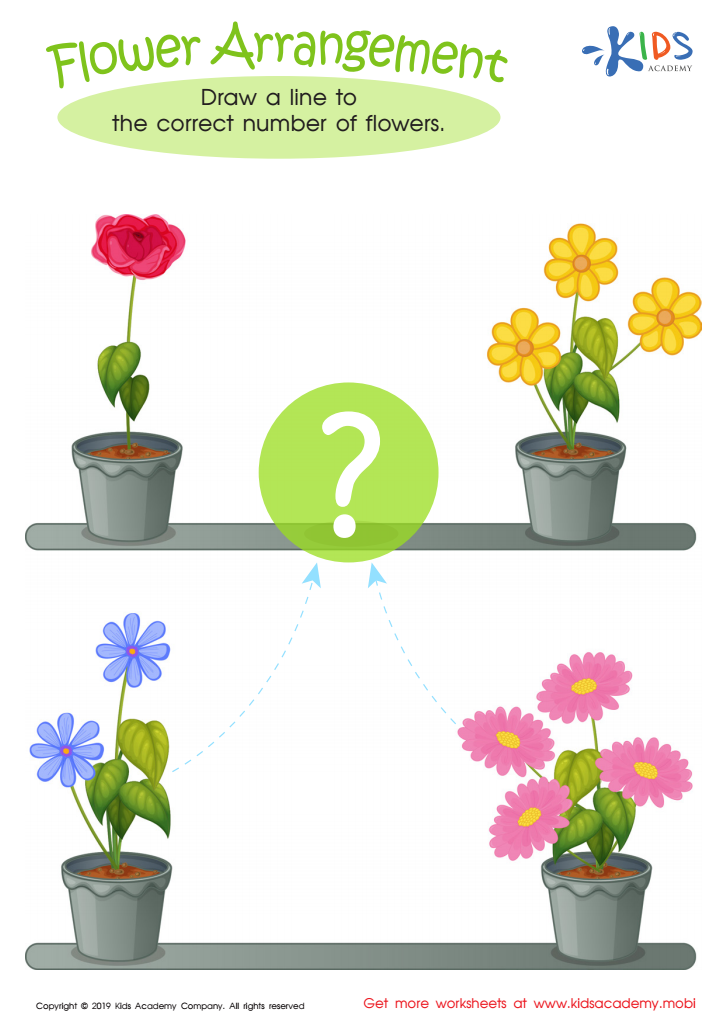
Flower Arrangement Worksheet
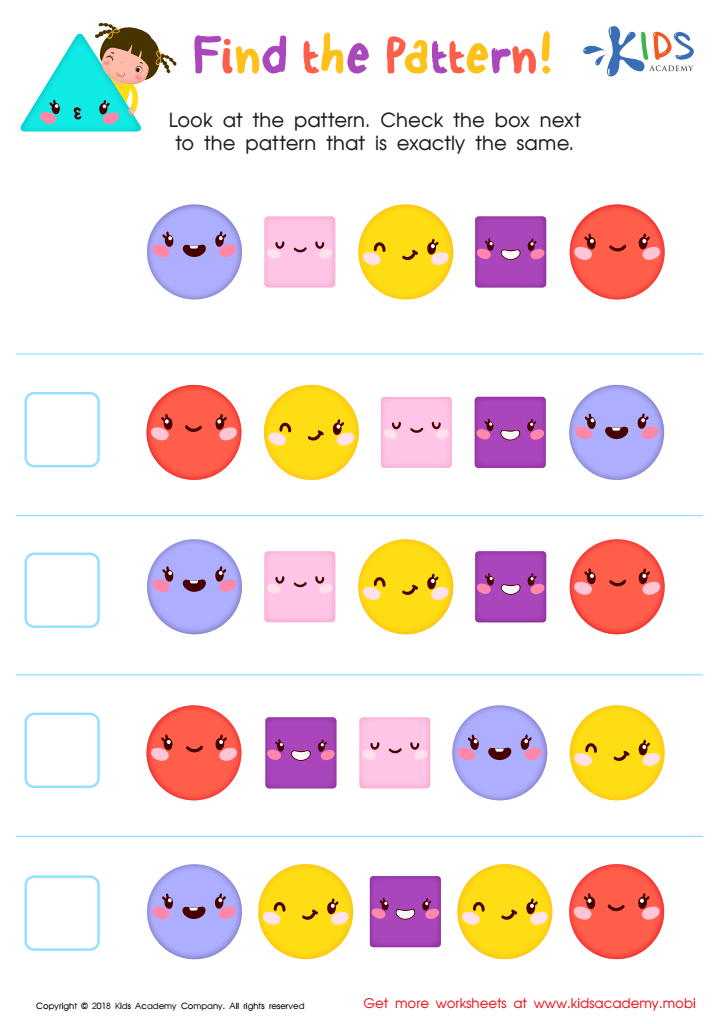
Find the Pattern Worksheet
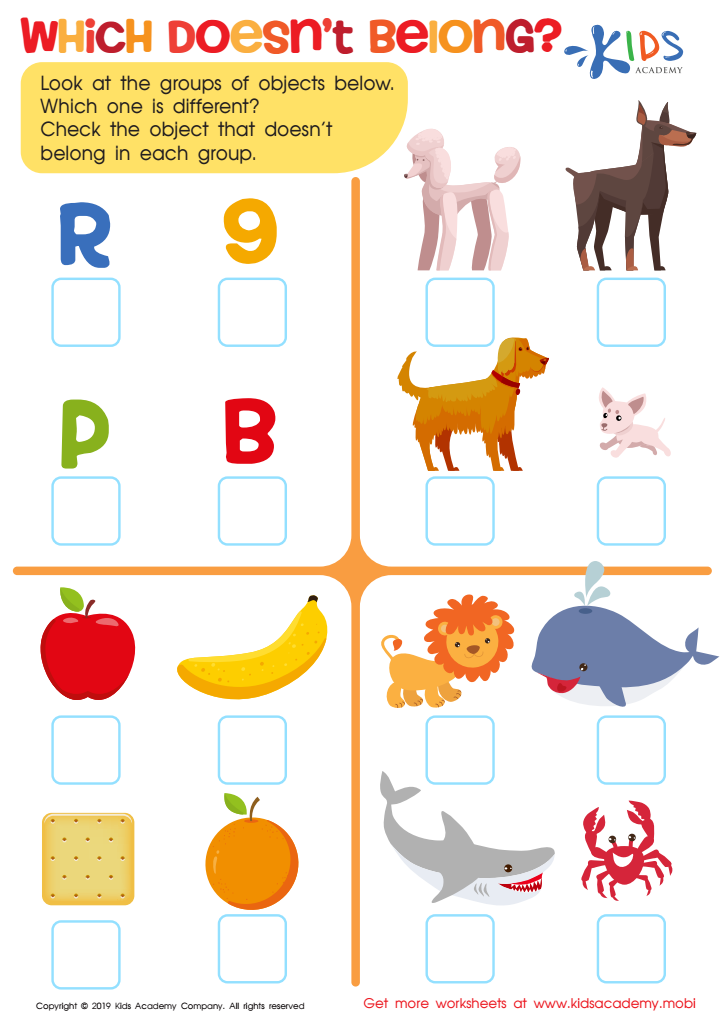
Which Doesn't Belong? Worksheet
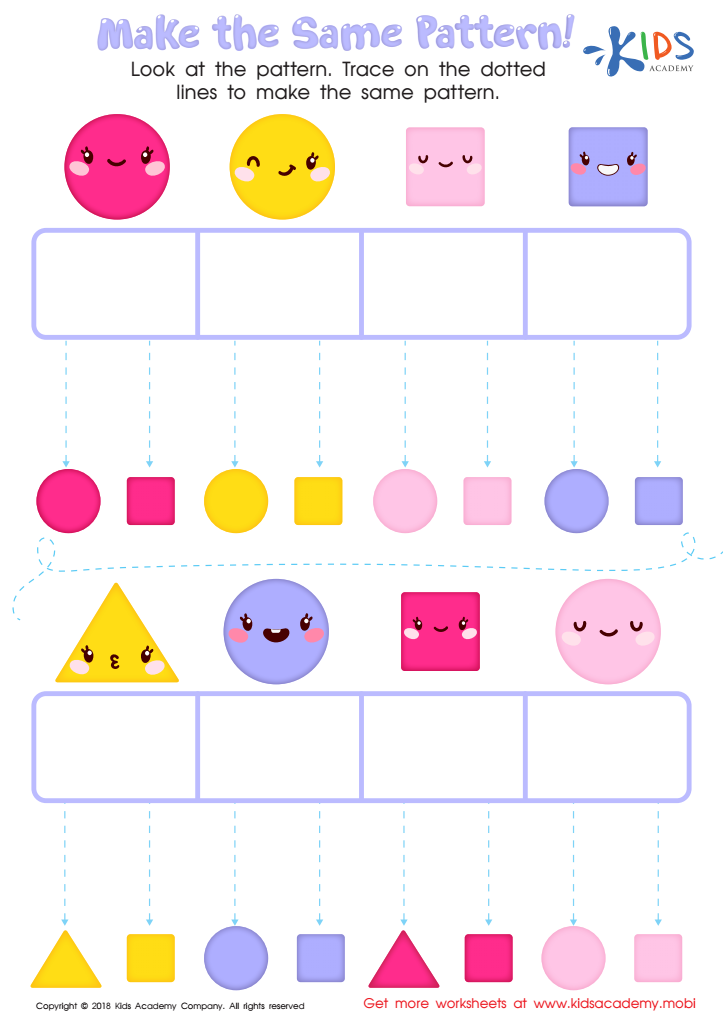
Make the Same Pattern Worksheet
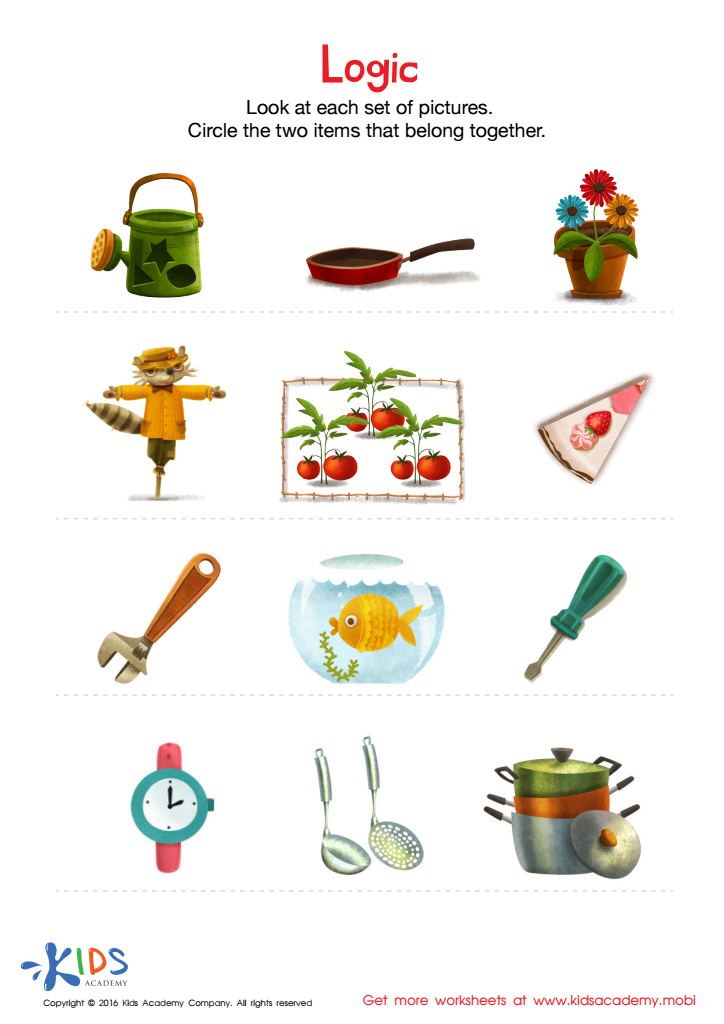
Logic Game Sorting Worksheet
Christmas: Christmas Tree Printable
 Assign to My Students
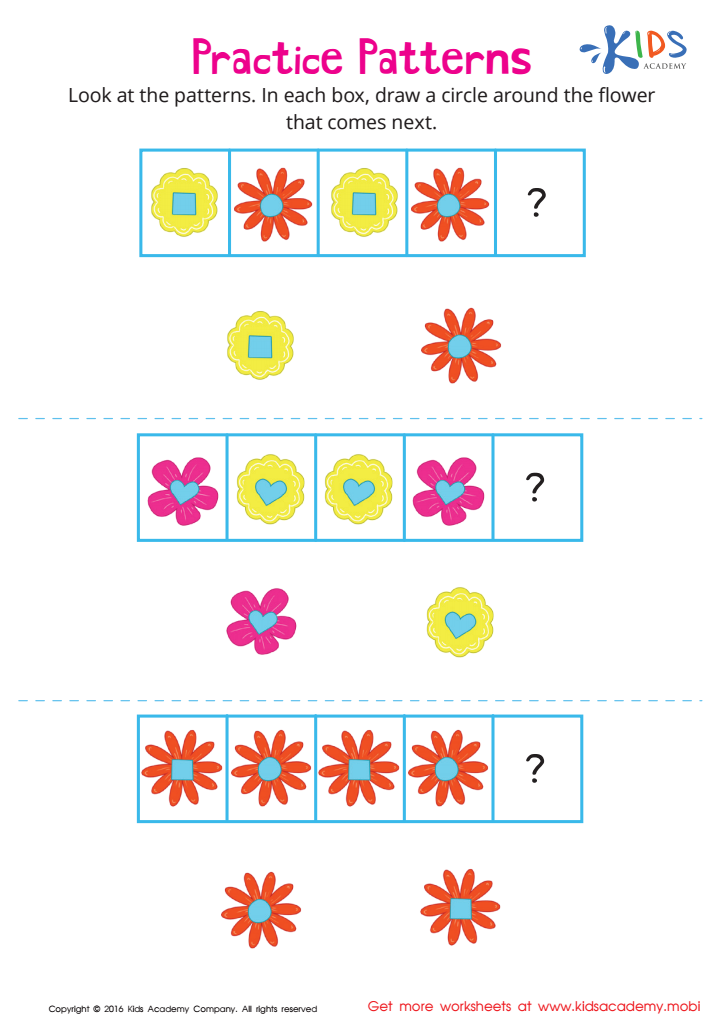
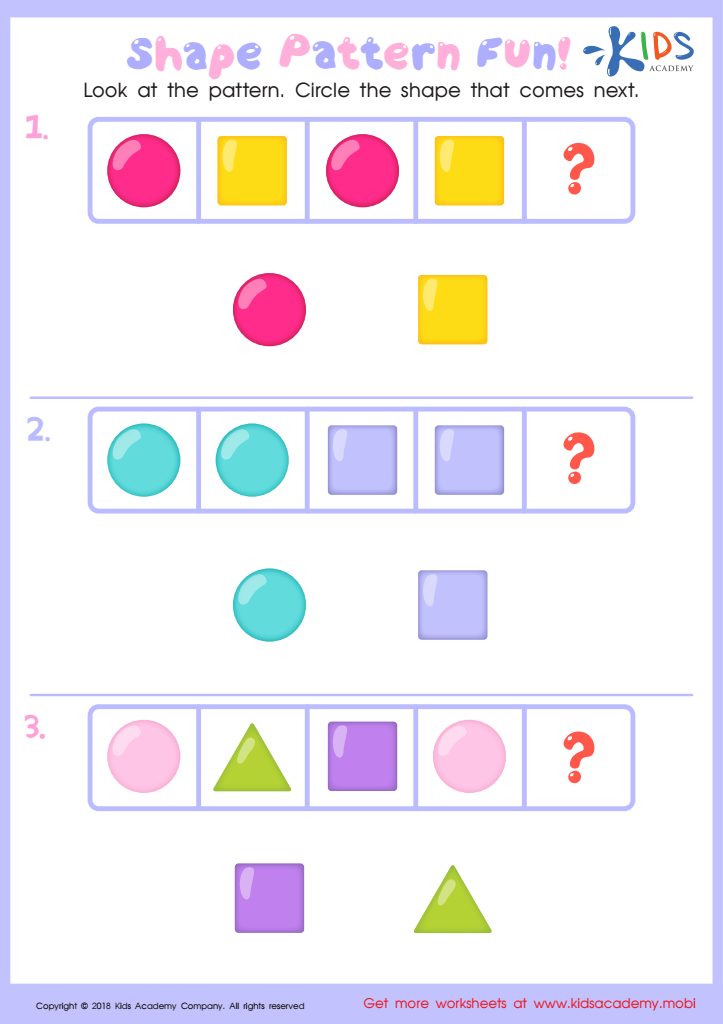
Shape Pattern Fun Worksheet







Pattern recognition is a crucial cognitive skill that forms the foundation for future learning in young children, particularly for 5-year-olds. At this age, children's brains are wired to notice and analyze patterns in their environment. When parents and teachers encourage pattern recognition, they help children develop critical thinking, problem-solving skills, and mathematical understanding.
Understanding patterns helps children make predictions, which enhances their reasoning skills. For instance, recognizing color sequences (like red, blue, red, blue) allows them to anticipate the next color, reinforcing their logical thinking. Beyond mathematics, pattern recognition supports literacy development as children learn phonics and sentence structures.
Moreover, engaging with patterns promotes creativity. Children often express themselves through art and stories that involve repetition and sequences, foundational elements in developing narrative skills.
Fostering this skill also builds confidence. As children identify and create patterns, they learn perseverance and patience—qualities vital for academic success.
Incorporating pattern recognition into games, books, and everyday activities provides a natural and enjoyable way for children to learn. Therefore, paying attention to pattern recognition is essential for holistic development and prepares youngsters for more complex concepts in the future.








