Filters

7 filtered results

Clear all filters
Favorites
With answer key
Interactive

7 filtered results

Difficulty Level

Grade


Unlock your child's full potential with our Cognitive Development Normal Geometry Worksheets designed specifically for 5-year-olds. These expertly crafted activities focus on shapes, spatial understanding, and patterns, helping young learners enhance their essential cognitive skills. Through engaging tasks and playful exercises, children explore the world of geometry, building a strong foundation for future math success. Perfect for home or classroom use, our worksheets make learning enjoyable and effective. Equip your child with the tools they need for cognitive growth and a love of learning. Start their geometric journey today and watch their minds flourish!

Check out this FREE Trial Lesson on Geometry for age 5!

Describing Objects in the Environment

Favorites
With answer key
Interactive
  • 5
  • Cognitive Development
  • Geometry
  • Normal
Fruits Matching Worksheet

Fruits Match Up Worksheet

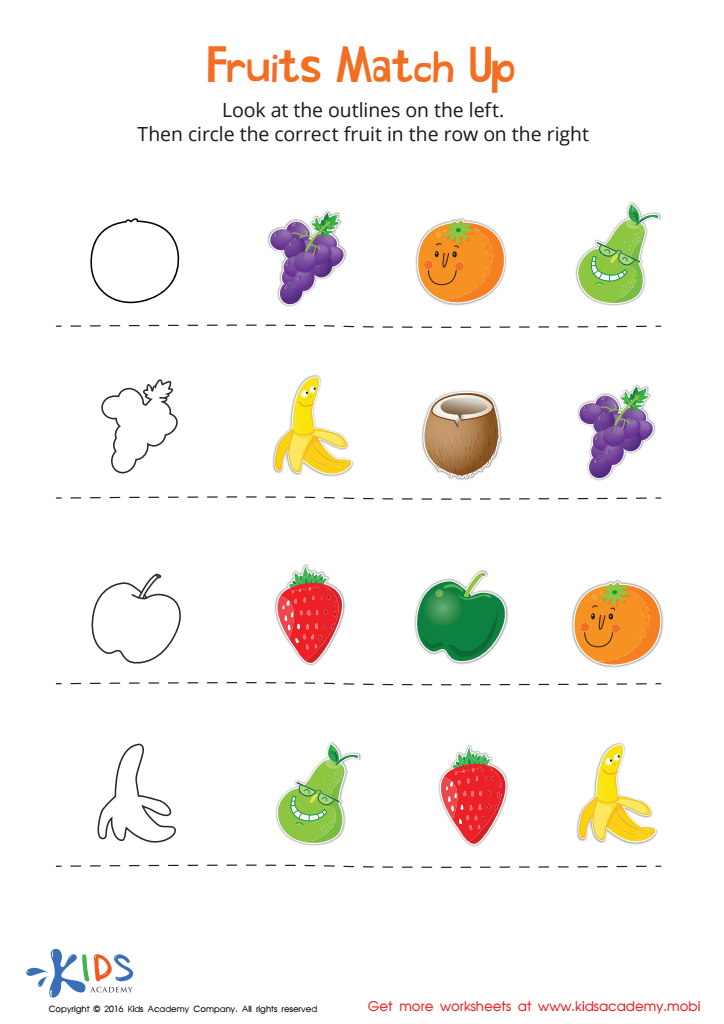
Motivate your child to count and sharpen their spatial reasoning skills with this vivid fruit worksheet.
Fruits Match Up Worksheet
Worksheet
Geometric Shapes for Kids: Practicing to Draw Circles And Squares PDF

Practicing to Draw Circles And Squares Printable
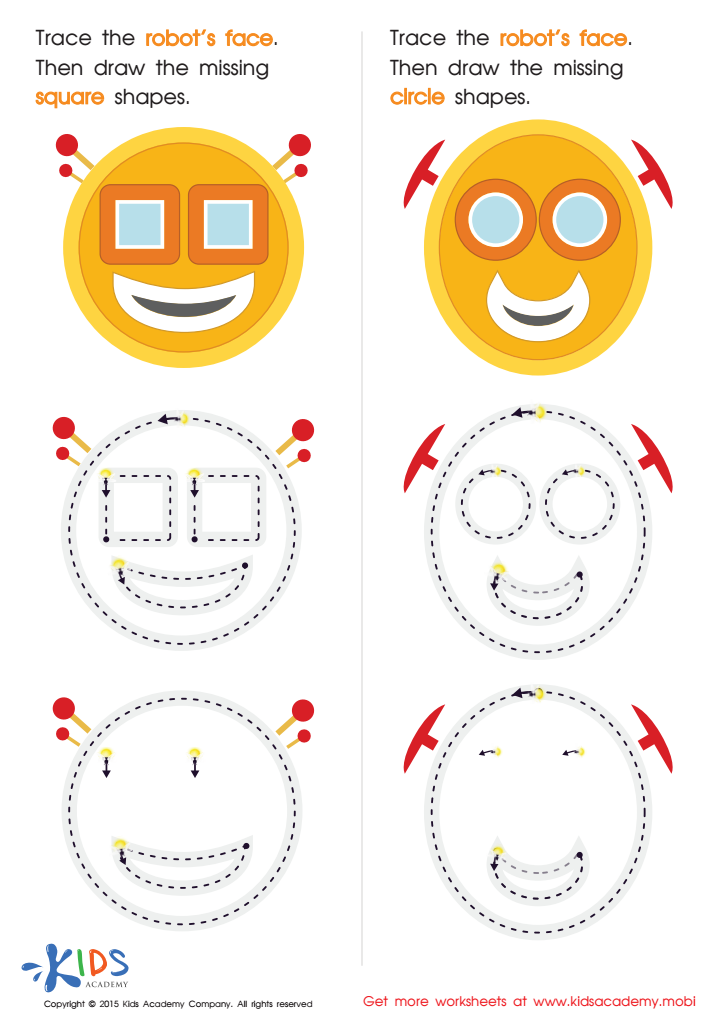
Download our free printable geometry worksheets to learn shapes with your preschoolers. Trace Robot's face, draw the square parts and round shapes, remember the names for each one. Get more materials for kids at Kids Academy and make learning fun with our free printable geometry worksheets.
Practicing to Draw Circles And Squares Printable
Worksheet
Geometry: part 1 Worksheet

Geometry: part 1 Worksheet

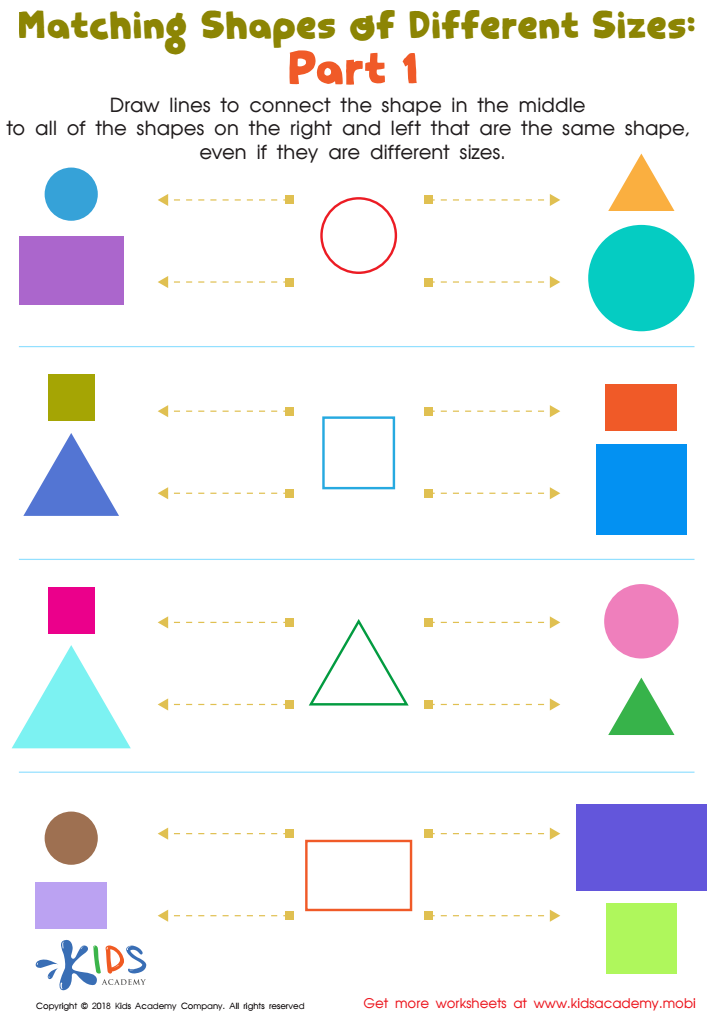
Test your student's shape knowledge with this beginner-level geometry worksheet. This fun, challenging printable PDF will sharpen spacial recognition skills as they match shapes of different sizes. Get started now!
Geometry: part 1 Worksheet
Worksheet
Preschool Geometry Printable Worksheet

Preschool Geometry Match Up Worksheet
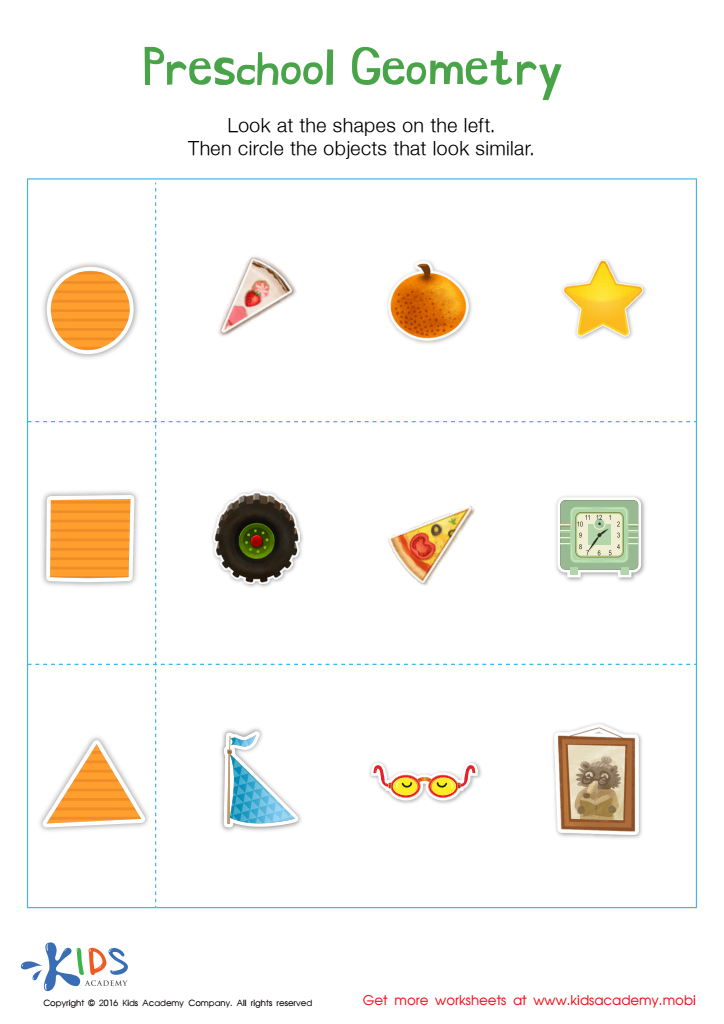
Teach your preschooler geometry using everyday objects. This printable worksheet helps them recognize, match, and follow directions like left and right. Start a conversation to extend their learning and they'll see how shapes appear in the world around them.
Preschool Geometry Match Up Worksheet
Worksheet
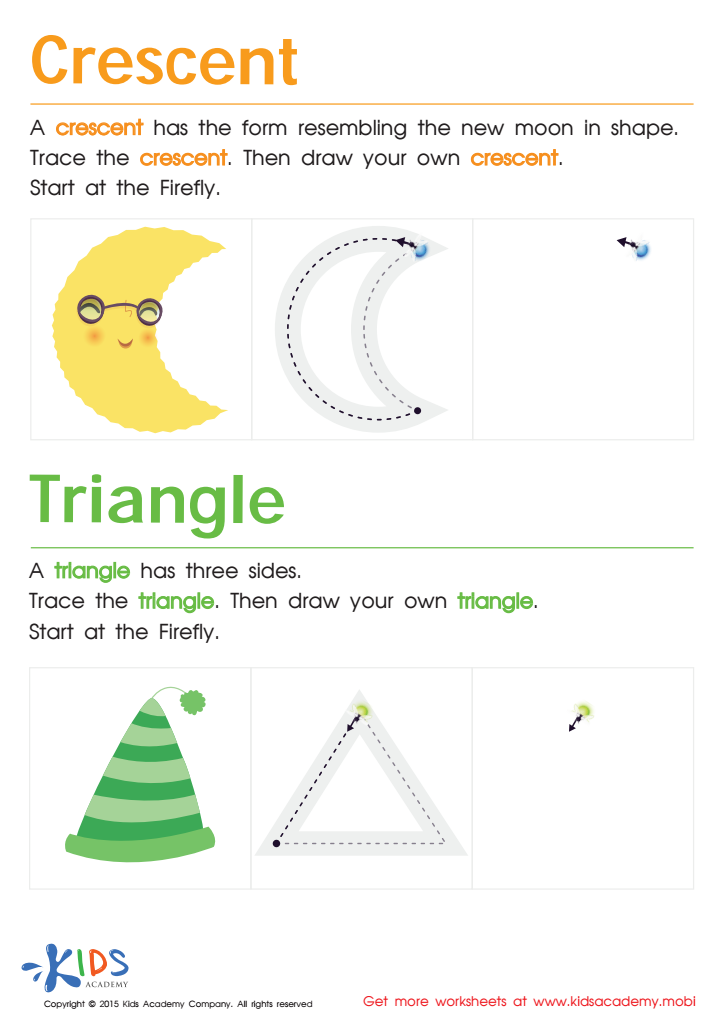
Geometric Shapes for Kids: Learning to Draw Crescents And Triangles PDF

Learning to Draw Crescents And Triangles Worksheet
Help your kids draw a crescent and triangle with this free printable worksheet! Start by tracing a crescent in the form of the new moon, and then teach them that a triangle has three sides and looks like a hat. Find more geometry practice worksheets at Kids Academy!
Learning to Draw Crescents And Triangles Worksheet
Worksheet
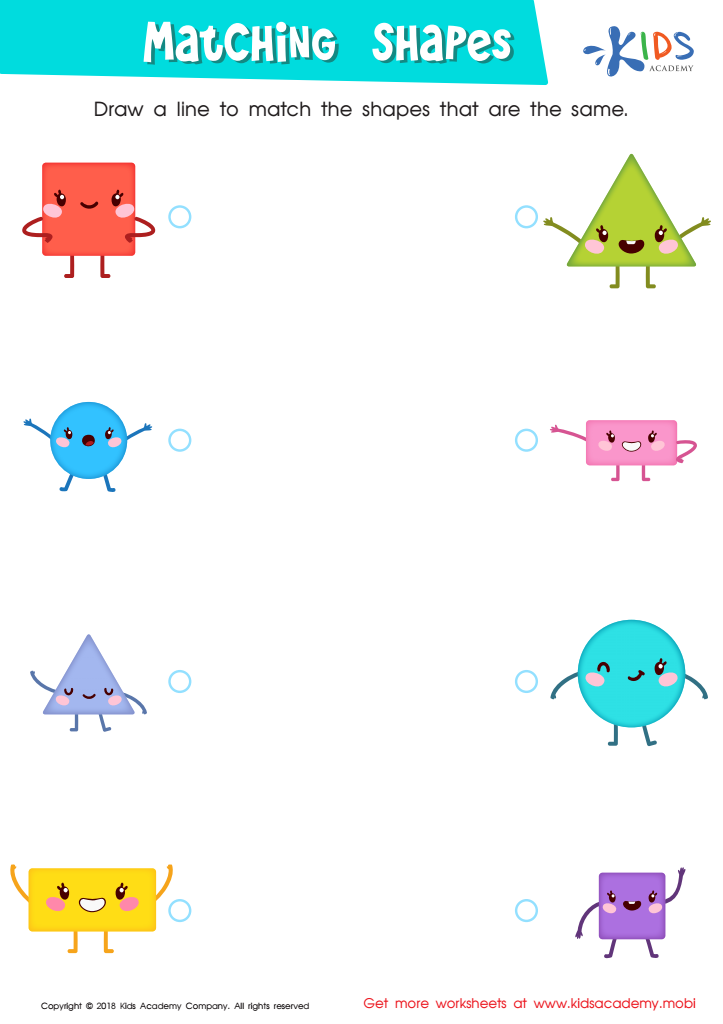
Matching Shapes Worksheet
Matching Shapes Worksheet

Introduce your students to the 4 most common shapes: squares, triangles, rectangles and circles. When they progress, show them other shapes like rhombuses and parallelograms. Use this matching shapes worksheet to help them match two identical shapes. Print out the worksheet and instruct them to draw lines connecting them.
Matching Shapes Worksheet
Worksheet
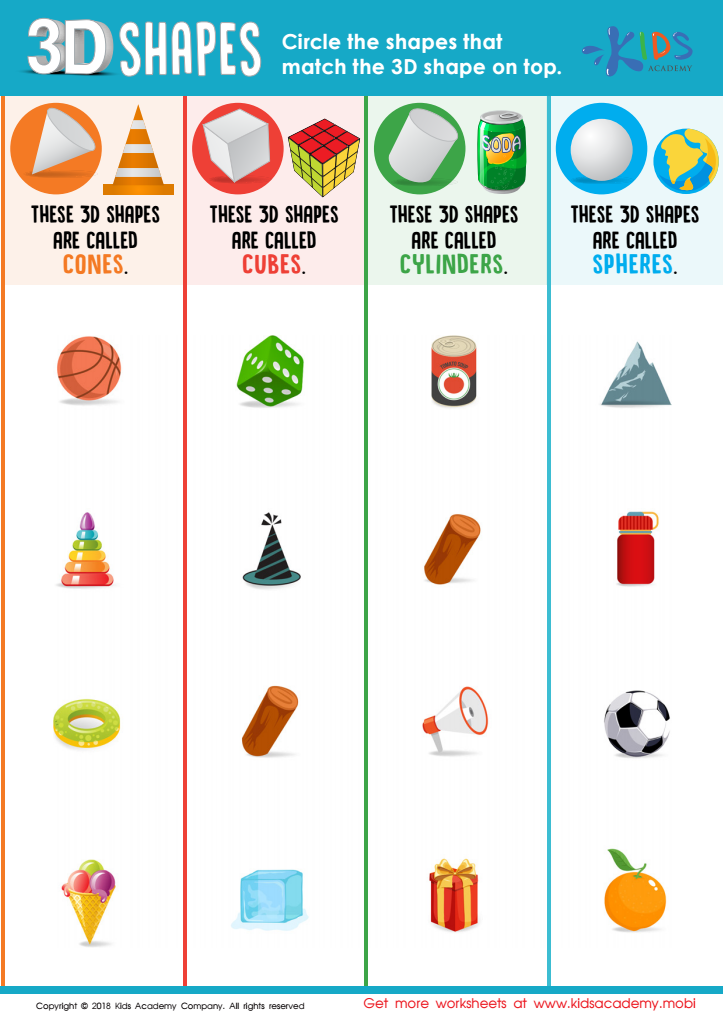
3D shapes worksheet
3D shapes worksheet

3D Shapes Worksheet

It's time to identify 3D shapes! This worksheet helps kids find and name shapes like cones, cylinders, cubes, and spheres using pictures of everyday objects. Let's explore 3D shapes in the real world!
3D Shapes Worksheet
Worksheet


Cognitive development in early childhood is crucial, as it lays the foundation for all future learning and understanding. For 5-year-olds, mastering normal geometry skills—such as recognizing shapes, understanding spatial relationships, and reasoning about proportions—plays an essential role in this development. Parents and teachers should care about fostering these skills because they are not only fundamental to mathematics but also contribute to overall cognitive growth, including problem-solving, logical reasoning, and critical thinking abilities.

Learning geometry helps children make sense of the world around them. By identifying and comparing shapes, they sharpen their visual-spatial skills, which are necessary for everyday activities like reading and writing. For instance, understanding that a triangle has three sides prepares children for more complex geometric reasoning in later years.

Additionally, engaging with shapes and spatial concepts can boost children's creativity. Manipulating different shapes to create a picture or solve a puzzle encourages them to think outside the box. It also supports the development of fine motor skills through activities like drawing or building with blocks.

Ultimately, integrating normal geometry into early childhood education lays a solid mathematical groundwork for future academic success and fosters a love for learning. This holistic development provides children with a more rounded set of cognitive tools that will benefit their growth across various domains.