Problem-Solving Skills Normal Geometry Worksheets for 5-Year-Olds
6 filtered results
-
From - To
Introduce your five-year-old to the exciting world of geometry with our Problem-Solving Skills Normal Geometry Worksheets. Perfectly designed for young minds, these engaging worksheets aim to build foundational geometry skills through fun, interactive activities. Your child will explore shapes, patterns, and simple spatial reasoning, enhancing their problem-solving abilities while boosting their confidence. Crafted by educational experts, each worksheet is tailored to align with kindergarten curriculum standards. Delight in watching your young learner develop critical thinking skills as they navigate through progressively challenging exercises. Make learning geometry enjoyable and impactful with our comprehensive, age-appropriate worksheets!
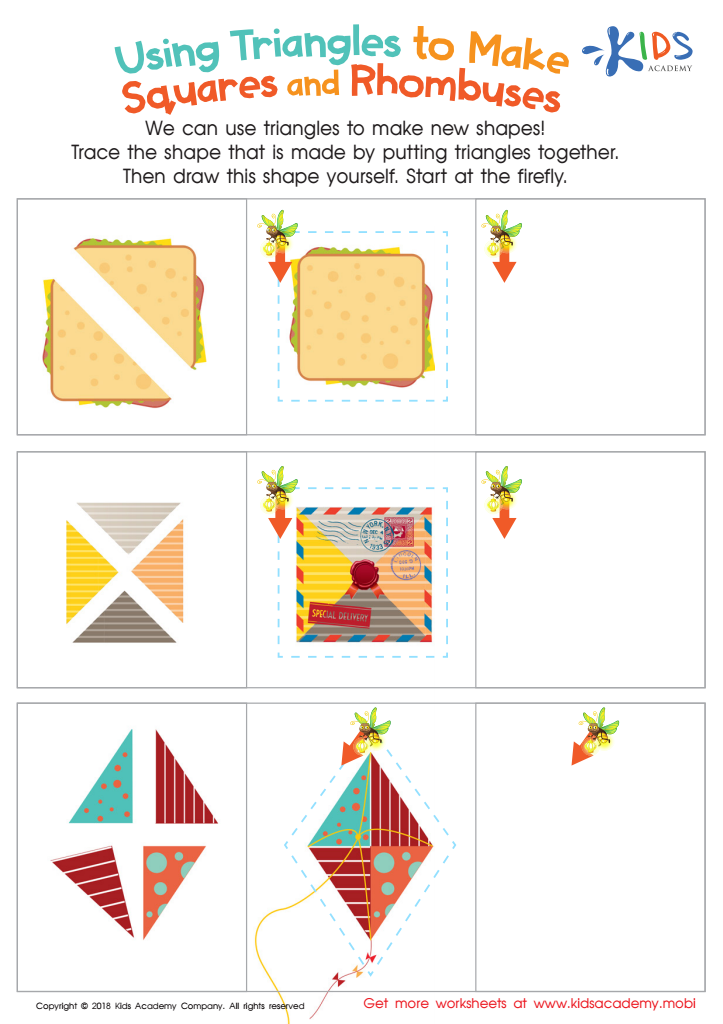
Using Triangles to Make Squares and Rhombuses Worksheet
 Assign to My Students











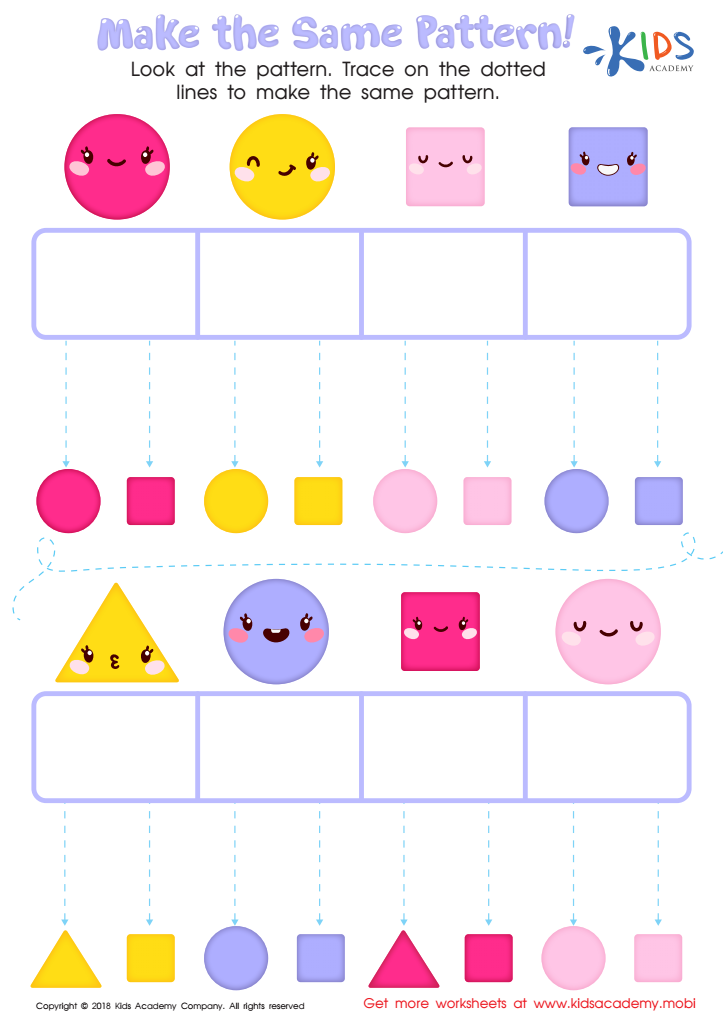
Make the Same Pattern Worksheet
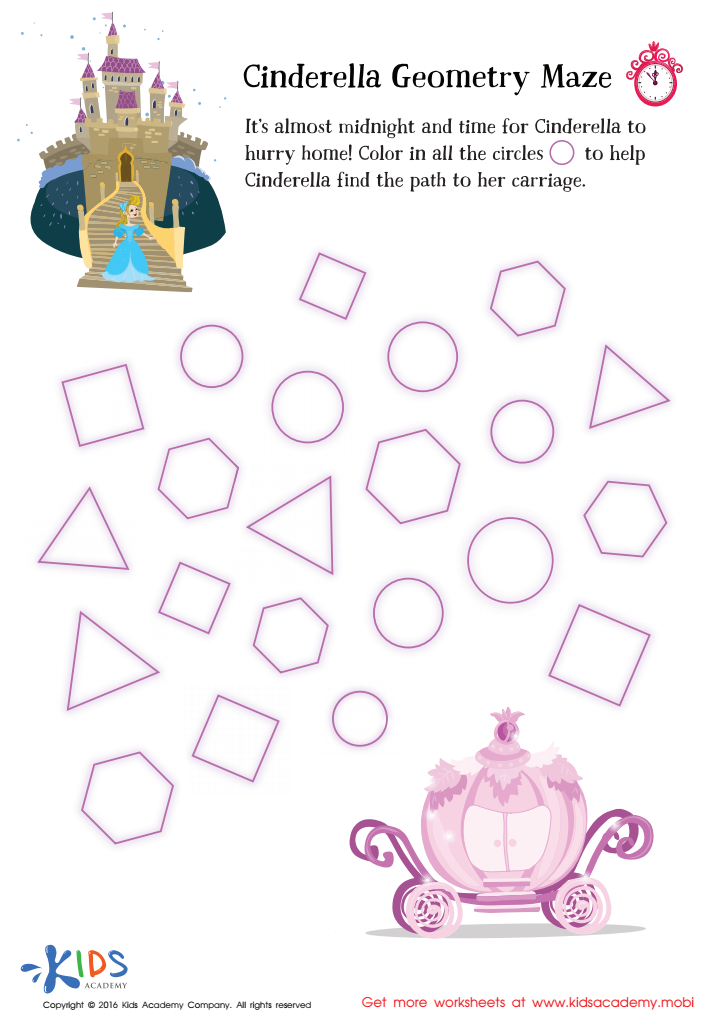
Cinderella Geometry Maze Worksheet
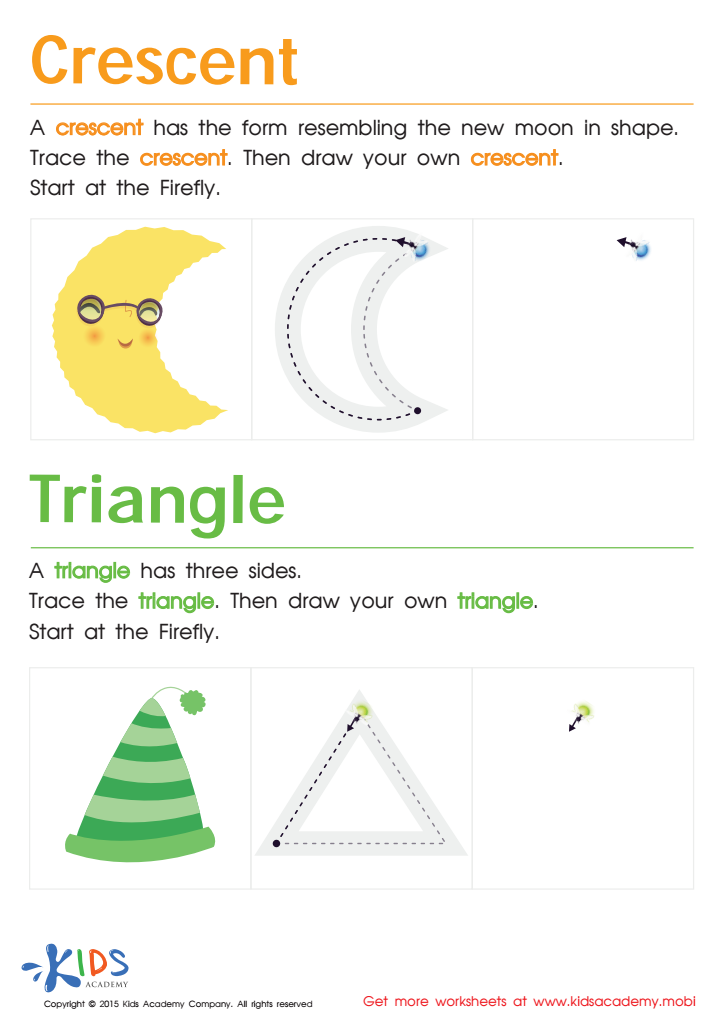
Learning to Draw Crescents And Triangles Worksheet
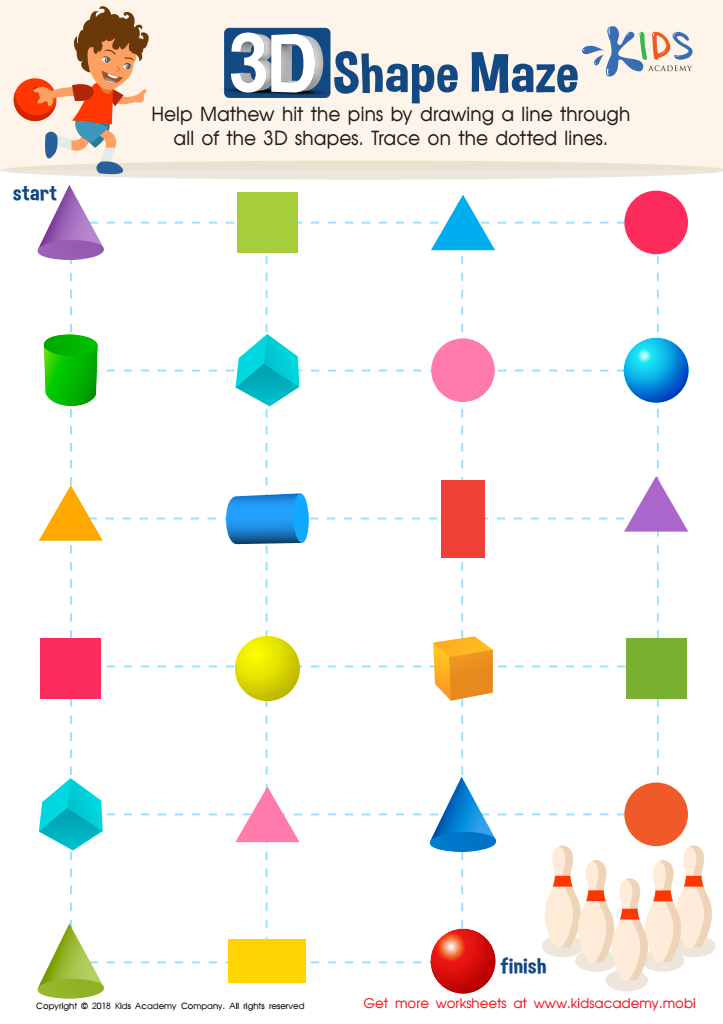
Shapes Maze Geometry Worksheet
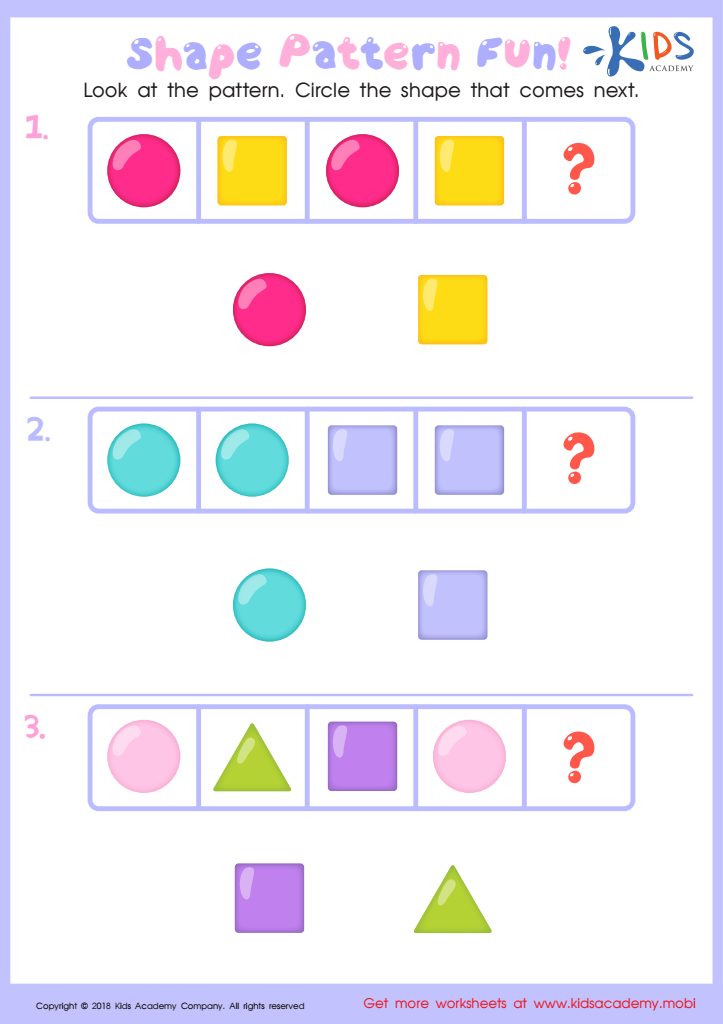
Shape Pattern Fun Worksheet








Caring about problem-solving skills in normal geometry for 5-year-olds is crucial for both parents and teachers as it lays a strong foundation for future academic and life success. Geometry introduces young learners to basic geometric shapes and spatial relationships, which are fundamental components of early math skills. Encouraging problem-solving within this context fosters critical thinking, logical reasoning, and the ability to approach tasks from different angles.
At this early age, cognitive development is rapid, and introducing geometry helps children develop essential skills such as pattern recognition, sequencing, and spatial visualization. These skills are not only important for understanding math but also for many real-life situations, such as reading maps, assembling puzzles, and even in activities that require fine motor skills like drawing or cutting shapes.
Moreover, early exposure to problem-solving in geometry sparks curiosity and promotes a positive attitude towards learning. It encourages children to explore, ask questions, and become more resilient when faced with challenges. These traits are beneficial not only in academic pursuits but throughout life.
Incorporating these skills into early education also strengthens parent-child and teacher-student relationships, as adults actively engage in guiding children through enjoyable and stimulating activities. In summary, nurturing problem-solving skills in normal geometry sets the stage for a lifelong appreciation and understanding of mathematics, enhances cognitive development, and supports the overall growth of young learners.








