Welcome to our Basic Addition Normal Numbers Worksheets for 5-Year-Olds! Designed to ignite a love for math, these engaging worksheets introduce young learners to fundamental addition concepts using fun visuals and relatable scenarios. Each worksheet is crafted to develop essential skills in number recognition, counting, and simple arithmetic, ensuring that your child builds a strong foundation in math. The activities are tailored to their learning pace, making it easy and enjoyable to practice addition with normal numbers. Whether in the classroom or at home, these worksheets provide the perfect opportunity for kids to explore addition in a playful and interactive way!

Check out this FREE Trial Lesson on Numbers for age 5!

Farm Animals and Pets

Favorites
With answer key
Interactive
  • 5
  • Basic Addition
  • Numbers
  • Normal
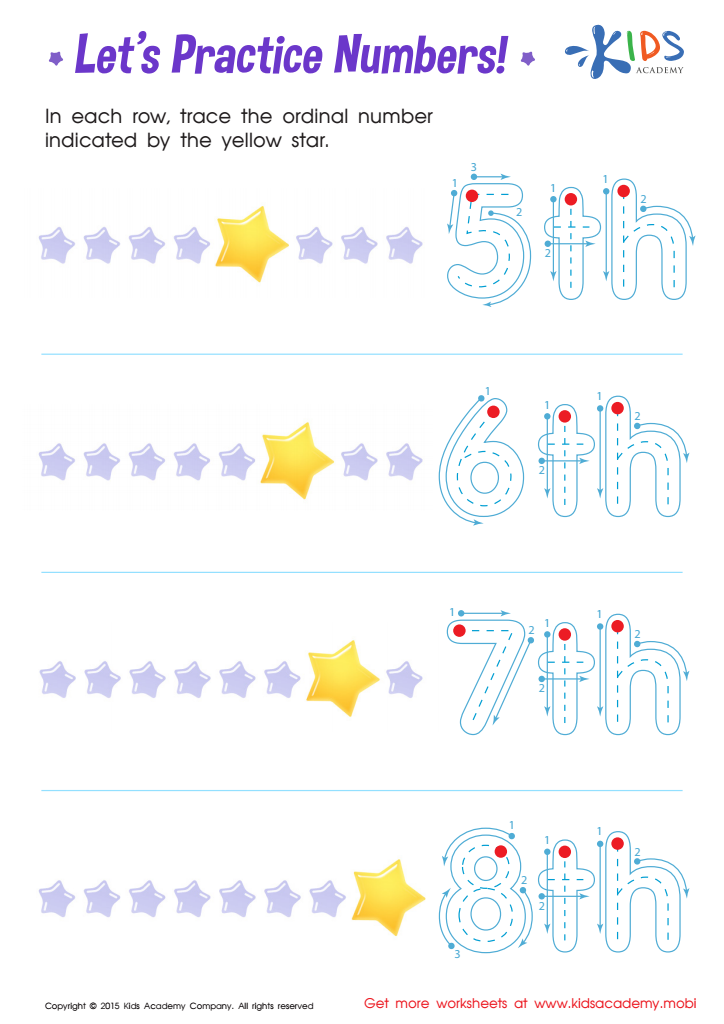
Practice Ordinal Numbers Worksheets PDF
Ordinal Numbers: Let's Practice Numbers Printable
Worksheet
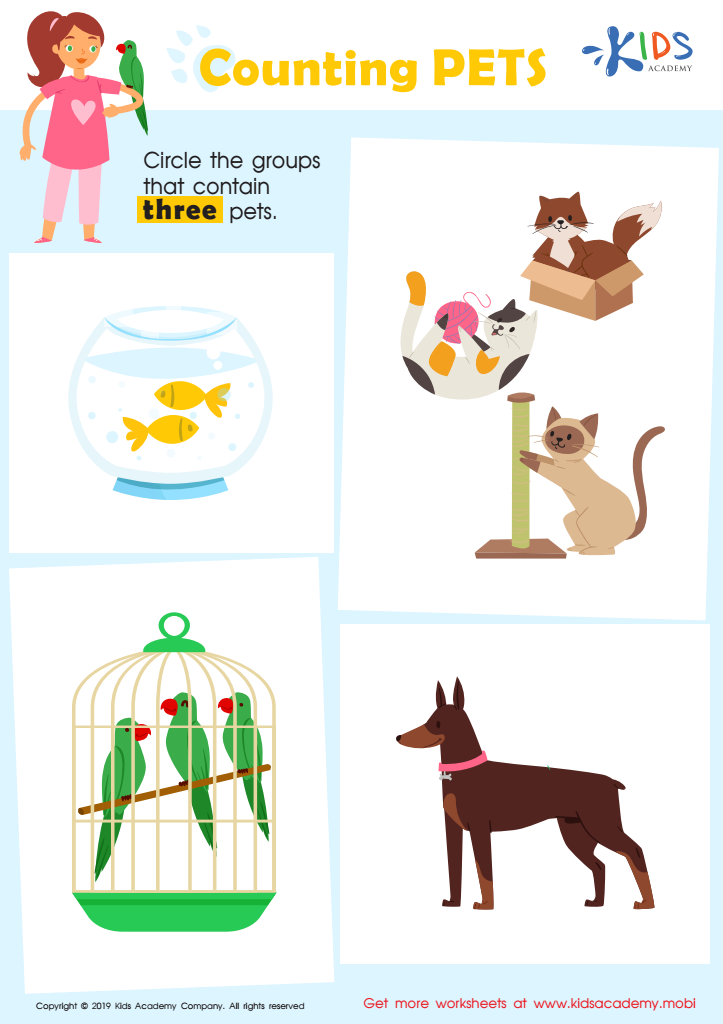
Counting Pets Worksheet

Counting Pets Worksheet

Kids adore their pets, making this free pet counting worksheet the perfect way to combine something they love with math skills. They'll count the number of pets, circle the pictures with three pets, and use one-to-one picture representation to help. This exercise will cultivate their learning and reinforce their love of animals!
Counting Pets Worksheet
Worksheet
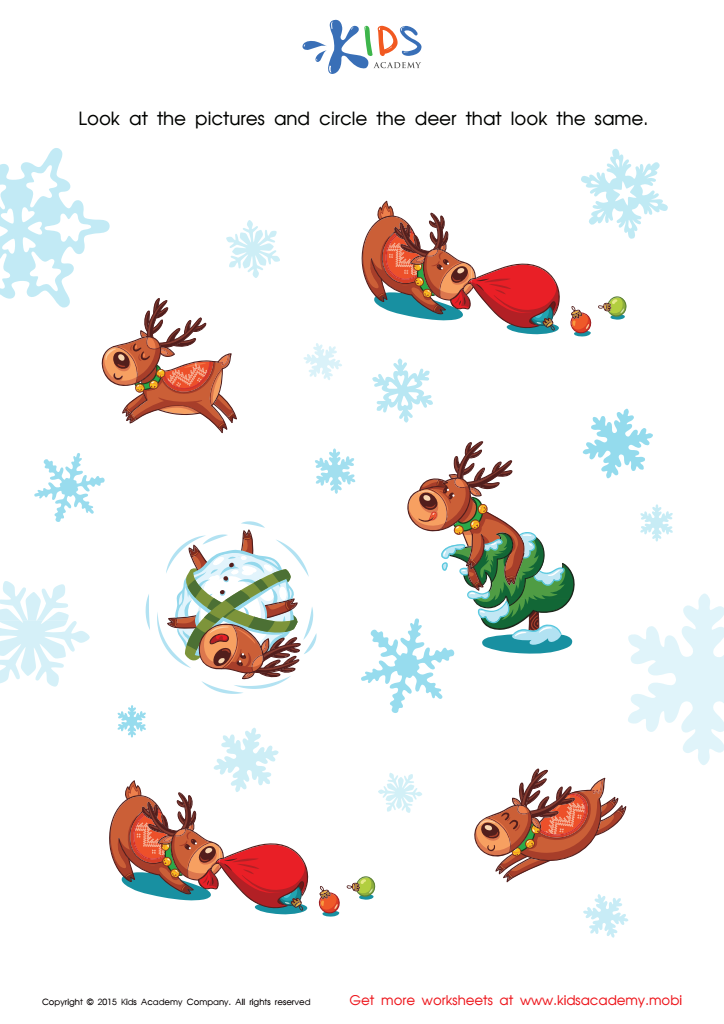
Math PDF Worksheet: Count the Deer

Count the Deer Worksheet

Spread festive cheer this holiday season with Kids Academy's Christmas-themed math worksheet! Your little learner can count and color in the cute deer while reinforcing their counting skills. Get your colorful worksheet now and make Christmas counting fun. For more number worksheets, click here.
Count the Deer Worksheet
Worksheet
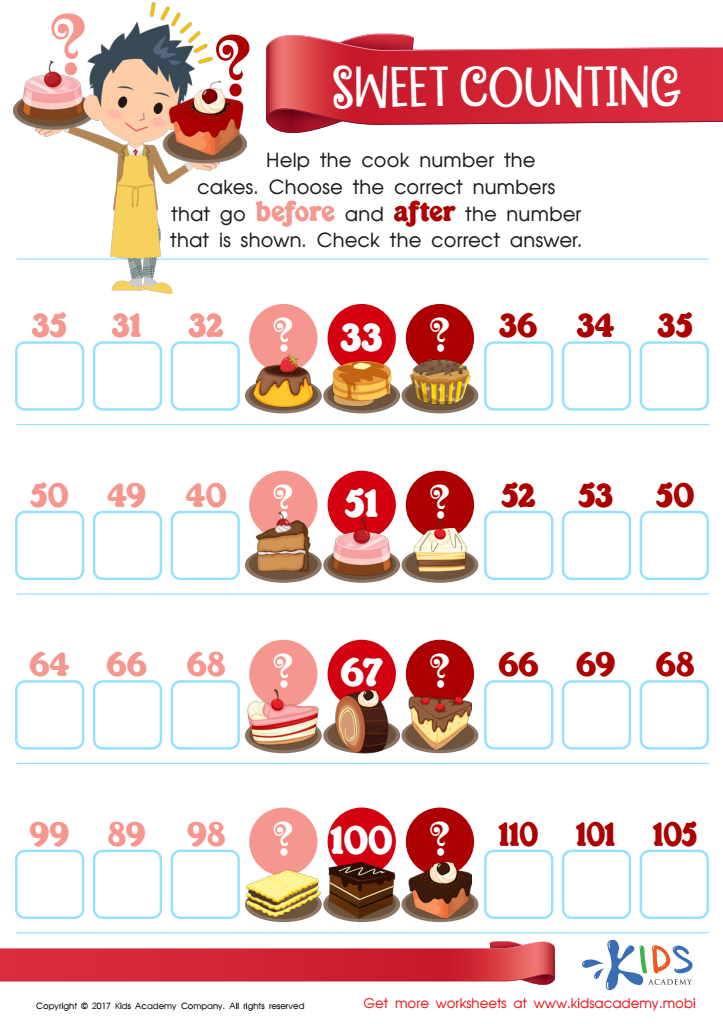
Sweet Counting - Part 1 Worksheet

Sweet Counting - Part 1 Worksheet

Help your child learn numbers by counting cakes! Download this fun worksheet and have them fill in the numbers missing in the line of cakes. They'll have fun helping the cook and be learning at the same time!
Sweet Counting - Part 1 Worksheet
Worksheet
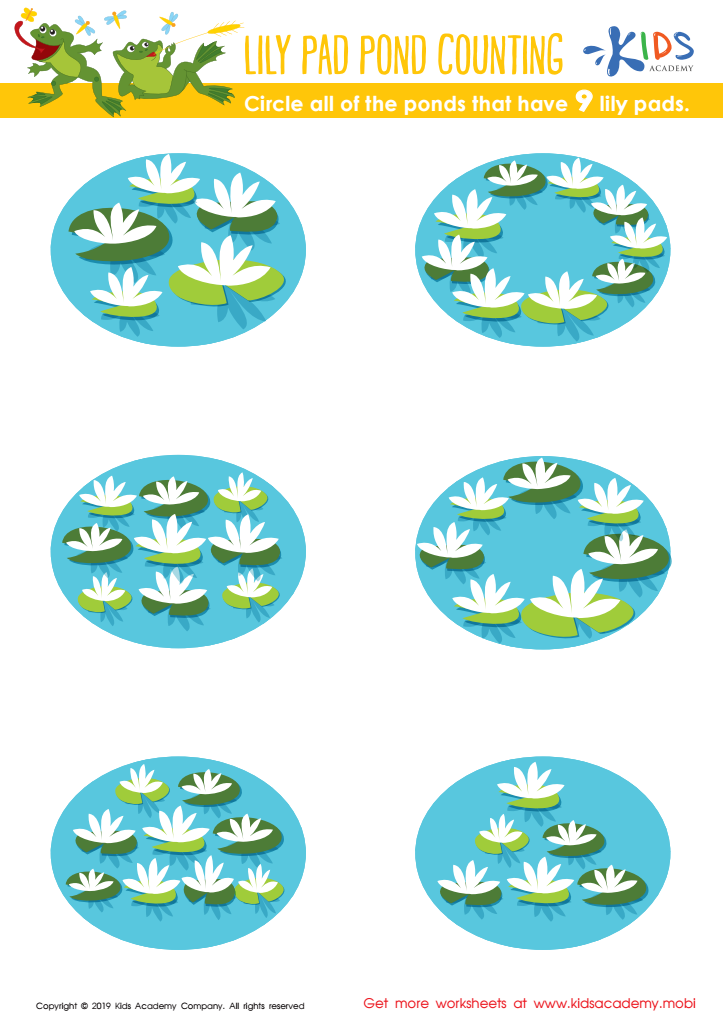
Lily Pad Pond Counting Worksheet

Lily Pad Pond Counting Worksheet

Counting can be fun with this colorful worksheet. Guide and be patient with your kids as they write numbers and count the six groups of lily pads. Help them circle the ponds with 9 lily pads, and watch them learn better and faster.
Lily Pad Pond Counting Worksheet
Worksheet
none
none

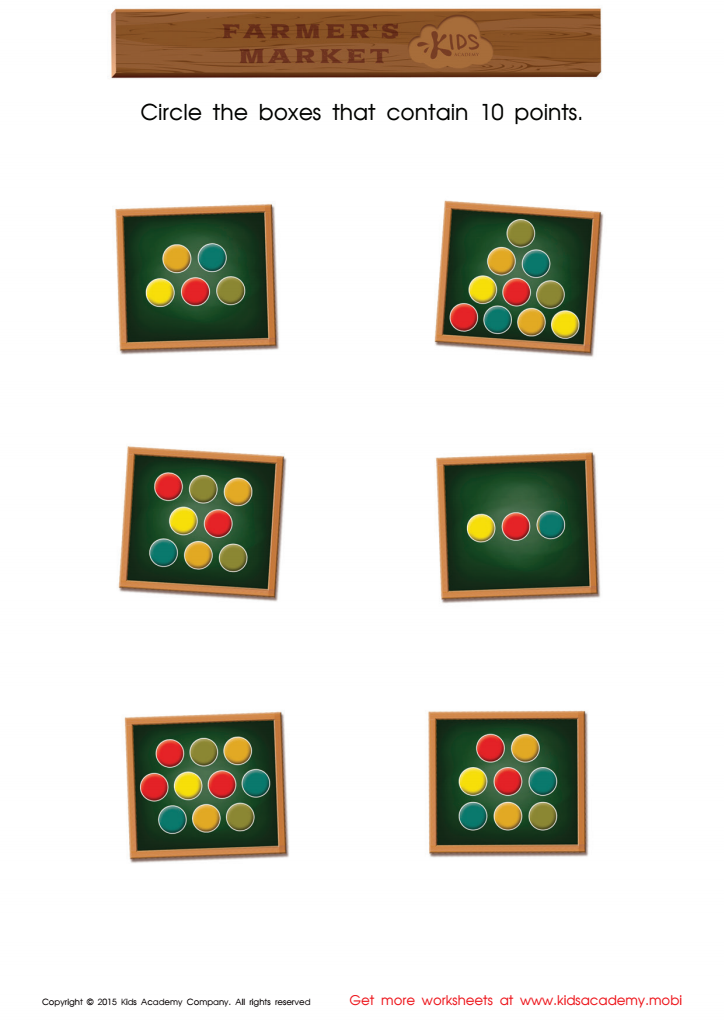
Count and Match Points 10 Math Worksheet
Help your youngster practice counting with this worksheet. Count the points in each box and circle any with up to 10 points. It will improve their counting and matching ability. Forget about addition and subtraction; it's time for a fun exercise for you both!
Count and Match Points 10 Math Worksheet
Worksheet
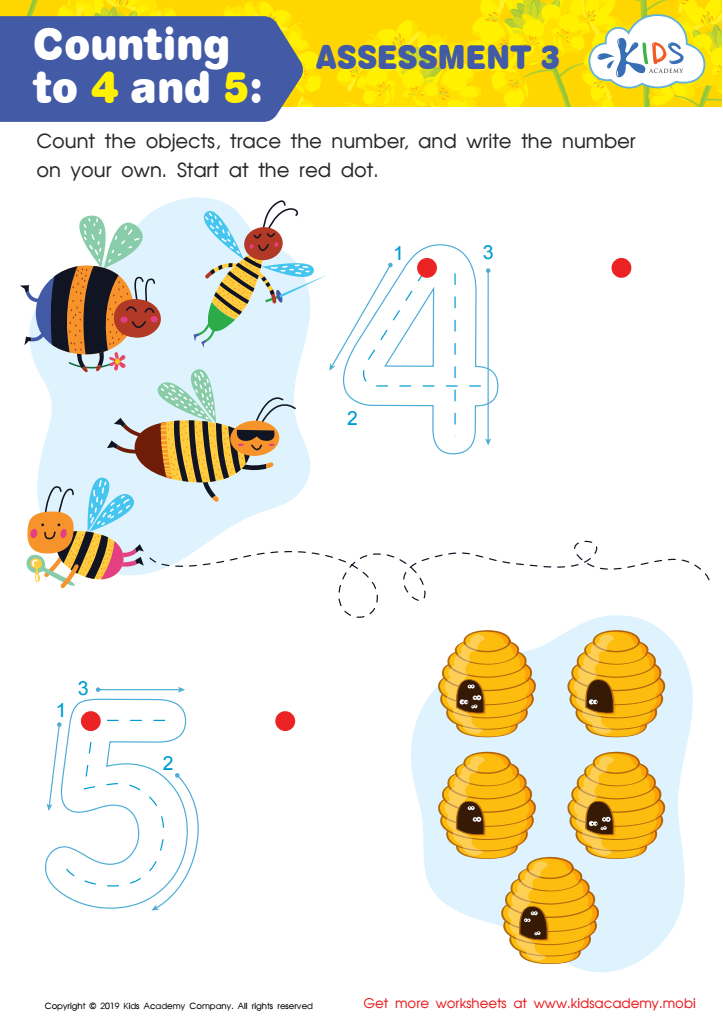
Counting to 4 and 5: Assessment 3 Worksheet

Counting to 4 and 5: Assessment 3 Worksheet

Help your kids learn to count with fun objects and items they like - like the bees in this worksheet. Ask them to count, trace the number, and write it down. Give guidance, starting at the red dot. This is an important first step in math and your kids will love it!
Counting to 4 and 5: Assessment 3 Worksheet
Worksheet
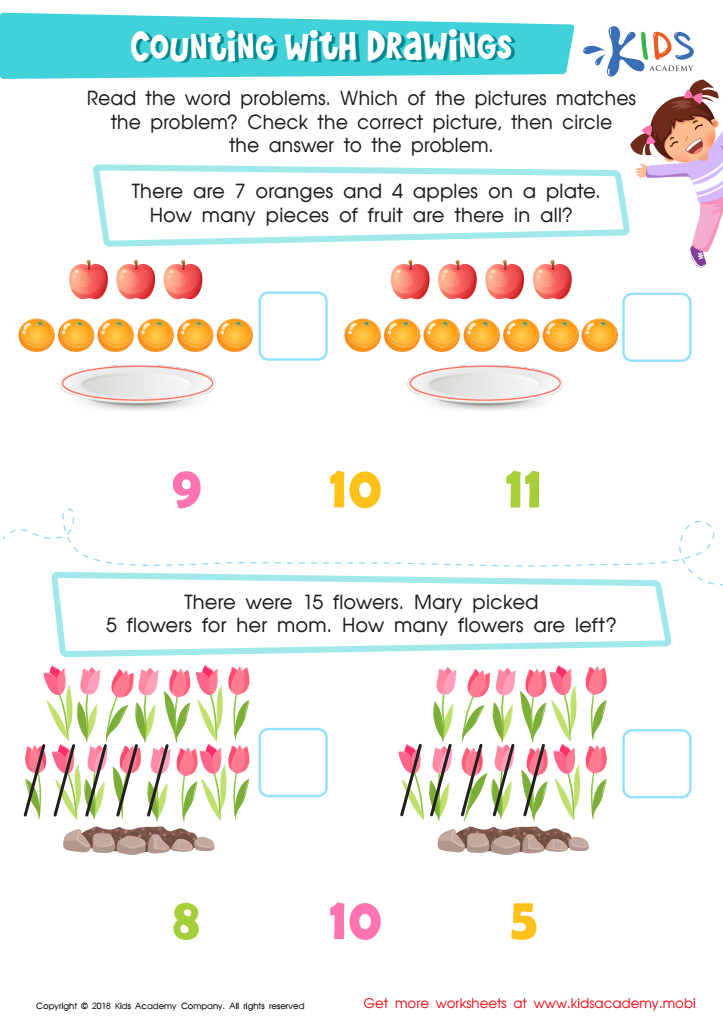
Counting with Drawings:Fruits & Flowers Worksheet


Counting with Drawings:Fruits & Flowers Worksheet

At Kids Academy, we know pictures make math come alive and make sense. This worksheet is perfect for early learners to practice word problems. Kids read each problem and count the images that represent the numbers, then solve the problem with addition or subtraction to get the right answer.
Counting with Drawings:Fruits & Flowers Worksheet

Worksheet


Teaching basic addition of normal numbers to 5-year-olds is crucial for several reasons. First, it lays a strong foundation for early math skills, which are essential for future academic success. Understanding simple addition helps children develop critical thinking and problem-solving abilities, making them more adaptable learners.

Moreover, early exposure to addition fosters a positive attitude toward math. When children grasp these concepts early on, they are less likely to develop math anxiety, setting the stage for a lifelong love of learning. Additionally, mastering basic addition enhances their ability to understand everyday situations, helping them make sense of the world around them—such as counting objects, sharing with friends, or understanding simple transactions.

Furthermore, engaging in addition activities at this age promotes cognitive development and social skills. Working on math problems, whether individually or collaboratively, encourages communication, cooperation, and patience. Parents and teachers can reinforce these concepts through playful, interactive experiences that make learning enjoyable.

In summary, caring about basic addition in early education is vital for cognitive development, emotional well-being, social interaction, and preparing children for more complex mathematical concepts in the future. By investing time and effort into basic addition, parents and teachers shape a brighter, more confident path for young learners.