
Counting skills Normal Math Worksheets for 5-Year-Olds
72 filtered results
Difficulty Level
Grade
Age
-
From - To
Subject
Activity
Standards
Discover engaging and fun counting skills worksheets designed specifically for 5-year-olds! Our printable math worksheets provide a variety of activities to help children develop essential counting skills, number recognition, and early arithmetic concepts. With colorful illustrations and hands-on learning approaches, kids will enjoy practicing with engaging exercises such as counting objects, matching numbers, and filling in missing values. These worksheets not only promote cognitive development but also encourage fine motor skills as young learners trace, write, and explore numbers. Perfect for home or classroom use, our counting skills worksheets make learning math enjoyable and effective for early learners. Explore our resource today!
Favorites
With answer key
Interactive
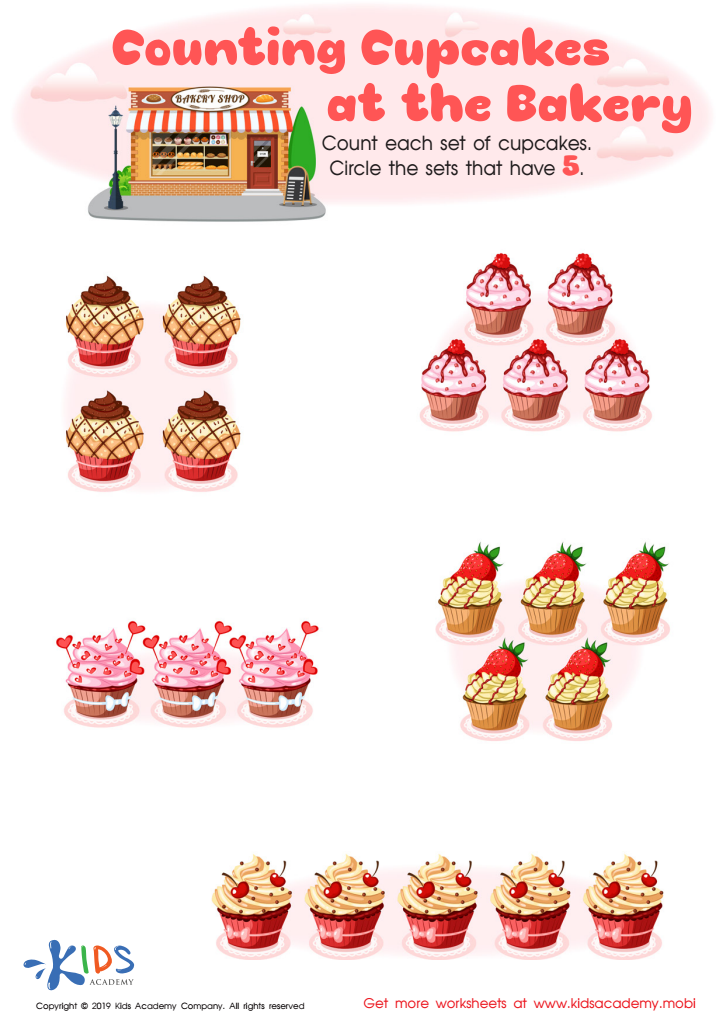
Counting Cupcakes Worksheet
This fun worksheet for preschoolers uses cupcakes to teach counting. Kids must circle the groups of cupcakes that add up to 5. The delicious treats make learning fun and engaging!
 Assign to My Students
Counting Cupcakes Worksheet
Worksheet
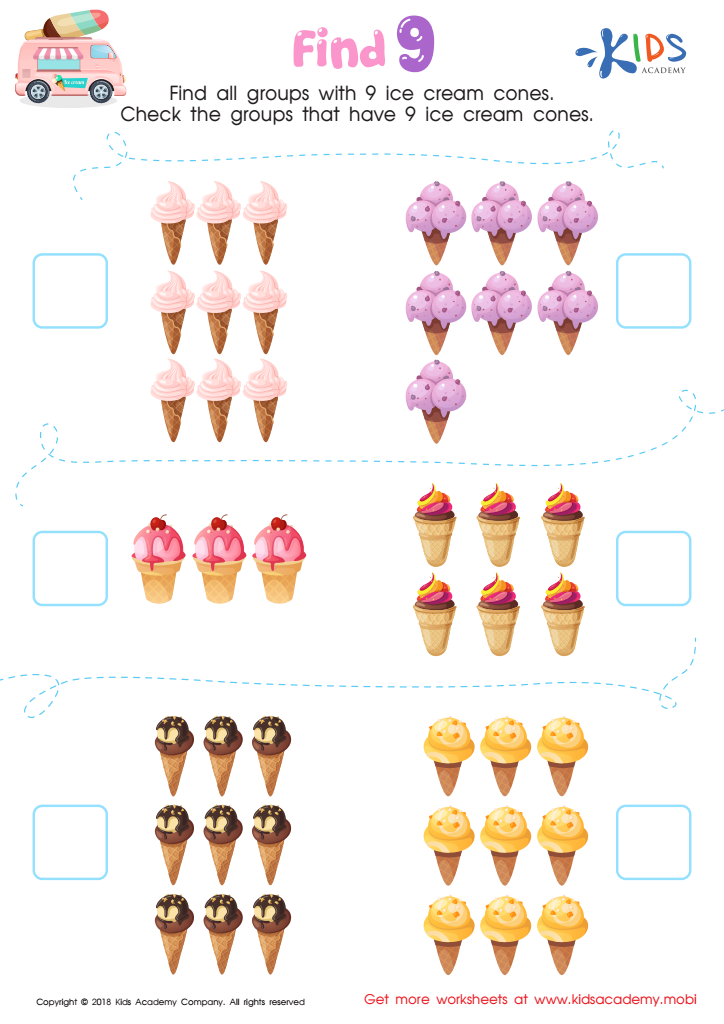
Find 9 Worksheet
Let your kids practice grouping numbers with this fun downloadable worksheet! It's full of ice cream colors and will help them improve their accuracy in addition and multiplication. Tracing the lines will also boost their fine motor skills.
Find 9 Worksheet
Worksheet
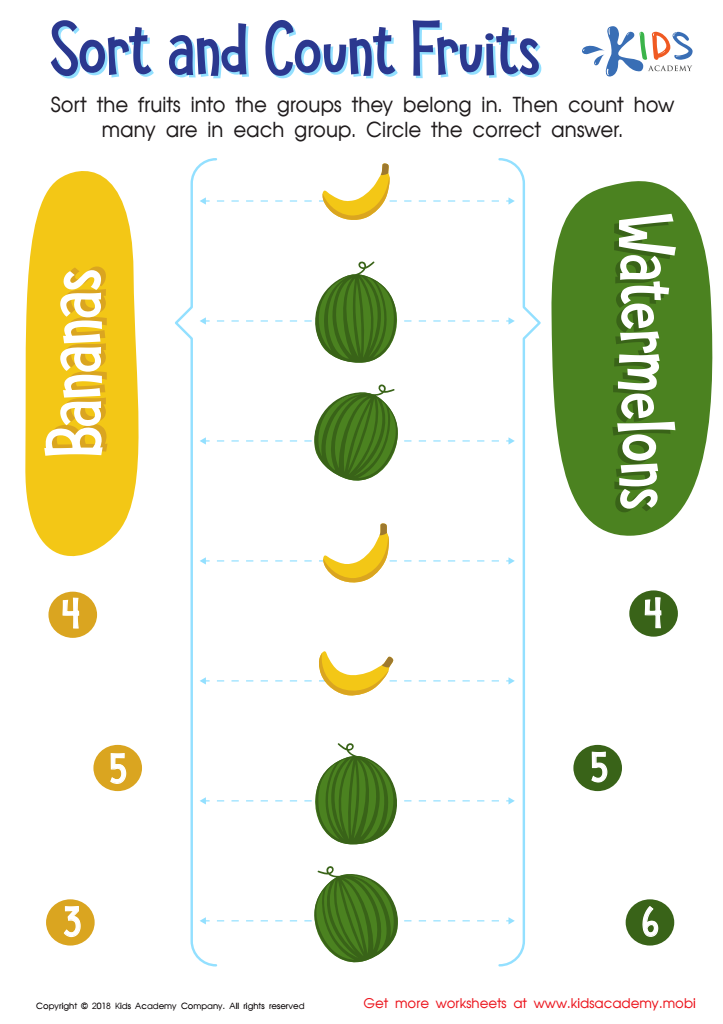
Sort and Count Fruits Worksheet
Allow your children to hone their critical thinking and number reasoning skills with this free worksheet. They'll sort, count, and trace fruits while learning basic number sense. A fun, delicious learning experience with familiar pictures they'll love.
Sort and Count Fruits Worksheet
Worksheet
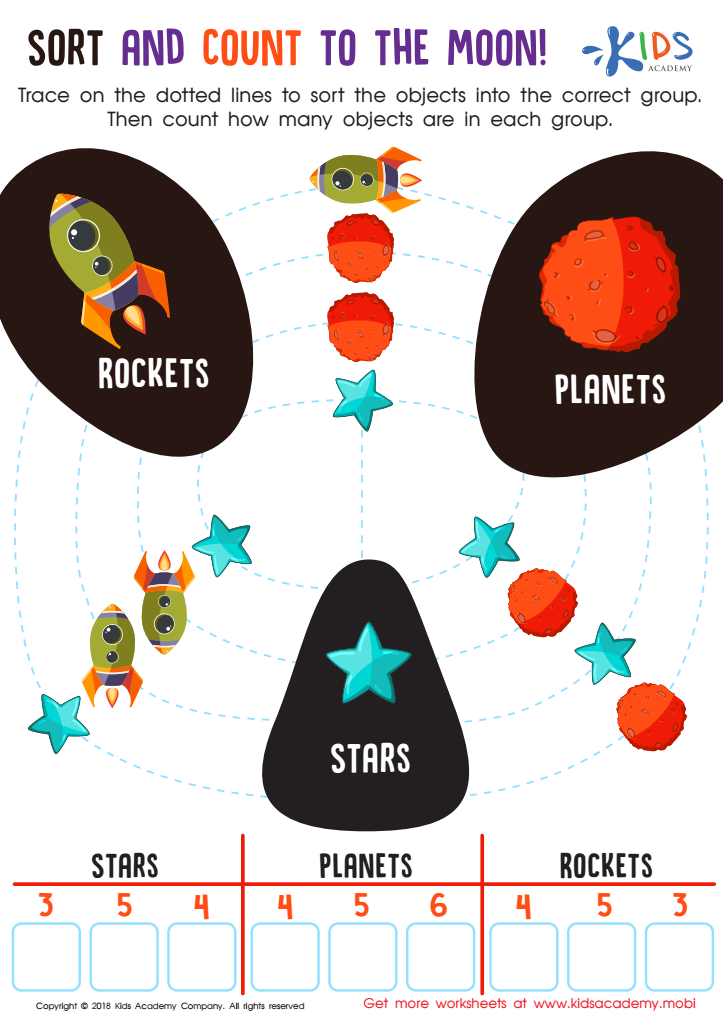
Sort and Count to the Moon Worksheet
Little space explorers will love counting, sorting and strengthening number sense with this galactic worksheet! They'll use traceable lines to sort pictures of stars, planets and rockets into categories according to properties. After sorting, they'll count each item and fill in the boxes. Bold pictures make it fun and build critical thinking skills.
Sort and Count to the Moon Worksheet
Worksheet
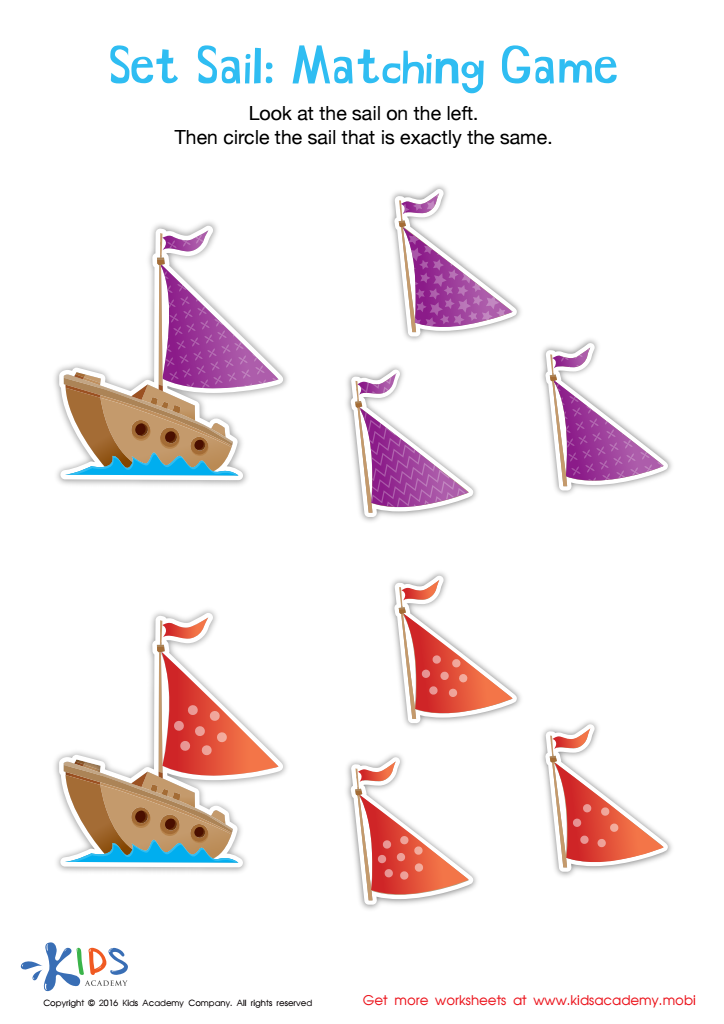
Set Sail Worksheet
Set sail with this fun matching game for toddlers! Kids will love finding the same pattern on the sails, improving their problem-solving and counting skills. Enjoy this bright and engaging worksheet!
Set Sail Worksheet
Worksheet
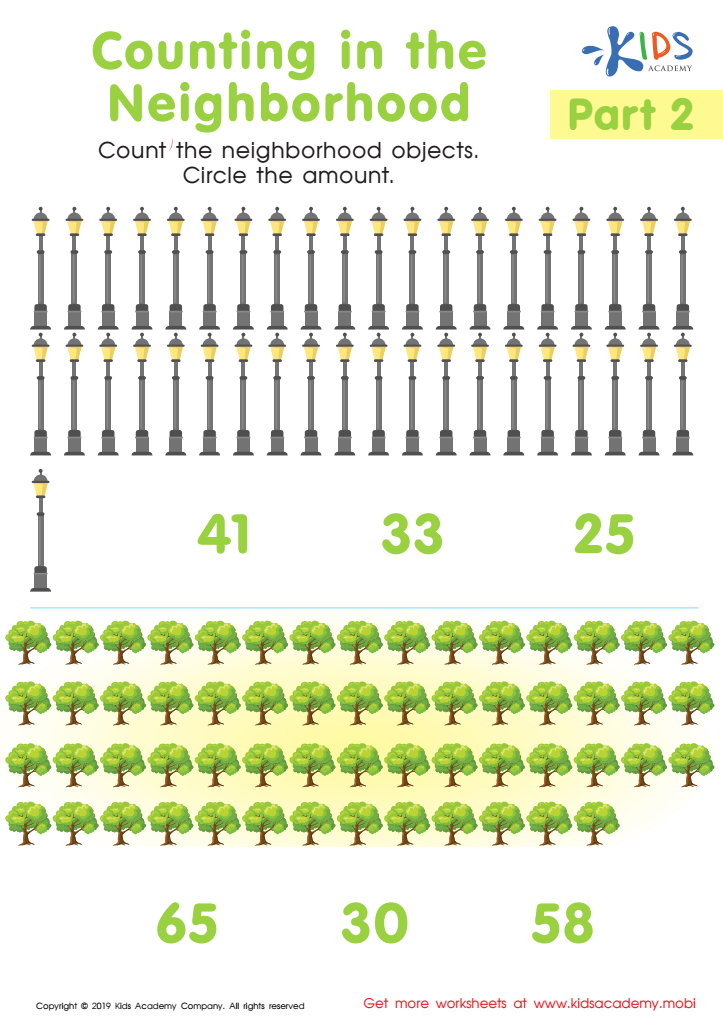
Counting In The Neighborhood Part 2 Worksheet
Download this free worksheet to help your child build number sense and math reasoning skills! It uses pictures of objects they know, letting your child count and match the right numeral to the objects to count past 10. Let them feel successful in mastering numbers.
Counting In The Neighborhood Part 2 Worksheet
Worksheet
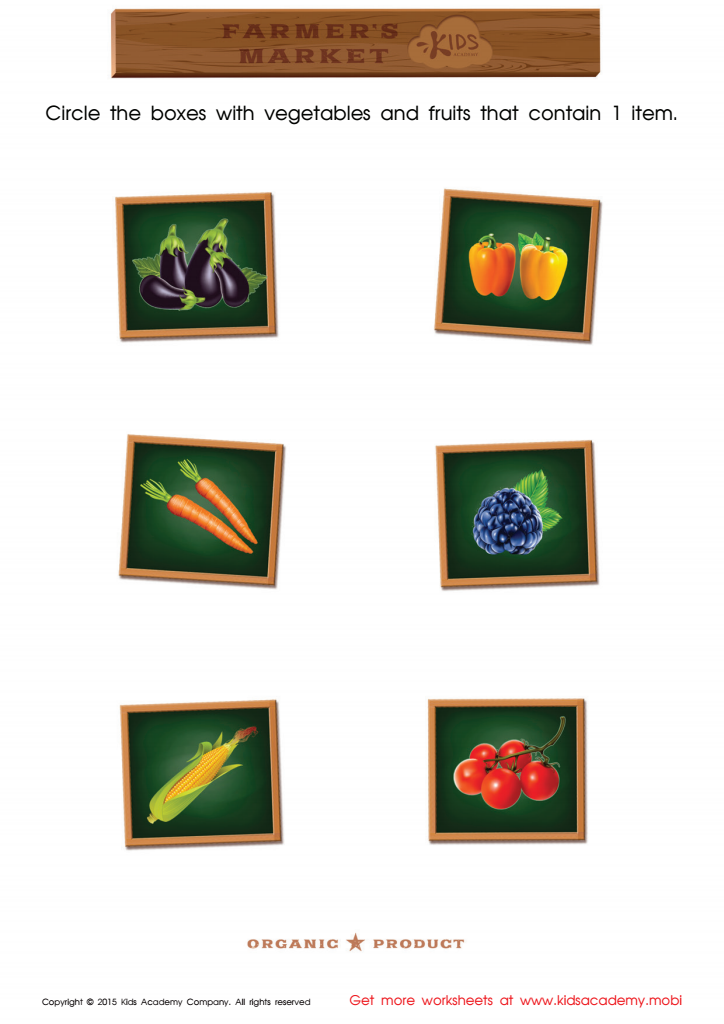
Count and Match Boxes with Vegetables
Print one and help your kid sharp his counting skills. With a variety of veggies to count, such as raspberries and eggplants, your little mathematician will have lots of fun.
Count and Match Boxes with Vegetables
Worksheet
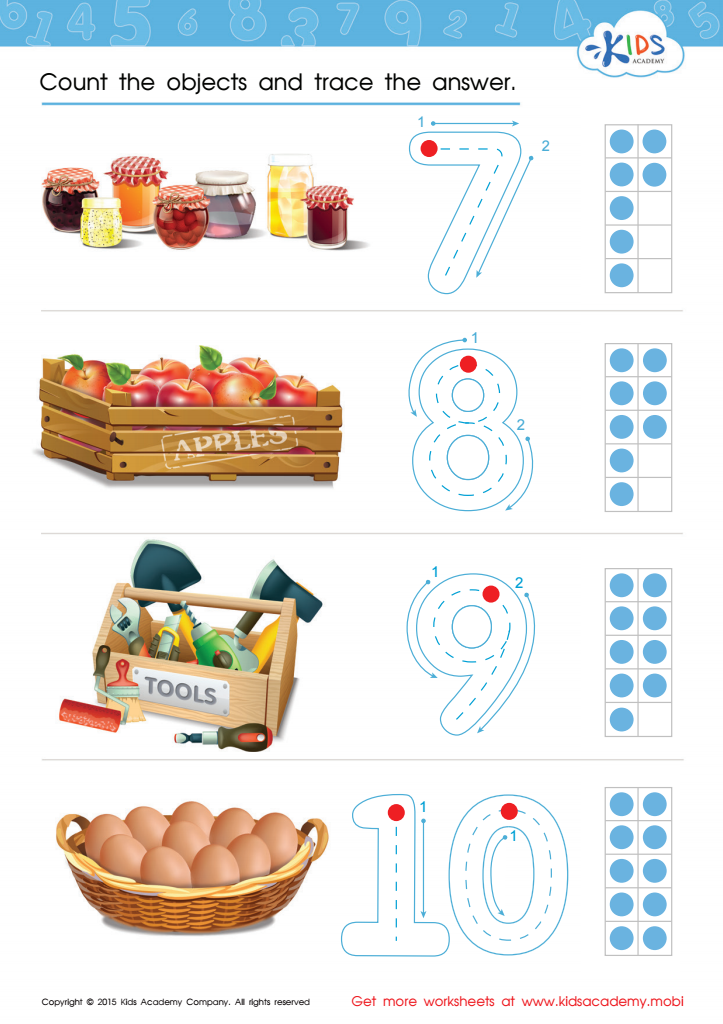
Count and Trace 7 – 10 Worksheet
Let your child develop a lifelong love of math with Kids Academy's printable math worksheet based on the innovative Singapore Math method. It uses funny pictures and graphs to help solve math problems. Check out our amazing collection of free printable math worksheets now!
Count and Trace 7 – 10 Worksheet
Worksheet
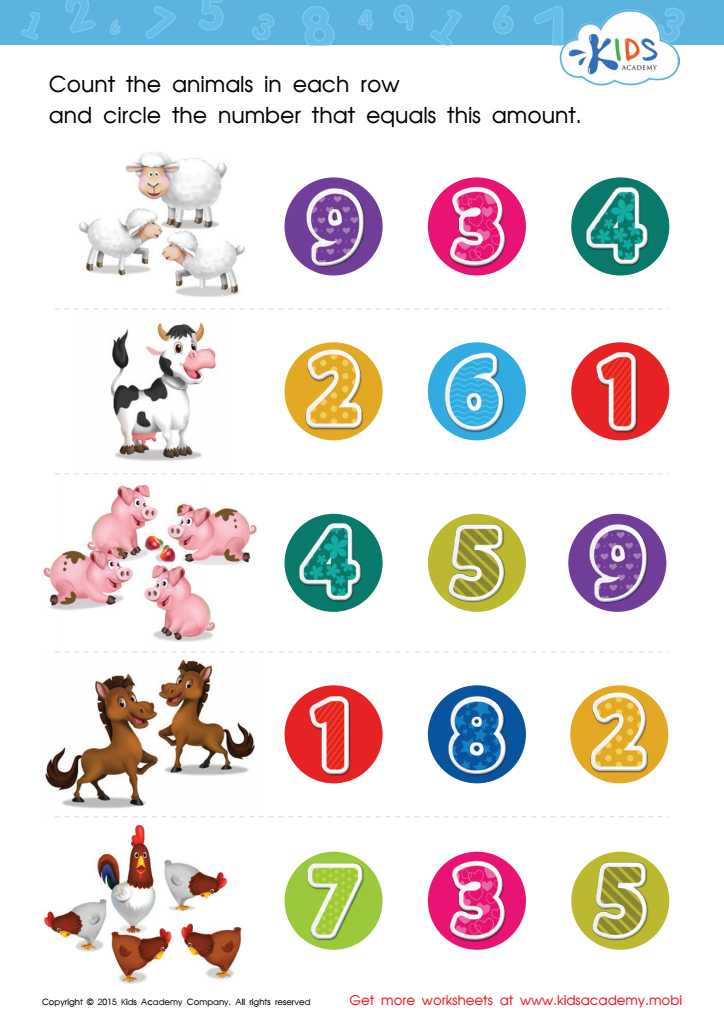
Count and Match 1 – 5 Math Worksheet
Find the colorful worksheet aimed to help your little learner develop their math skills. Count the cute animals and identify the correct numbers based on the Singapore Math method. This worksheet is a fantastic way to start your kid on their mathematical journey.
Count and Match 1 – 5 Math Worksheet
Worksheet
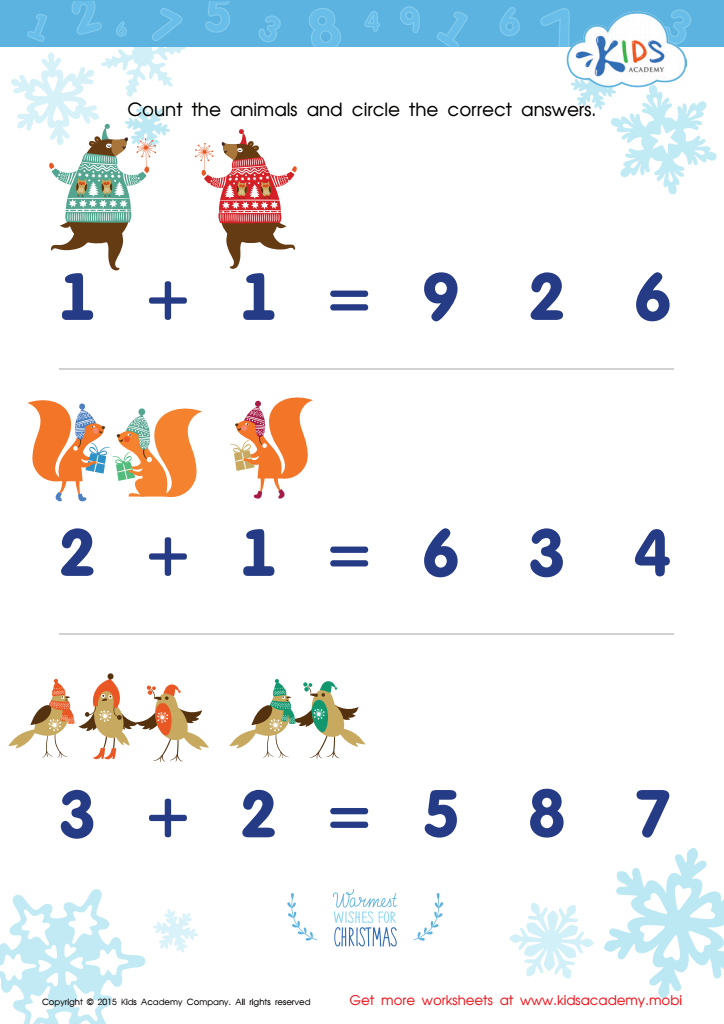
Count Funny Animals Worksheet
Get your kid in the Christmas spirit with this festive addition worksheet! They'll have fun counting the colorful animals and writing in the numbers. Our graphic layout makes it easy for them to visualize and solve the task. Print it out and help your kid keep their math skills sharp this winter with Kids Academy!
Count Funny Animals Worksheet
Worksheet
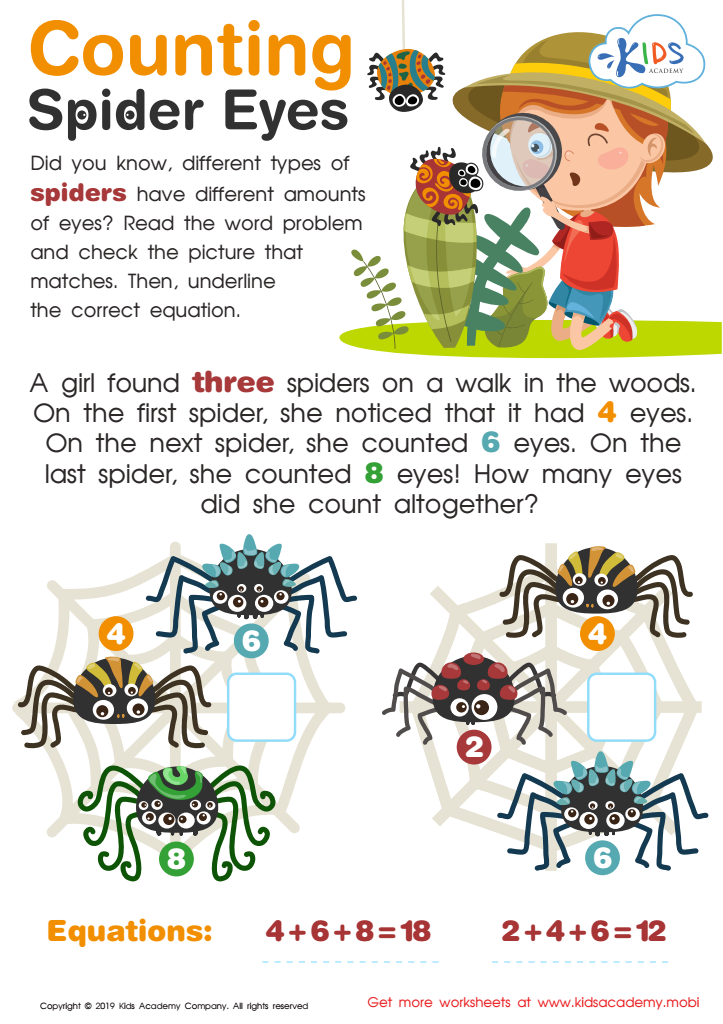
Counting Spider Eyes Worksheet
Did you know different spiders have different eye numbers? Kids will love learning this fact and solving the spider word problems on this free worksheet! Word problems promote a deeper understanding of the concept, plus they get to add up the spiders’ eyes while solving addition problems with more than one addend. Fun and math all in one!
Counting Spider Eyes Worksheet
Worksheet
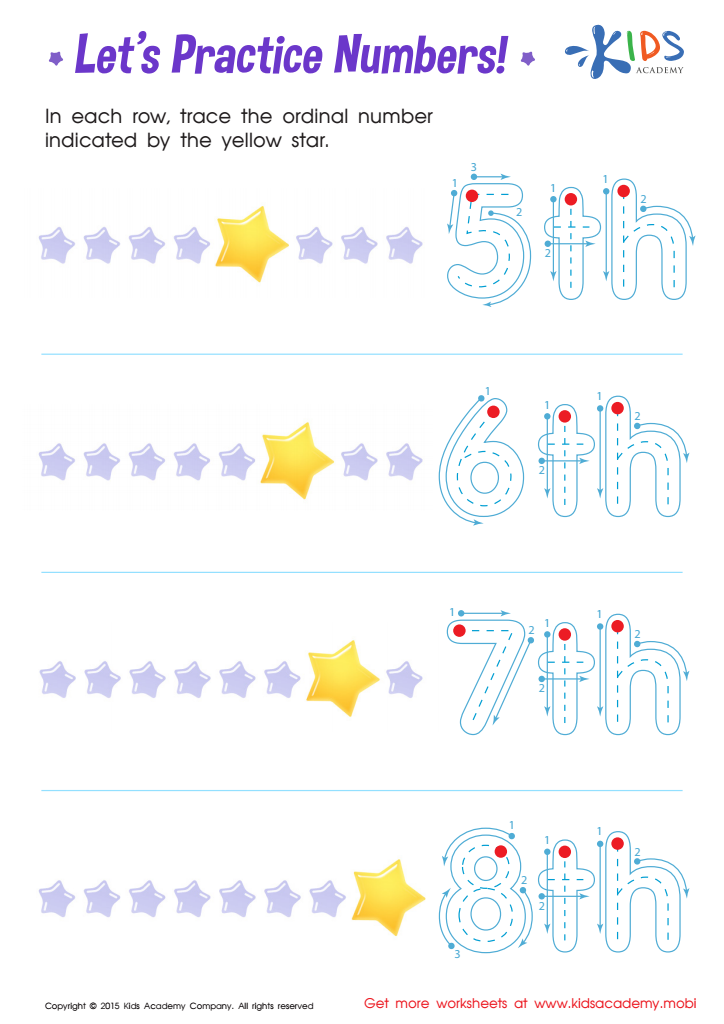
Ordinal Numbers: Let's Practice Numbers Printable
Worksheet
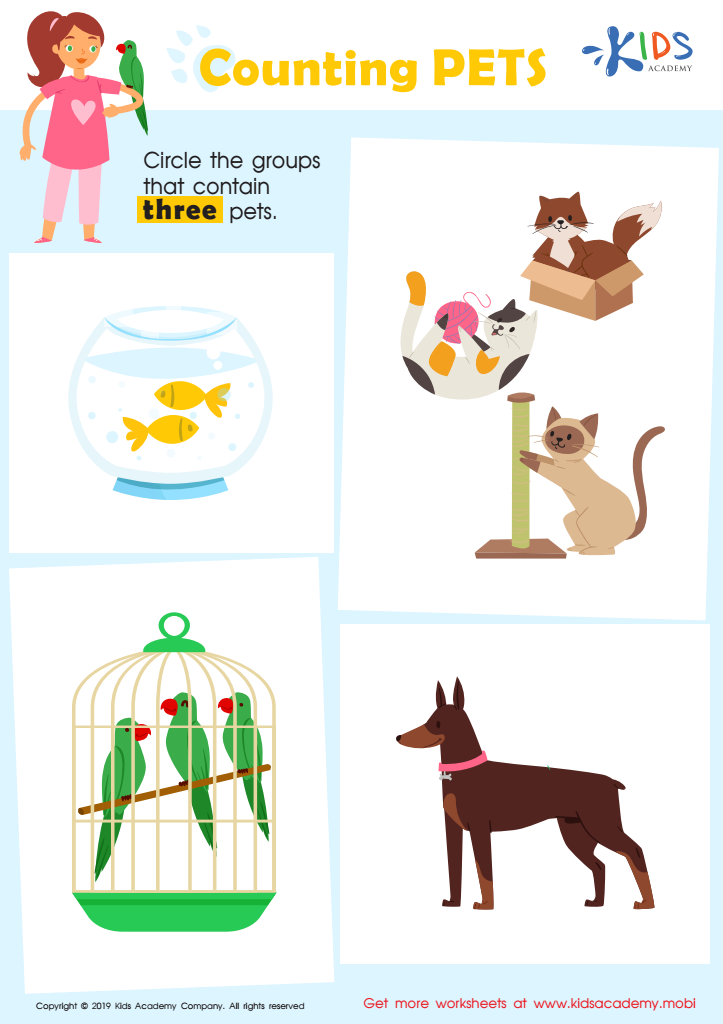
Counting Pets Worksheet
Kids adore their pets, making this free pet counting worksheet the perfect way to combine something they love with math skills. They'll count the number of pets, circle the pictures with three pets, and use one-to-one picture representation to help. This exercise will cultivate their learning and reinforce their love of animals!
Counting Pets Worksheet
Worksheet
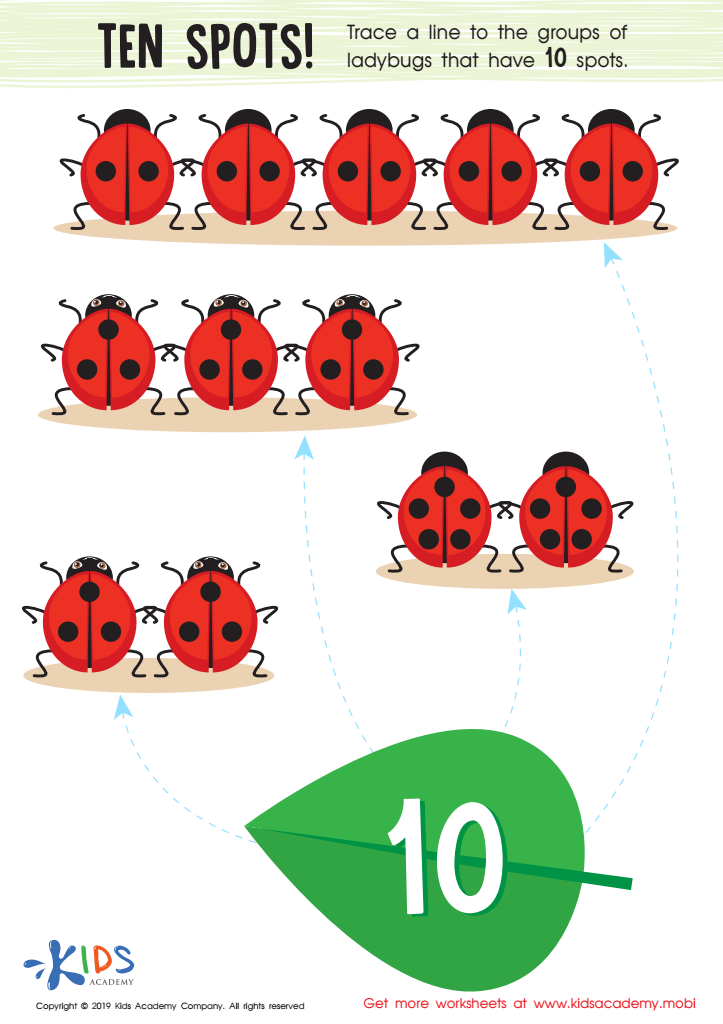
Ten Spots Worksheet
Kids love ladybugs! Ask them to tell you what stands out most--the spots. Show them a picture and help them count the spots. Trace a line to the group with 10 spots for a fun counting lesson.
Ten Spots Worksheet
Worksheet
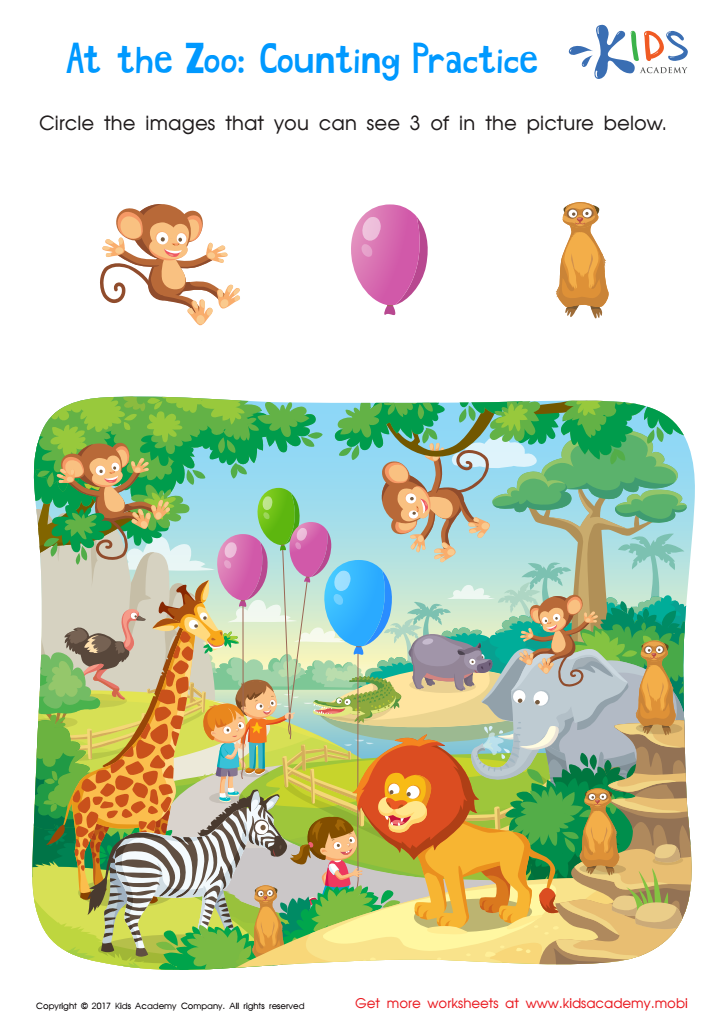
At the Zoo: Counting Practice Worksheet
This zoo-themed worksheet is perfect for practicing early counting skills and following directions. Your child will rule out incorrect answers and use problem solving to find images with duplicates. Fun and educational, this worksheet will get your preschooler ready for early math!
At the Zoo: Counting Practice Worksheet
Worksheet
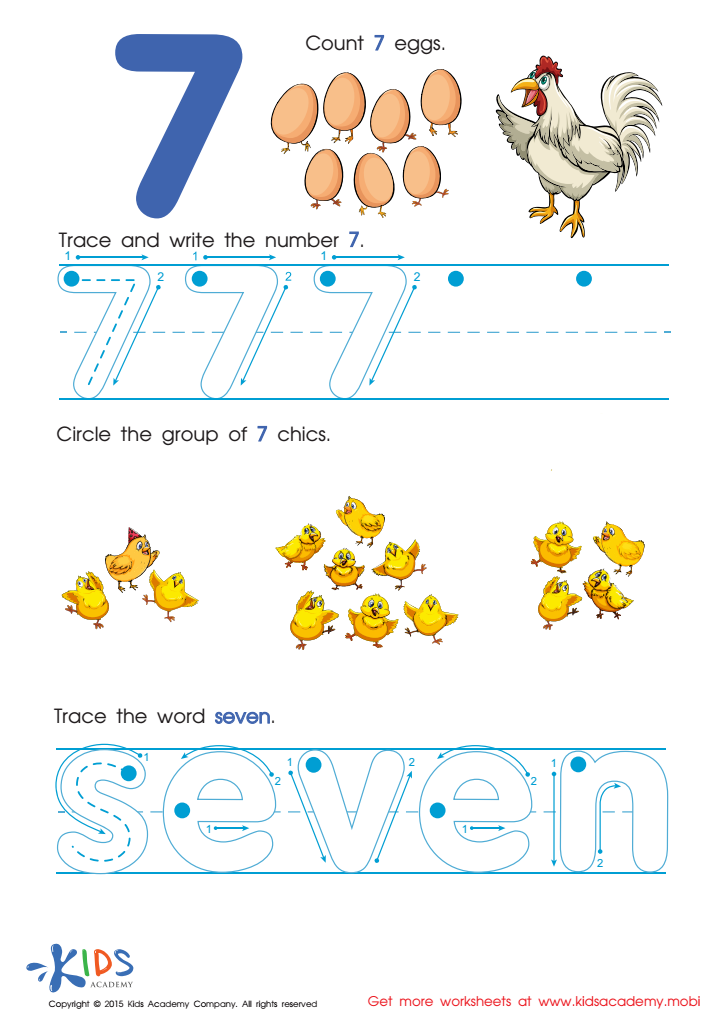
Trace And Write Number 7 with Fun Worksheet
Try one with a cute hen and its seven eggs! Trace and write the number 7, circle the group of seven chicks, and trace the word "seven". Fun and educational!
Trace And Write Number 7 with Fun Worksheet
Worksheet
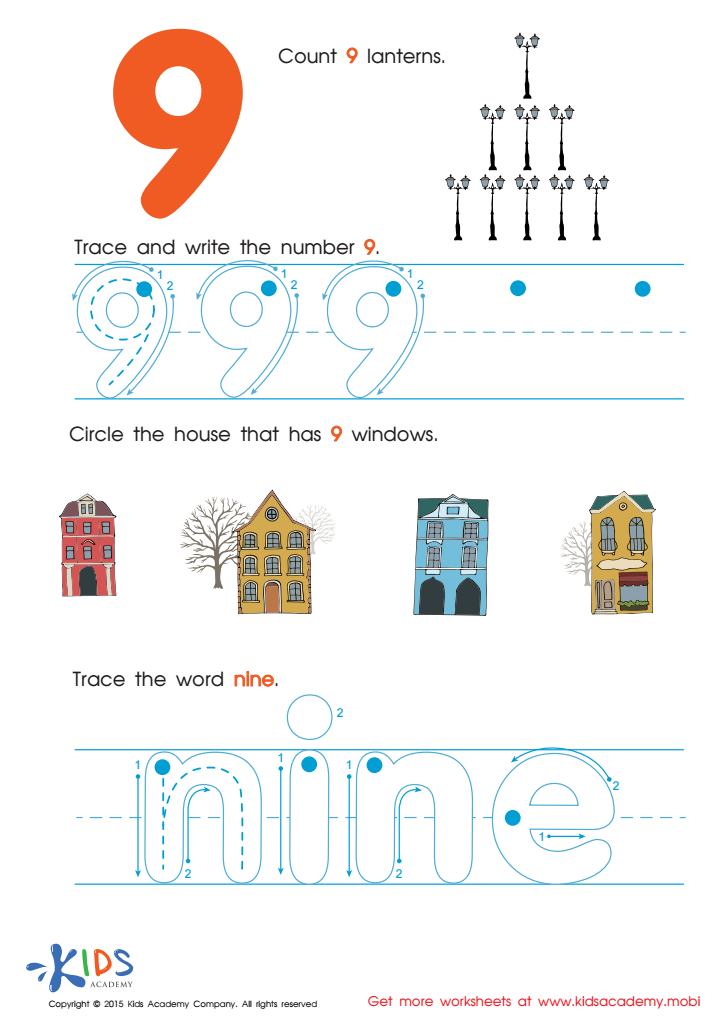
Tracing And Learning to Write Number 9 Worksheet
Explore our collection of learning numbers worksheets and make teaching numbers to preschoolers easier with Kids Academy. Trace numbers, circle houses with the specified number of windows, write the corresponding number words and revise previous numbers regularly to help kids learn.
Tracing And Learning to Write Number 9 Worksheet
Worksheet
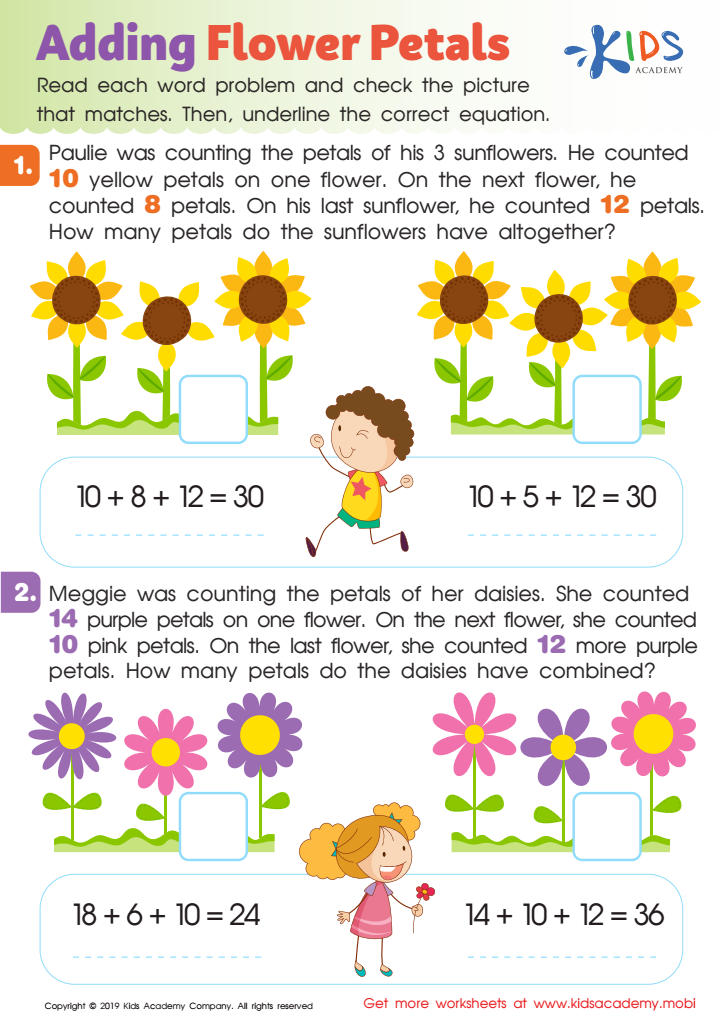
Adding Flower Petals Worksheet
This free worksheet helps little mathematicians learn to understand word problems. They'll read each one and match it to the corresponding picture. Important info is highlighted, teaching kids to look for key info when solving problems. Then they'll underline the correct number equation that matches the picture. A great way to practice problem-solving skills!
Adding Flower Petals Worksheet
Worksheet
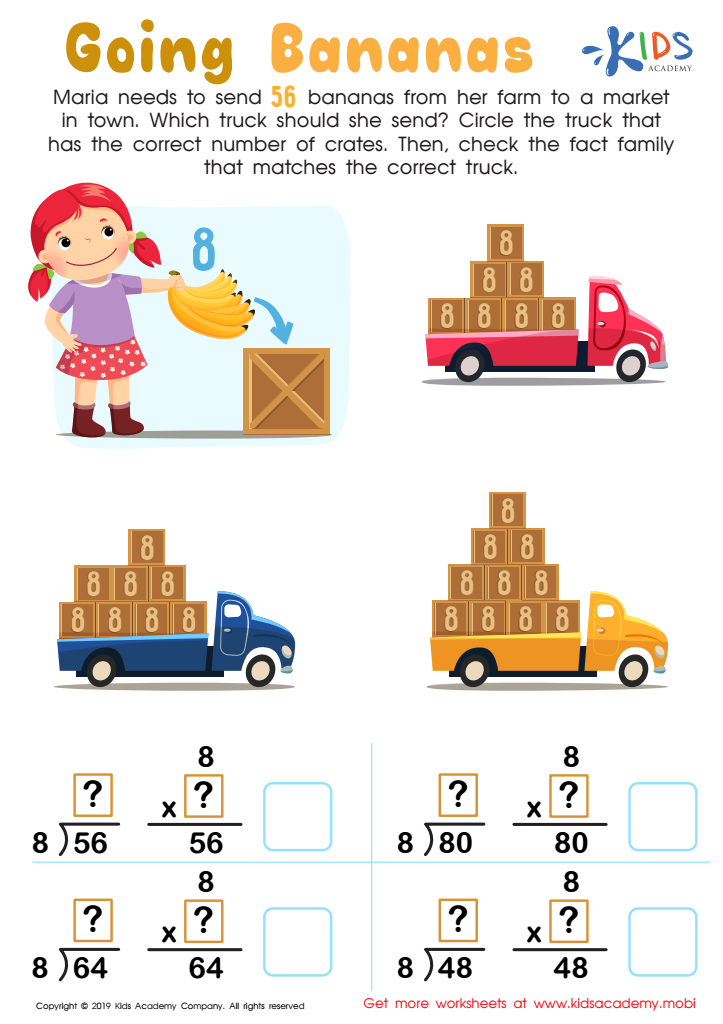
Going Bananas Worksheet
Marla needs to send 56 bananas in batches of 8. Help your child practice division and learn about fact families with this free worksheet. It'll help boost their multiplication skills and increase speed when solving problems.
Going Bananas Worksheet
Worksheet
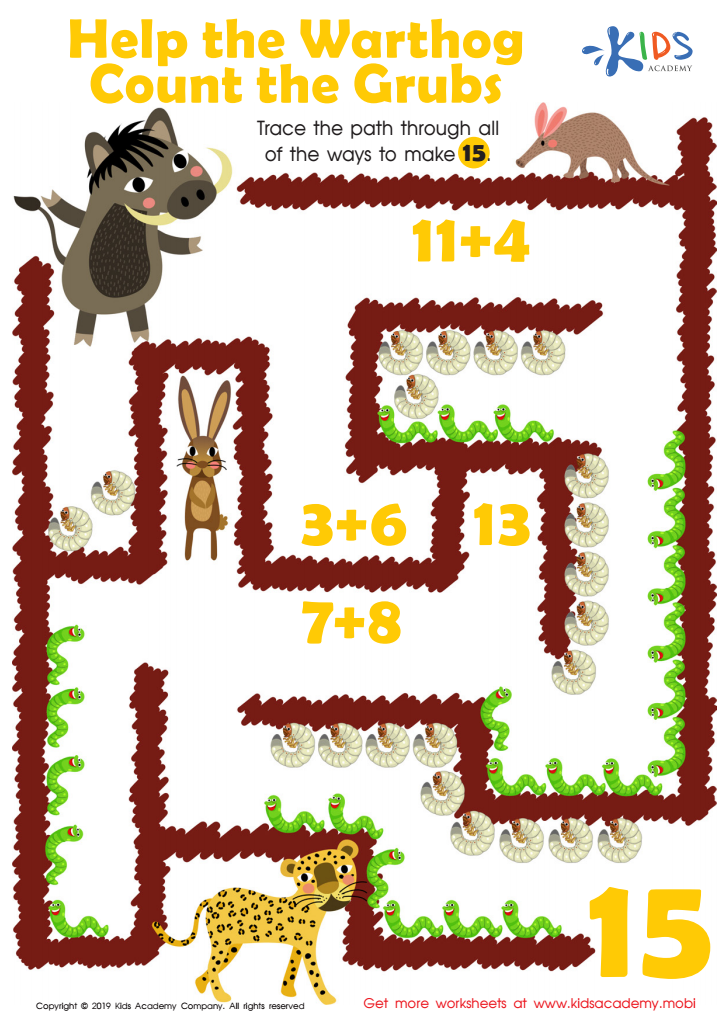
Help the Warthog Count the Grubs Worksheet
Test your kids' knowledge of wild animals. Ask them to name some they know, then have them identify the animals on this worksheet. If they can't, take the time to tell them the names. Finally, trace the warthog's path through the maze by solving the equations and going through paths that make 15.
Help the Warthog Count the Grubs Worksheet
Worksheet
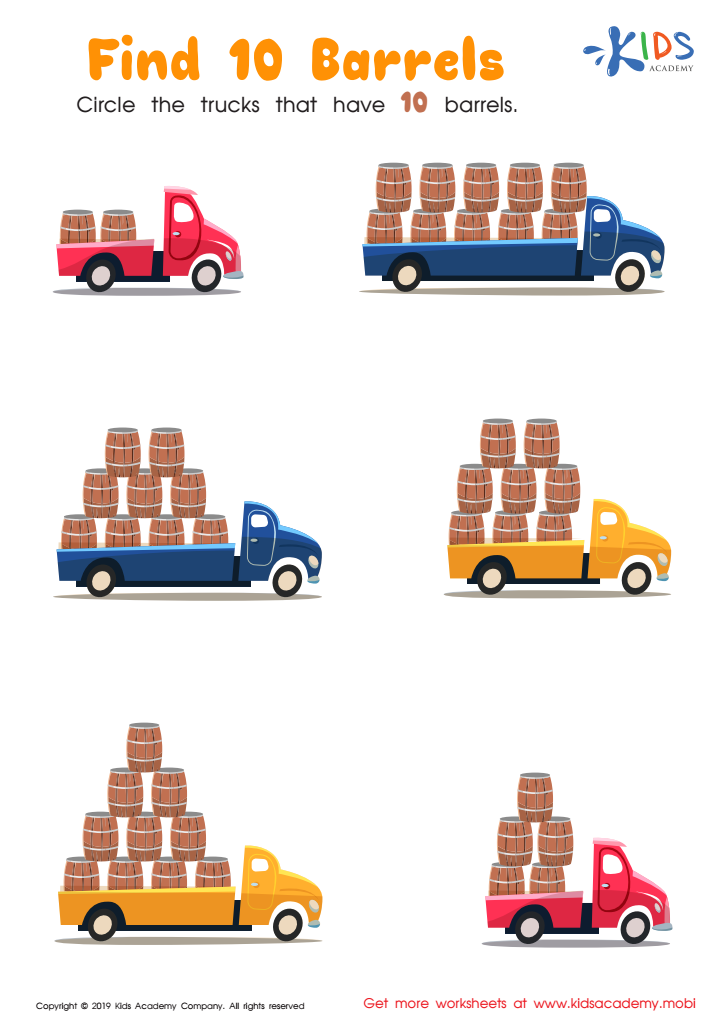
Find 10 Barrels Worksheet
Help your kids learn to count with 1, 2 and 3, then progress to tens and hundreds. Supplied with educational materials and colorful worksheets, they'll be counting as high as they can. Together, count the barrels on the trucks in the printout and encourage them to circle the ones with 10 barrels.
Find 10 Barrels Worksheet
Worksheet
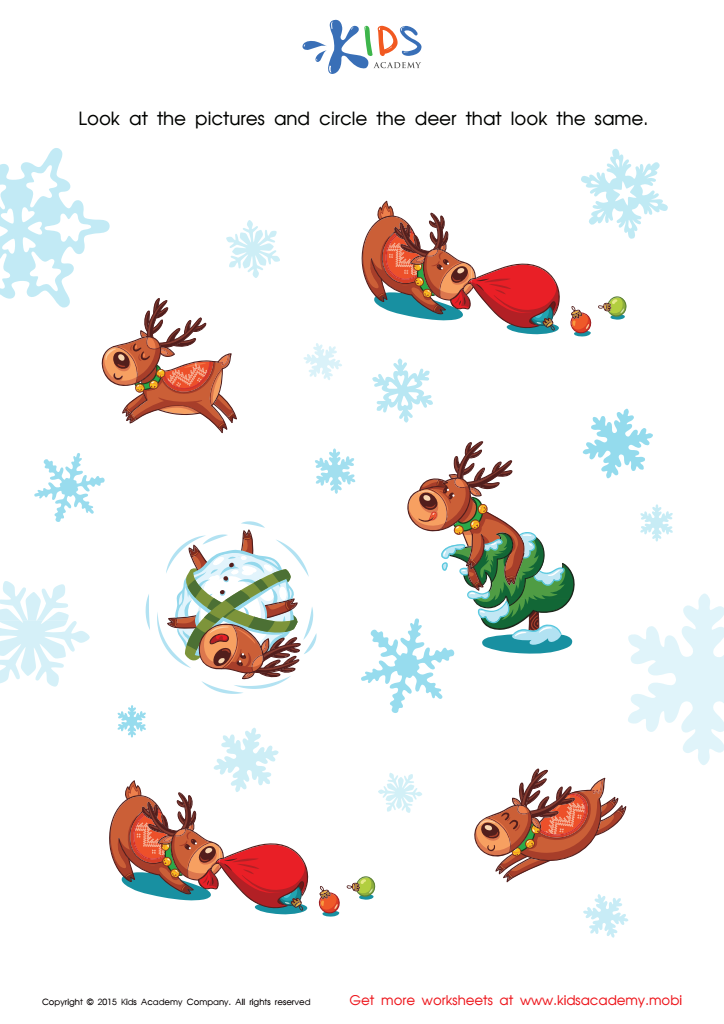
Count the Deer Worksheet
Spread festive cheer this holiday season with Kids Academy's Christmas-themed math worksheet! Your little learner can count and color in the cute deer while reinforcing their counting skills. Get your colorful worksheet now and make Christmas counting fun. For more number worksheets, click here.
Count the Deer Worksheet
Worksheet
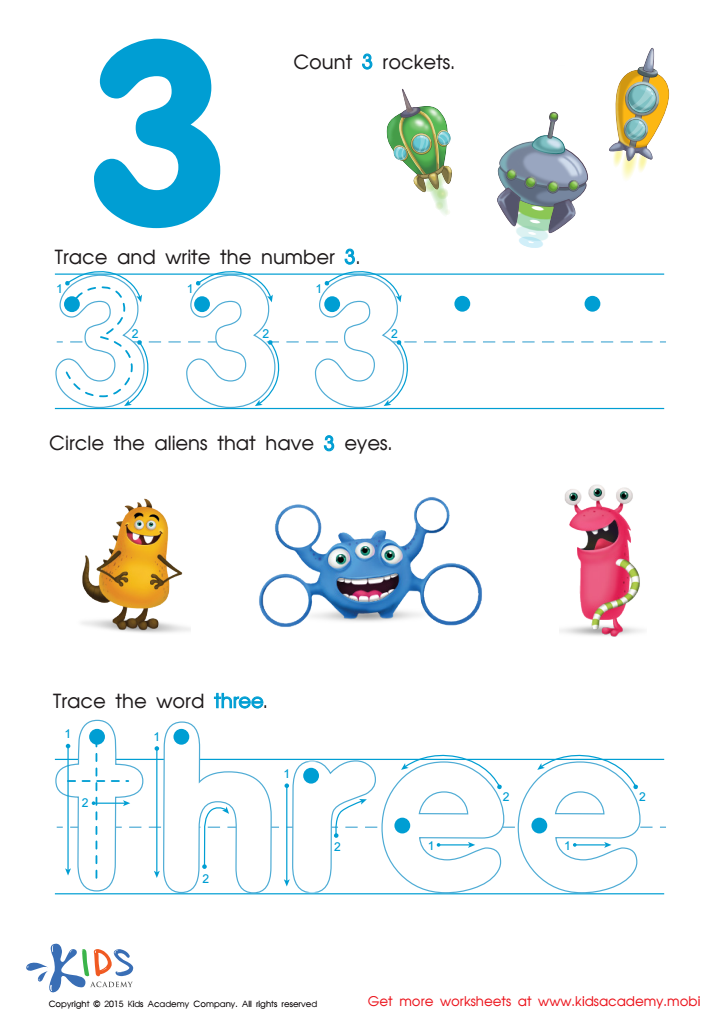
Learning Number Three Worksheet
Learn to count with aliens! Trace the number 3 and circle aliens with 3 eyes. Explore our web site for more number games and activities for preschoolers.
Learning Number Three Worksheet
Worksheet
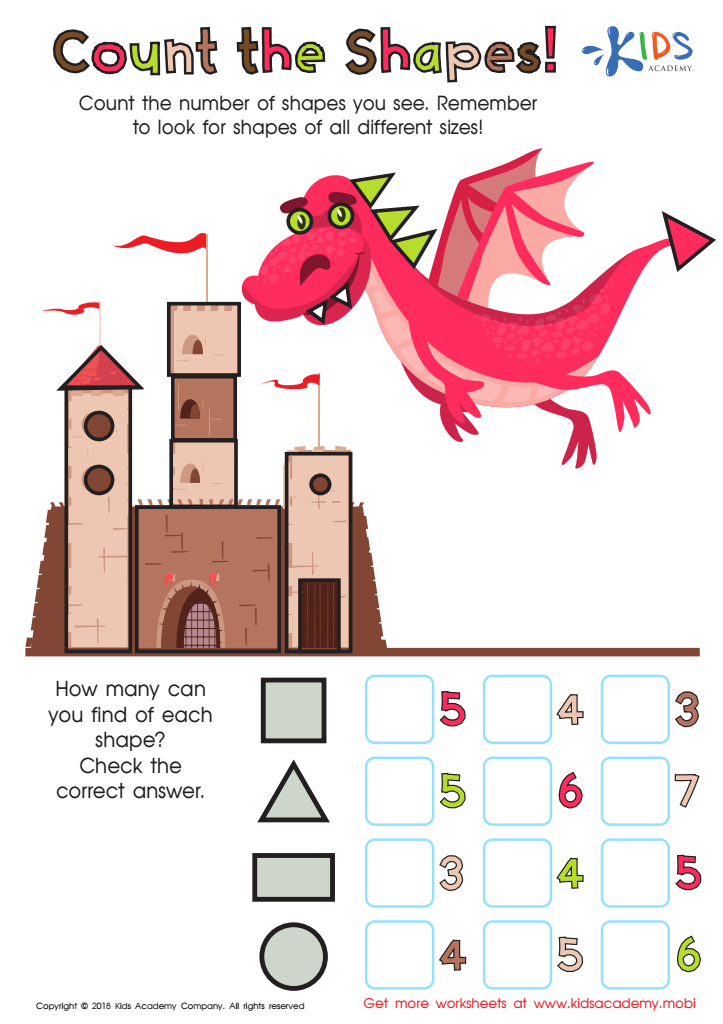
Count the Shapes Worksheet
This fun and learning worksheet is perfect for sharpening visual discrimination skills. Kids search a castle picture featuring a dragon and identify shapes, counting circles, squares, triangles and rectangles. Checking the correct box beside the number, they practice shape identification and counting. Download now and get started!
Count the Shapes Worksheet
Worksheet
Join Kids Academy for Free
Who is primarily going to use this learning content?







Counting skills are fundamental to a child's mathematical development and overall academic success. At the age of five, children start to develop critical cognitive abilities, and counting serves as a foundation for more complex math concepts later on. Parents and teachers should prioritize counting skills because they enhance a child’s number sense, which is crucial for understanding quantity, measurement, and relationships between numbers.
Mastering counting enables children to perform basic arithmetic operations and fosters problem-solving skills. Additionally, counting supports language development as children learn to verbalize numbers and understand sequences. This skill set also encourages social interaction through games and activities, promoting cooperative learning among peers.
Furthermore, strong counting skills at an early age can boost a child’s confidence in their math abilities, diminishing math anxiety as they grow older. Engaging children in counting activities can make learning fun and interactive, reinforcing the idea that math is an important part of everyday life.
Ultimately, nurturing counting skills in young children helps pave the way for future academic achievement and fosters a positive attitude towards learning, making it vital for parents and educators alike to invest time and resources into these early math experiences.








