Vocabulary Building Normal Matching Worksheets for 5-Year-Olds
5 filtered results
-
From - To
Our "Vocabulary Building Normal Matching Worksheets for 5-Year-Olds" offer an engaging and effective way to enhance your child's language skills. Designed for young learners, these worksheets help children connect words with images, boosting their vocabulary and comprehension. Each activity is carefully crafted to be fun and educational, featuring age-appropriate content that makes learning enjoyable. Through interactive and colorful exercises, children improve their ability to recognize and name objects, strengthening their understanding of words and their meanings. Start your child on the path to vocabulary success with our specially designed matching worksheets!
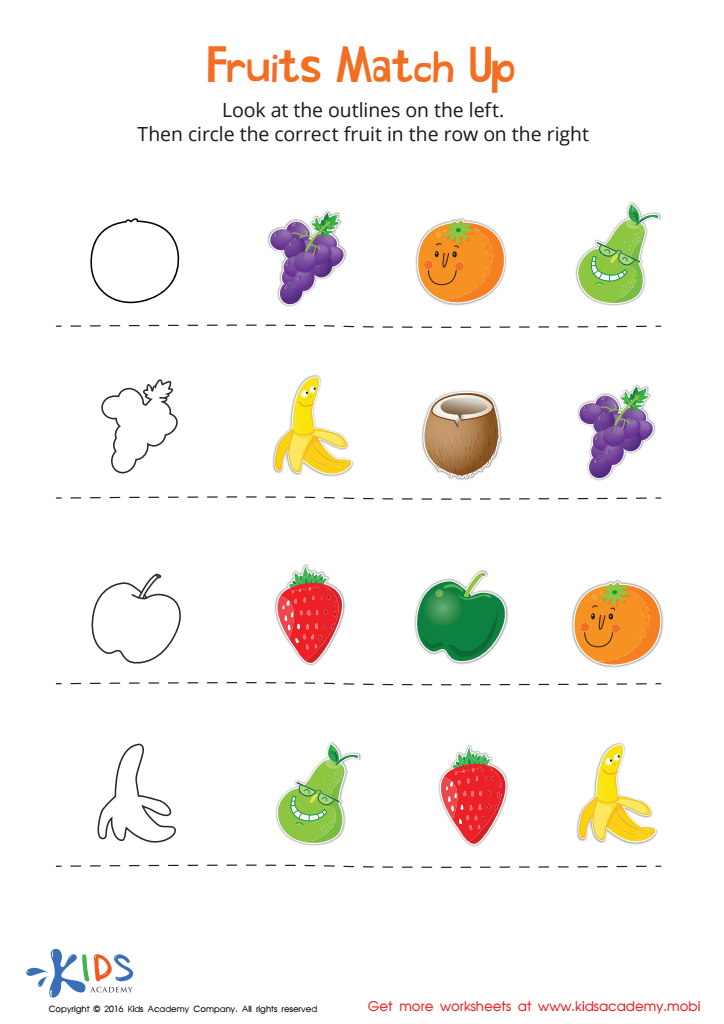
Fruits Match Up Worksheet
 Assign to My Students
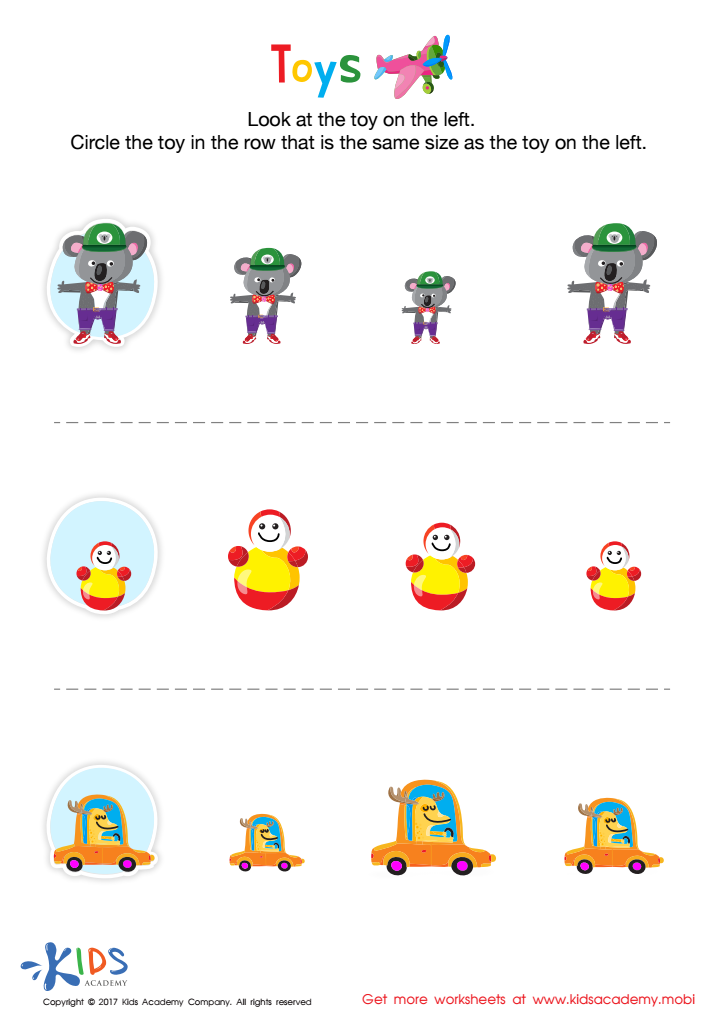
Matching: Classifying Toys by Size Worksheet
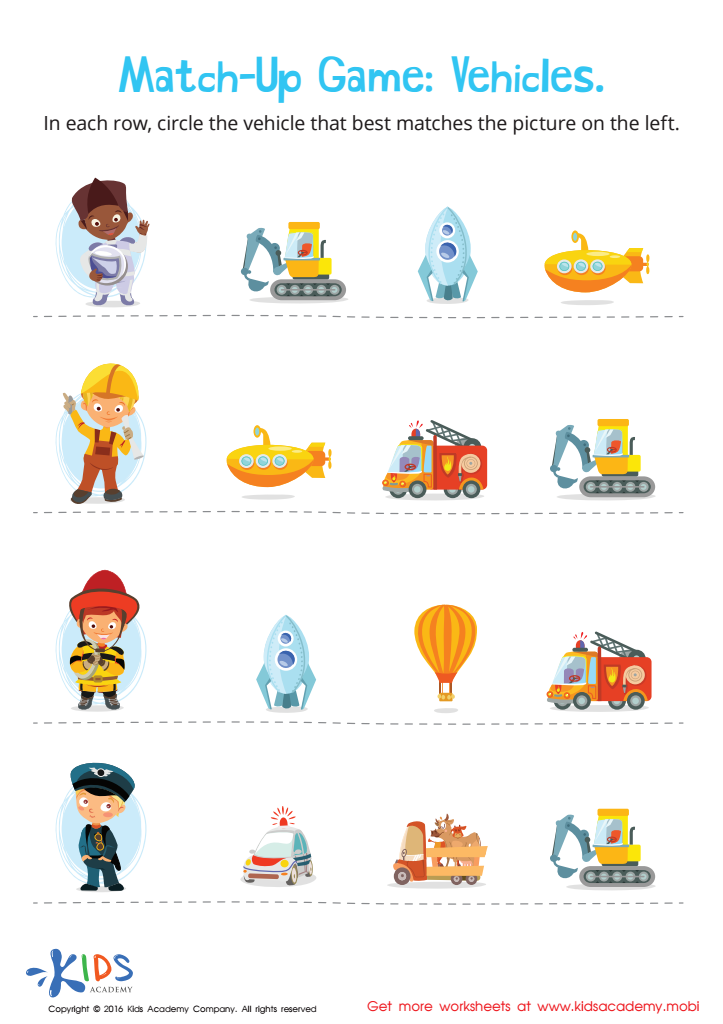
Vehicles Worksheet
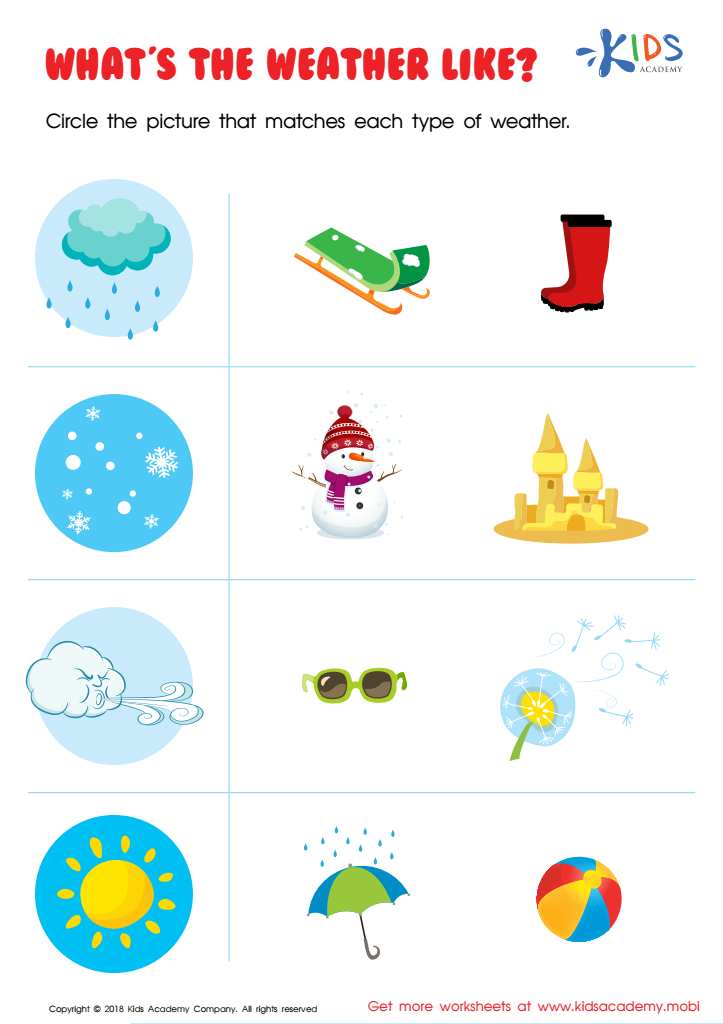
What's the Weather Like? Worksheet








Parents and teachers should prioritize vocabulary building for 5-year-olds because it's a crucial period for language development, fundamental for later academic and social success. At this age, children's brains are particularly receptive to learning new words and concepts. A robust vocabulary not only enhances communication skills but also supports reading comprehension and overall literacy, which are essential for future learning.
By engaging in activities like vocabulary matching games, children start to associate words with meanings in an enjoyable and memorable way. This process helps solidify their understanding and use of new terms. Additionally, a strong vocabulary forms the foundation for academic subjects, enabling children to grasp more complex concepts as they progress in school.
Moreover, vocabulary building fosters social-emotional development. Children who express themselves with ease tend to have better relationships with peers and adults, as they navigate social situations more effectively. Comprehending and using a diverse vocabulary can also boost a child's confidence and curiosity, encouraging a lifelong love of learning.
Lastly, interactive and consistent vocabulary practice at home and in the classroom bridges the gap between different learning environments, providing a cohesive educational experience. For parents and teachers, investing time in vocabulary development sets children up for greater academic achievement and personal growth.








