Lowercase identification Normal Alphabet Worksheets for Ages 6-7
4 filtered results
-
From - To
Enhance your child's literacy skills with our engaging Lowercase Identification Normal Alphabet Worksheets, specifically designed for ages 6-7. These worksheets provide a fun and interactive way to help young learners recognize and differentiate between lowercase letters. Each activity promotes letter recognition through various exercises, including matching, tracing, and filling in missing letters. Tailored to meet developmental goals, these worksheets not only build confidence in reading and writing but also encourage fine motor skills. Perfect for homeschooling or supplementary classroom activities, our worksheets make learning the alphabet a delightful experience for early learners. Explore our resources and watch your child thrive in their literacy journey!
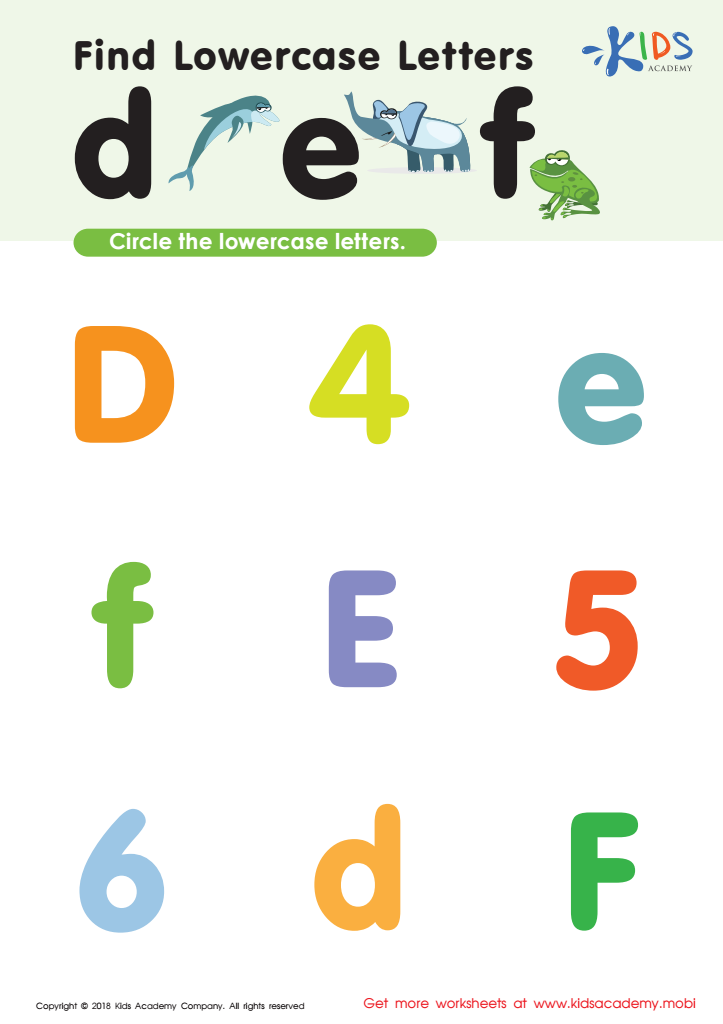
Find Lowercase Letters d e f Worksheet
 Assign to My Students
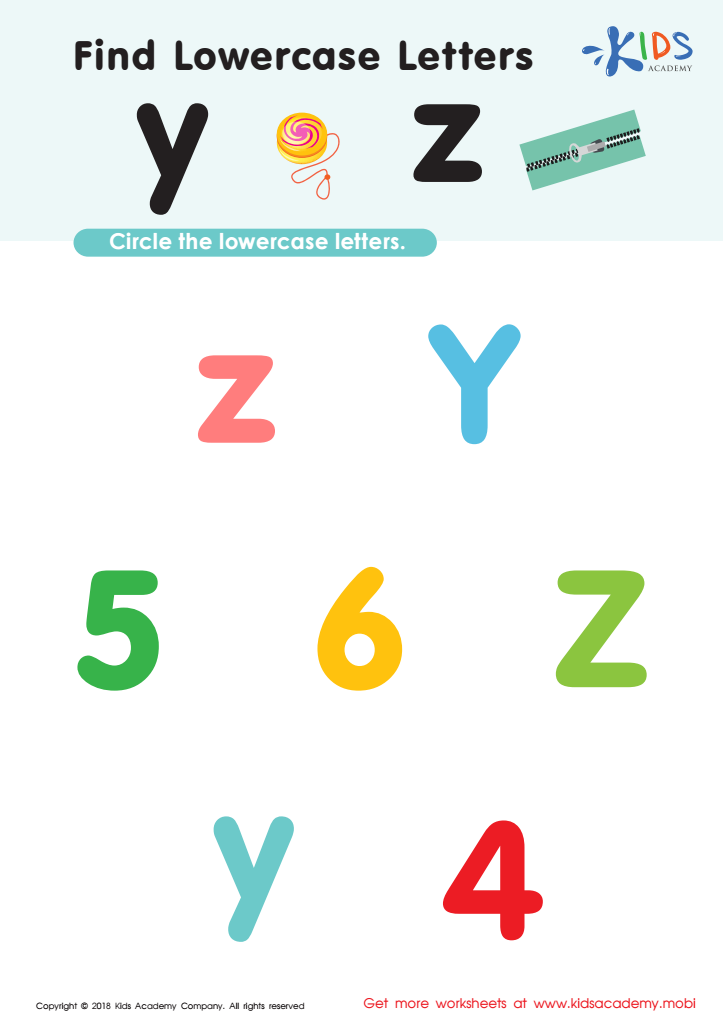
Find Lowercase Letters y z Worksheet

Find lowercase letters a b c Worksheet
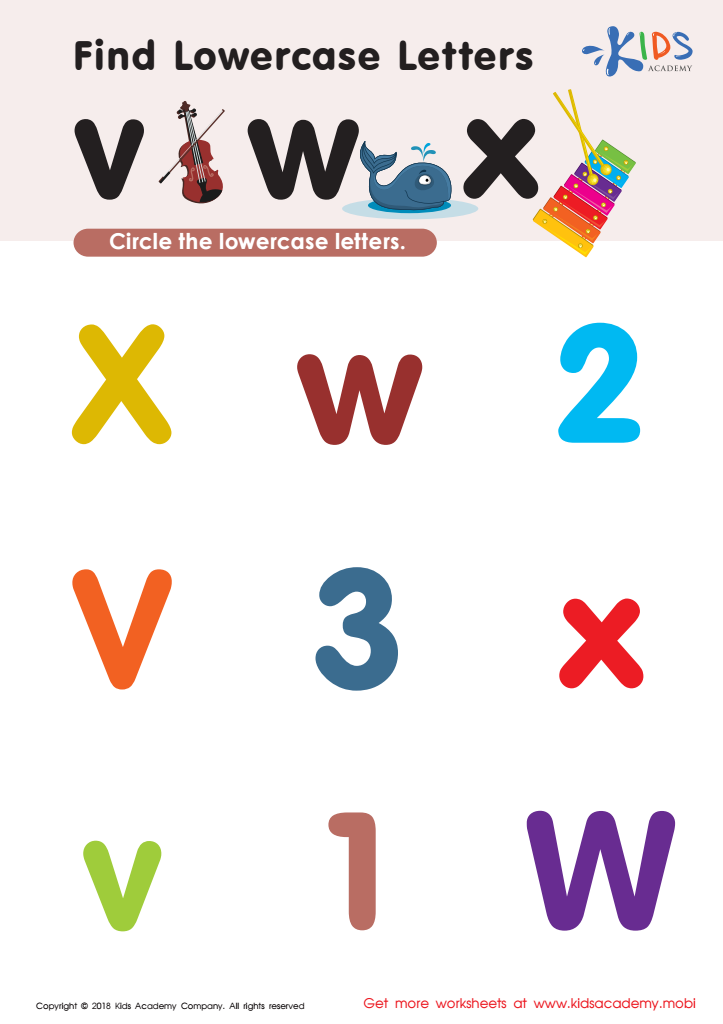
Find Lowercase Letters v w x Worksheet







Understanding lowercase letter identification is vital for children aged 6-7, as it forms the foundation for reading and writing skills. At this age, children are transitioning from recognizing letters to using them in context, and lowercase letters are prevalent in most texts. This means that being able to identify and differentiate between uppercase and lowercase letters is crucial.
Parents and teachers should care about lowercase identification as it directly influences literacy development. Mastery of lowercase letters aids in word recognition, facilitating smoother reading experiences. Children who struggle with letter identification may experience challenges with phonics and decoding, limiting their ability to read fluently and comprehend meaning.
Moreover, this skill supports writing development. As children begin to write sentences, they need to know when to use lowercase letters, encouraging proper grammar and sentence structure. Engaging in activities that promote lowercase identification not only enhances literacy skills but also fosters a love for reading and writing.
Ultimately, by emphasizing lowercase letter identification, parents and teachers equip children with essential tools for academic success and nurture their confidence in communication from an early age. This foundational understanding paves the way for lifelong literacy skills.







