Filters

54 filtered results

Clear all filters
Favorites
With answer key
Interactive

54 filtered results

Difficulty Level

Grade


Subject

    Check out this FREE Trial Lesson on Chess for age 6-7!

    Special Moves: Promotion

    Favorites
    With answer key
    Interactive
    • 6-7
    • Chess
    • Normal
    How Bishops Move Worksheet
    How Bishops Move Worksheet

    How Bishops Move Worksheet

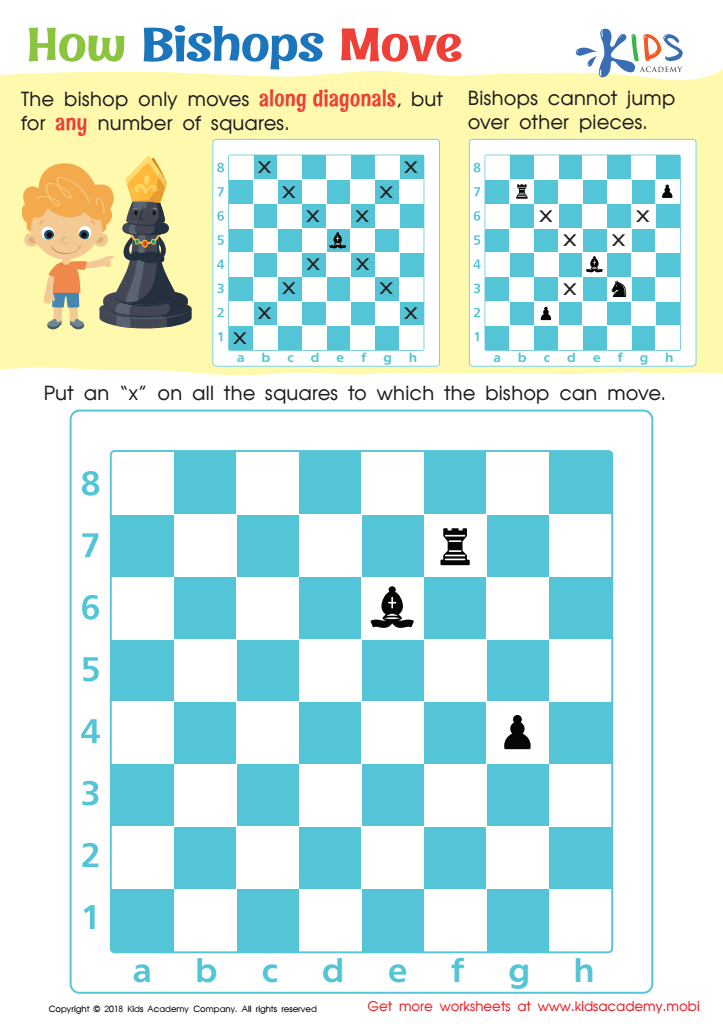
    There is no such thing as too much sharpening of skills. Encourage your child to learn more about chess technicalities with this simple worksheet. It shows them how a bishop moves: along diagonals any number of squares, but it can't jump over other pieces.
    How Bishops Move Worksheet
    Worksheet
    Rook and Bishop Worksheet
    Rook and Bishop Worksheet

    Rook and Bishop Worksheet

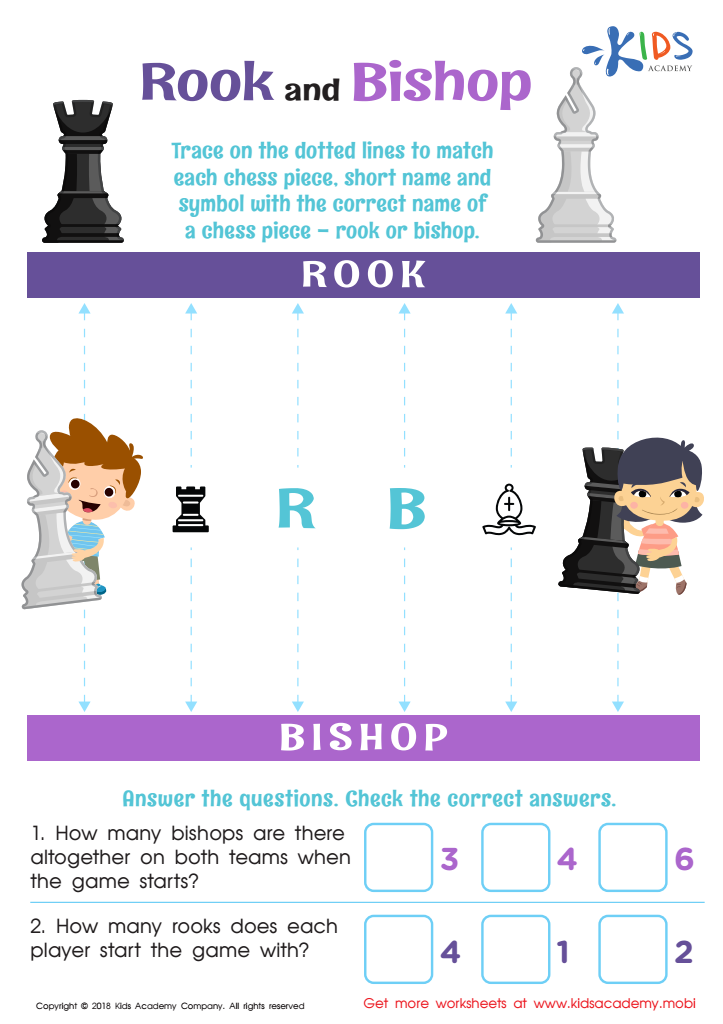
    This tracing sheet helps your child learn chess pieces by matching each piece, short name and symbol to the correct name. After tracing, have them answer the questions and check their answers. It's a great way for them to become familiarized with chess.
    Rook and Bishop Worksheet
    Worksheet
    Knight Quest Worksheet
    Knight Quest Worksheet

    Knight Quest Worksheet

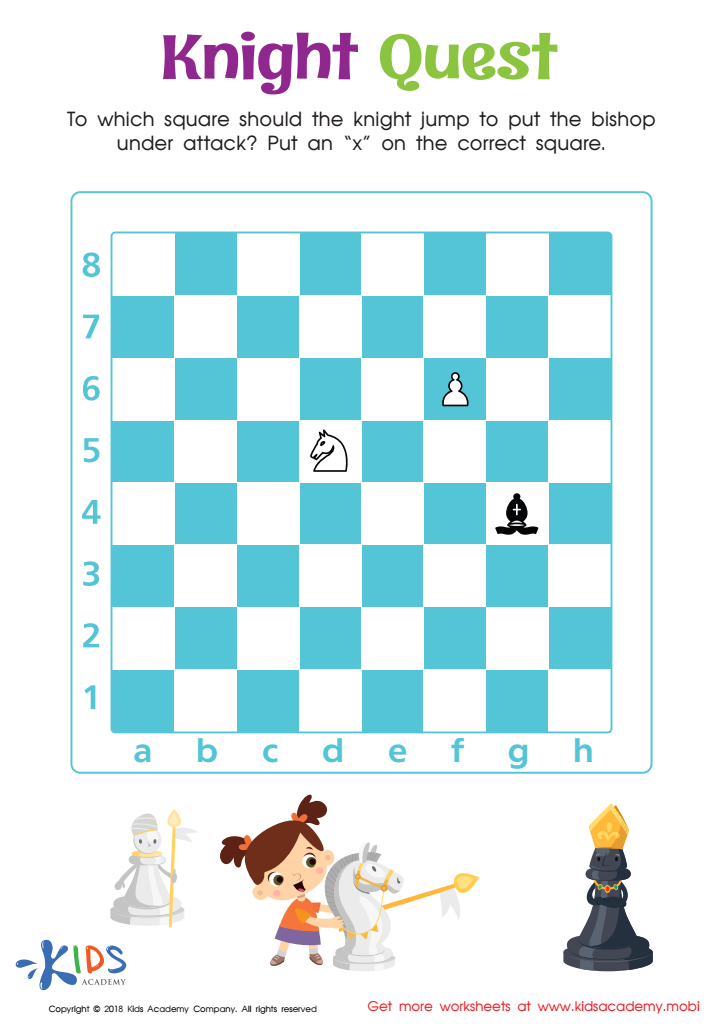
    Testing your child's strategic planning and chess skills? Give them this worksheet: Ask them to mark an 'x' on the square where the knight should jump to attack the enemy bishop. See how well they plan for a win! (80 words)
    Knight Quest Worksheet
    Worksheet
    Smart Capturing Worksheet
    Smart Capturing Worksheet

    Smart Capturing Worksheet

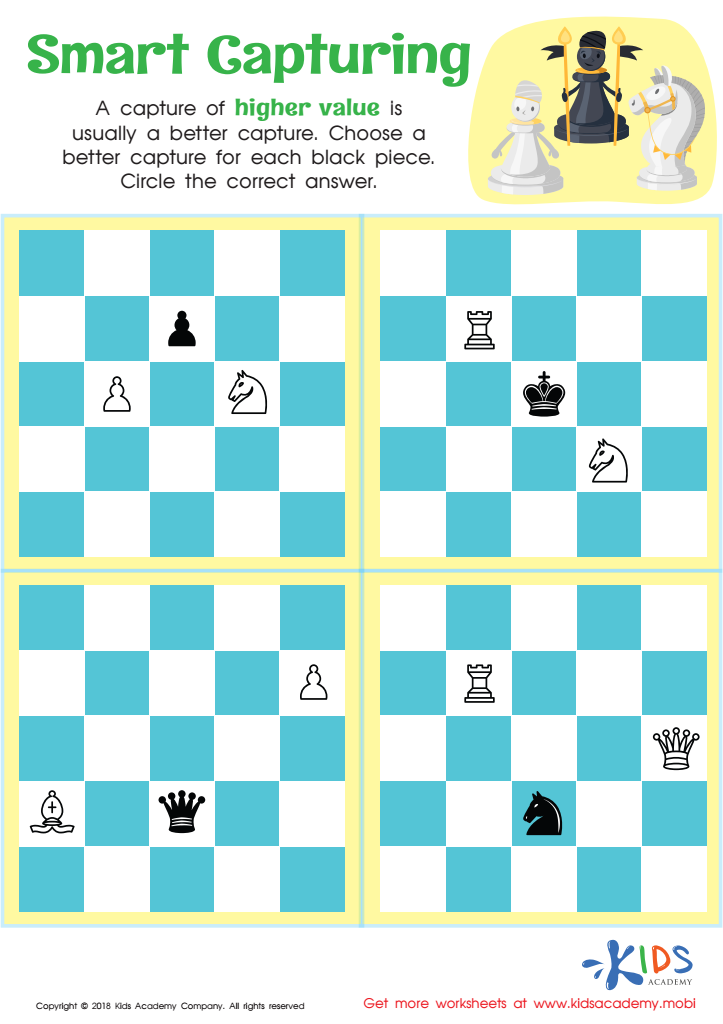
    Chess is a game of strategy and calculation. When presented with two captures, a player should always go for the one that yields the highest value. For example, taking a knight over a pawn. In this worksheet, your children will choose the best capture for each black piece. Ask them to circle the correct answers. (80 words)
    Smart Capturing Worksheet
    Worksheet
    Promotion Practice Worksheet
    Promotion Practice Worksheet

    Promotion Practice Worksheet

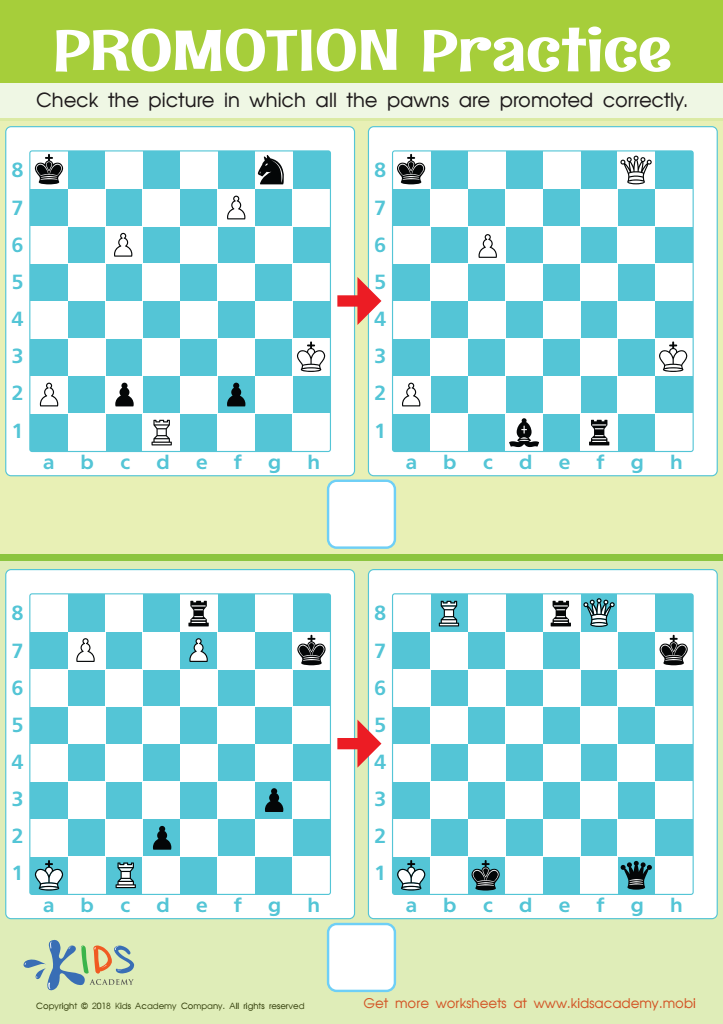
    Test your kids' promotions skills with this worksheet! Ask them to find the pictures in which the pawns are correctly promoted. Remember, when a pawn reaches the last rank it may be promoted to a queen, bishop, knight or rook. In addition, a pawn can be promoted when it captures a chess piece on the last rank.
    Promotion Practice Worksheet
    Worksheet
    Setting up the Chessboard: Part 1 Worksheet

    Setting up the Chessboard: Part 1 Worksheet

    Setting up the Chessboard: Part 1 Worksheet

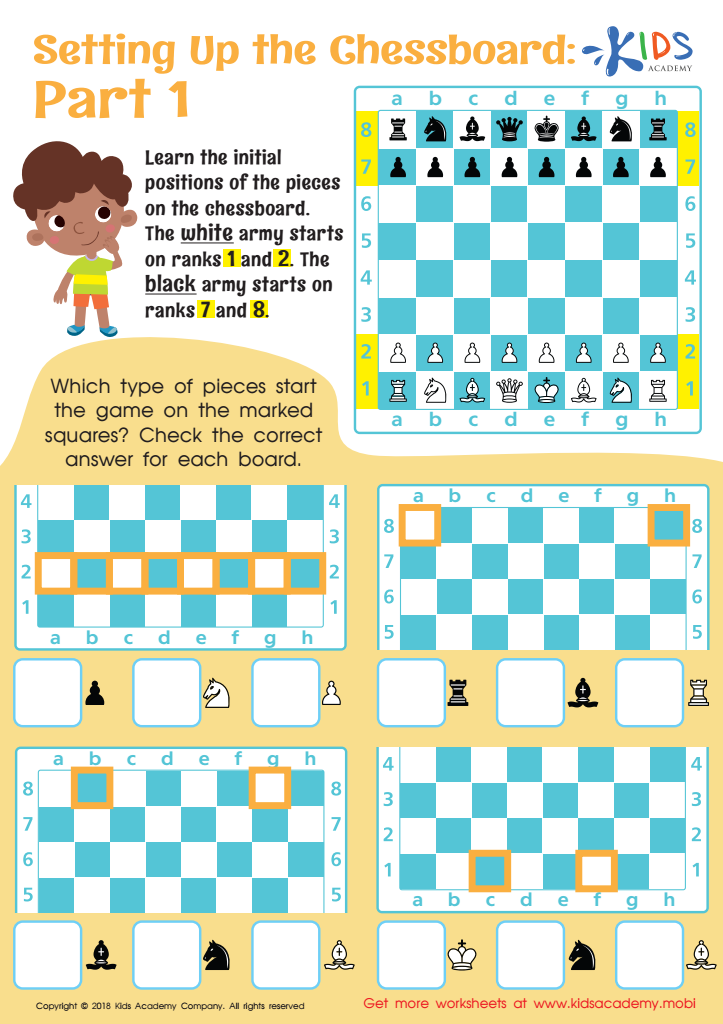
    Teach your child the starting positions of the black and white armies on the chessboard. Black pieces are placed on ranks 7 and 8, and white pieces on ranks 1 and 2. Have them check the highlighted boxes on the chessboard to make sure they know the correct pieces to start with.
    Setting up the Chessboard: Part 1 Worksheet

    Worksheet


    ... 2 3

    Normal Chess worksheets designed for ages 6-7 offer a unique blend of educational benefits tailored specifically for young learners. These worksheets serve as an essential tool for introducing the intricate game of chess in a manner that is both engaging and developmentally appropriate for children in this age group.

    At ages 6-7, children are at a critical stage of cognitive development, where they begin to grasp more complex concepts and enhance their problem-solving skills. Normal Chess worksheets are crafted to nurture these abilities, presenting chess strategies and tactics in a simplified way that resonates with their budding intellectual capacities. These exercises encourage critical thinking, as young players must contemplate their moves and anticipate their opponents' strategies.

    Moreover, Normal Chess for Ages 6-7 helps in improving concentration and focus. Chess requires players to pay attention to the entire board, plan ahead, and remember the rules of how each piece moves. Regular practice with these worksheets can significantly enhance a child's ability to concentrate on tasks, a skill that is beneficial not only in chess but in academic pursuits as well.

    Additionally, through these worksheets, children learn the value of patience and perseverance. Grasping the basics of chess and gradually improving requires time and effort. This process teaches young learners the importance of diligent practice and learning from their mistakes, instilling a growth mindset from an early age.

    In conclusion, Normal Chess worksheets for ages 6-7 are not just about learning a game; they are a comprehensive educational tool that supports critical cognitive development, concentration, and character building in young children, making them an invaluable resource for their overall growth.